Scams are rampant that exploit children with cancer to defraud hundreds of millions of yen in donations.

An international fraud network has been uncovered that exploits sick children to defraud millions of yen in donations. The network preys on financially disadvantaged families, and has failed to give most of the funds it collected to save children's lives.
BBC World Service podcast investigates child cancer charity scam - PodcastingToday
https://podcastingtoday.co.uk/bbc-world-service-podcast-investigates-child-cancer-charity-scam/

Khalil, a 7-year-old boy living in the Philippines, was diagnosed with leukemia at age 7. His mother struggled to pay for his treatment, and they contacted him through a group called 'Chance Letikva.' For the shoot, Khalil was forced to shave his stubborn hair, use onions and menthol to induce tears, and recite the script in English. The campaign raised $27,000, but his family only received $700 for the day of filming. Sadly, Khalil later passed away at age 8.
Ana, a resident of an indigenous community in Colombia, was falsely accused of having only two months to live, even though she was actually on the mend. Her campaign is estimated to have raised around $250,000, but none of it was paid to her family.
In the case of Victoria, a five-year-old girl from Ukraine, local clinic staff were involved, and although their contracts stated that they would be paid after reaching a target, the target amount itself was left blank. A campaign promoting Victoria apparently raised more than 280,000 euros (approximately 44.8 million yen). Both campaigns were advertised on social media platforms such as YouTube and Facebook.
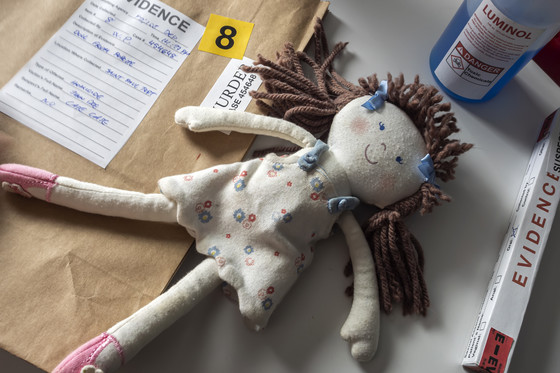
A BBC investigation found that nine families across five continents were victimized, with a total of $4 million in donations withheld. According to whistleblowers, the organization deliberately targeted 'beautiful, hairless children between the ages of 3 and 9.' At the time of writing, campaign pages for the children, including Khalil, are still accepting donations.
Further investigation revealed that the man behind these scams was an Israeli citizen living in Canada named Erez Hadari. The BBC believes that Hadari was using multiple organizations, including Chance Letikva, Walls of Hope, and Saint Raphael, to commit various donation fraud schemes. Hadari denied the allegations. Regarding the reason the donations didn't reach the families, he explained that they were in the red due to advertising costs. However, experts point out that advertising costs typically don't exceed 20% of the total donation amount.
The detailed findings are presented in the BBC documentary 'The Child Cancer Scam,' which can be viewed below.
The Child Cancer Scam - BBC World Service Documentaries - YouTube
Related Posts: