A collection of amazing projects that humanity has completed over the last century

Some of humanity's greatest discoveries and creations
What are some examples of marvelous projects human beings have undertaken that took ~ a century or more?
— Michael Nielsen (@michael_nielsen) February 5, 2020
Slow
https://michaelnotebook.com/slow/index.html
Nielsen focuses on goal-oriented projects, such as scientific experiments, academics, and architecture, showcasing projects that humanity has undertaken over the years.
The first famous example Nielsen cited was the 'proof of Fermat's Last Theorem.' Fermat's Last Theorem is a mathematical formula written by the 17th-century mathematician Pierre de Fermat, who declared that he had 'found a truly astonishing proof.' However, because no records exist of how the proof was made, it remained unclear for hundreds of years whether it could be proven. British mathematician Andrew Wiles finally provided a complete proof, but the proof was not completed until 1995, 330 years after Fermat's death. There are also many other unsolved problems in mathematics that have remained unsolved for over 100 years, such as the Riemann hypothesis and the Goldbach conjecture .
The proof of Fermat's Last Theorem involves an incredible amount of mathematics over many decades, and in some ways centuries: https://t.co/Nrn3dbCEyN
— Michael Nielsen (@michael_nielsen) February 5, 2020
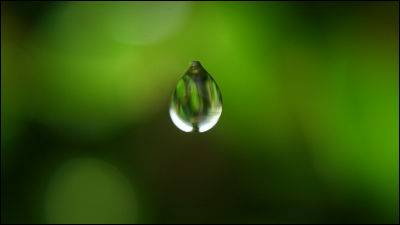
Not only in mathematics, but also in scientific experiments, there are things that have taken hundreds of years to prove. The pitch drop experiment is the world's longest-running scientific experiment, which proved that ' pitch ,' a general term for a substance that is so viscous it appears to be solid, actually has the properties of a very viscous liquid. Records of the experiment began in 1930, but because the pitch placed in the funnel is extremely viscous, it takes several years to over 10 years for a single drop to fall naturally. The first drop fell in 1938, and since then, a rate of 8 to 13 years per drop has been recorded.
The Pitch Drop Experiment, to demonstrate that pitch is really a liquid which flows, is closing in on 100 years: https://t.co/jHaULytEib
— Michael Nielsen (@michael_nielsen) February 5, 2020
(I used to walk past this every day - my office was in the same building!)
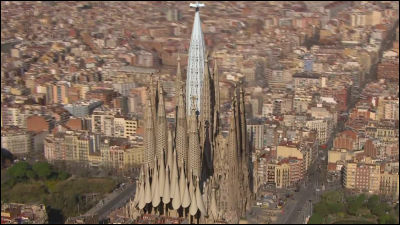
Notre Dame Cathedral in Paris is well known as a building that took more than a century to build. Construction of Notre Dame Cathedral began in 1163, and while the main sections were likely completed and used as a cathedral by 1225, the final building was not completed until 1345, approximately 200 years later. Construction of the Sagrada Familia began in 1882 and is still ongoing as of 2025. It was originally scheduled for completion in 2026, the 100th anniversary of the death of chief architect Antoni Gaudi, but the impact of COVID-19 and other factors has postponed the completion date. While the tallest tower, the 'Tower of Jesus,' will be completed in 2026, the entire structure is not expected to be completed until after 2030.
Many incredible cathedrals, of course. Eg Notre Dame, over 1163–1345: https://t.co/GiH2QDb62O Or the Sagrada Familia, ongoing (!) pic.twitter.com/p5eldrnj5x
— Michael Nielsen (@michael_nielsen) February 5, 2020
Although the project will be less than a century old as of 2025, there are experiments and records being conducted as part of a project that will continue for hundreds of years into the future. The Cape Grim Atmospheric Archive is carrying out 'air preservation' in order to observe and record changes in the Earth's atmosphere over the long term. The first sample was taken on April 26, 1978, and since then, four to six samples have been taken regularly each year. These samples are stored for future use when a specific year's atmosphere needs to be analyzed.
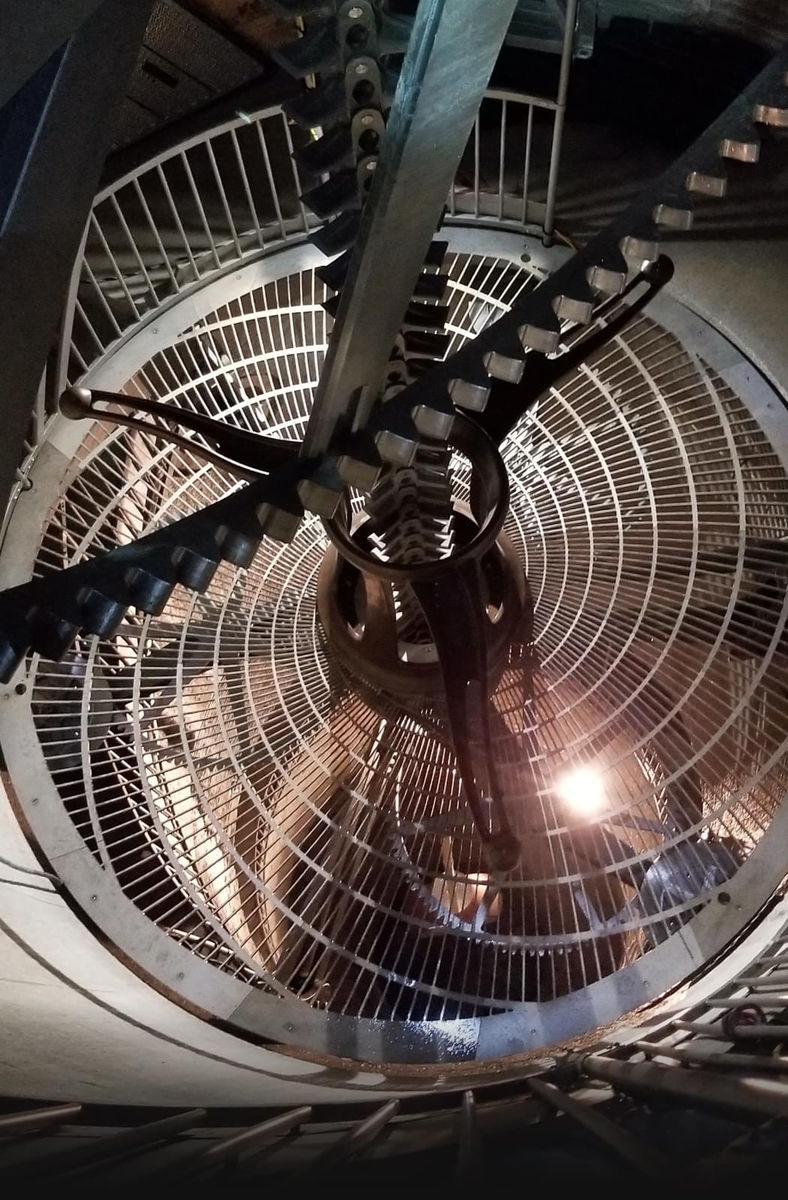
Another similar project looking towards the future is the Long Now Clock . The Long Now Clock is a large mechanical clock designed to run for 10,000 years. It was built by the Long Now Foundation, which advocates a longer-term view of the present, reflecting on modern society's tendency towards short-term thinking.
Related Posts:


in Science, Posted by log1e_dh