The 'AI cheating' epidemic is destroying education at an alarming rate

Regarding the role of AI in education, while there is a consistent stance that cheating, which involves leaving academic work entirely to AI
Rampant AI Cheating Is Ruining Education Alarmingly Fast
https://nymag.com/intelligencer/article/openai-chatgpt-ai-cheating-education-college-students-school.html
The first young person to speak to Intelligencer is Chungin Lee, a former Columbia University student. Born in South Korea and raised in the Atlanta suburbs, where his parents run a college admissions consulting firm, Lee was accepted to Harvard University while still in high school. However, he was suspended after being found out to have secretly skipped a field trip before graduation, which resulted in his acceptance being rescinded.
After failing to get into any of the 26 universities he applied to, Lee spent the next year at a community college before transferring to Columbia University as a sophomore computer science major.
However, in his introductory programming class, Lee relied heavily on AI, submitting almost exactly what ChatGPT output for his assignments. He also said that 80% of his essays were written by AI, with Lee only making edits to the final 20%.
When Intelligencer asked Lee, 'Why did you decide to entrust your studies to AI after you went to university?' he replied, 'Because university is a great place to meet your startup co-founder and future CEO wife.'
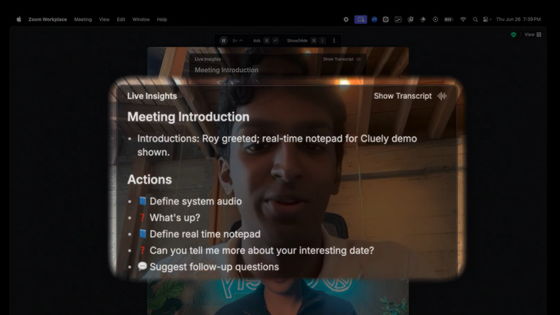
In addition, Mr. Lee actually founded an AI startup with a co-founder. You can find out more about that in the article below.
A former university student who was expelled for using AI in his job hunt starts an AI cheating tool company called 'Cluely' and raises 740 million yen in funding - GIGAZINE

The second person is Sarah, a first-year student at Wilfrid Laurier University in Canada. While Lee is a real name, all of the current students mentioned in this article, including Sarah, were interviewed under pseudonyms.
Sarah first tried ChatGPT in the spring of her final year of high school, and after becoming familiar with generative AI, she started using ChatGPT in all of her classes. Thanks to that, she achieved excellent grades, and she says, 'AI has changed my life.'
Sarah continued using ChatGPT after entering university, and claims that with ChatGPT she can write an essay in just two hours that would normally take her 12. She also claims that there are hardly any days when she doesn't see other students using ChatGPT on their laptops during class.
Some students are not happy about being educated in this way. Wendy, a finance major at a prestigious local university, is opposed to the use of AI. 'I'm against copy-pasting, and I'm against cheating and plagiarism,' she said.
However, even Wendy is using AI to help her with her university assignments. Wendy, who has difficulty structuring sentences, first inputs the AI, 'I'm a freshman taking an English class,' then provides background information about the class and prompts from her professor. She then asks the AI to 'create an outline so I can write an essay according to the prompts.' The AI then outputs the outline, introduction, and structure of the essay, which she then uses to write her essay.
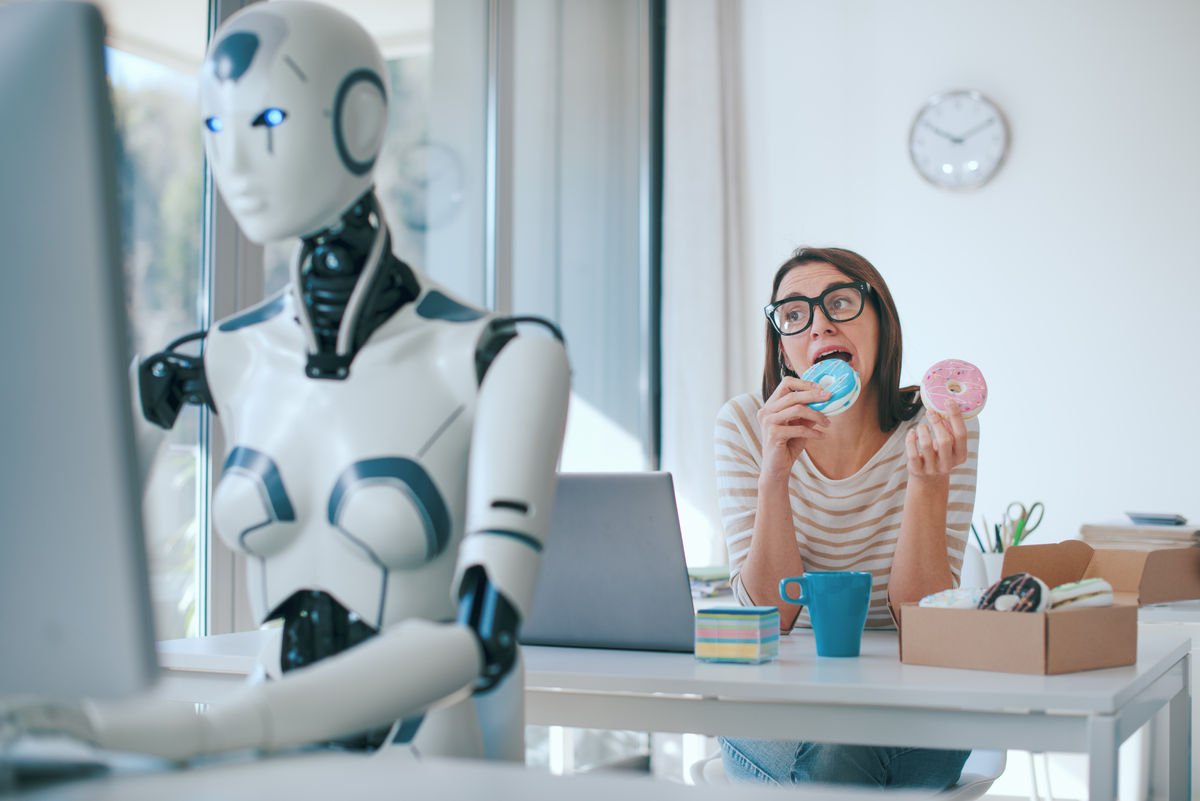
As AI becomes increasingly popular among students, teachers are exploring ways to address the situation, such as reverting to handwritten exams, switching to oral exams, or adapting assignments to include the use of AI.
Brian Patrick Green, a technology ethicist at Santa Clara University in the United States, stopped assigning essays immediately after first using ChatGPT. He then assigned a book report, thinking, 'No one will use ChatGPT if this is the case,' but one of his students soon submitted a book report with robotic language and awkward phrasing. Another professor, a philosophy professor at the University of Arkansas at Little Rock, said he found students using AI even to answer questions like, 'Tell us a little about yourself and what you hope to learn in this class.'
Similar fraud was already reaching a peak even before OpenAI released ChatGPT in November 2022. At the height of the COVID-19 pandemic, many college students were graduating from high school through distance learning, and due to the lack of oversight, many students turned to paid cheating services like Chegg and Course Hero. These cheating tools boasted that experts in India and elsewhere were available 24/7 and could answer questions in as little as 30 minutes. However, when ChatGPT was released, students seeking faster, more powerful tools quickly jumped on it.
This rapid spread of generative AI has left educational institutions struggling to cope, with most universities adopting ad hoc approaches or leaving it up to professors to decide whether to allow students to use AI.
Some educators are using ingenious methods to combat AI-based cheating, such as 'Trojan horse' tactics, where unrelated instructions are slipped in small white text between the lines of an assignment.
'Sometimes these ideas work,' said Troy Jollimore, a philosophy professor at California State University, Chico. 'For example, I've written, 'How would Aristotle answer this?' for assignments that had nothing to do with Aristotle. Other times, I've written even more outlandish ideas that students didn't even notice. This means they're not only not writing their own essays, but they're not even reading the ones they turn in.'
The fact that similar AI countermeasures are being implemented in Japanese educational institutions was once discussed on X (formerly Twitter).
Keio's AI countermeasures are so funny.pic.twitter.com/KkQCHzcKMT
— Yin Yang Hemorrhoids (@onmyoupiles) April 21, 2025
High-precision AI detection tools like Turnitin have also emerged, but students are fighting back by deliberately making spelling mistakes, revising parts of sentences themselves, or instructing the AI to 'write as if I'm a slightly dopey freshman.' The battle between educators trying to detect AI use and students sneakily using it has become a game of cat and mouse.
Mark, a mathematics student at the University of Chicago, told a friend he'd used AI for a coding assignment that he'd done. He said, 'If you were a carpenter and you used power tools to build a house, it still wouldn't be finished without you.'
'Still, it's really hard to judge,' Mark told Intelligencer. 'Can I really call it my job to write something that was written using AI?'
Related Posts: