The U.S. government has suspended permanent residency applications for foreign workers from eight companies, including Microsoft and Adobe.
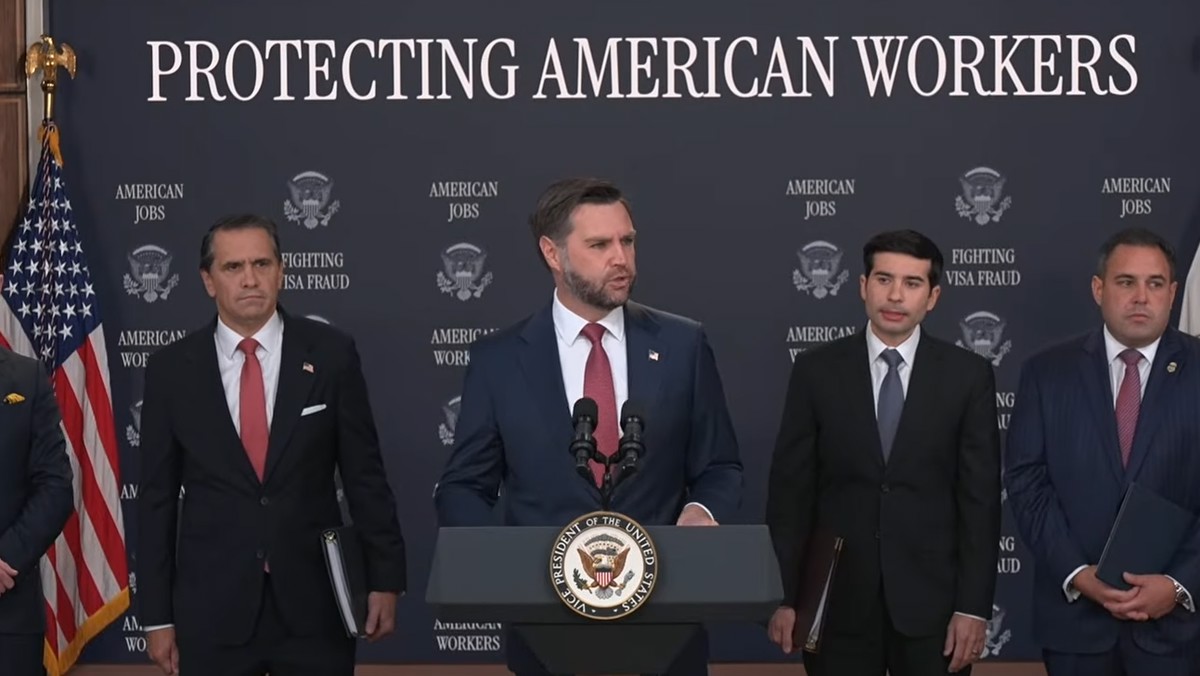
On October 8, 2026, the Trump administration in the United States announced it would suspend the application process for work permits required for foreign workers to obtain permanent residency for eight companies, including Microsoft and Adobe. Vice President J.D. Vance criticized Microsoft for laying off American employees while hiring foreign workers, but Microsoft has refuted the government's claims regarding its foreign worker hiring practices.
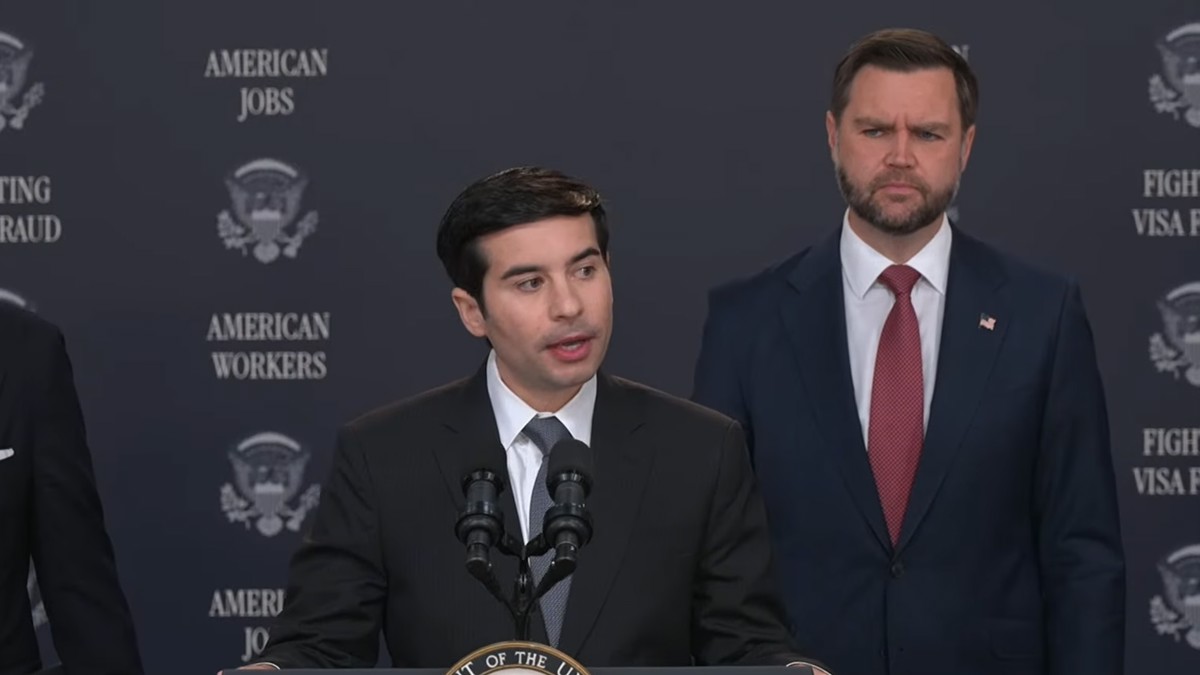
Vice President JD Vance Holds Press Conference on Fighting Visa Fraud – The White House
Microsoft Comment on Recent Immigration Questions - Microsoft On the Issues
https://blogs.microsoft.com/on-the-issues/2026/10/08/microsoft-comment-on-recent-immigration-questions/
Microsoft being suspended from a green card program as Vance alleges fraud | AP News
https://apnews.com/article/h1b-visa-program-vance-microsoft-e7b3a407f822702b269ee277d21343ea
This measure was announced at a press conference held at the White House by Vice President Vance and Secretary of Labor Keith Sonderling, among others.
Vice President JD Vance Holds Press Conference on Fighting Visa Fraud - YouTube
The eight companies affected are Microsoft, Adobe, Cognizant, Infosys, Tata Consultancy Services, Wipro, HCL Technologies, and Capgemini. The Department of Labor has decided not to accept or process new applications for work authorizations for permanent residency from these companies.
In the United States, when a company helps foreign workers obtain permanent residency through employment, it is generally required to go through a labor certification process called 'PERM.' Companies must prove, through recruitment activities and other means, that there are no suitable American workers for the job and that employing foreign workers will not worsen the wages or working conditions of American workers. This measure will prevent the target companies from using this process, but it will not suspend the 'H-1B visa' itself for foreign professional workers.
Vice President Vance claimed that Microsoft will lay off approximately 6,000 American employees by 2025, while simultaneously obtaining 6,300 H-1B visas and around 3,000 green cards. He further criticized this, stating that it would amount to replacing approximately 1.5 foreign workers for every American employee laid off.
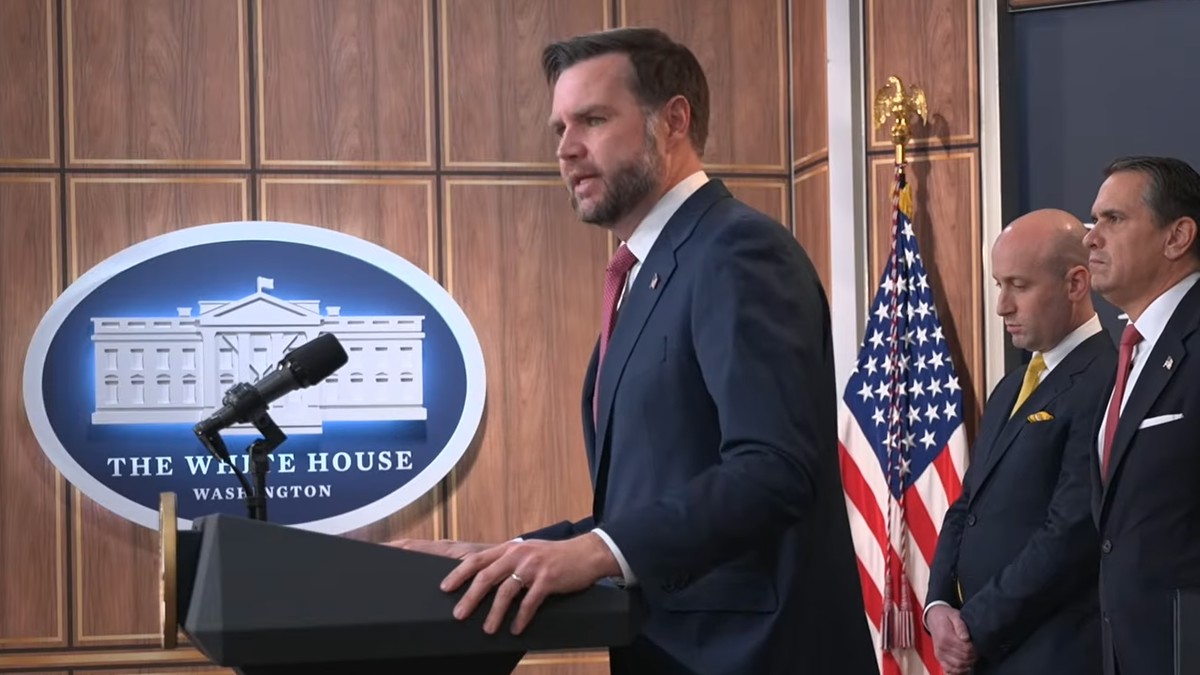
Vice President Vance also pointed out that some companies are placing job advertisements in inconspicuous local newspapers and justifying the employment of foreign workers by claiming they have no applicants. He also argued that because foreign workers depend on their employers for their residency status, employers can pay them lower wages than Americans.
According to Labor Secretary Sonderling, the companies targeted in this case have sought a total of approximately 3 million foreign workers since 2009, receiving approvals for more than 230,000 H-1B visas and more than 100,000 work authorizations. The Secretary cited ongoing federal investigations into Microsoft and Adobe as the reason for the suspension.
In response, Microsoft issued a statement on its official blog the same day. According to the company, 80% of the approximately 6,000 H-1B visa applications submitted in the previous fiscal year were for the purpose of extending or changing the residency status of existing employees, and not for hiring new employees. The remaining applications for new hires were for people who were already legally residing in the United States, and the company explained that this number represents only 1% of its total workforce in the United States.
Microsoft further emphasized that 'H-1B visa applications are limited to employees who meet strict eligibility requirements, and employees working under this visa are paid the same level of compensation as other employees performing equivalent duties.' In addition, the company stated that the vast majority of its employees in the United States are American citizens and that it intends to provide the government with additional information.
On the other hand, Doug Land, who served as a senior advisor to the U.S. Citizenship and Immigration Service under the Biden administration, pointed out that if the government is concerned with foreign workers being dependent on their employers, then preventing them from obtaining permanent residency is contradictory. This is because obtaining permanent residency would eliminate the need for foreign workers to continue working for a specific employer in order to maintain their residency status, making it easier for them to change jobs and negotiate wages.
In addition to taking measures against companies, the Trump administration has also announced its intention to investigate nine universities, including Harvard University, Yale University, Stanford University, and Massachusetts Institute of Technology, on suspicion of fraudulent use of the J-1 exchange visitor visa for foreigners.
Related Posts: