Google launched a satellite equipped with a dedicated AI chip (TPU) on October 1st as part of its 'Project Suncatcher' experiment to establish an AI data center in space.

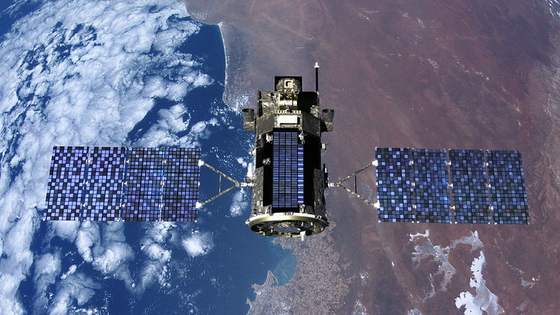
On September 24, 2026, local time, Google announced that it will launch a prototype satellite on October 1, 2026, as an initial experiment for ' Project Suncatcher ,' which aims to operate an AI data center in Earth orbit. The satellite will be used to evaluate how Google's AI chip, ' TPU ,' functions in space.
Learn about Google's Project Suncatcher to put ML infrastructure in space
https://blog.google/innovation-and-ai/models-and-research/google-research/google-project-suncatcher-facts/
Google's first Suncatcher orbital data center test launches October 1 - Ars Technica
https://arstechnica.com/google/2026/09/googles-first-suncatcher-orbital-data-center-test-launches-october-1/
'Project Suncatcher' is a research project exploring the possibility of operating an AI data center in space. In low Earth orbit, satellites receive sunlight almost continuously, allowing them to generate up to eight times more solar power than on Earth. Therefore, if multiple satellite constellations can be coordinated in low Earth orbit, it may be possible to operate a large-scale AI data center at a low cost.
Google's latest moonshot to put machine learning in space - YouTube
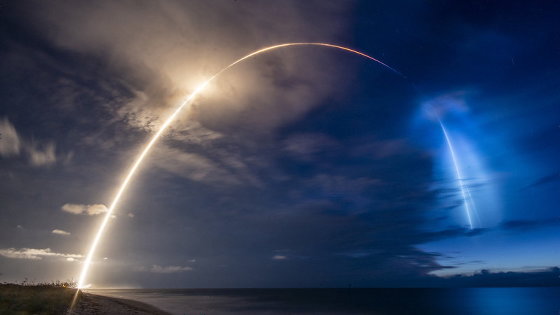
The first question that arises is, 'Can Google's AI hardware operate in space?' To answer this question, Project Suncatcher will operate a satellite equipped with a TPU in space and investigate the effects of space-specific stresses such as radiation and extreme temperature changes on the TPU. The satellite equipped with the TPU is scheduled to be launched into space on SpaceX's Falcon 9 rocket in the rideshare mission ' Transporter 18 '. Transporter 18 is scheduled to launch at 3:18 AM JST on October 2, 2026.
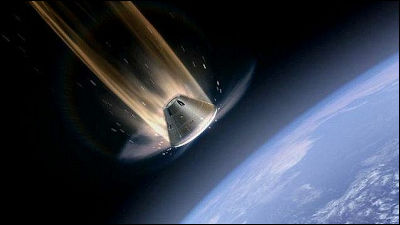
TPUs are subjected to significant stress even during their journey into space. It takes approximately 10 minutes for a rocket to reach low Earth orbit. During this time, the spacecraft experiences intense vibrations and sustained acceleration loads equivalent to 10 times gravity (10G). Individual components such as TPUs may experience even greater gravitational accelerations of 50 to 100G.
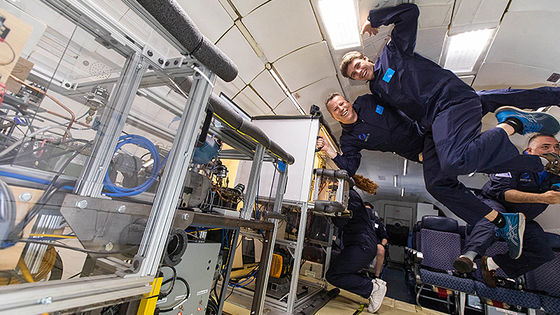
The Project Suncatcher team conducted vibration tests that violently shook the satellite in all three axes to replicate the vibrations experienced during a rocket launch. 'These kinds of tests rarely go according to plan, so we were pleasantly surprised that the hardware was able to withstand the forces,' said Travis Beals, senior director of Project Suncatcher.
Testing AI chips to survive in space - YouTube
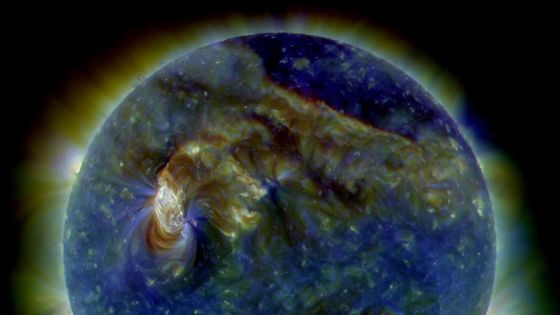
Once the TPU reaches space, it will be exposed to radiation levels beyond Earth's atmosphere. Because solar activity and cosmic rays can severely damage electronics, the Project Suncatcher team tested the TPU while running AI workloads at the Crocker Nuclear Research Center's proton beam facility at the University of California, Davis.
During testing, the impact of errors such as bit inversions on the workload was closely monitored. Initial results showed that Google's sixth-generation TPU, Trillium , demonstrated surprisingly high durability, capable of withstanding radiation levels higher than the total amount of ionizing radiation it might receive during a five-year space mission.
However, since some things can only be verified in space, it is necessary to launch TPUs into low Earth orbit and collect data in actual space.
Another challenge when operating a data center in space is 'cooling the TPU.' TPUs generate a large amount of heat in a small area, and if this heat is not safely dissipated, it can reach temperatures that make it difficult for the chip to function. Air cooling and water cooling systems on Earth rely on 'airflow,' but there is no airflow in space, so a completely different approach is needed to cool electronic devices.
Making sure AI chips don't overheat in space - YouTube
The Project Suncatcher team is exploring various approaches to cooling the TPU, including a combination of heat pipes and radiators. So far, they have been testing these techniques in a thermal vacuum chamber that simulates the thermal and vacuum environments of outer space. Moving forward, they plan to verify how the cooling system functions in actual outer space and refine the design based on the insights gained.
The satellites operating as AI data centers will each be equipped with dozens of TPUs, and multiple satellites will operate in conjunction. To maintain the bandwidth required for AI processing, each satellite needs to know its own position and its relative position to neighboring satellites. Therefore, the satellites will communicate with each other using lasers.
Keeping flying satellites connected with lasers - YouTube
While satellite communication technology already exists in space, most state-of-the-art systems are optimized for long distances and low bandwidth, whereas lasers used in AI data center satellites need to operate over extremely short distances with very high bandwidth. Furthermore, maintaining the necessary connectivity requires extremely high precision. The required precision is said to be 'equivalent to hitting a coin-sized target from several miles away.' The Project Suncatcher team plans to demonstrate this new laser technology when they launch two satellites into low Earth orbit in 2027.
Related Posts: