Apple has announced a new Mac mini with an M6 chip and a new Mac Studio with an M5 Ultra chip.
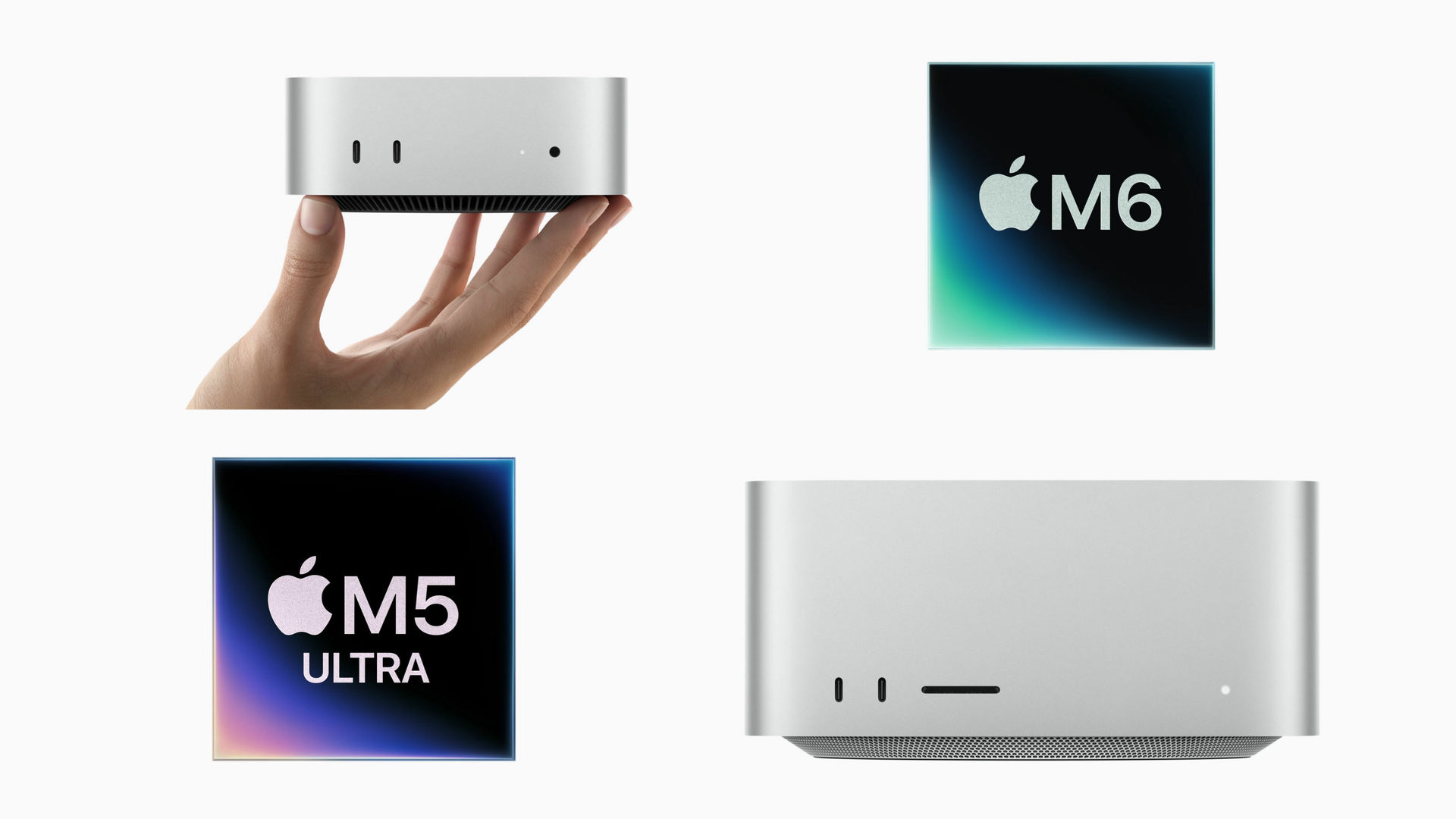
Apple announced its new Apple Silicon chips, the ' M6 ' and ' M5 Ultra ,' and unveiled the ' Mac mini ' and ' Mac Studio ' that feature these chips.
Apple unveils a more powerful Mac mini with the new M6 and M5 Pro processors - Apple (Japan)
Apple announces new Mac Studio models featuring the M5 Max and M5 Ultra - Apple (Japan)
https://www.apple.com/jp/newsroom/2026/08/apple-introduces-new-mac-studio-with-m5-max-and-m5-ultra/
Apple announces M6 and M5 Ultra, delivering significant performance and AI computing improvements - Apple (Japan)
https://www.apple.com/jp/newsroom/2026/08/apple-introduces-m6-and-m5-ultra-for-a-big-leap-in-performance-and-ai-compute/
Mac mini - Apple (Japan)
https://www.apple.com/jp/mac-mini/
Mac Studio - Apple (Japan)
https://www.apple.com/jp/mac-studio/
◆M6
The M6 is a new Apple Silicon chip built with cutting-edge 2nm process technology. Its smaller die allows for a higher density of transistors, resulting in significantly improved performance and power efficiency. The M6 features dual 16-core Neural Engines, delivering up to twice the peak computing performance of its predecessor, enabling even faster on-device AI workflows.
The M6 features a 12-core CPU, two more cores than the M5. Its configuration includes two supercores, four high-performance cores, and six high-efficiency cores. The M6's CPU delivers the world's fastest single-threaded performance and multi-threaded performance up to 1.2 times faster than the M5 and up to 2.4 times faster than the M1. The supercores handle single-threaded workloads quickly, the high-performance cores work with the supercores to execute demanding multi-threaded workloads with less power, and the high-efficiency cores handle everyday background tasks.
Furthermore, this performance is delivered with industry-leading performance per watt. Demanding CPU tasks such as image editing, code compilation, new file indexing, and agent-based AI workloads can be completed faster than ever before.
Furthermore, the M6 features a 12-core GPU, two more cores than the M5, with a Neural Accelerator for each core. This design results in a 30% improvement in peak AI GPU computing performance compared to the M5, and more than eight times faster compared to the M1. Prompt processing when interacting with large-scale language models (LLMs) running on the device can be significantly accelerated.
The M6 supports up to 32GB of unified memory, enabling multitasking across multiple demanding apps and running LLM on the device for secure, privacy-protected agent-based tasks. Unified memory bandwidth is up to 170GB/s, which is 10% faster than the M5 and 2.5 times faster than the M1.
◆M5 Ultra
The M5 Ultra is Apple's most powerful chip ever, designed for professionals who need the best CPU and GPU performance and unified memory bandwidth to quickly handle workloads such as complex 3D rendering, visual effects, scientific analysis, and running computationally intensive frontier AI models on their devices.
The M5 Ultra utilizes UltraFusion to connect two dual-die
The M5 Ultra features a next-generation GPU with up to 80 cores, and by incorporating a Neural Accelerator into each core, it delivers up to 4.5 times faster peak GPU computing performance for AI applications compared to the M3 Ultra and more than 6 times faster compared to the M1 Ultra. The GPU features Apple's latest shader cores with second-generation Dynamic Caching, as well as hardware-accelerated mesh shading and third-generation ray tracing, resulting in graphics performance up to 40% faster than the M3 Ultra.
The M5 Ultra features up to 512GB of high-bandwidth unified memory, achieving an astonishing 1.2TB/s unified memory bandwidth, 50% faster than the M3 Ultra. This allows users to store massive datasets entirely in local memory, increase token processing speeds per second, and run large-scale LLMs with hundreds of billions of parameters entirely on the device.
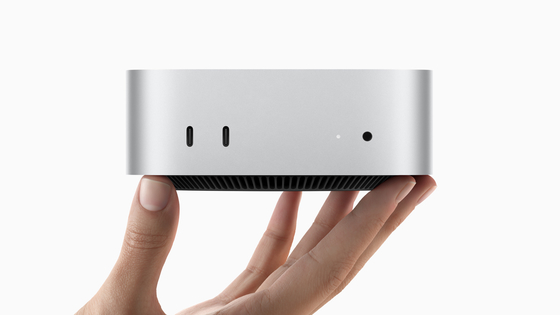
◆Mac mini
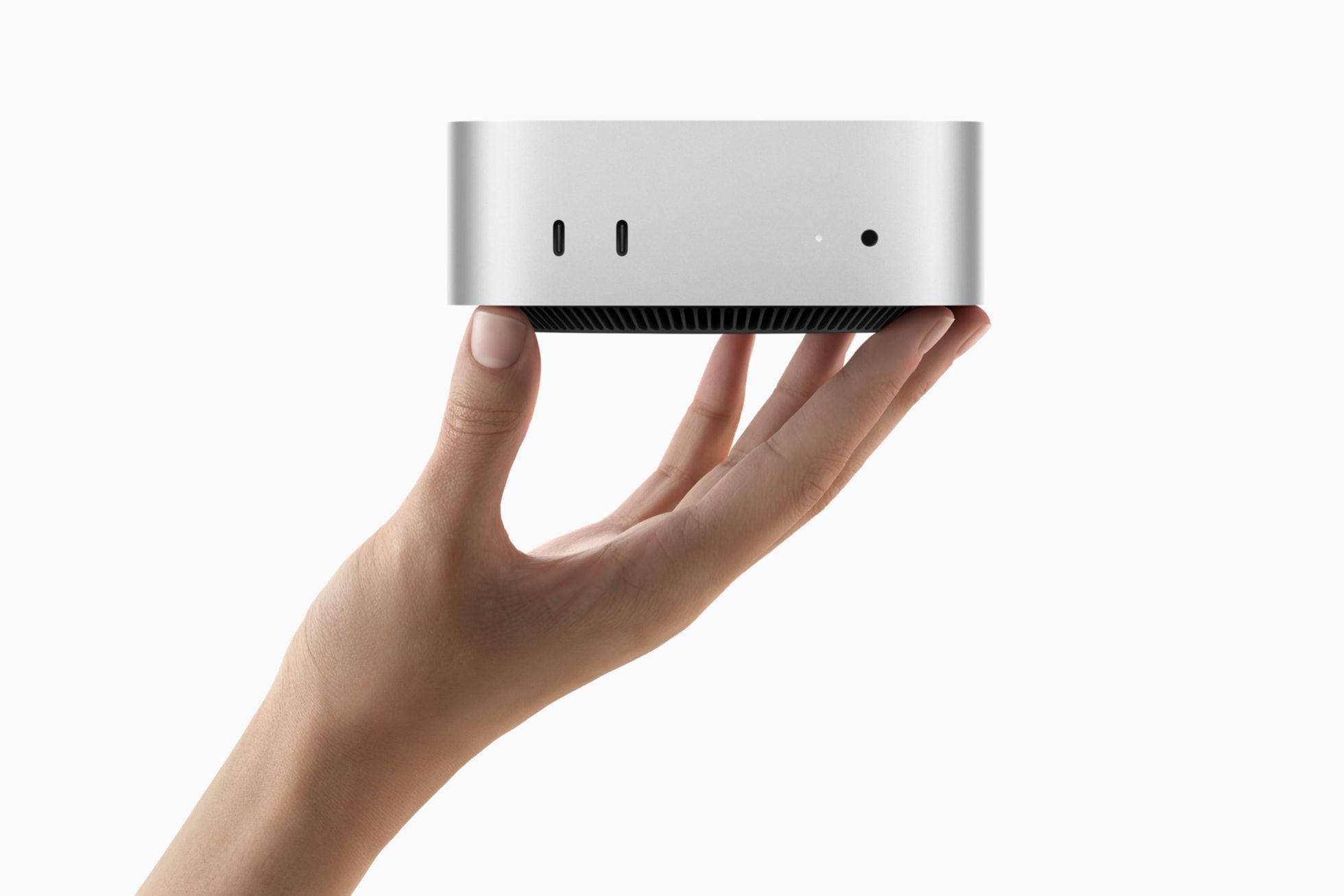
The new Mac mini offers a choice of M6 or M5 Pro SoCs. The M6-powered Mac mini delivers up to 4x faster AI performance, twice as fast storage and graphics, and 40% faster CPU performance. The M5 Pro model offers more professional-level performance, effortlessly handling demanding projects from video editing to game development. All new Mac mini models feature Wi-Fi 7 and Bluetooth 6, as well as upgraded 2.5Gb Ethernet (upgradable to 10Gb).
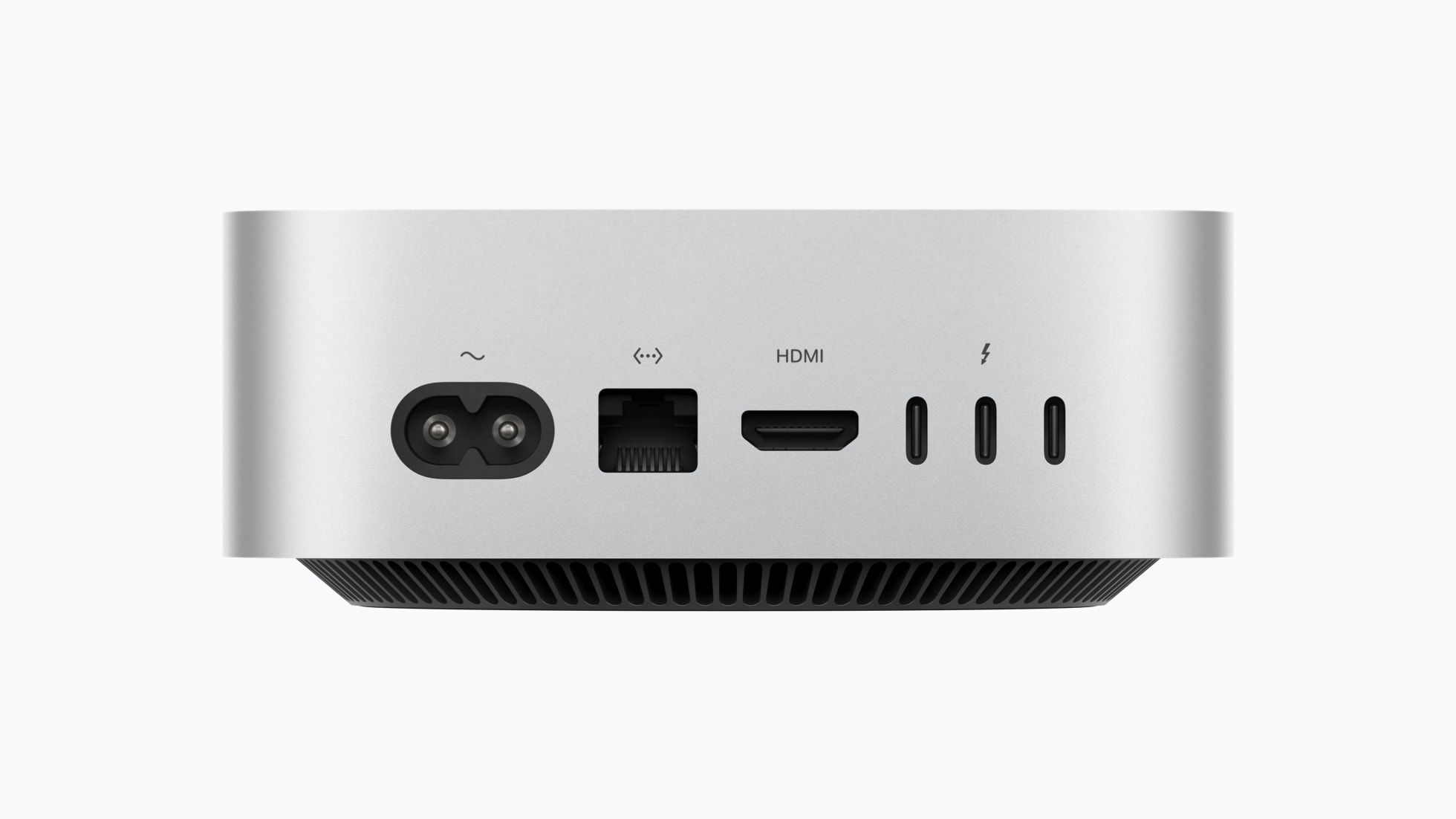
The M6 model offers a choice of 16GB, 24GB, or 32GB of memory, 256GB, 512GB, 1TB, or 2TB of storage, and 2.5 Gigabit (standard) or 10 Gigabit Ethernet. The M5 Pro model offers a choice of 24GB, 48GB, or 64GB of memory, 512GB, 1TB, 2TB, 4TB, or 8TB of storage, and 2.5 Gigabit (standard) or 10 Gigabit Ethernet.
Mac minis with an M6 processor offer up to 13.5 times faster LLM prompt processing in LM Studio compared to Mac minis with an M1 processor, and up to 4.8 times faster compared to Mac minis with an M4 processor. Calculations in Microsoft Excel spreadsheets are up to 2.3 times faster than those with an M1 processor, and up to 1.5 times faster than those with an M4 processor. Furthermore, gaming performance in Cyberpunk 2077 Ultimate Edition with ray tracing enabled is up to 2 times faster than that of Mac minis with an M4 processor.

On the other hand, with a Mac mini equipped with an M5 Ultra, LLM prompt processing performance in LM Studio is up to 8.5 times faster than with a Mac mini equipped with an M2 Pro, and up to 4 times faster than with a Mac mini equipped with an M4 Pro. Rendering performance using ray tracing in Blender is up to 4.5 times faster than with a Mac mini equipped with an M2 Pro, and up to 1.4 times faster than with a Mac mini equipped with an M4 Pro. Furthermore, image processing in Affinity is up to 2.1 times faster than with a Mac mini equipped with an M2 Pro, and up to 1.5 times faster than with a Mac mini equipped with an M4 Pro.
The new Mac mini will be released on September 22, 2026, and pre-orders are being accepted at the time of writing. The selling price starts at 149,800 yen for the M6 model and 299,800 yen for the M5 Pro model.
◆Mac Studio
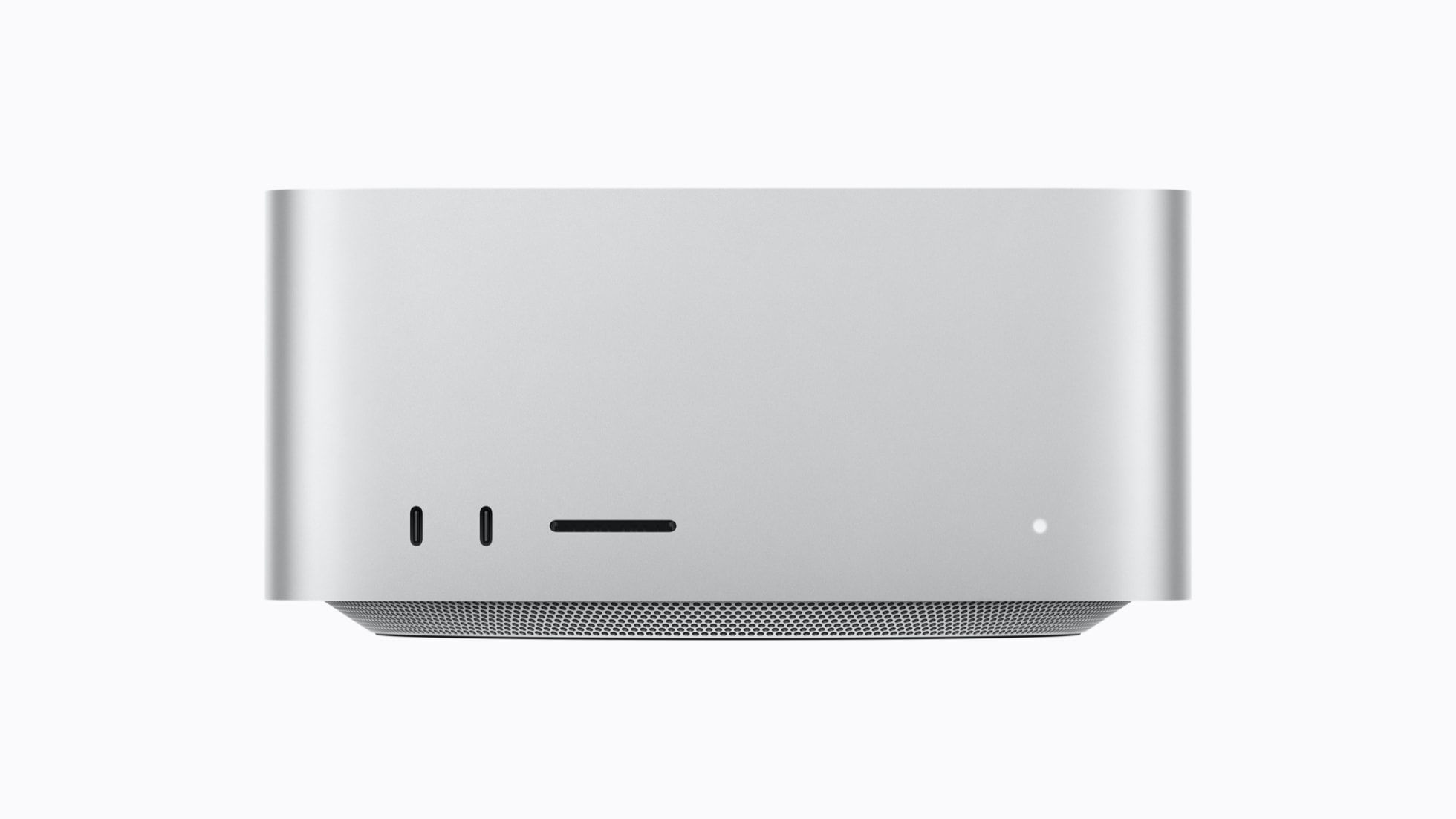
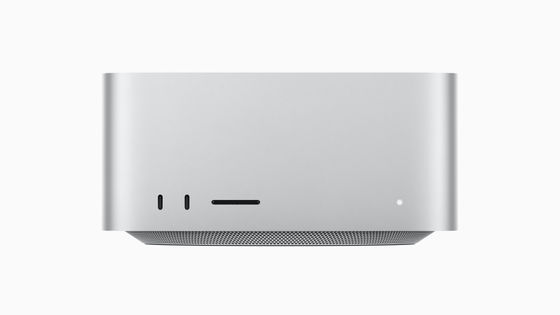
The new Mac Studio offers a choice of M5 Max and M5 Ultra SoCs. Models equipped with the M5 Ultra, the most powerful Apple Silicon ever, deliver up to 4.3 times the peak AI computing performance of the M3 Ultra and 9.8 times that of the M1 Ultra. Combined with up to 512GB of unified memory and a memory bandwidth of 1.2TB/s, 50% higher than the previous generation, the Mac Studio can run large-scale AI models entirely on the device while maintaining complete user privacy. There's no need to worry about token counts or increased cloud costs.
Furthermore, because Mac Studio supports Thunderbolt 5 and RDMA, it's possible to cluster multiple Mac Studio systems together. For example, a cluster consisting of four Mac Studios can achieve AI inference speeds up to three times faster than a single system—an astonishing feat.
The performance of a Mac Studio with an M5 Ultra is up to 15.4 times faster than a Mac Studio with an M1 Ultra and up to 3.3 times faster than a Mac Studio with an M3 Ultra for machine learning (ML) training with CopyCat in Foundry Nuke. LLM prompt processing in LM Studio is up to 9.8 times faster than a Mac Studio with an M1 Ultra and up to 4 times faster than a Mac Studio with an M3 Ultra. Image generation performance from text is up to 8.2 times faster than a Mac Studio with an M1 Ultra and up to 4.3 times faster than a Mac Studio with an M3 Ultra. In addition, scene rendering performance in Maxon Redshift is up to 4.7 times faster than a Mac Studio with an M1 Ultra and up to 1.7 times faster than a Mac Studio with an M3 Ultra.
Furthermore, the new Mac Studio boasts up to twice the storage performance thanks to its next-generation SSD architecture built on PCIe Gen 6. Thunderbolt 5 ports offer transfer speeds of up to 120Gb/s, allowing professional users to connect high-performance peripherals, displays, PCIe expansion chassis, and external storage and leverage their incredible speed. Apple-designed N1 chip also brings Wi-Fi 7 and Bluetooth 6 to the Mac Studio for the first time. The Mac Studio supports Genlock via USB-C, enabling precise synchronization between displays and camera capture from devices like the iPhone 17 Pro. In addition, it supports connection of up to eight displays, including up to four Studio Display XDRs with full 5K resolution and a 120Hz refresh rate.
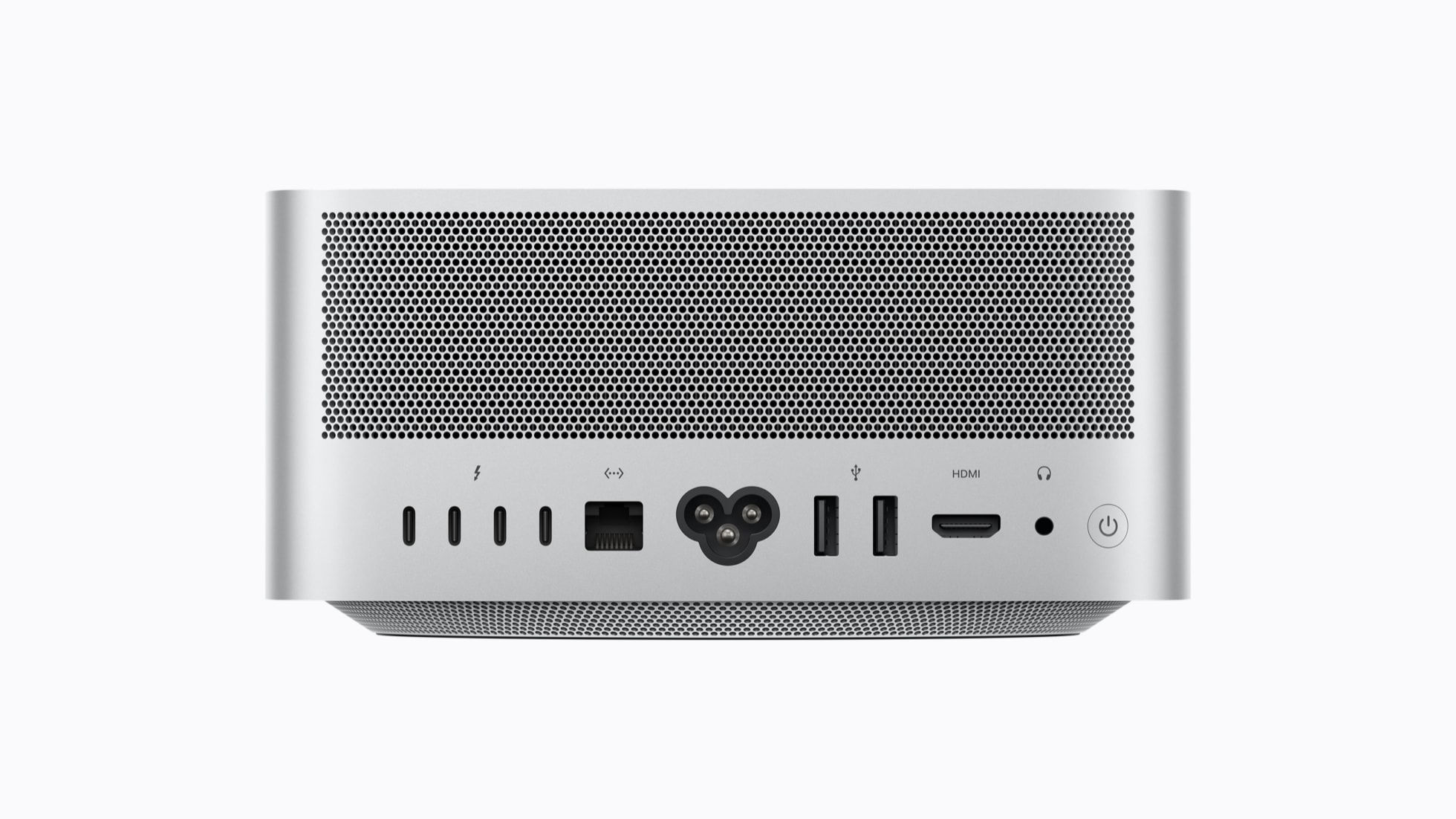
The new Mac Studio M5 Max model offers a choice of 36GB, 48GB, 64GB, or 128GB of memory, and 512GB, 1TB, 2TB, 4TB, or 8TB of storage. The M5 Ultra model offers 96GB, 256GB, or 512GB of memory (scheduled for release in late October 2026), and 1TB, 2TB, 4TB, 8TB, or 16TB of storage.
The new Mac Studio will be released on September 22, 2026, and is currently available for pre-order. The M5 Max model starts at 419,800 yen, and the M5 Ultra model starts at 949,800 yen.
Related Posts:




in Hardware, Posted by logu_ii