The invisible drone 'Phantom Twist' can fly while disappearing by rapidly rotating its entire body.

A research group at
New spinning drone hides in plain sight - Northwestern Now
https://news.northwestern.edu/stories/2026/07/new-spinning-drone-hides-in-plain-sight
While various research efforts have been conducted using camouflage patterns, transparent materials, and optical systems that bend light, aiming to realize 'invisible drones and robots,' a research group at Northwestern University has developed a drone that disappears using 'motion blur,' which makes a high-speed rotating fan invisible. The group has named this drone 'Phantom Twist.'
The following demonstration video clearly shows how the Phantom Twist actually disappears.
New drone nearly disappears in flight - YouTube
The Phantom Twist is set up on the launch pad.
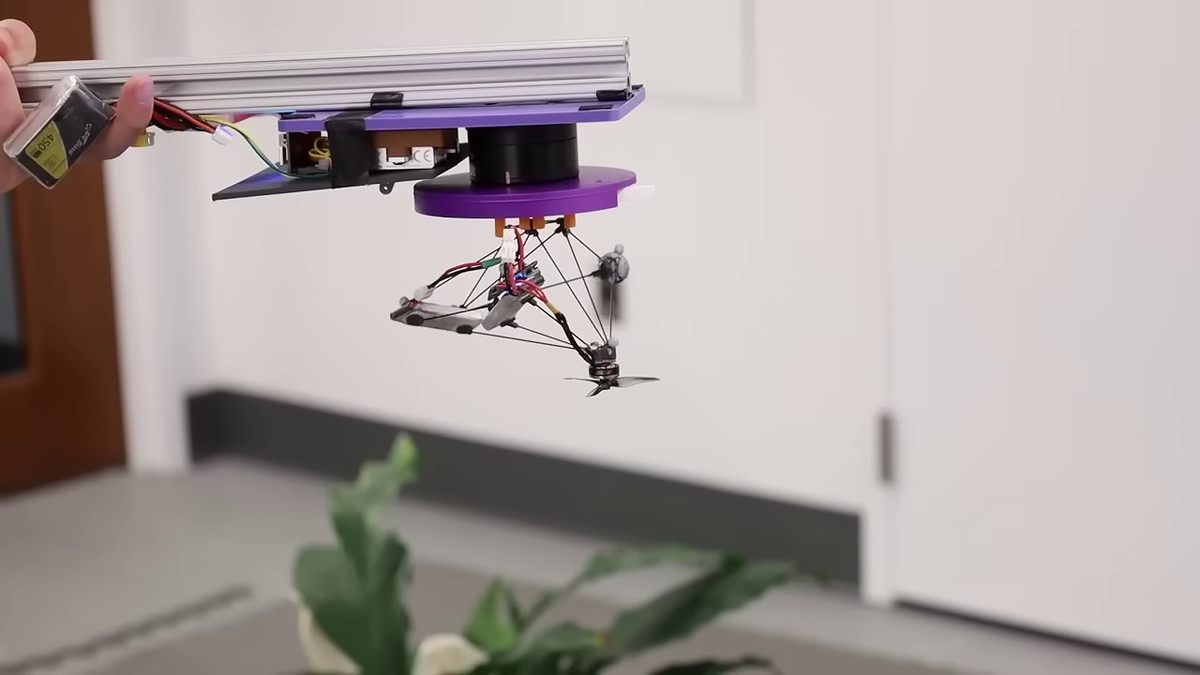
Start of rotation
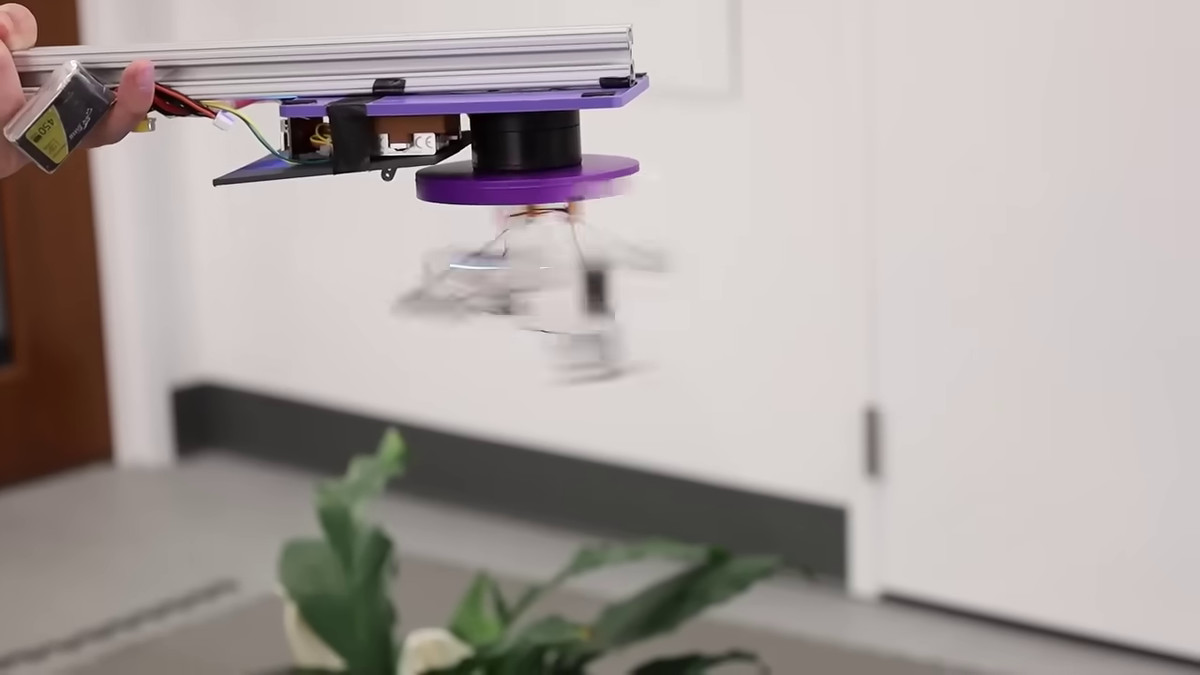
Motion blur makes it difficult to see, causing it to move out of focus, and it takes off while the camera's focus is on the wall behind it. It shoots out downwards while spinning, giving the impression of a Beyblade being launched.
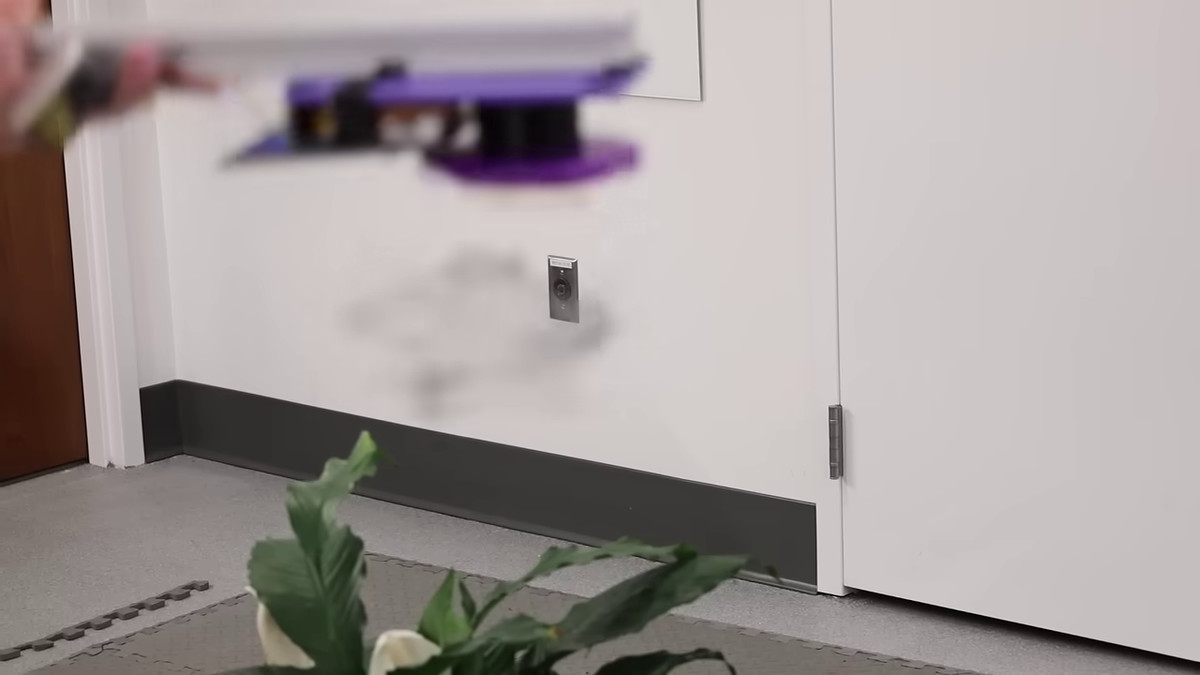
Flying while spinning
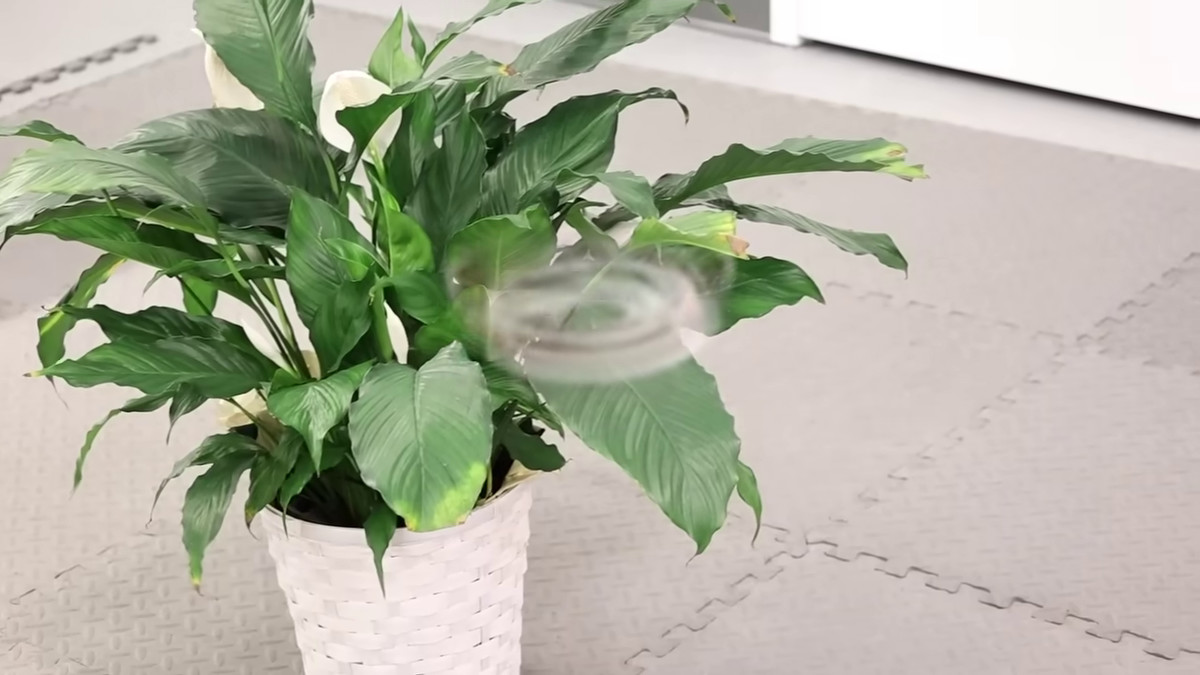
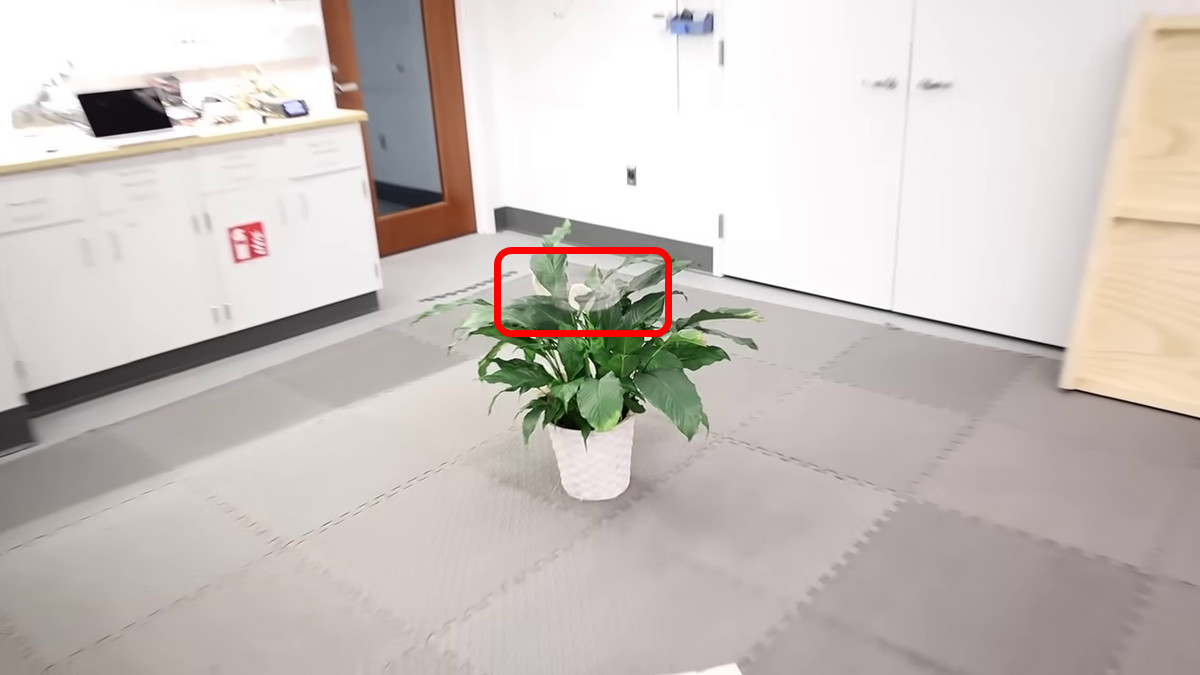
It's true that when the camera zooms out, it's a little difficult to tell where Phantom Twist is.
Phantom Twist was showcased during a presentation at '
Computational Design of a Low-Visibility UAV Using a Human-Aligned Perceptual Metric · Robotics: Science and Systems
https://roboticsconference.org/program/papers/196/
Michael Rubenstein, who led the research, said, 'Many attempts to camouflage drones focus on blending them into their surroundings. In contrast, we considered whether we could design drones from the perspective of 'how humans perceive movement.' The idea of reducing visibility through continuous motion is something that has been hardly studied before.'
The defining feature of the Phantom Twist is that, unlike many drones which are quadcopters with four independent rotors, it consists of a single motor and a single propeller. The propeller rotates in one direction while the rest of the drone rotates in the opposite direction. According to Rubenstein, quadcopter drones are visible because 'the body is stationary and the propeller rotates,' but the Phantom Twist is invisible because the entire drone rotates and there are no stationary parts.
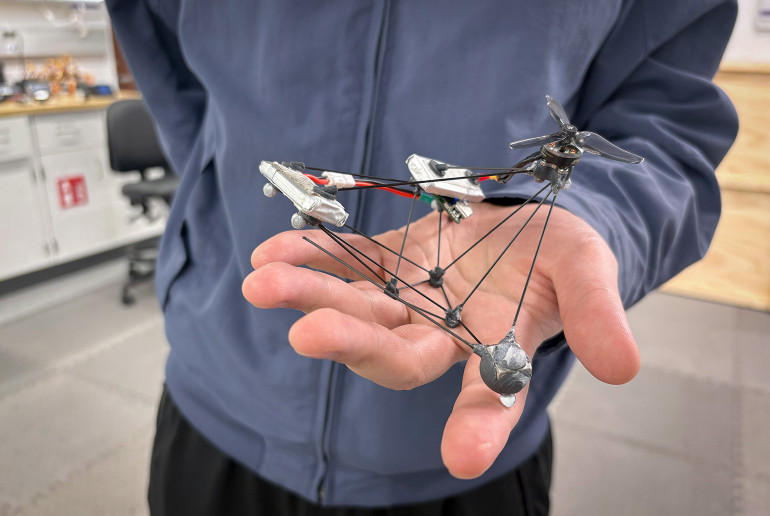
While the Phantom Twist's visibility is reduced to about one-tenth that of conventional drones, it still emits noise from its propellers, and its wiring and structural materials are still quite noticeable. Therefore, the group plans to develop an improved version that uses even more transparent materials and a quieter propulsion system to further reduce its visibility.
In tasks such as monitoring nesting birds, conducting wetland surveys, and inspecting aging infrastructure, drones can sometimes be detected by people or animals, influencing their behavior and altering observation results. Therefore, there is a growing demand for drones like the Phantom Twist that can blend into their surroundings while performing their missions.
Related Posts: