What is the 'fatigue-free method for handwriting' recommended by the science fiction author who coined the term 'metaverse'?
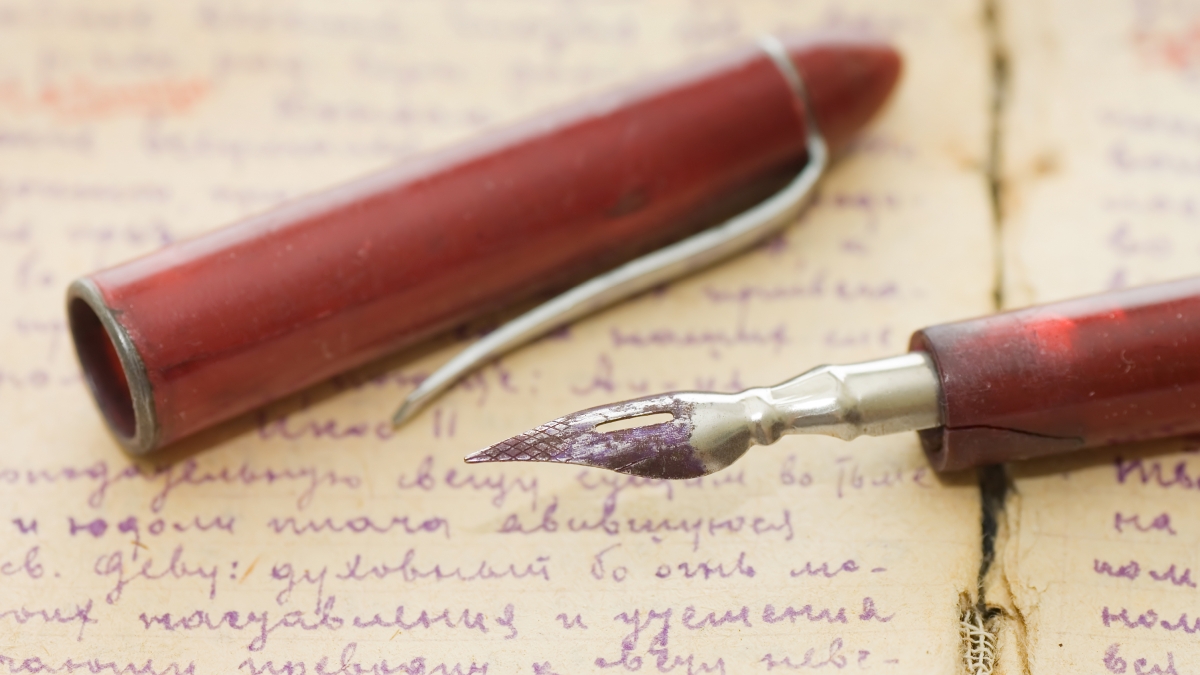
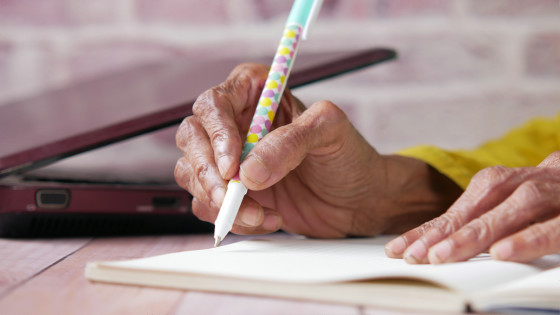
Science fiction author Neal Stephenson, known for novels such as ' Snow Crash ' which coined the term 'metaverse,' explains how to choose writing instruments and paper, as well as writing techniques, to avoid fatigue when writing by hand, based on his experience of writing novels with fountain pens and paper for about 25 years.
Writing by Hand is Good for your Brain - Here's how to do it
https://nealstephenson.substack.com/p/writing-by-hand-is-good-for-your
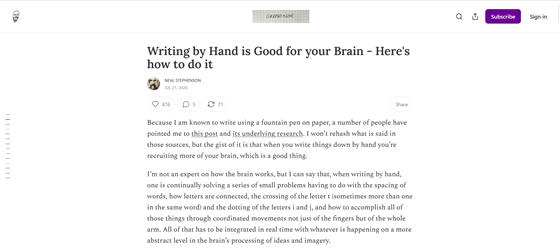
About 25 years ago, Stevenson stopped writing his novels on a keyboard and switched to writing with a fountain pen and paper. The handwritten manuscripts for his ' Baroque Cycle ' series alone would reach a height of approximately 107 cm if stacked, but Stevenson says he has 'never had a stiff or painful hand.' However, he did experience hand pain from writing school assignments with a pencil when he was a child, and from this difference, he believes that whether or not one gets tired from writing by hand for long periods 'depends on the tools and writing style.'
The first thing Stevenson mentions to avoid fatigue is not using pencils that require strong pressure or old-fashioned oil-based ballpoint pens that use thick ink. He explains that when writing with these instruments, the writing can show through to the other side of the paper, sometimes leaving indentations on the paper underneath, which is evidence of the strong pressure applied.
However, with a fountain pen that dispenses ink properly, the nib glides smoothly over the freshly dispensed ink on the paper, allowing you to write with almost no pressure. He also states, prefacing his remarks with 'I don't want to admit it,' that gel ink ballpoint pens are almost the same as fountain pens in terms of being able to write with little pressure.
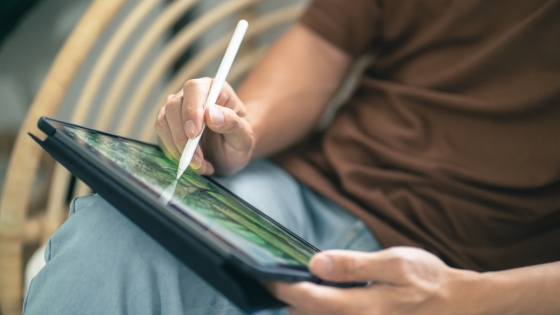
Writing on a smooth glass screen like an iPad with a hard-tipped stylus might seem less tiring because it requires little pressure and has little friction, but Stevenson points out that 'it actually puts more strain on you.' If the stylus slides too much, you have to constantly make fine adjustments to the movement of the pen tip, which puts extra strain on both your head and your hand. Stevenson explains this by comparing it to 'dribbling a soccer ball on a giant air hockey table with no friction.' However, with a fountain pen and paper, the roughness of the paper provides just the right amount of resistance to the pen tip, preventing it from sliding too much, so it's less tiring even when writing for long periods of time.
The combination of pen and paper also affects how easy it is to write. In Mr. Stevenson's case, he says that with cheap copy paper that absorbs too much ink, the lines become thick and blurry, but with regular plain notebooks or high-quality copy paper containing 25% or more cotton, he can write with almost no problems. Therefore, he uses different paper combinations depending on the fountain pen he owns to find the best match.
Furthermore, thin paper can experience ' bleed-through ,' where ink bleeds through to the other side, making the writing difficult to read if both sides are used. Therefore, Stevenson recommends writing on only one side. He also advises against trying to cram as much text as possible onto a single sheet, as this disrupts a natural and comfortable writing style and can easily lead to fatigue. Instead, he suggests prioritizing your own mind and time over paper, and not hesitating to use inexpensive and readily available paper and notebooks.
Stevenson advises those just starting out with fountain pens to first decide on the type of paper they'll use regularly. He suggests choosing inexpensive paper that's easy to buy and taking it to a pen shop to compare different papers. This will help you find a pen that works well with that paper. For example, if you're using thin paper, Stevenson suggests starting with a fine nib and gradually moving to thicker ones to see at what point the ink starts to bleed through. He also says that an inexpensive fountain pen is sufficient until you figure out your preferences, and that you should choose disposable ink cartridges rather than bottles from the start.
Related Posts:
in Note, Posted by log1b_ok