It has been discovered that a paper published more than 80 years ago by Max Planck, the renowned physicist considered the father of quantum theory, was inexplicably retracted.
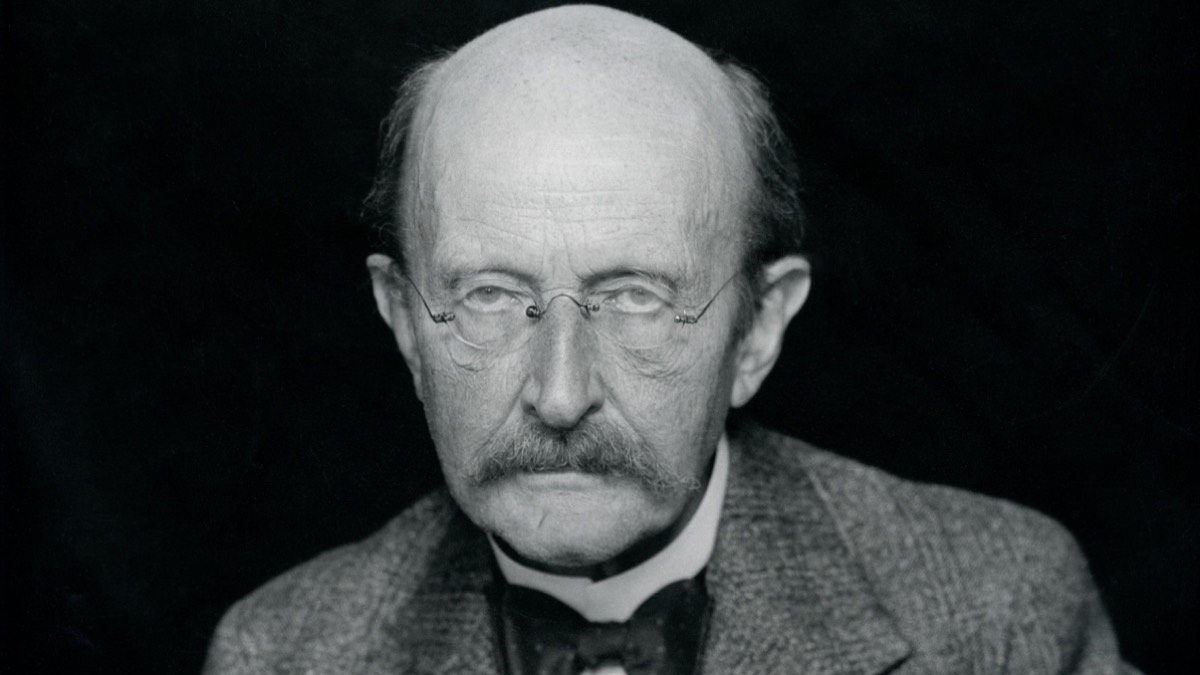
Two papers by physicist
[2605.17534] The Curious Case of Max Planck retracted papers. When past scientific practices meet contemporary publishing norms
https://arxiv.org/abs/2605.17534
Why did this journal retract two 1940s papers by Max Planck? [UPDATED] - Ars Technica
https://arstechnica.com/science/2026/06/why-did-this-journal-retract-two-1940s-papers-by-max-planck/
It all started when Yves Zingas, a historian of science at the University of Quebec at Montreal, was browsing a list of retracted papers by Nobel laureates on the website 'Retraction Watch.' Surprised to find Planck's name there, Zingas collaborated with Maddie Kerfawi of the University of Quebec at Trois-Rivières to launch an investigation.
The papers in question are 'Naturwissenschaft und reale Außenwelt' (Natural Science and the Real Outside World), published in 1940, and 'Sinn und Grenzen der exakten Wissenschaft' (The Meaning and Limitations of Exact Science), published in 1942. Both were published in Naturwissenschaften (now The Science of Nature), a leading German scientific journal at the time. This journal has been published by Springer Nature since its founding in 1913.
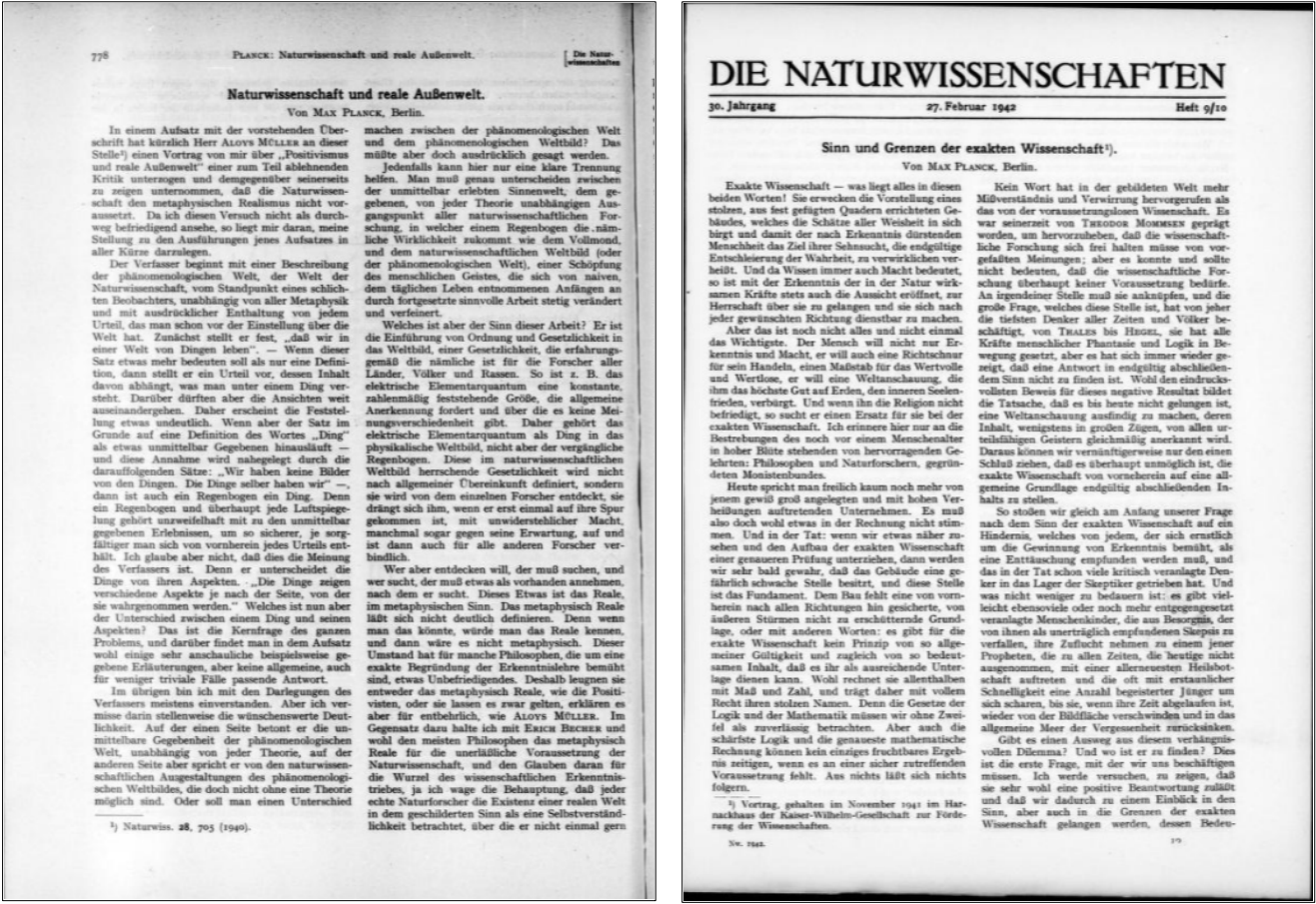
Normally, retracted papers remain online with a large 'RETRACTED' label and the full text. However, in the case of Planck's two papers, the text pages were completely blank, with only the inexplicable sentence, 'Retracted due to violation of rules,' written on them.
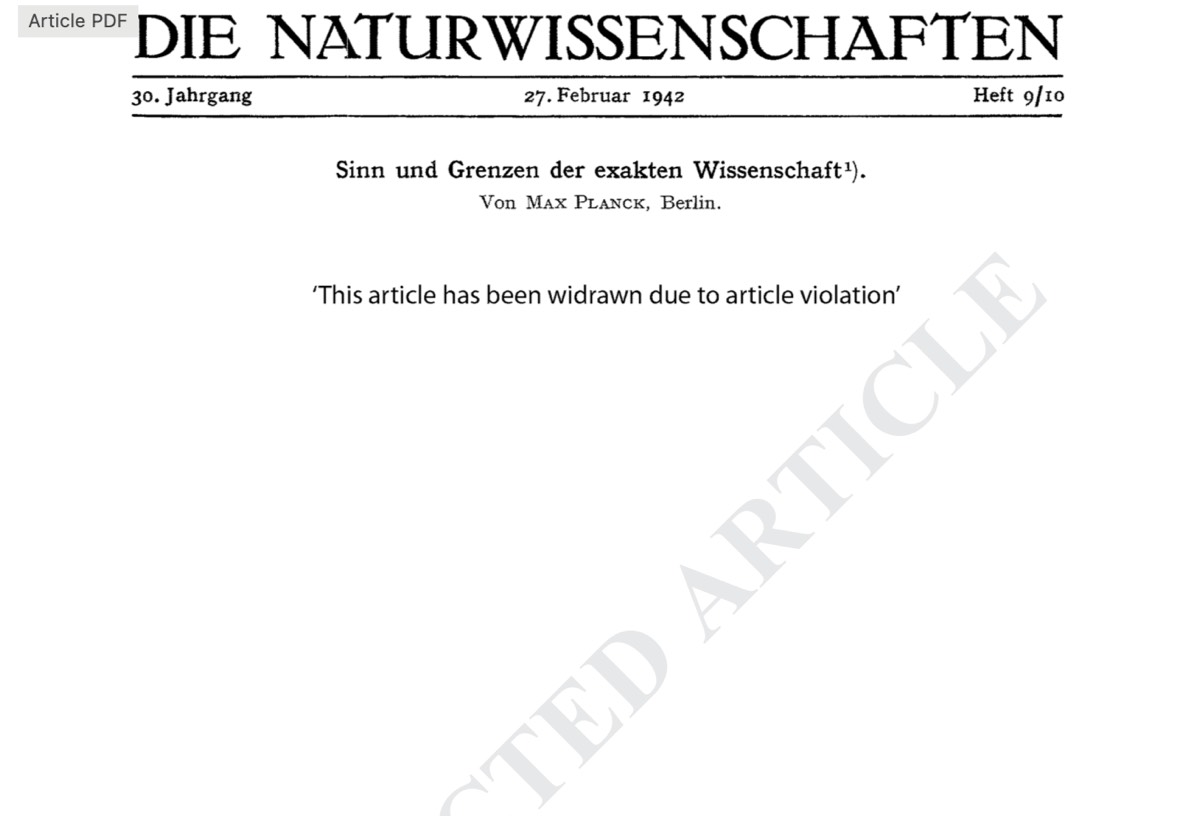
Zingas et al. found that the DOIs ( Digital Object Identifiers ) for both papers were created in April 2005, which coincided with a period when publishers were digitizing their past print publications and integrating them into online archives.
Zingas and Kerfawi speculate that the issue stemmed from the mechanical application of modern standards regarding copyright infringement. Planck's 1942 book, 'Sinn und Grenzen der exakten Wissenschaft,' was originally based on a lecture he gave in Berlin in 1941, which was later included in pamphlets, other magazines, and Planck's collected works. The fact that the same lecture content was repeatedly published in multiple media likely triggered the modern criteria for 'duplicate publication' or 'self-plagiarism.'
On the other hand, there is no record of such multiple publications for the 1940 paper. However, in the same year, a researcher named Alois Müller published a paper in Naturwissenschaften criticizing Planck's previous arguments, and Planck contributed a rebuttal a few months later with almost the same title. It is believed that the existence of papers with the same title by different authors in the same journal may have caused confusion in the catalog management system.
Zingas and Kelfawi emphasize that 'such duplicate publications were not considered problematic at all in the scientific publishing culture of the time.' In the first half of the 20th century, researchers prioritized reaching as wide an audience as possible, even those divided by language and national borders, and it was common practice to publish the same lecture content in multiple journals and books. Other prominent physicists, such as Niels Bohr and Henri Poincaré, also published the same lecture content in multiple publications.
The concept of 'self-plagiarism' itself is a relatively new idea that emerged in the 1990s and beyond, as systems for numerically evaluating research achievements became widespread. As research papers transformed into 'units to be counted' for hiring, promotion, and research funding allocation, the repeated publication of identical content became a problem. Zingas et al. point out that applying these modern standards retroactively to past publications distorts the historical record.
Suzanne Scarlata, the current editor-in-chief of The Science of Nature, said she learned of the retraction for the first time during this interview. While she doesn't understand why the paper was flagged as a violation, she suggested it was probably due to an automated system.
However, the publisher, Springer Nature, subsequently issued an official statement to the overseas media outlet Ars Technica, saying that 'the retraction was a human decision made in 2011, and no software or automated processes were involved.' The person in charge at the time has since left the company, and there are no records of the detailed circumstances. The company stated that it is taking steps to republish the paper.
Planck died in 1947, and the copyright protection period has already expired in many countries, meaning both papers are effectively in the public domain. In other words, the reason for retraction—copyright infringement—is meaningless at the time of writing this article. Nevertheless, the full text remains unavailable online in Springer Nature.
Fortunately, both papers are accessible through scans of older versions stored in the non-profit digital library, the Internet Archive. Ironically, non-profit organizations have been more stable in preserving historical materials in the history of science than for-profit publishers. Zingas argues that the papers should be returned to the database, regardless of whose decision it is, and describes the current situation as intellectually unacceptable.
Related Posts:






in Science, Posted by log1i_yk