Why do 'small AI models' have the potential to save people all over the world?

Recent advancements in AI technology have been remarkable, with major technology companies successively releasing large-scale AI models with a vast number of parameters. Meanwhile, attention is also being drawn to 'small-scale AI models' that have the potential to save many lives and help with food production, as reported by IEEE Spectrum, the journal of the international engineering society
Small Language Models Power Life-Saving Small AI - IEEE Spectrum
https://spectrum.ieee.org/small-language-models-ai-pharmaceuticals
IEEE Spectrum cites ' RxScanner ,' a counterfeit drug scanner, as an example demonstrating the usefulness of small AI models. RxScanner is a portable spectrometer developed by Adebayo Alonge, an AI startup founder from Nigeria, that can determine whether a drug is genuine or counterfeit by scanning a tablet and analyzing its molecular profile with an AI model equipped with a drug database.
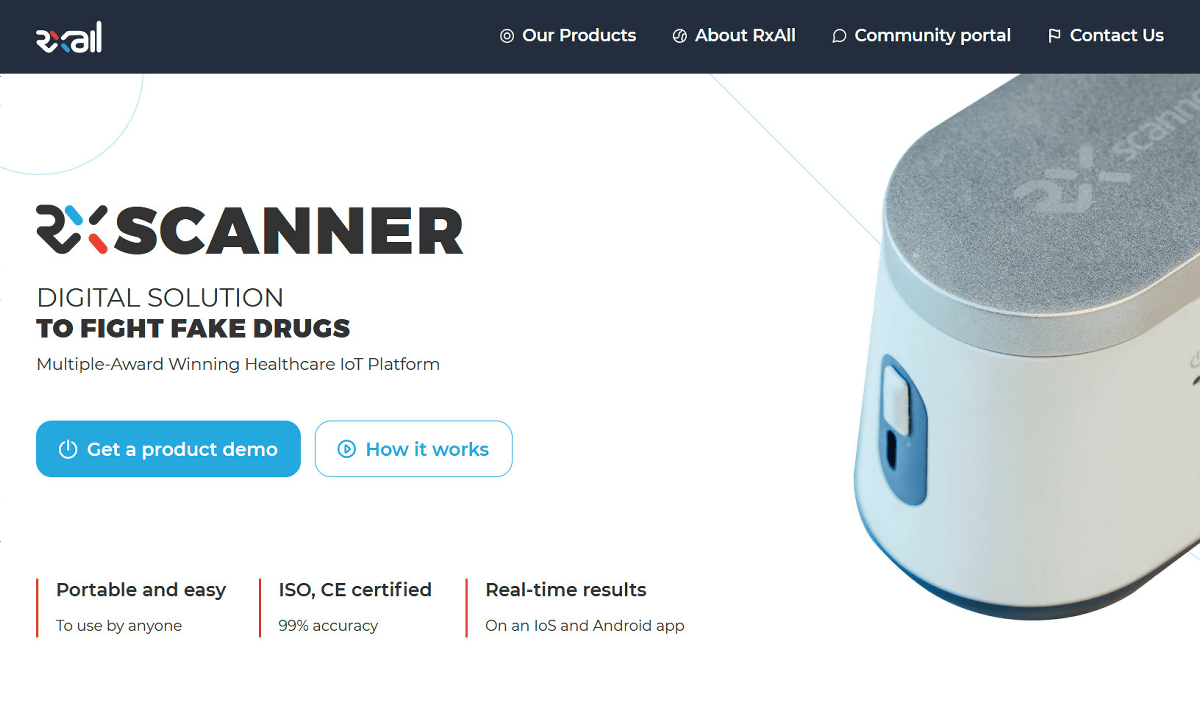
Counterfeit medicines are said to kill thousands of people in Africa every year, and the system has been used in more than 10 countries, including Ghana, Kenya, Myanmar, and Nigeria. However, because it employed a method of 'running the AI model in a data center and transferring the data over the internet,' it required a long time of 5 minutes for a single scan in areas such as South Africa, which are 'too far from the data center and have limited network bandwidth.'
Therefore, Alonge collaborated with engineers to scale down the AI model to a size that could run locally on an Android smartphone. This made it possible to use RxScanner reliably even in places where 'high-speed internet,' 'high-performance PCs,' and 'stable power supply' cannot be secured. Based on this experience, Alonge advocates for the importance of small, locally running AI models.

In the field of AI, the large-scale language models developed by leading technology companies, equipped with cutting-edge capabilities and requiring investments of billions of dollars and massive data centers, often generate significant buzz. However, billions of people living primarily in low- and middle-income countries around the world cannot access these large-scale language models, and in many cases, only small-scale AI models are available to them.
At the World Economic Forum in January 2026, World Bank President Ajay Banga stated, 'Most people discuss AI in terms of its logical and generative aspects. However, this requires enormous computing power, electricity, vast amounts of data, and skilled personnel to manage them. Outside of developed countries, perhaps only India and China meet all these requirements.'
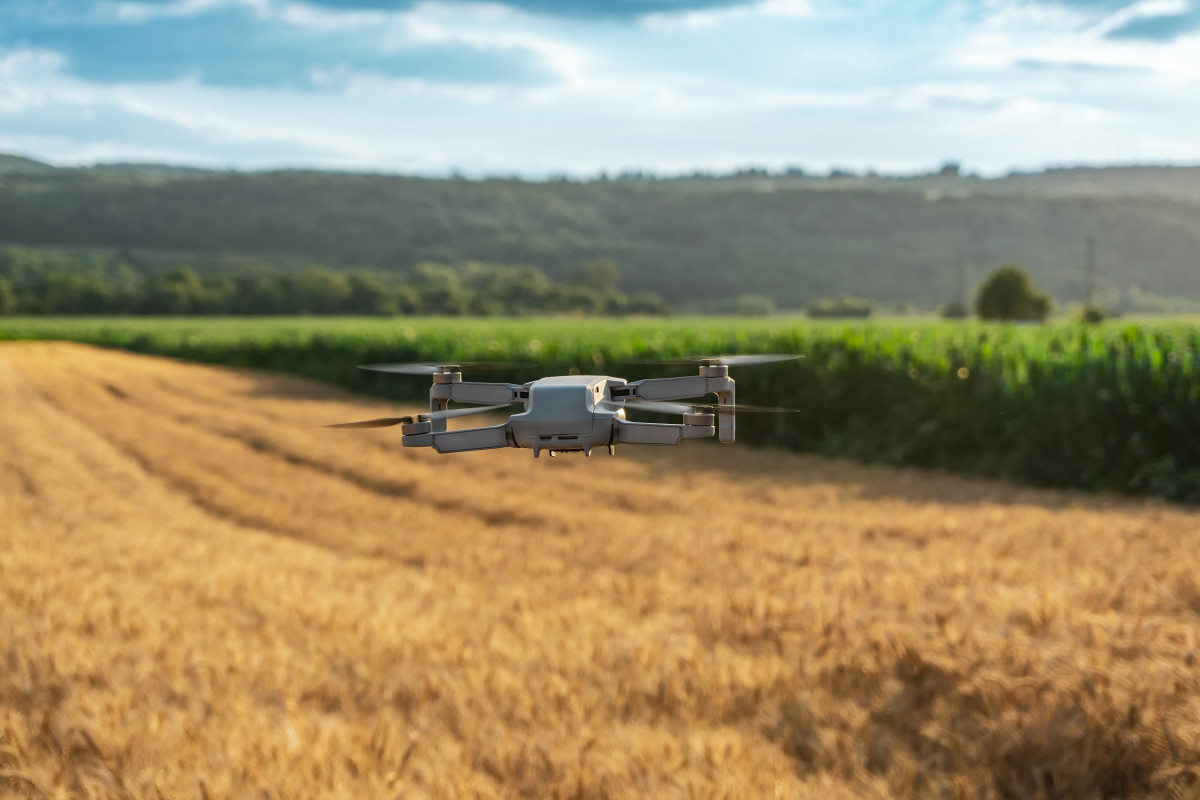
In contrast, small AIs can provide useful, and in some cases life-saving, services to people in areas where such advanced infrastructure is completely absent. For example, researchers at Belor Polytechnic University in India have developed a drone system that takes pictures of cashew nut trees and quickly identifies trees with spots that are signs of disease. All photography and image processing are done on the drone, so there is no need to set up a computer on-site or connect to a server on the internet.
In Uruguay, a small AI system has been developed to identify the breeding of ant pests in vineyards, as well as a system to detect malaria-carrying mosquitoes and an electrocardiogram system using the Arduino microcontroller board. These systems bring significant benefits to agriculture and medicine in areas where adequate infrastructure is lacking.
Alonge stated, 'I believe the future of AI lies not in a single massive central model, but in millions of smaller, more precise models deployed at the periphery, each solving specific challenges and situations.' He added that these smaller AI models will benefit people living in developing countries and certain regions of developed countries.
There is no clear definition of a small AI model, but it is generally used to refer to a language model with at most a few billion parameters. However, some cutting-edge large-scale language models have over a trillion parameters. Small AI models are created by removing unnecessary parameters from large-scale language models, performing
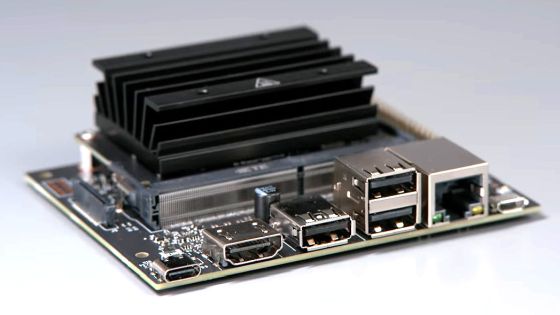
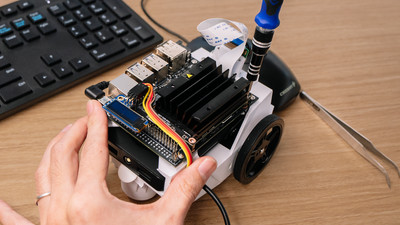
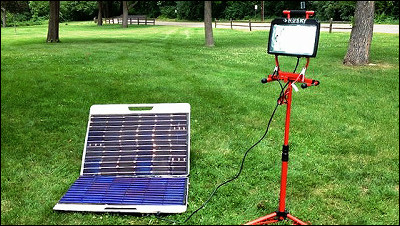
Small AI models with several billion parameters can run on smartphones or small computers like Raspberry Pi. Therefore, they can operate on the device itself, without needing to connect to a data center via the internet, using just a few watts of power supplied by a battery or solar panel.
In recent years, the number of smartphones equipped with NPUs (Network Processing Units) dedicated to AI processing has increased, and open-weight AI models that can be adjusted to user needs have been appearing one after another, which has been a tailwind for small AI models. On the other hand, the development of small AI models requires knowledge, data processing capabilities, and results from the development of large-scale language models, so the development of large-scale language models is also important.
Furthermore, while small AI models are beneficial for those who cannot access large-scale language models, they do not bridge the digital divide. Even if small AI models are introduced, countries cannot escape the challenge of building an ecosystem to support AI. In other words, infrastructure such as a stable power supply, supply chains, and educational systems to cultivate the human resources necessary for AI tool development is required.

Alonge's RxScanner also requires regular synchronization via the internet to update new chemical compositions and analytical data for drugs. A stable power supply is also essential for charging smartphones. Alonge stated, 'Small AI models are working and will eventually be needed in many places. The question is whether politicians have the wisdom to invest in the infrastructure to support them in the long term.'
Related Posts:




in AI, Posted by log1h_ik