A 'space roadside assistance' mission is underway to rescue NASA's old satellite, Swift.
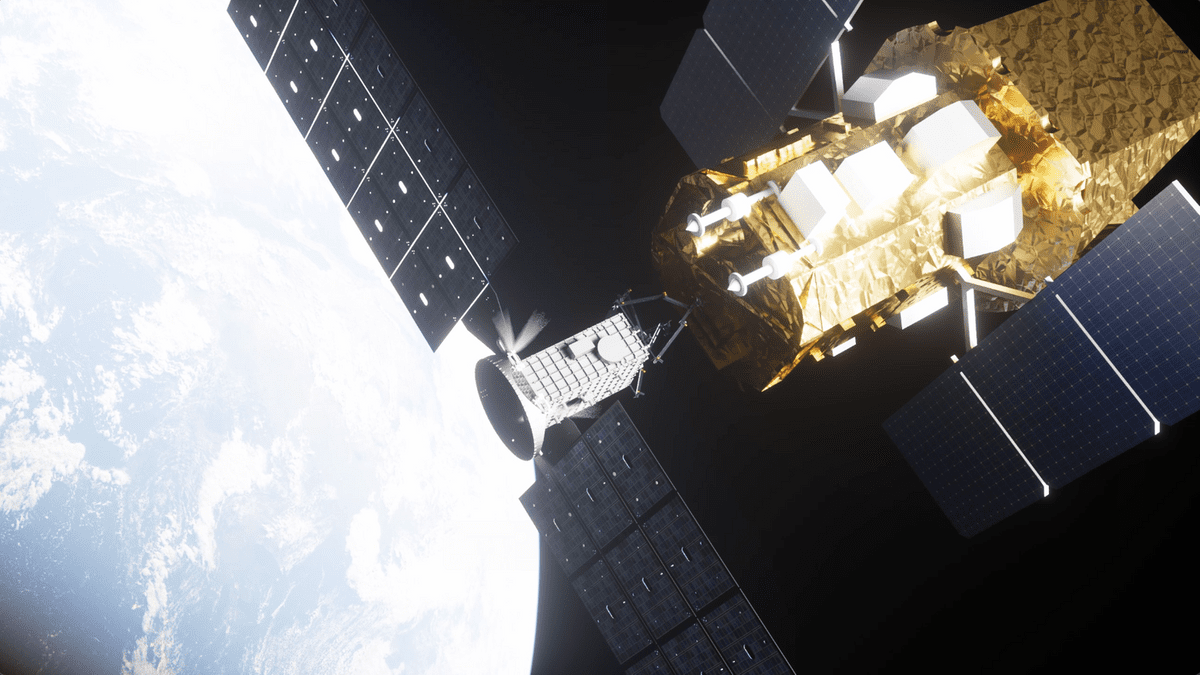
To rescue NASA's aging satellite, the Neil Gehrels Swift Observatory, private company Katalyst Space Technologies launched its robotic spacecraft, LINK, which is currently on a mission to track Swift in orbit.
Swift Boost Mission - NASA Science
Katalyst's satellite rescue mission is now in pursuit of NASA's Swift - Ars Technica
https://arstechnica.com/space/2026/07/katalysts-satellite-rescue-mission-is-now-in-pursuit-of-nasas-swift/
Artificial satellites that do not have a propulsion system to raise their orbit will, if left alone, gradually encounter atmospheric resistance and eventually re-enter the atmosphere and burn up.
Swift is a NASA space telescope launched in 2004 that has observed gamma-ray bursts, some of the largest explosive phenomena in the universe. Although it is an older satellite, it still retains scientific value as it is equipped with multiple telescopes that can handle visible light, ultraviolet light, X-rays, and gamma rays, allowing it to quickly track sudden astronomical phenomena.
In recent years, increased solar activity has caused the Earth's upper atmosphere to expand, increasing drag on satellites and causing Swift's orbit to descend faster than initially anticipated. Calculations indicated that Swift would re-enter the atmosphere in the summer of 2026. The Swift operations team attempted to reduce air resistance by decreasing the number of observation targets and changing the satellite's orientation, but a fundamental solution required raising its orbit.
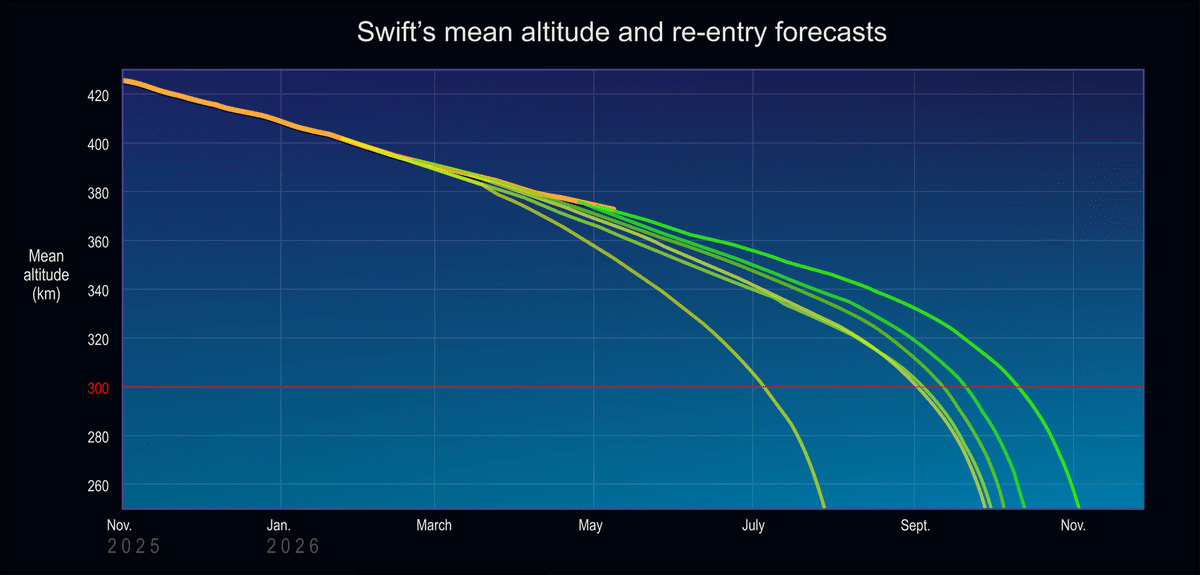
by NASA's Goddard Space Flight Center/Michael Shoemaker and Francis Reddy
Therefore, in September 2025, NASA awarded a $30 million (approximately 4.3 billion yen) contract to Katalyst Space in Arizona, USA. Katalyst will design, manufacture, test, and launch LINK in less than a year, and then approach Swift in orbit to grab it and lift it to a higher orbit. This is not a typical satellite launch, but rather a mission that can be described as a 'space-based roadside assistance' service, where a satellite that is already in space will be sent to help it.
LINK was launched on July 3, 2026, from Kwajalein Atoll in the Marshall Islands in the South Pacific. The launch used Northrop Grumman's Pegasus XL air-launched rocket, with a modified L-1011 Stargazer aircraft carrying the rocket to an altitude of approximately 40,000 feet (about 12.2 km), then separating the Pegasus XL in mid-air and sending it into space.
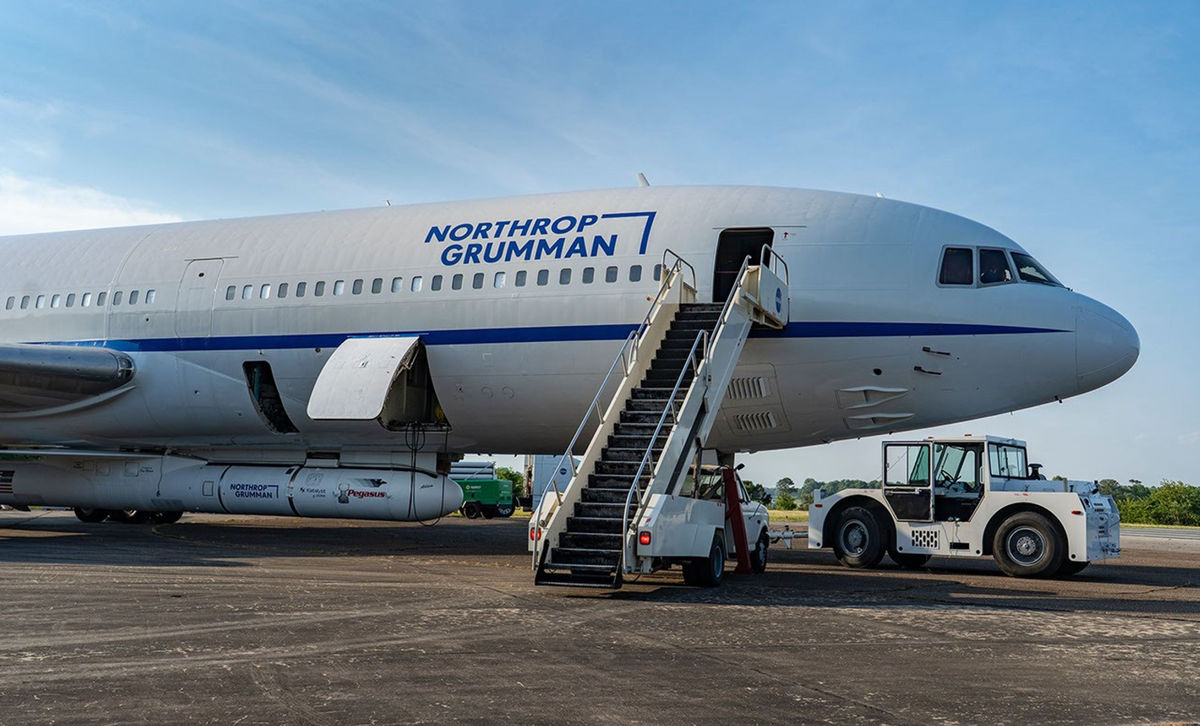
by NASA/Ron Beard
After being placed into orbit, the Katalyst and NASA teams successfully established communication with LINK. LINK will not immediately grasp Swift; instead, it will spend several weeks inspecting its propulsion system, sensors, and navigation system. Once the inspection is complete, LINK will approach Swift to examine the satellite's condition after more than 21 years of orbit, before using its robotic arm to capture it and raise its orbit.
LINK is equipped with three robotic arms to grasp satellites like Swift, which were not designed to be captured. LINK is scheduled to travel for about a month to get close to Swift, and then approach further to attempt a capture. If successful, it is estimated that it will take another 60 days to lift Swift to its target orbit at an altitude of approximately 600 km.
On-orbit services, such as repairing satellites, refueling them, and raising their orbits, are attracting attention as a crucial technology for preventing satellites from being disposable. If expensive satellites can be kept alive in space, it may be more cost-effective than building and launching new satellites from scratch. In the case of Swift, it is possible to extend the lifespan of a $500 million observation satellite with a $30 million mission.
However, Swift was not originally designed to be grabbed in space. There are still risks involved in LINK's safe approach, capture without disrupting its attitude, and the long-term process of pushing it up. NASA says it will continue to update the mission's progress on the Swift blog, and whether the veteran observation satellite, which nearly fell from space, will be successfully towed to a higher orbit will depend on the work done over the next few months.
Related Posts:

in Hardware, Posted by log1d_ts