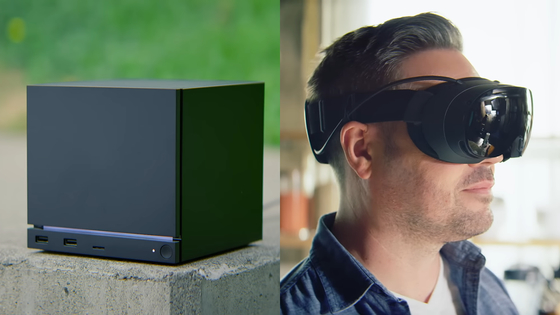
I bought the official Steam gaming PC, the 'Steam Machine,' and it arrived, so I've done an unboxing and a detailed review of its size and ports.
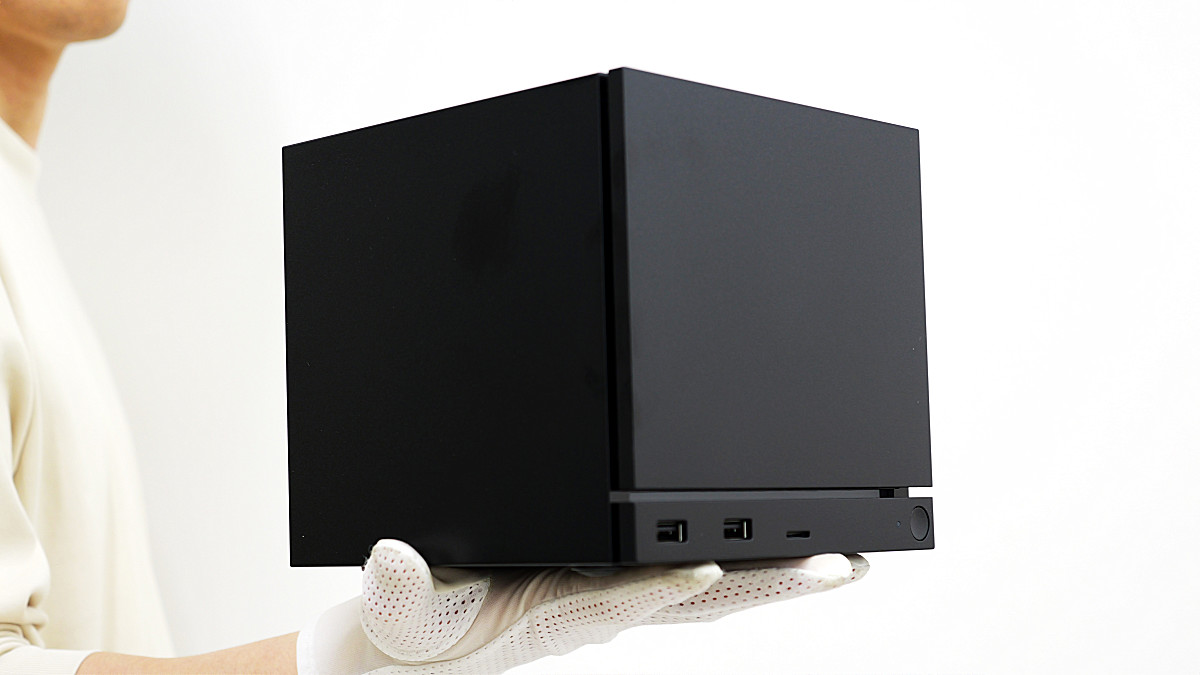
The ' Steam Machine ' is an official Steam gaming PC equipped with Steam OS. Unlike PlayStation and Xbox, it uses a Linux-based OS, allowing you to not only play games from your Steam library but also use it as a Linux machine. It seemed like a very interesting device, so I bought it as soon as it was released. It arrived at the GIGAZINE editorial office on July 1st, 2026, so I unboxed it and took a detailed look at its appearance.
Steam Machine
Steam Machine – KOMODO STATION
https://komodostation.com/product/steam-machine_jpy/
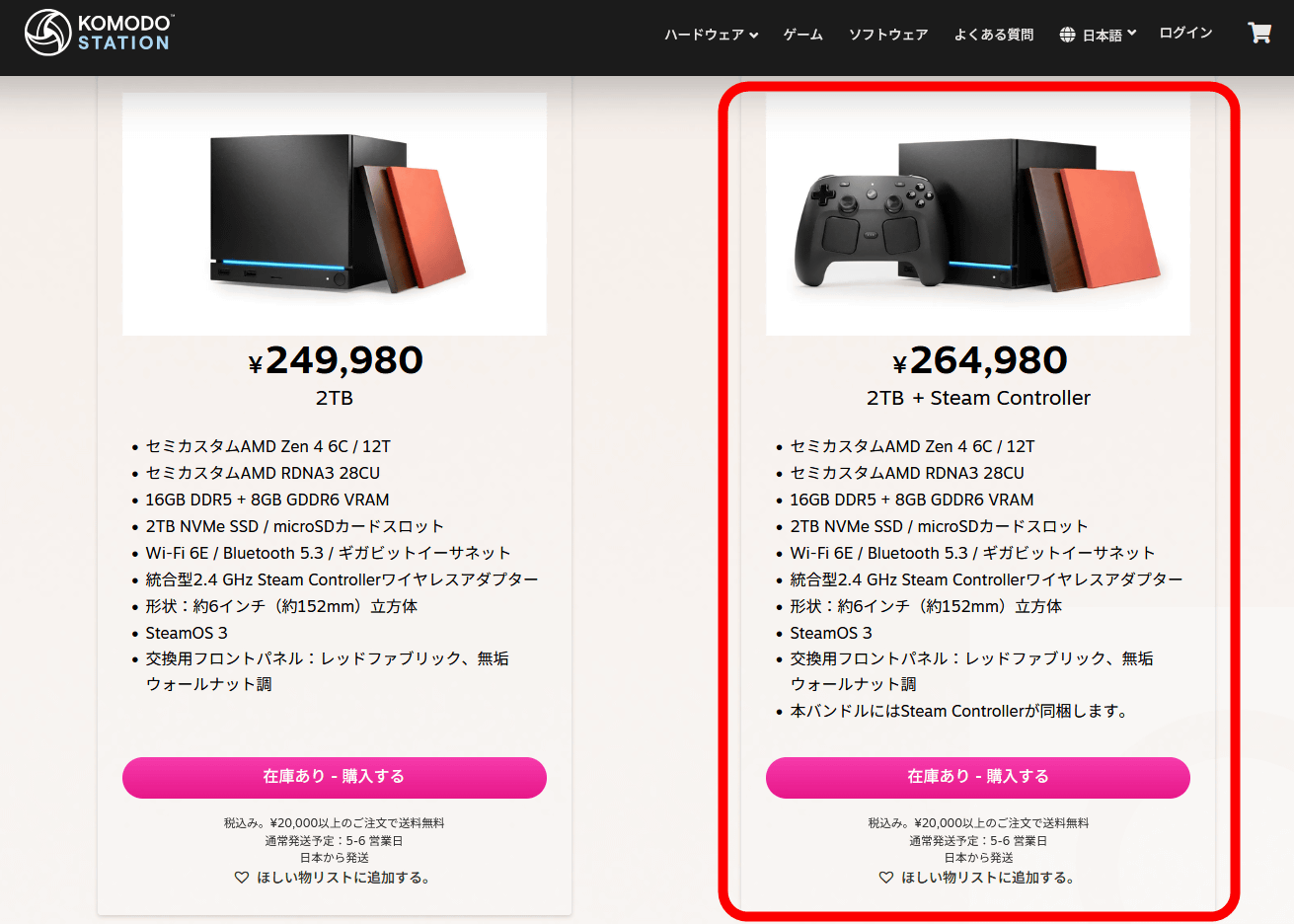
The Steam Machine was released on June 23, 2026. In countries like the United States, it was available through a lottery system where winners could purchase it, but in Japan, it was sold on a first-come, first-served basis at KOMODO STATION. There were four configurations available: '1TB,' '1TB with controller,' '2TB,' and '2TB with controller,' so I immediately ordered the top-of-the-line '2TB with controller.'
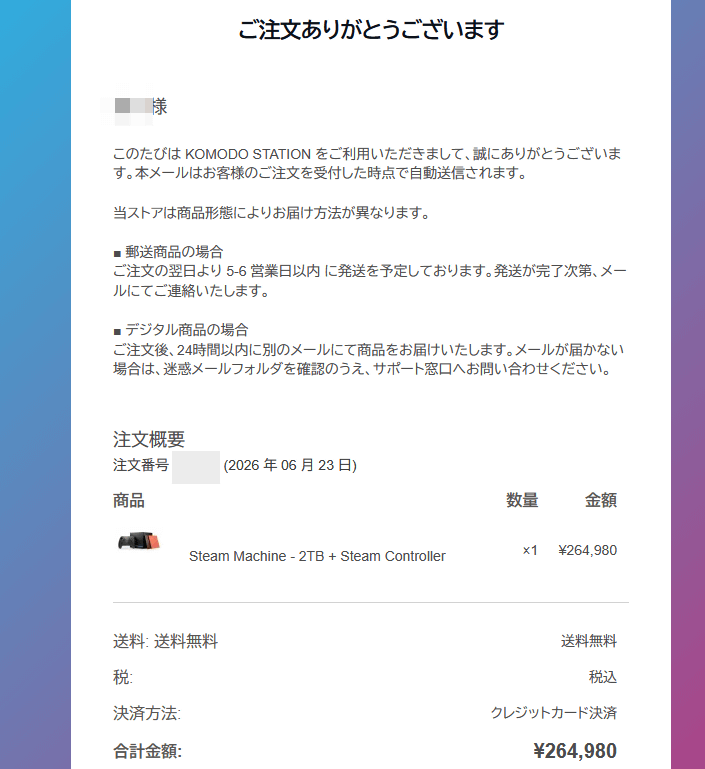
The order confirmation email looked like this. The price was 264,980 yen including tax.
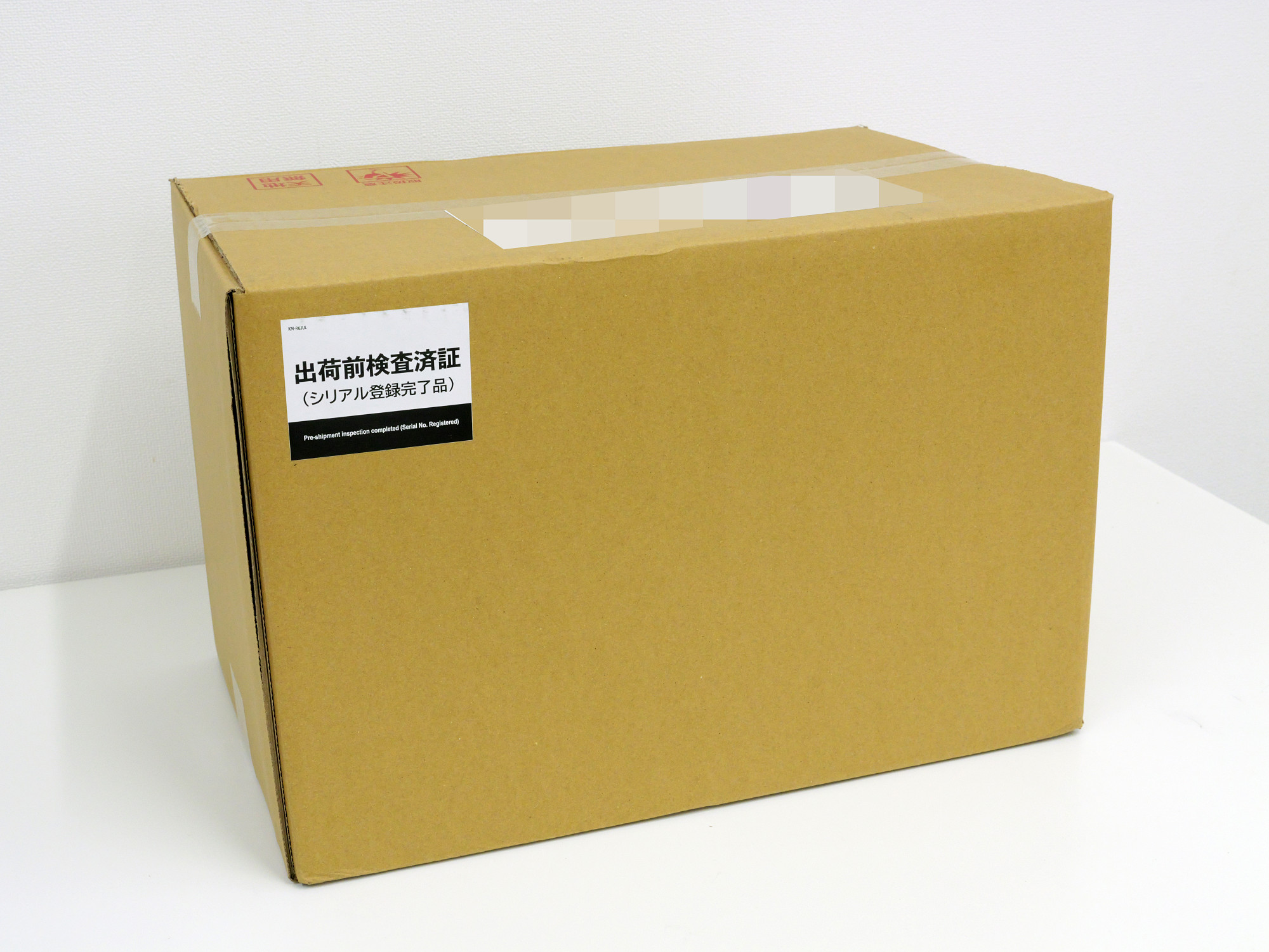
Then, on July 1, 2026, a cardboard box containing the Steam Machine arrived at the GIGAZINE editorial office. It had a sticker that read 'Pre-shipment inspection completed.'
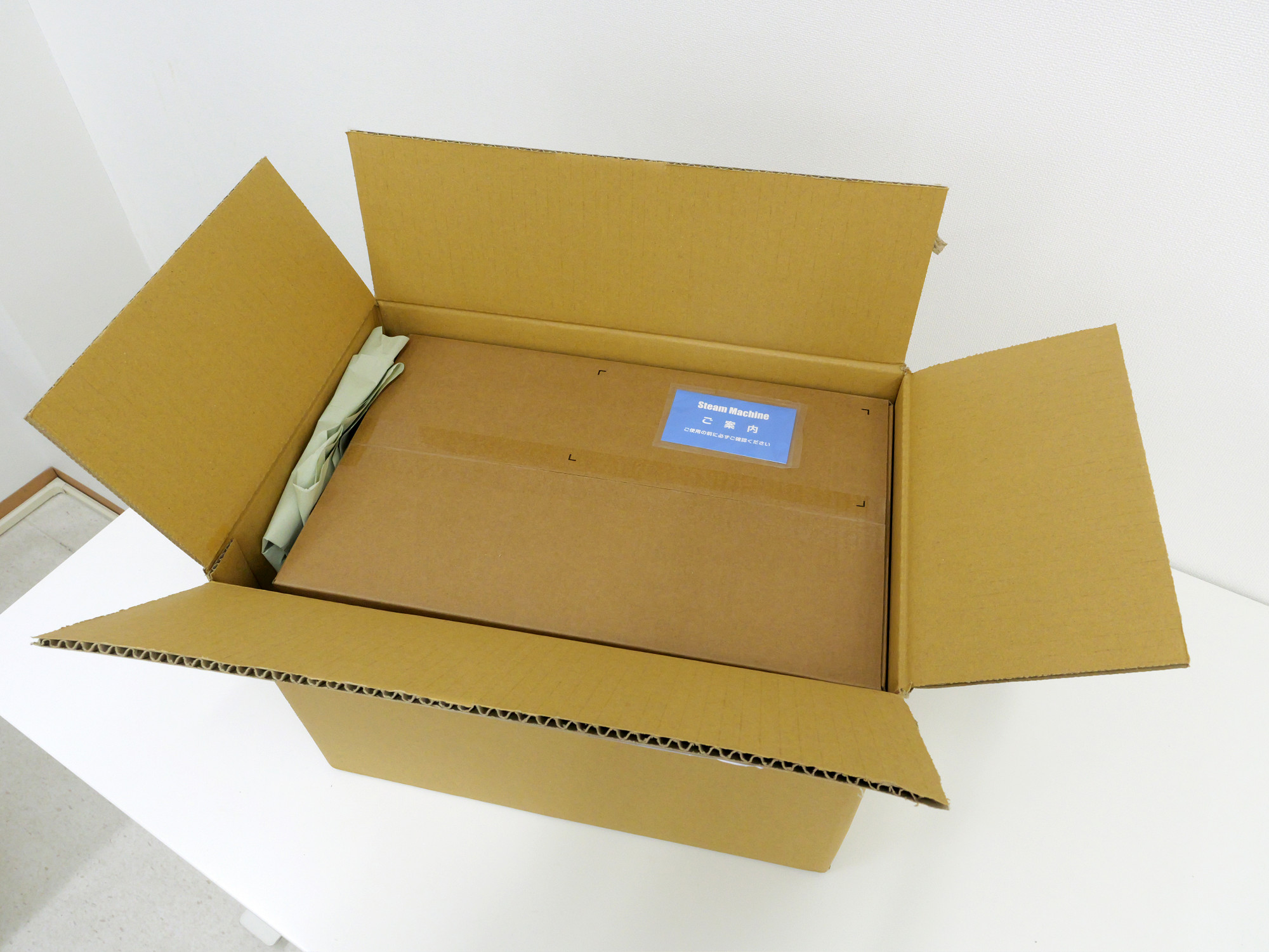
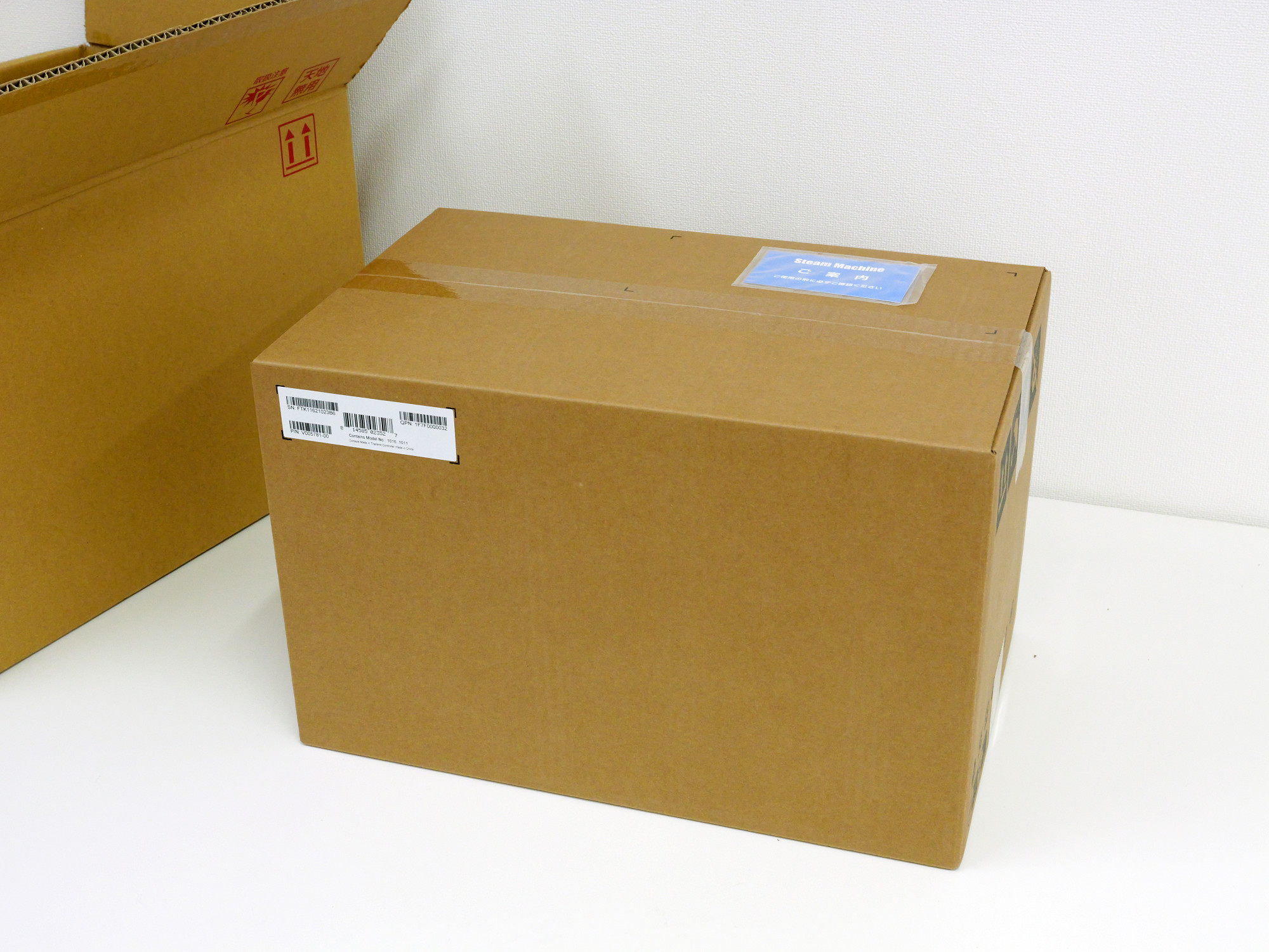
A cardboard box inside another cardboard box.
The serial number and other information are printed on the side of the box.
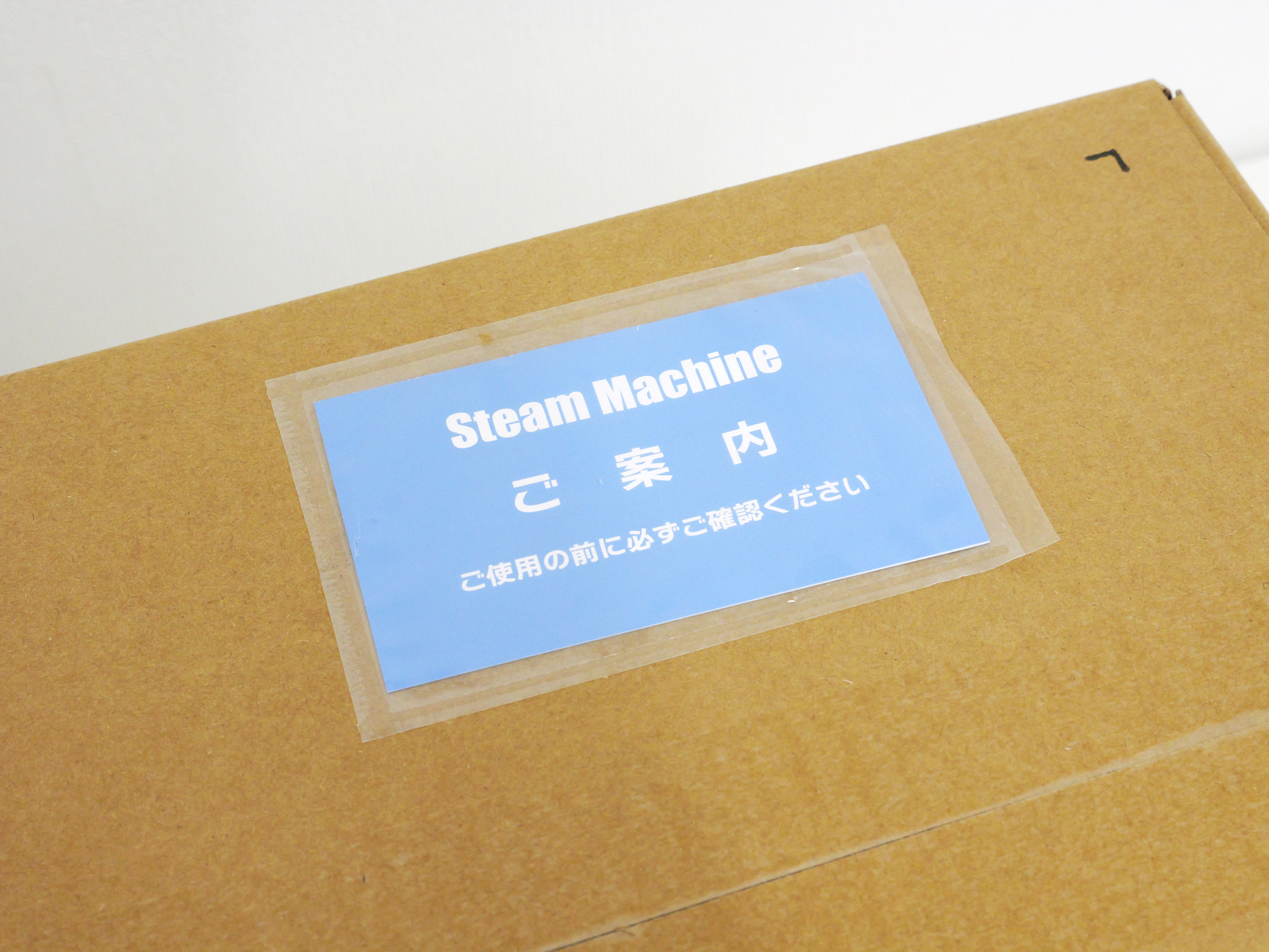
A card with the words 'Information' is attached to the top.
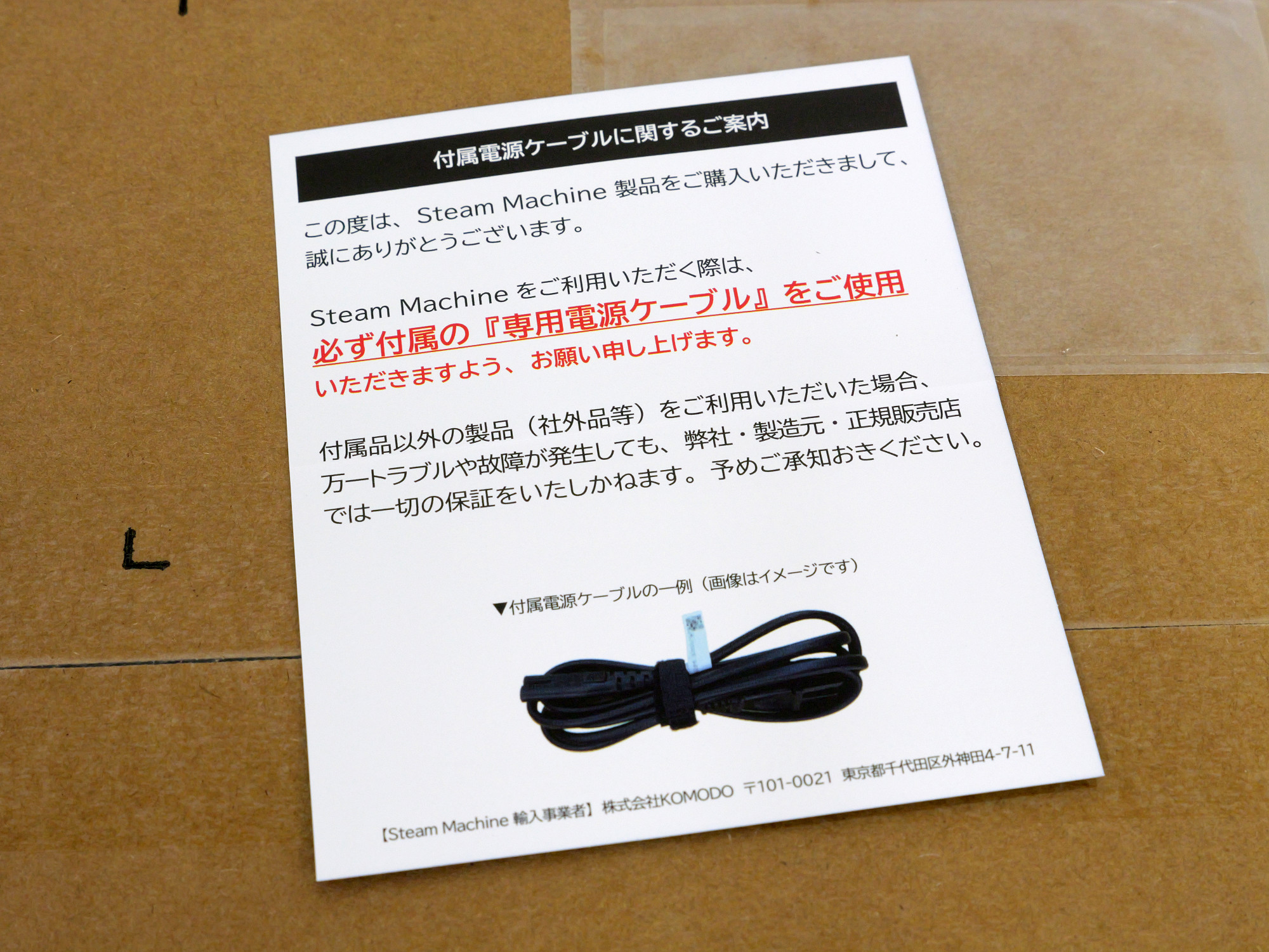
The card instructed that a dedicated power cable be used.
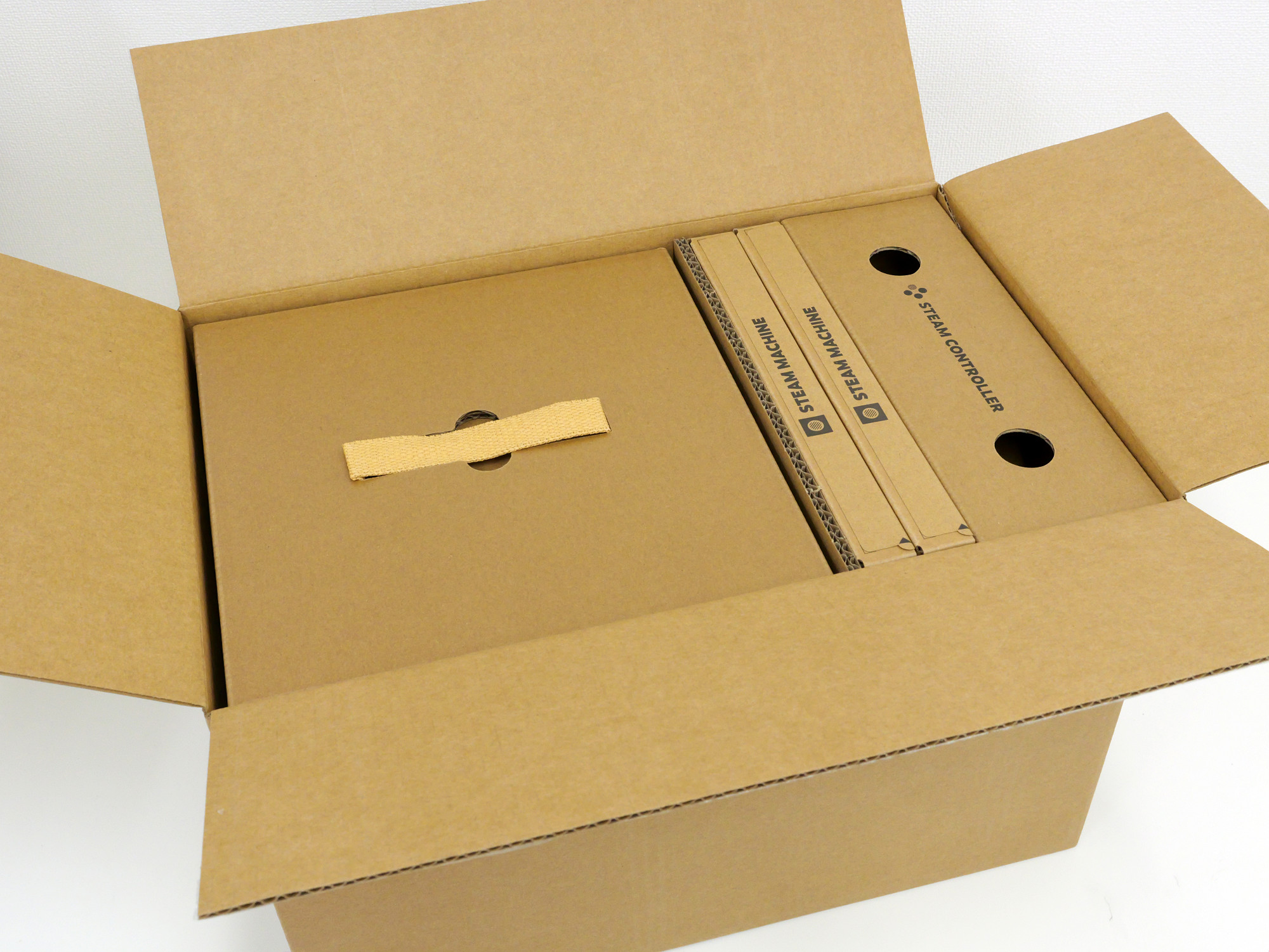
The box is packed full of boxes containing devices, with no space left to spare.
The box containing the Steam Machine had a handle.
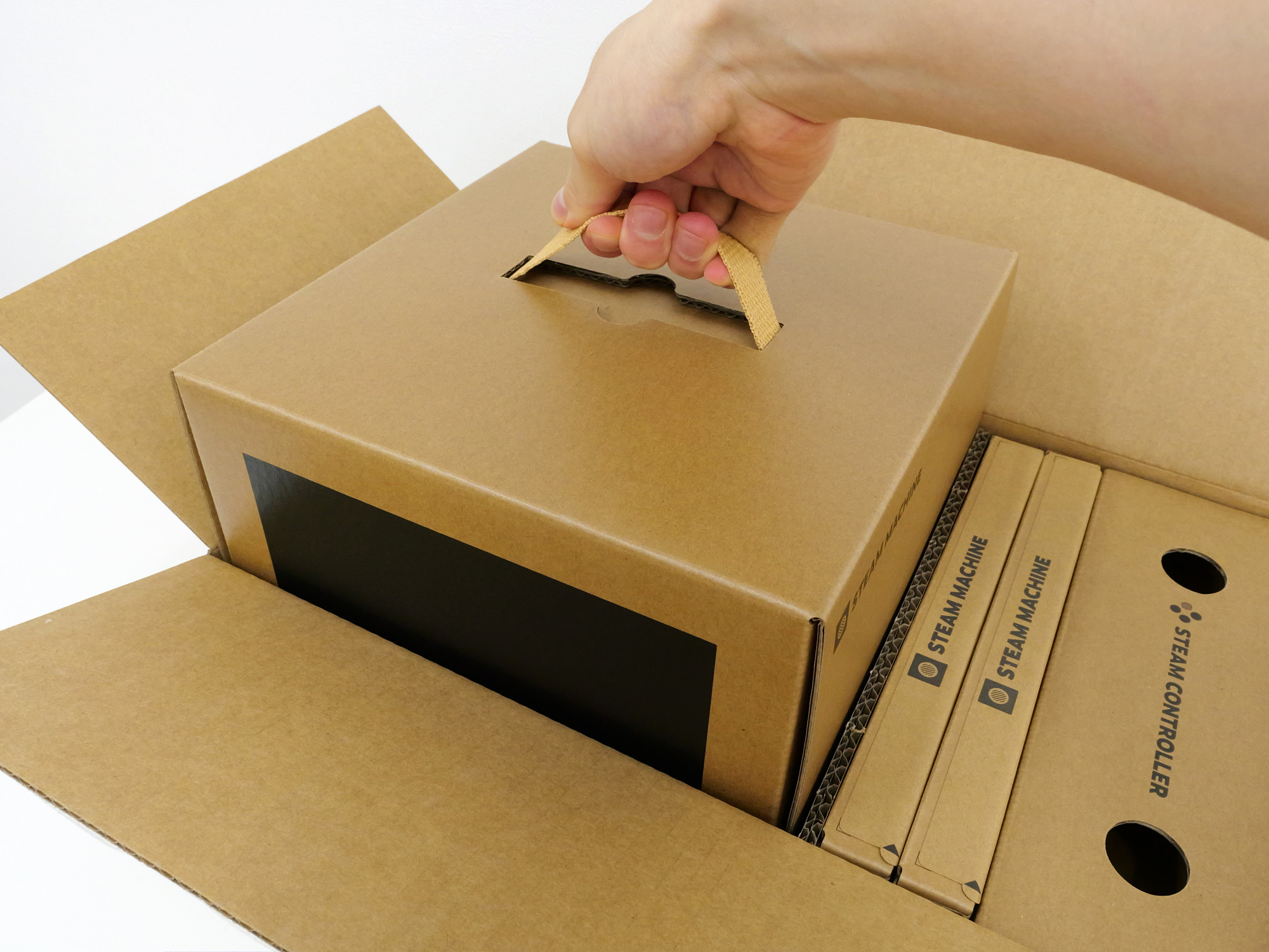
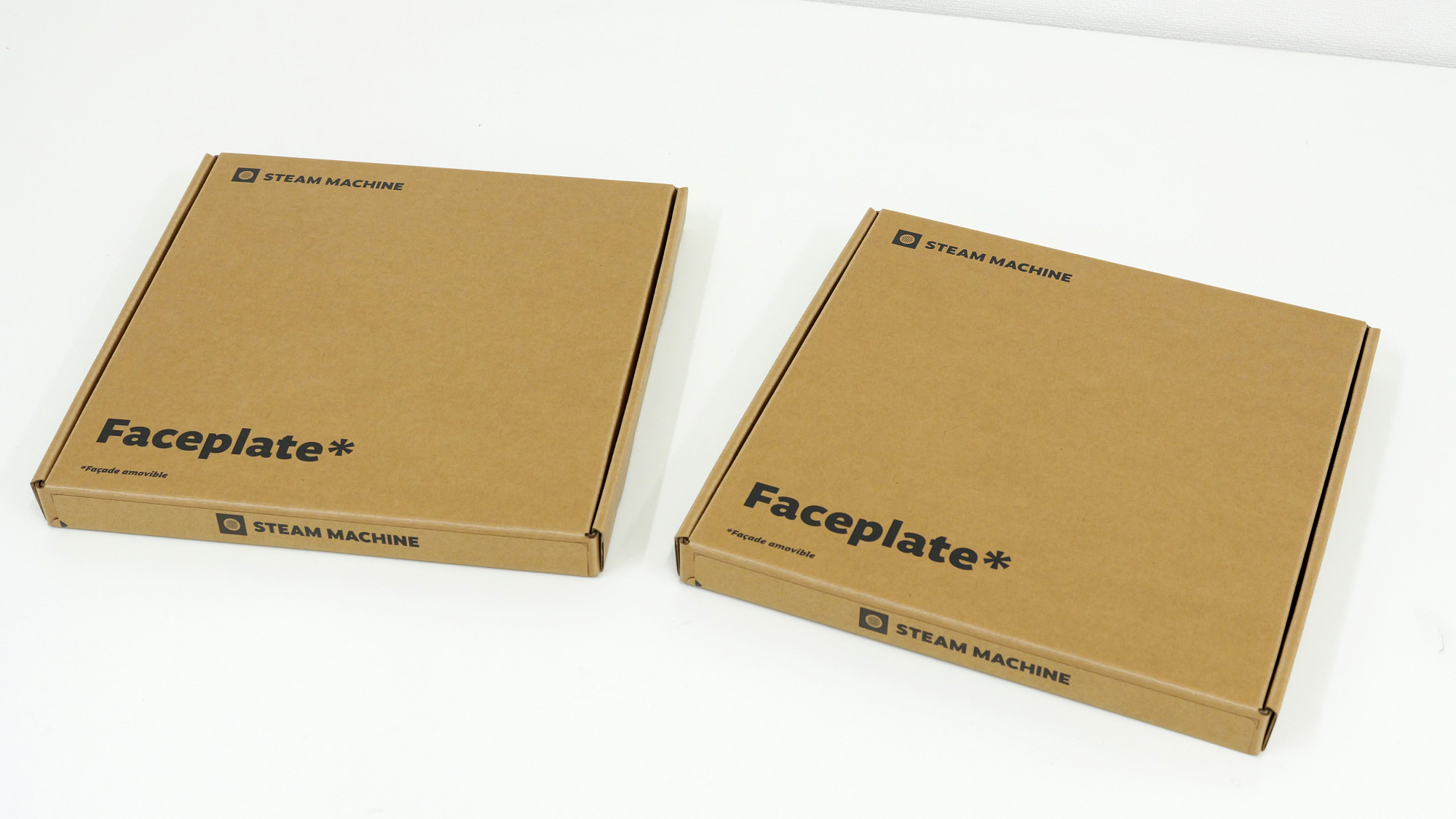
The package contains 'a box with the Steam Machine,' 'a box with the Steam Controller,' and 'two boxes with replacement front panels.' The packaging is quite elaborate, giving you the exciting feeling of having bought a new game console.
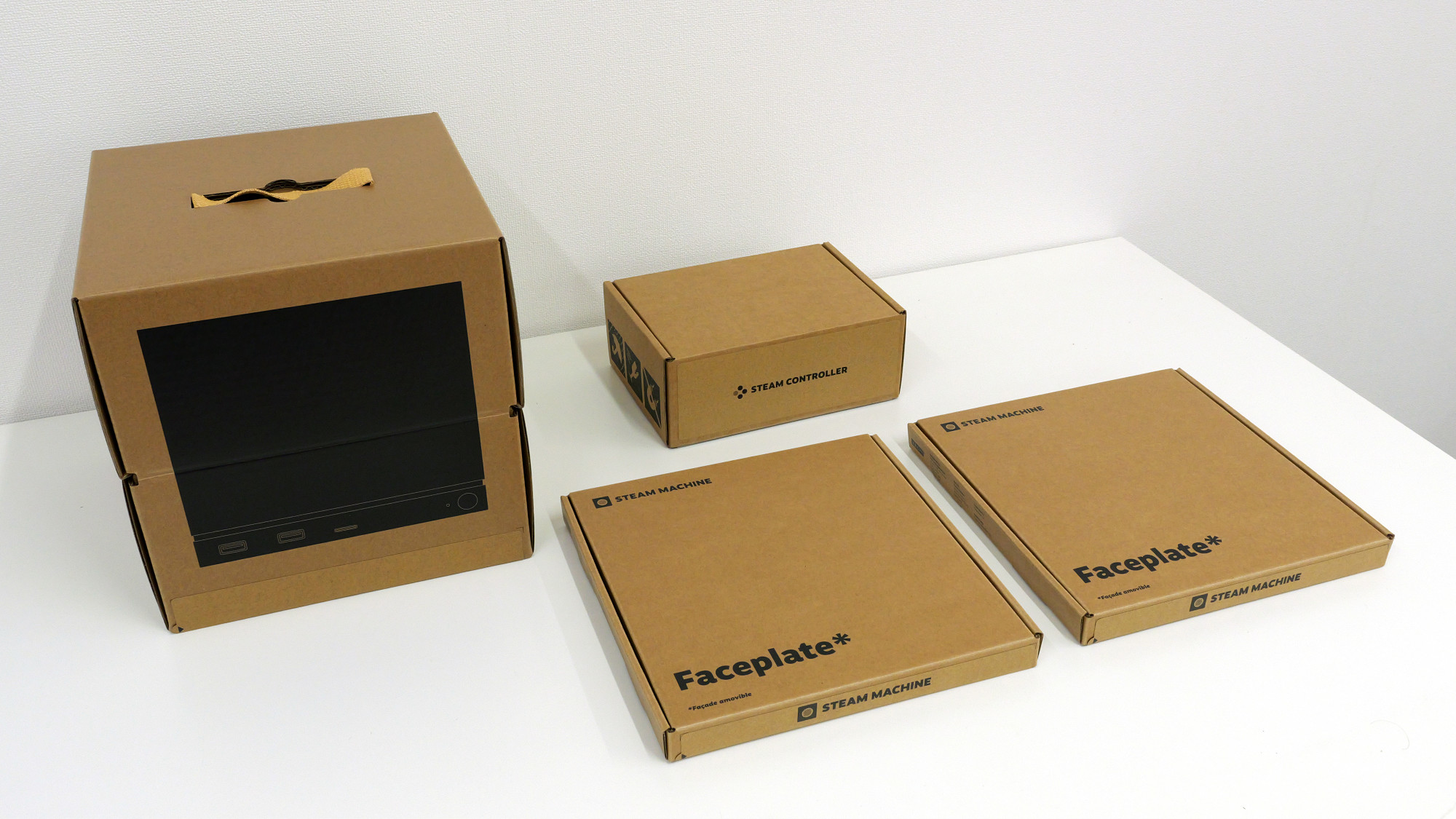
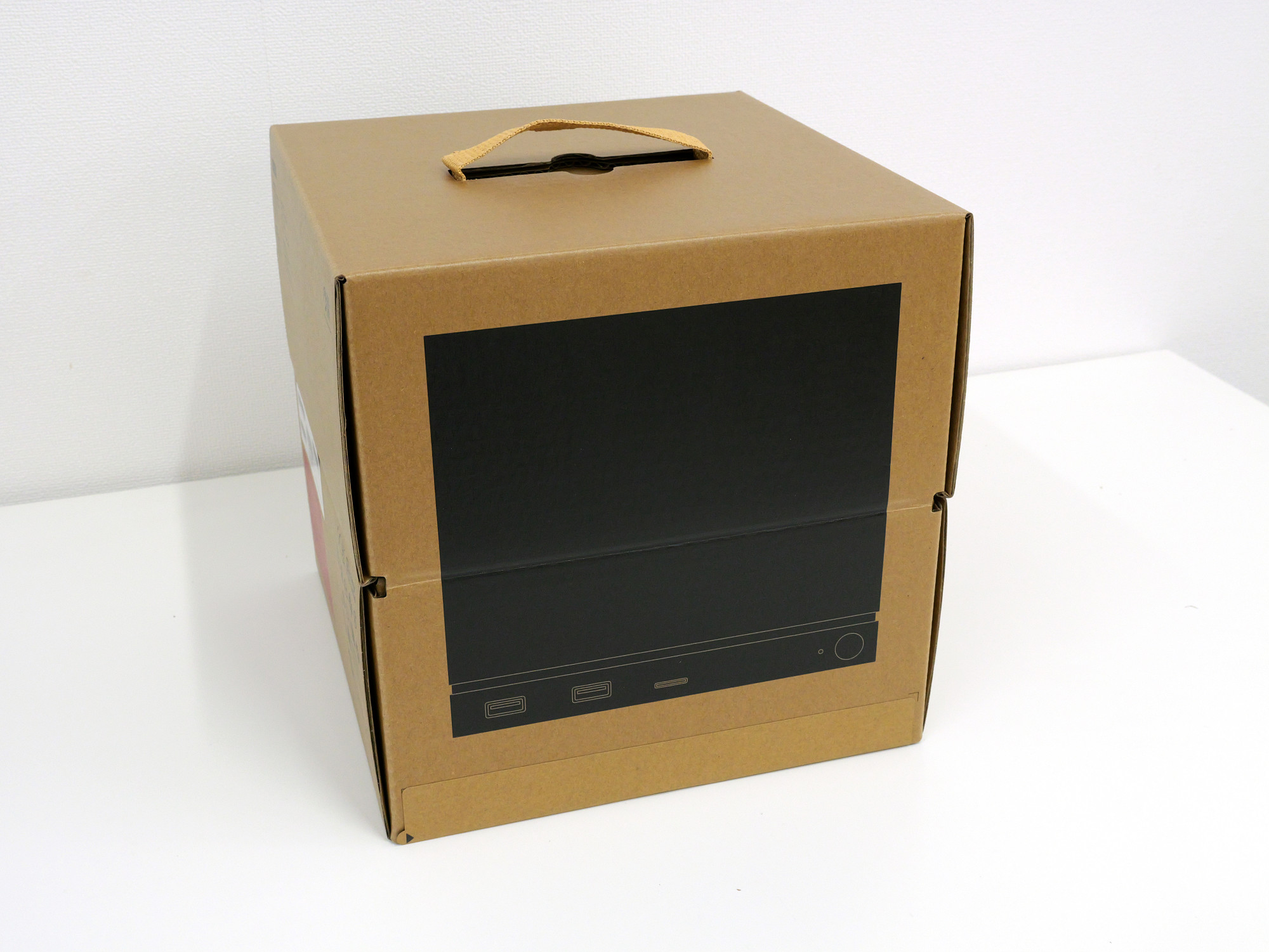
This is what the Steam Machine box looks like.
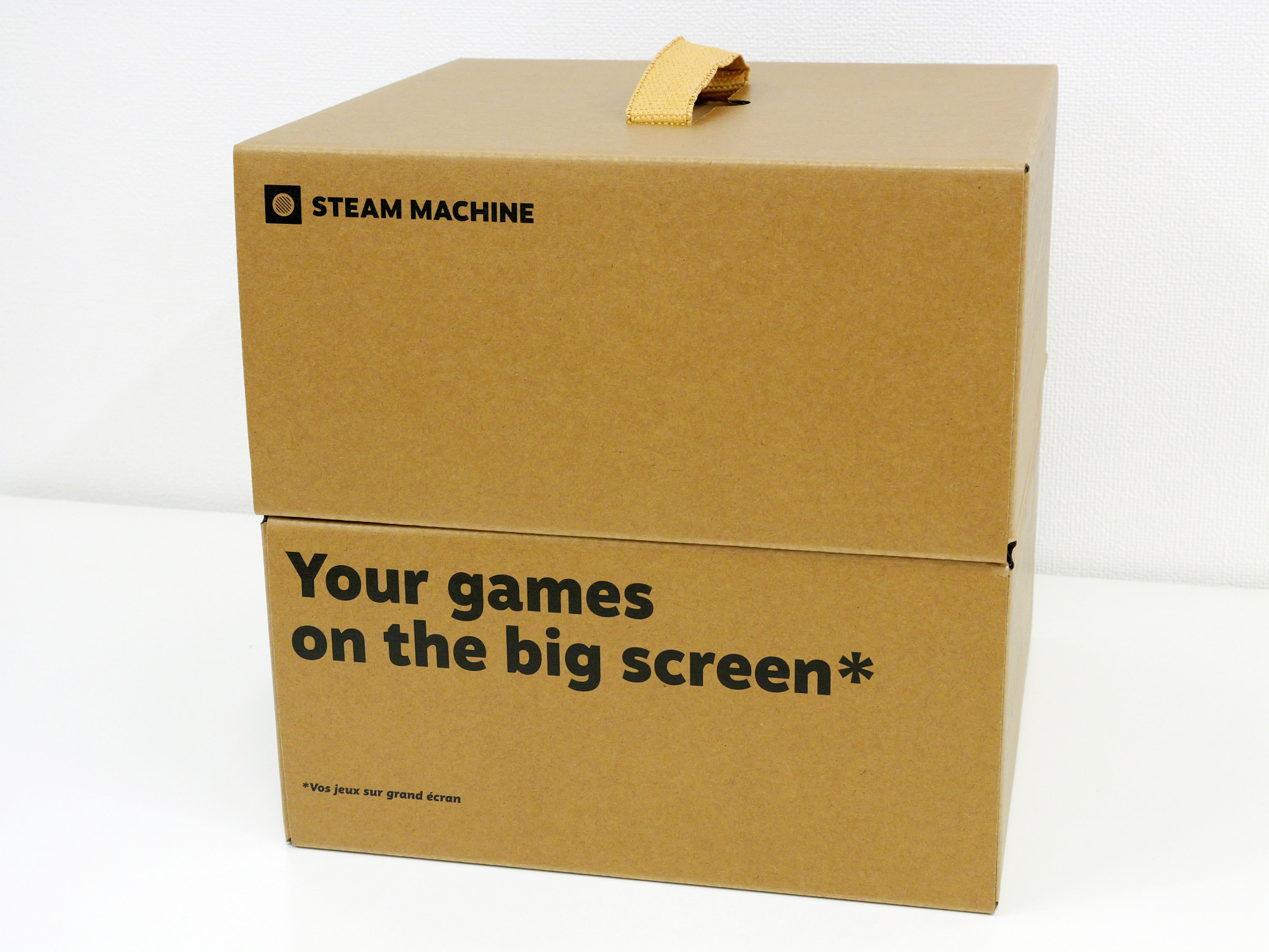
The tagline 'Your games on the big screen' is printed on the side. It likely means 'Enjoy games on a big screen.'
The other side contains explanations in various languages.
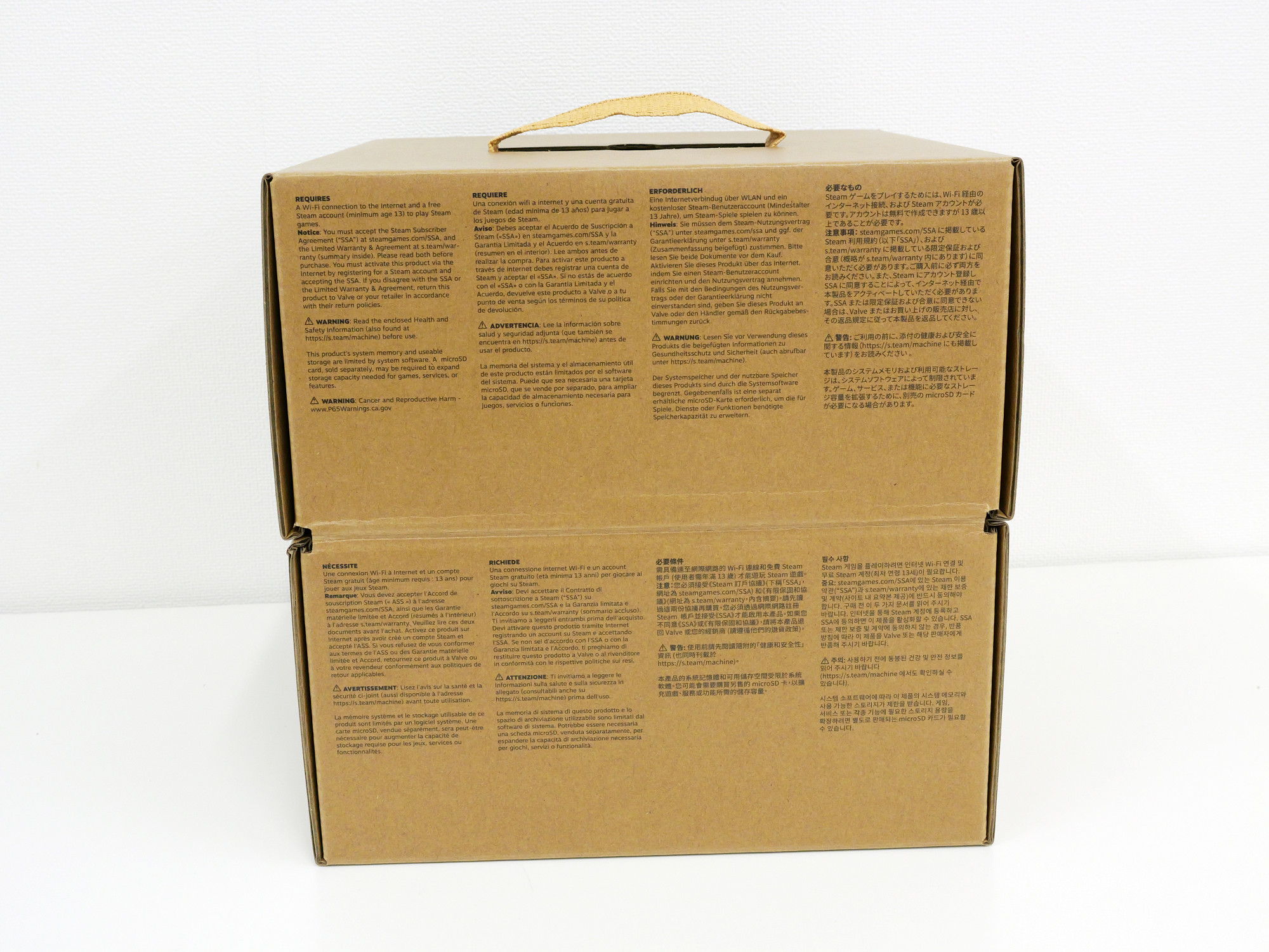
There was also a Japanese explanation. It stated that 'an internet connection via Wi-Fi and a Steam account are required' and 'a separately sold microSD card is needed if storage is insufficient.'
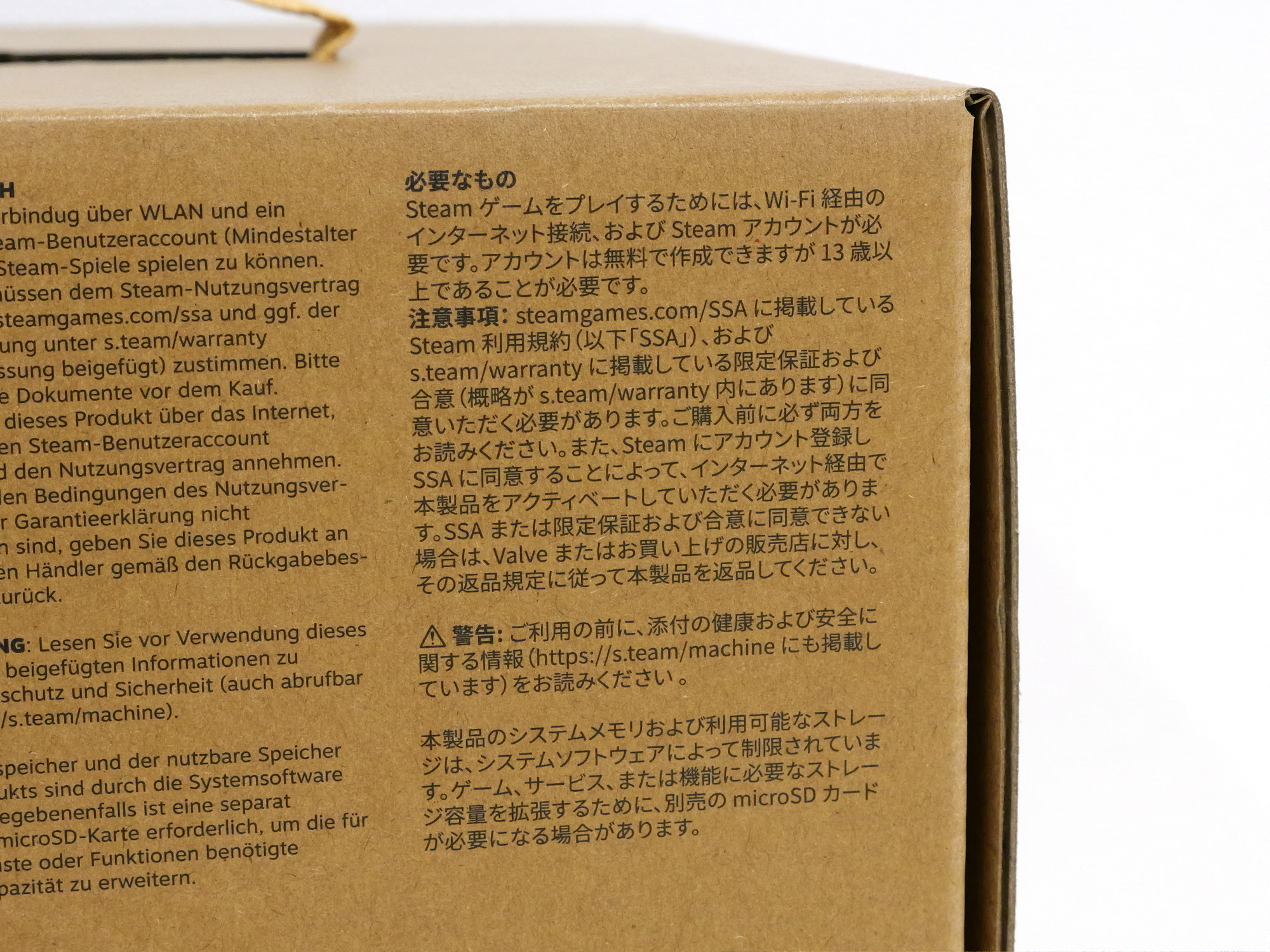
The bottom of the box is sealed with a sticker, so peel it off.
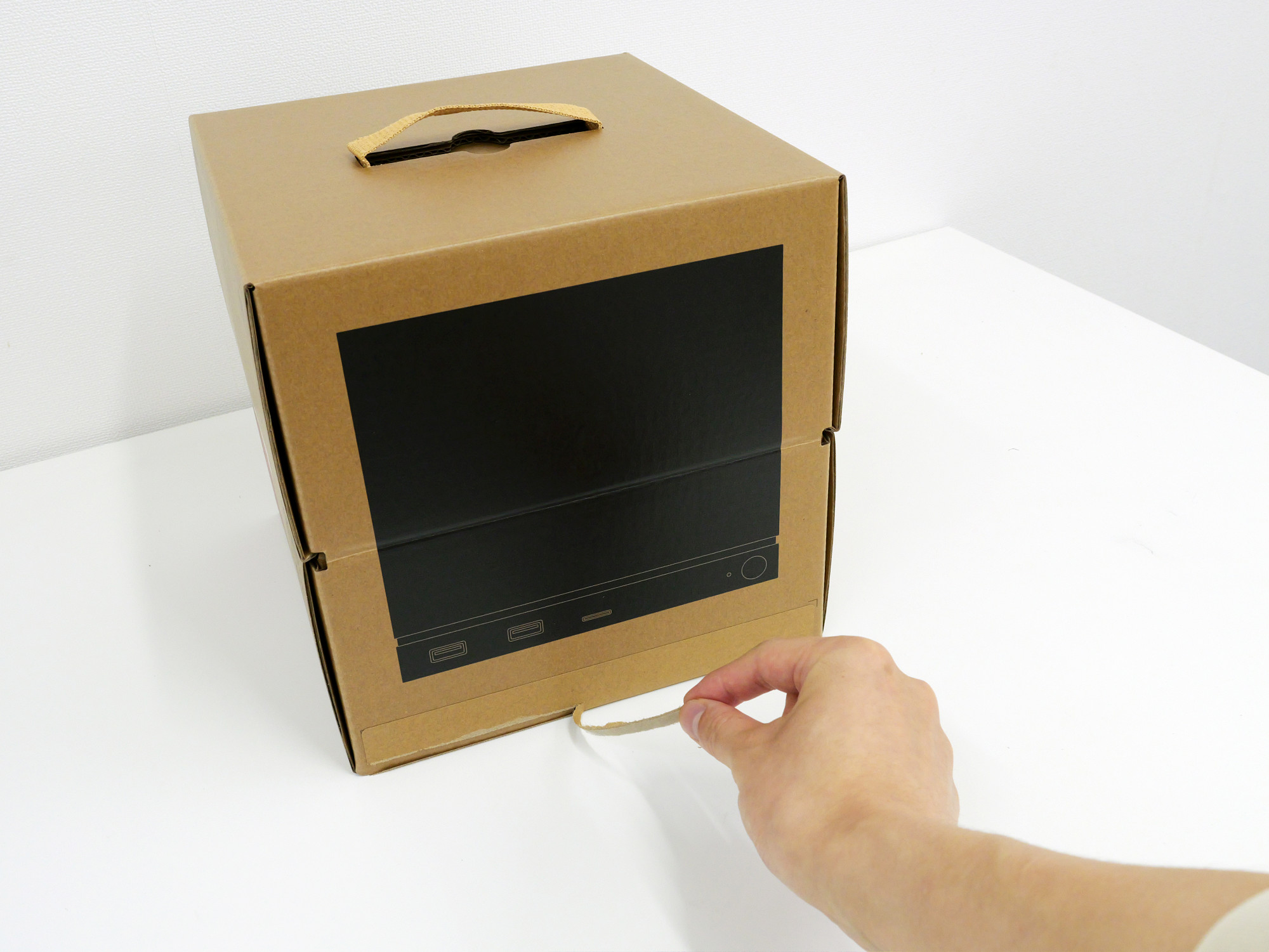
Once you peel off the seal, it opens upwards.
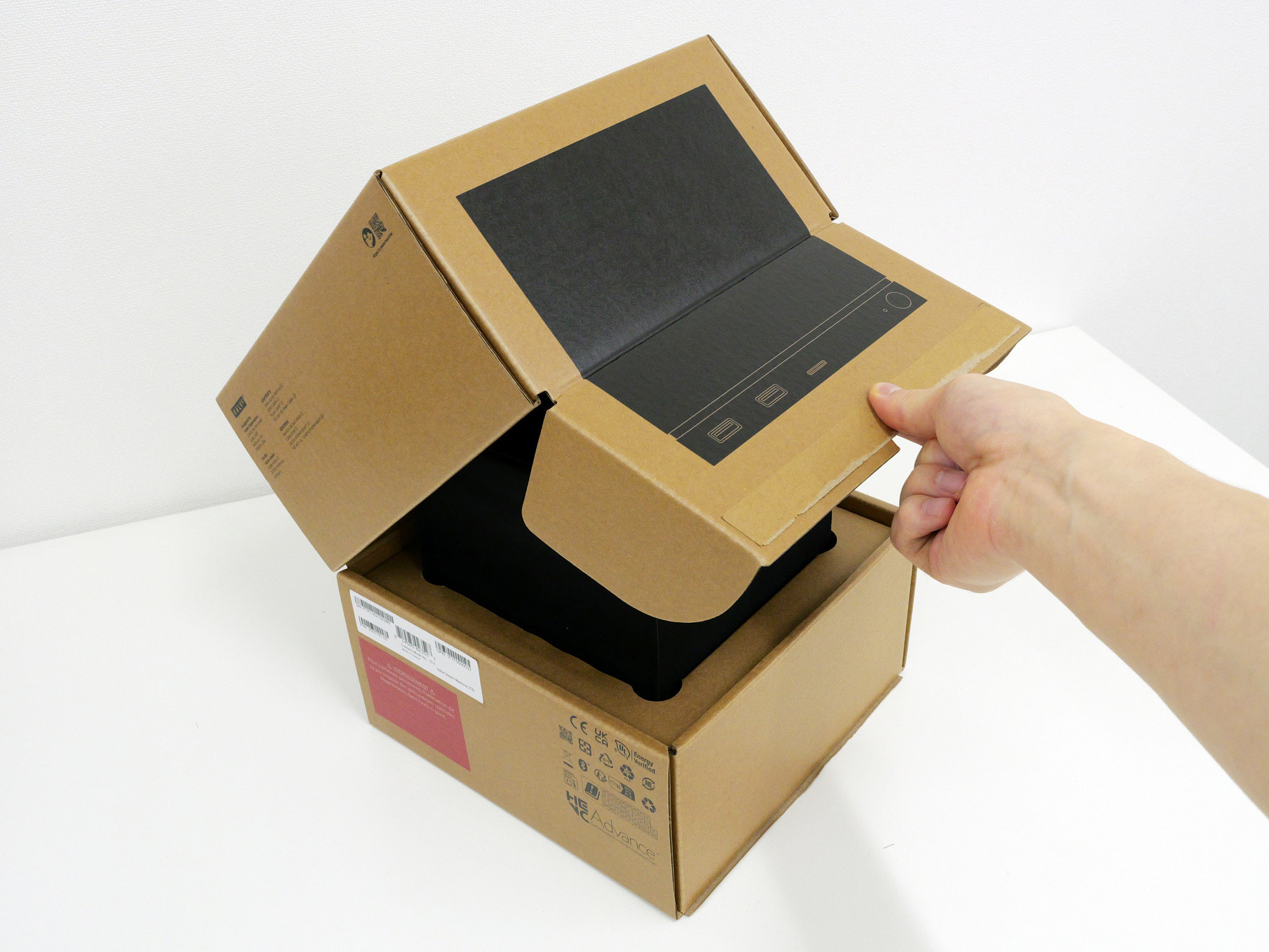
The Steam Machine was inside, wrapped in a black cloth.
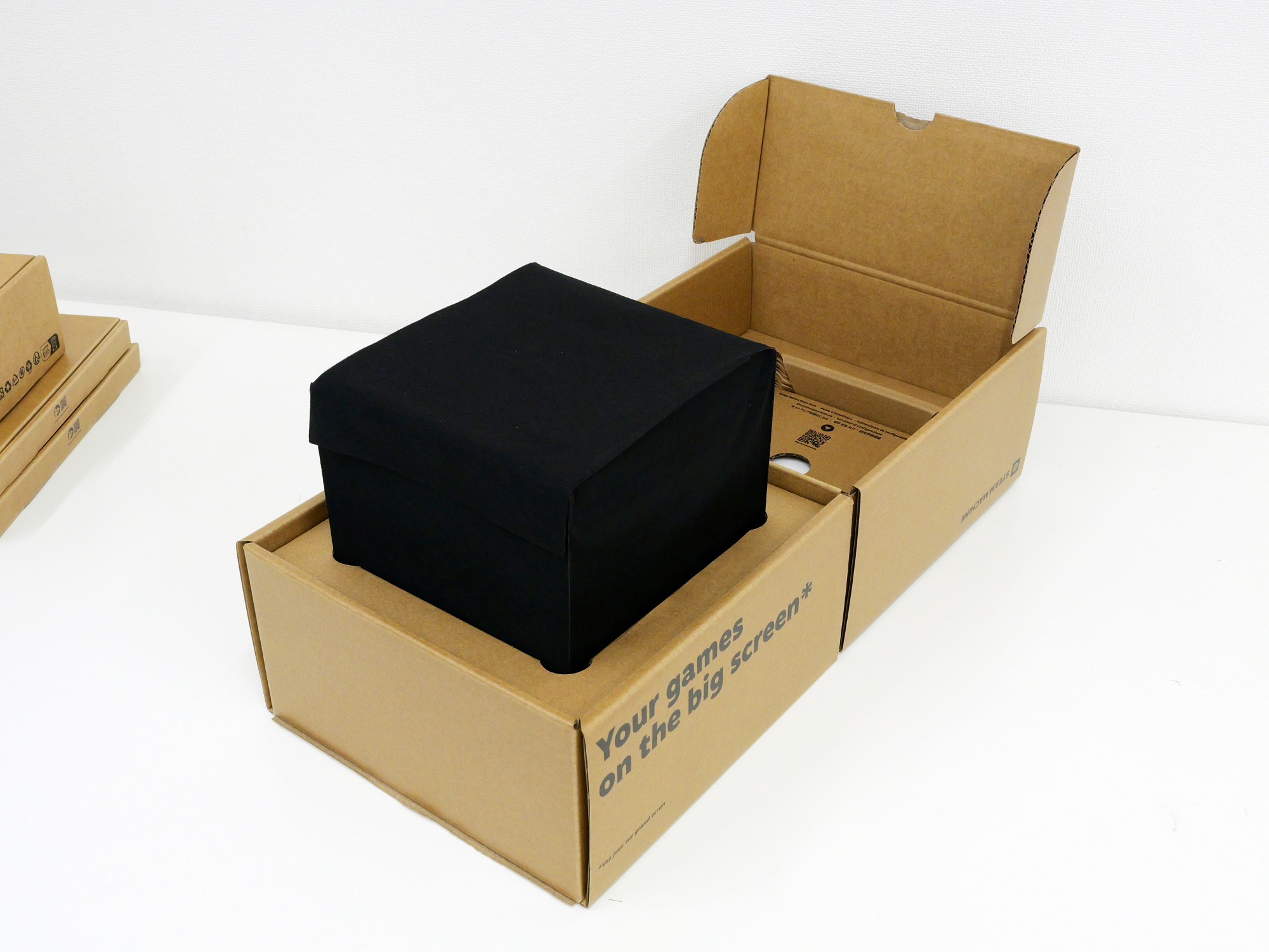
The box contained the Steam Machine itself, a power cable, an HDMI cable, and safety instructions.
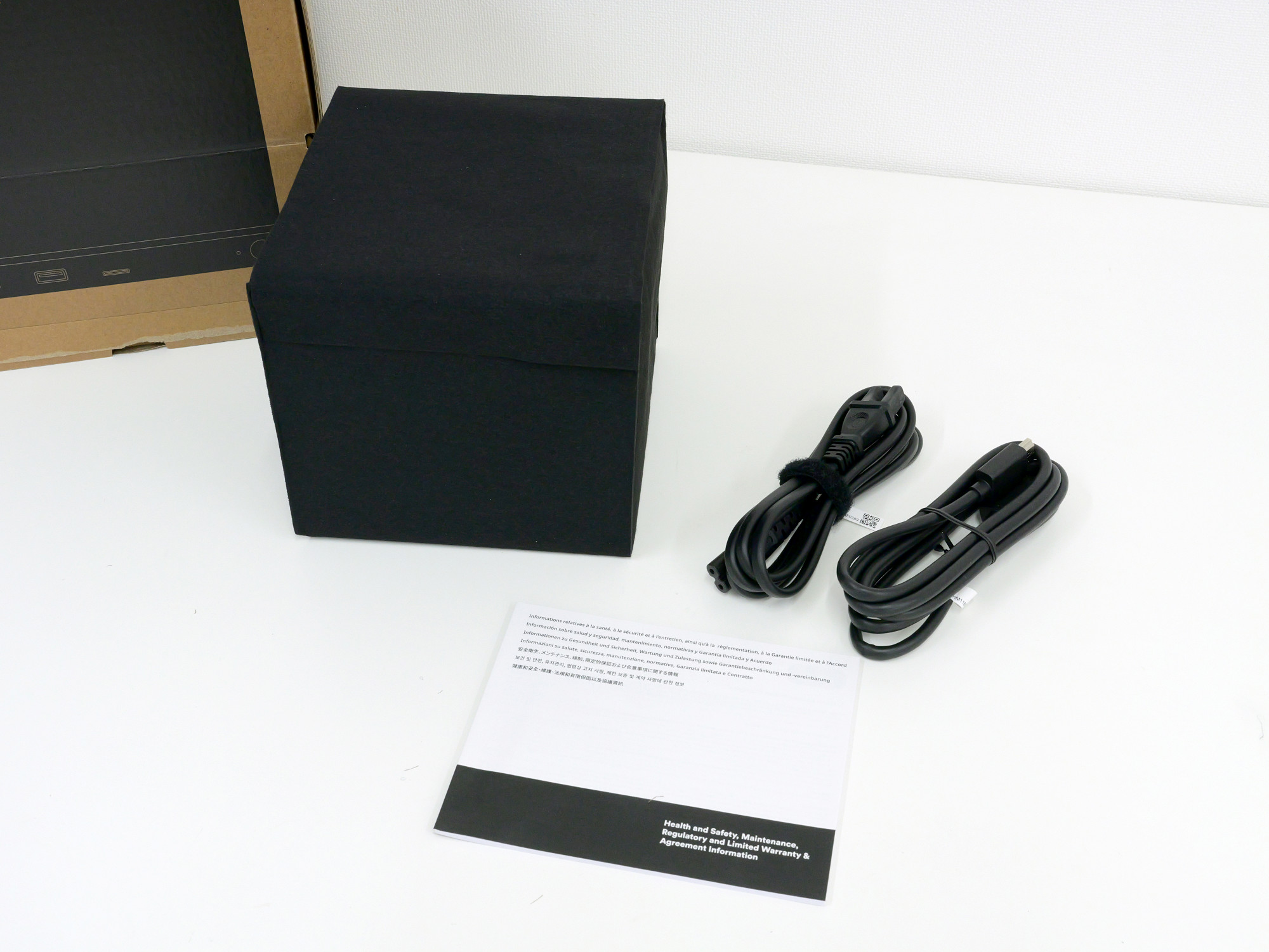
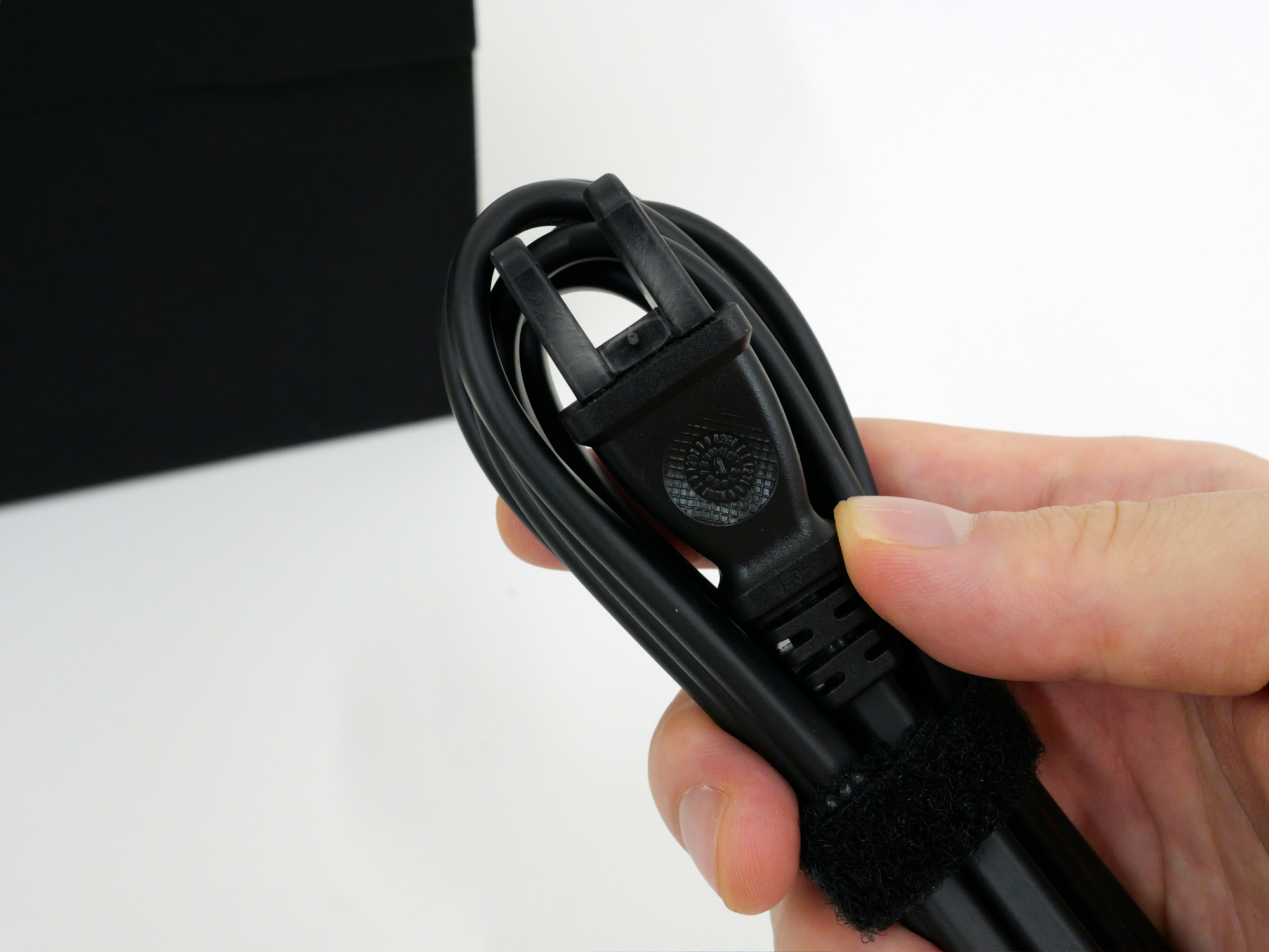
The power cable is compatible with Japanese outlets. You don't need to prepare a conversion connector.
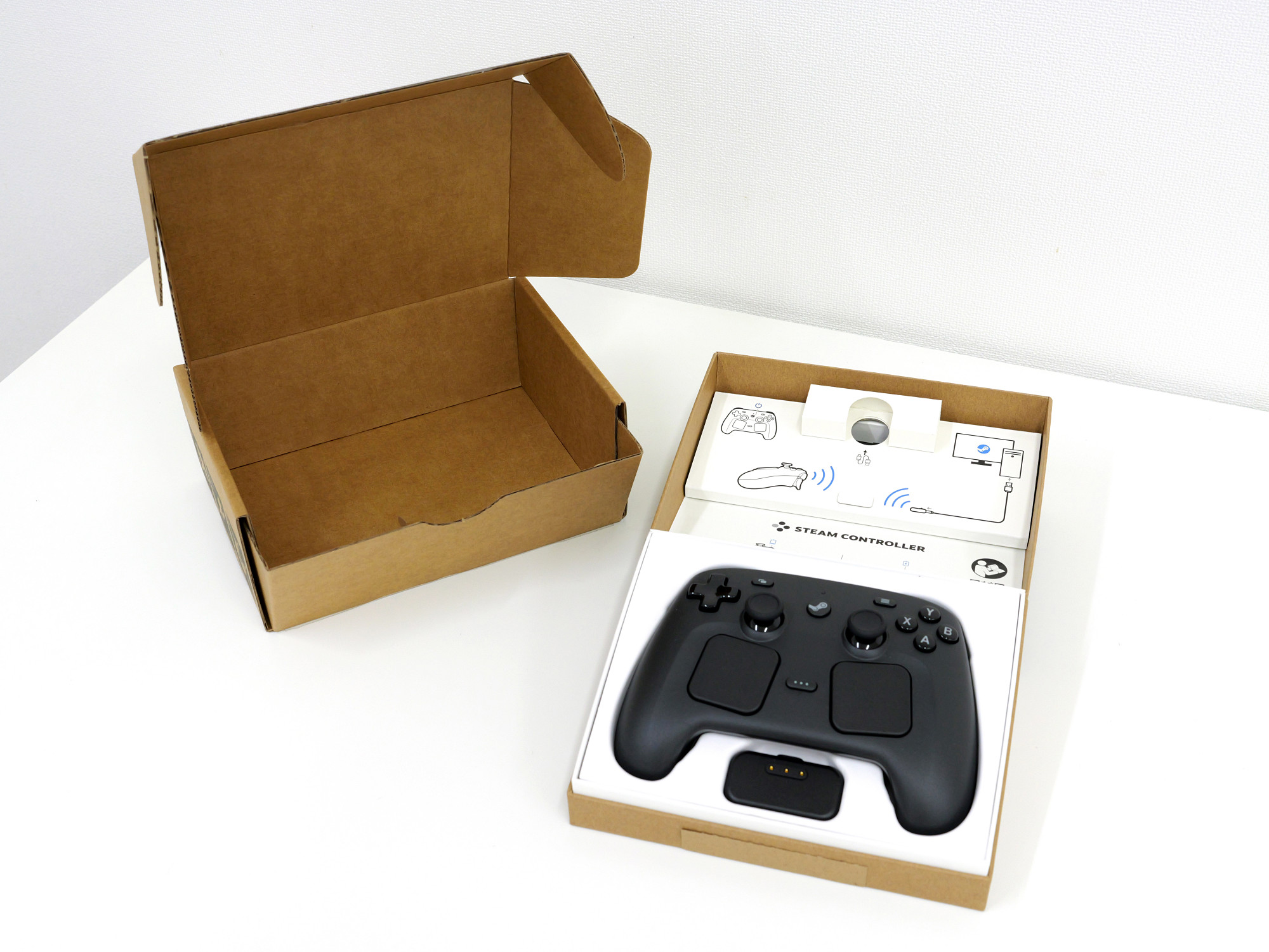
A Steam Controller wrapped in cloth.
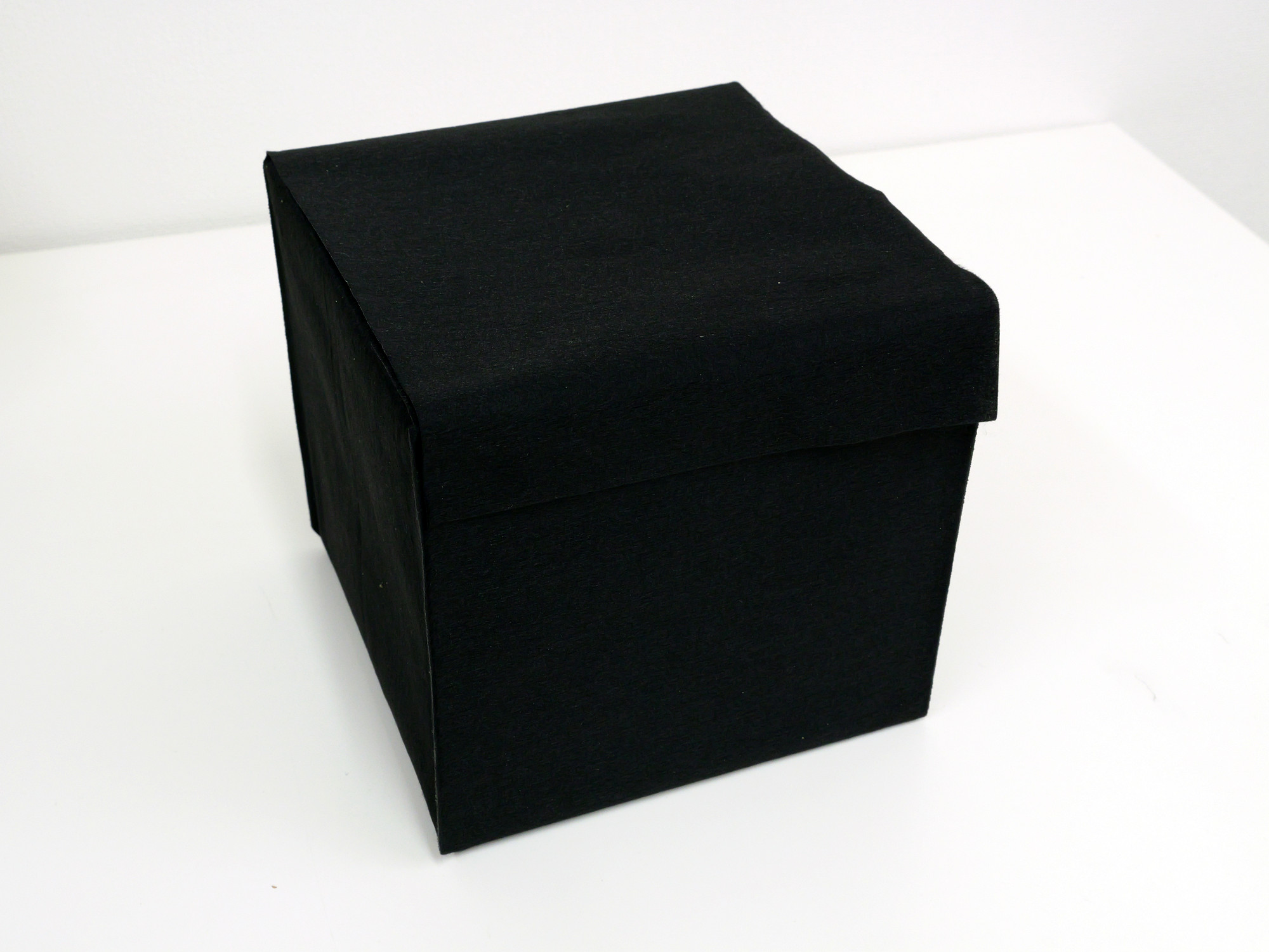
Development.
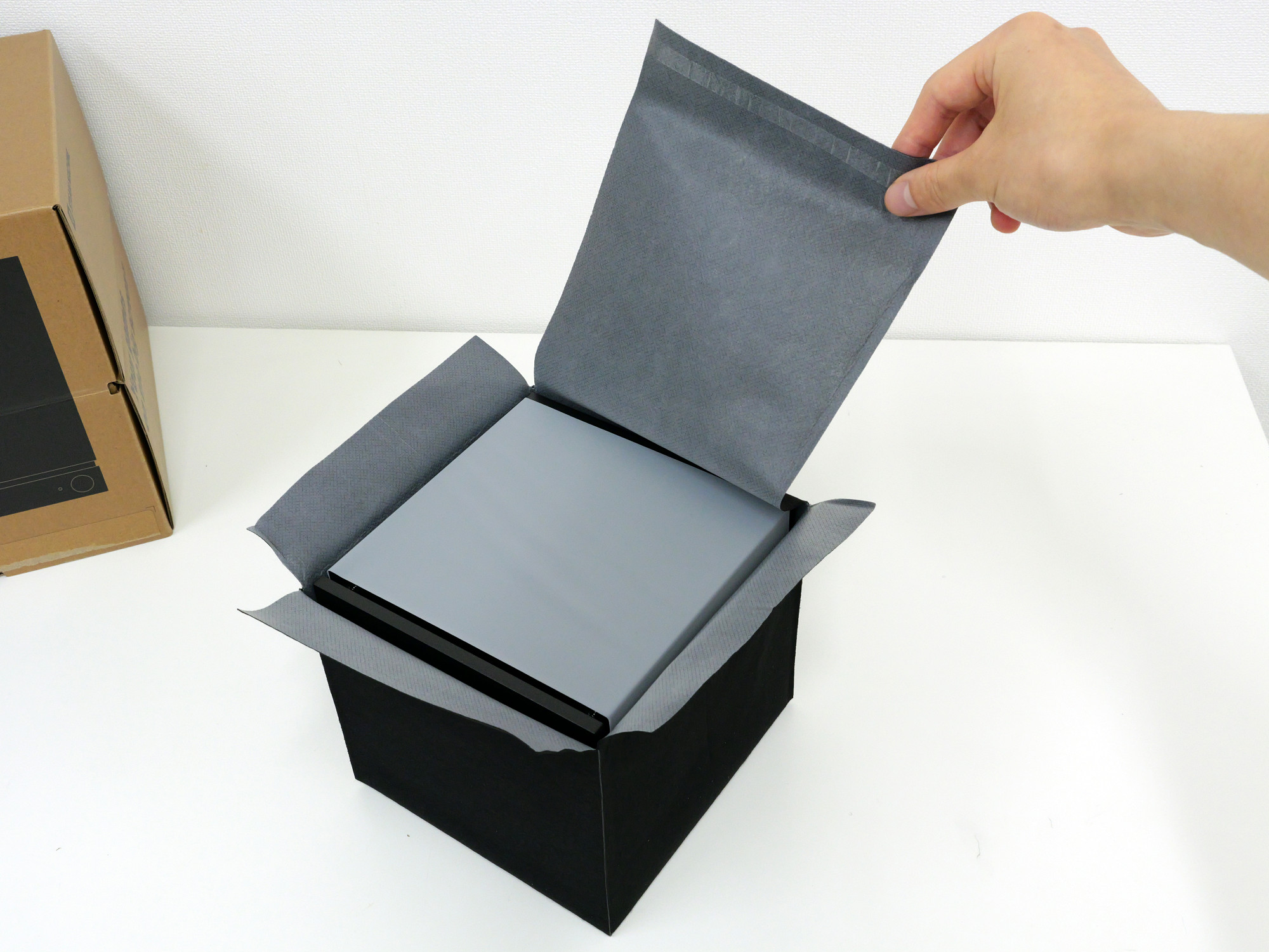
It was also wrapped in a translucent film.
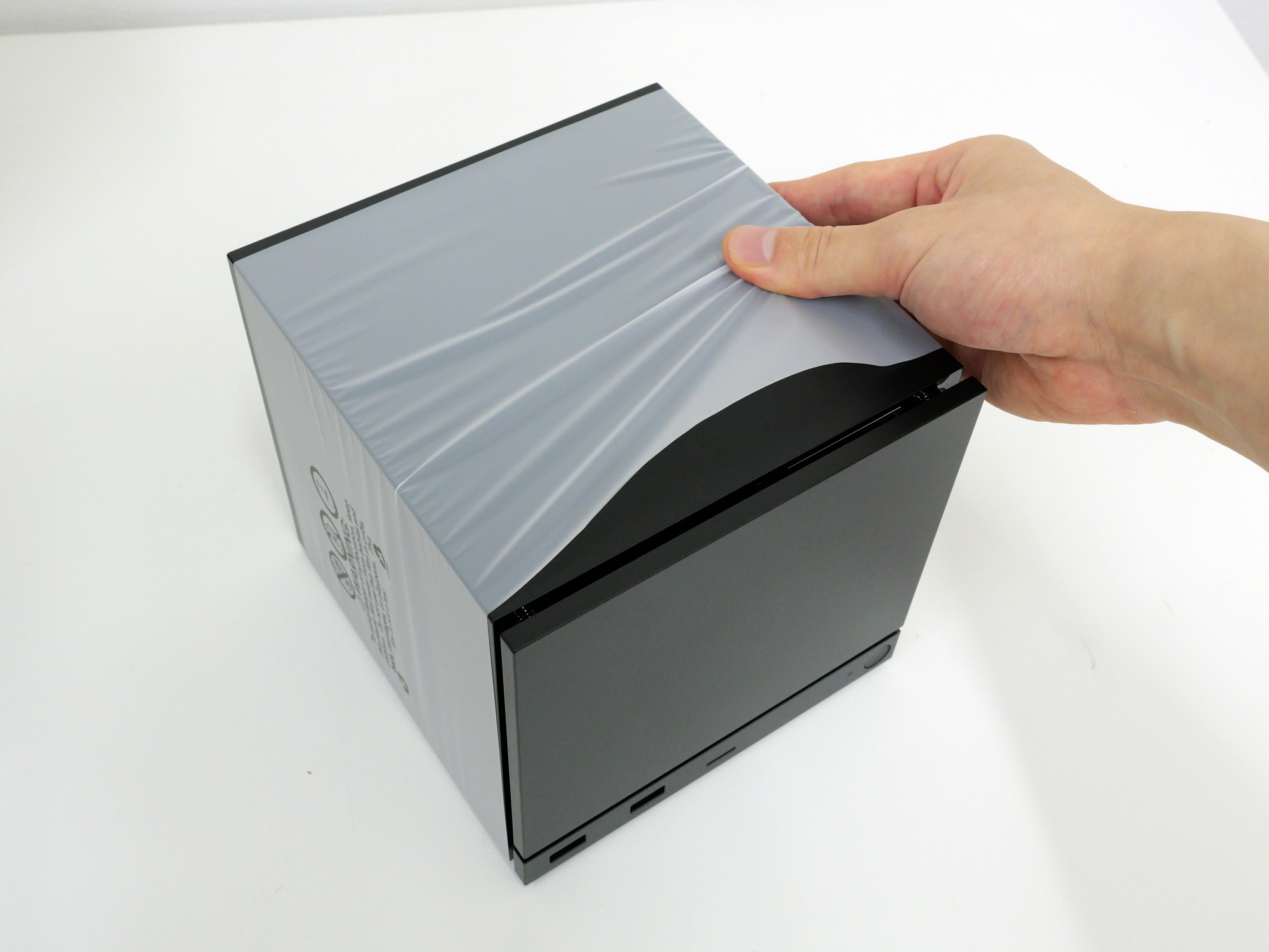
This is the Steam Machine. Inside, it's packed with a 2TB NVMe SSD, 16GB of DDR5 memory, 8GB of VRAM, a semi-custom AMD Zen 4 6C/12T processor, and a semi-custom AMD RDNA3 28CU processor.
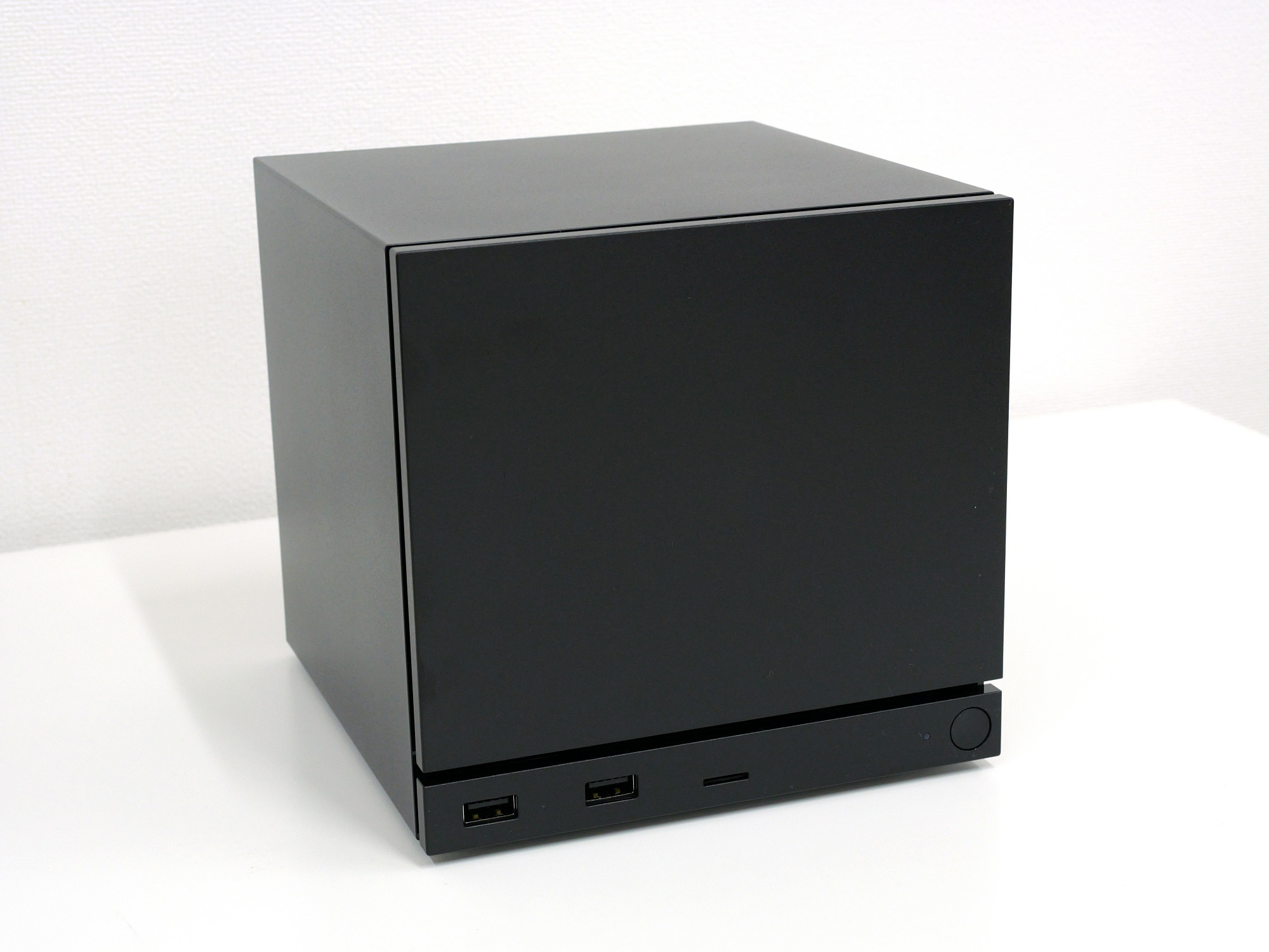
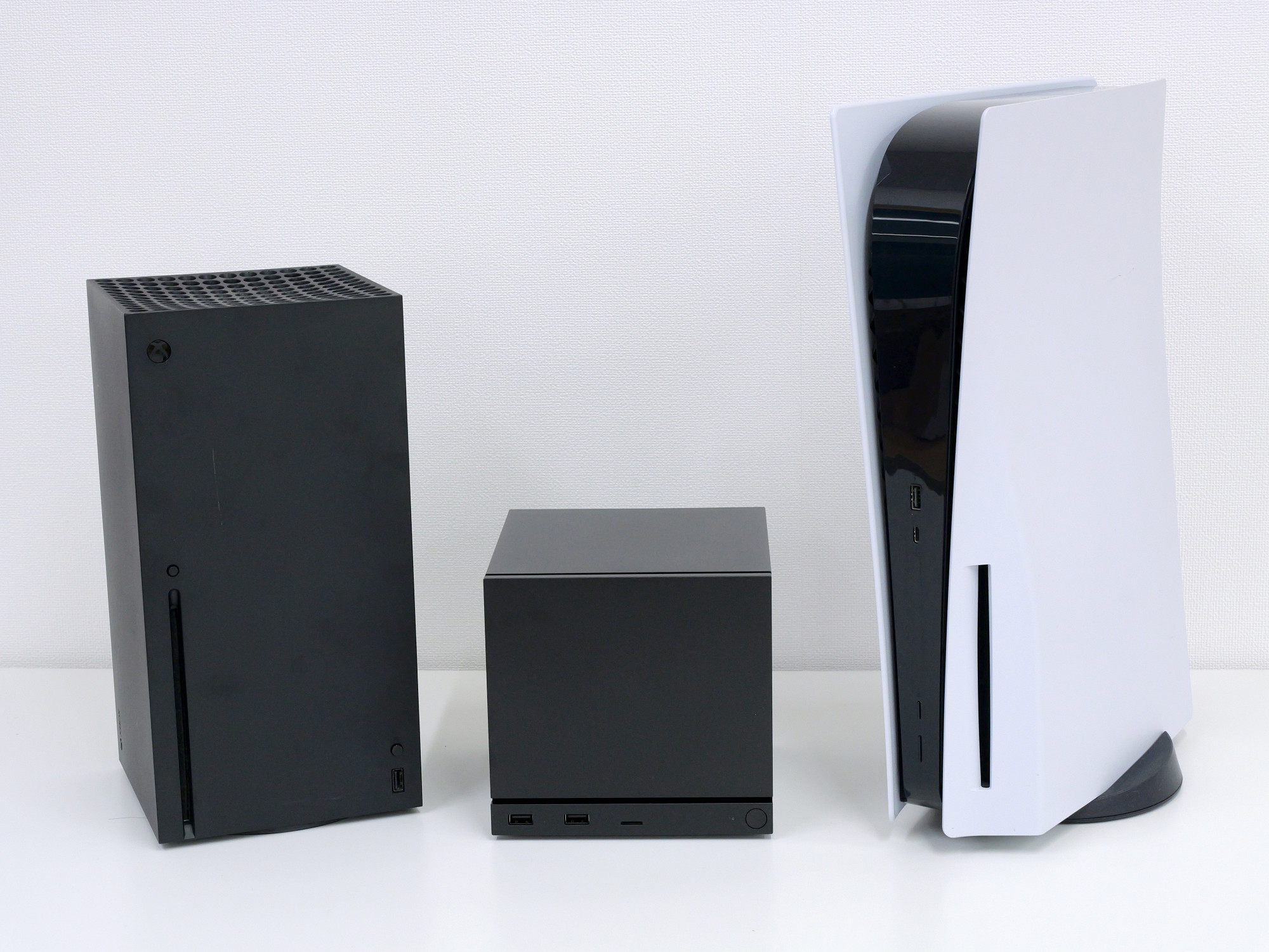
The dimensions are 152mm (height) x 162.4mm (depth) x 156mm (width). This is what it looks like when held in the hand.
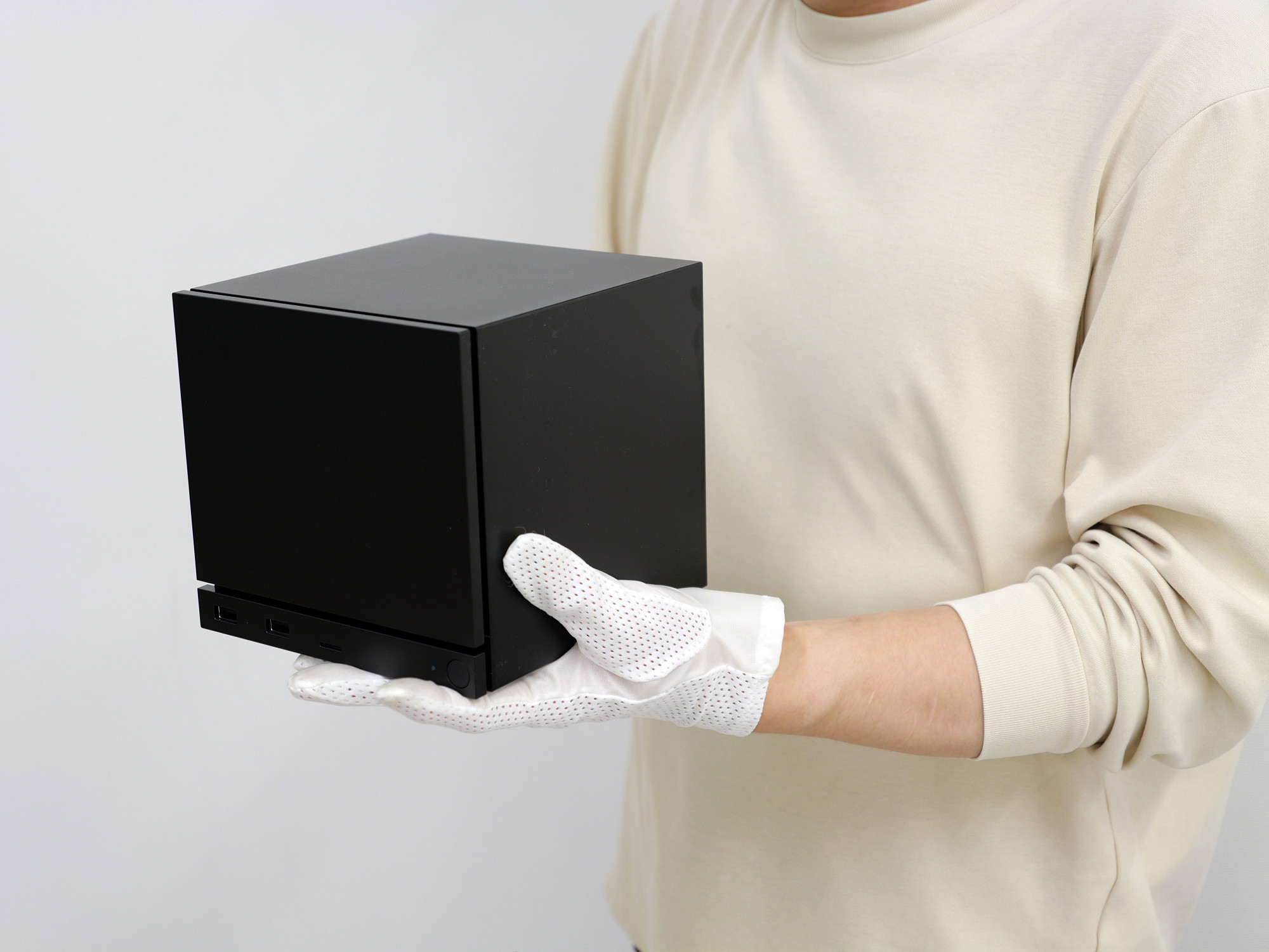
I lined up the 'XBOX Series X (left),' 'Steam Machine (center),' and 'original PlayStation 5 (right).' You can really see how small the Steam Machine is.
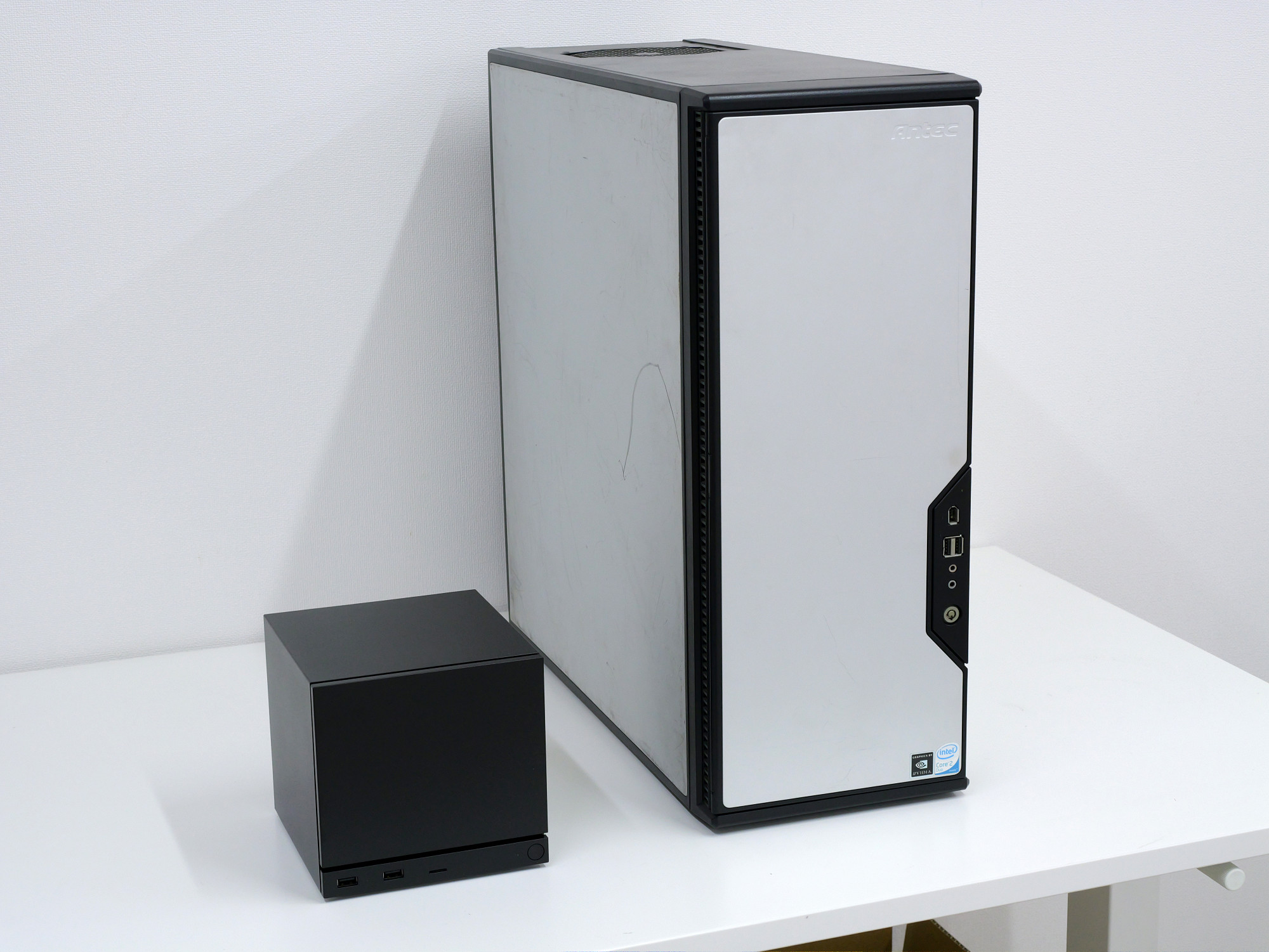
I even placed it next to a full-tower desktop PC for comparison. It's incredibly small.
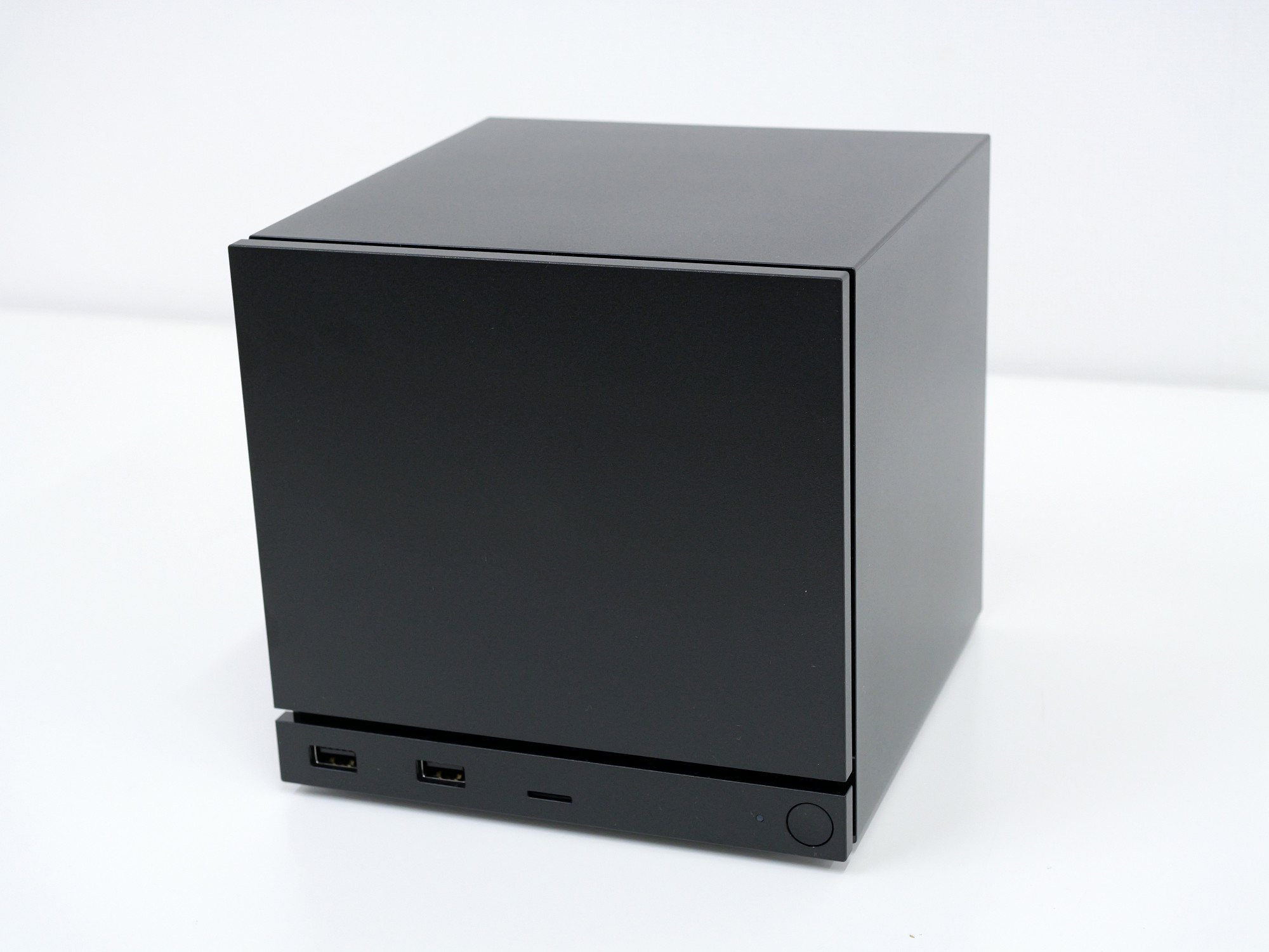
Let's take a closer look at the Steam Machine's appearance. There are no Steam or Valve logos on the front.
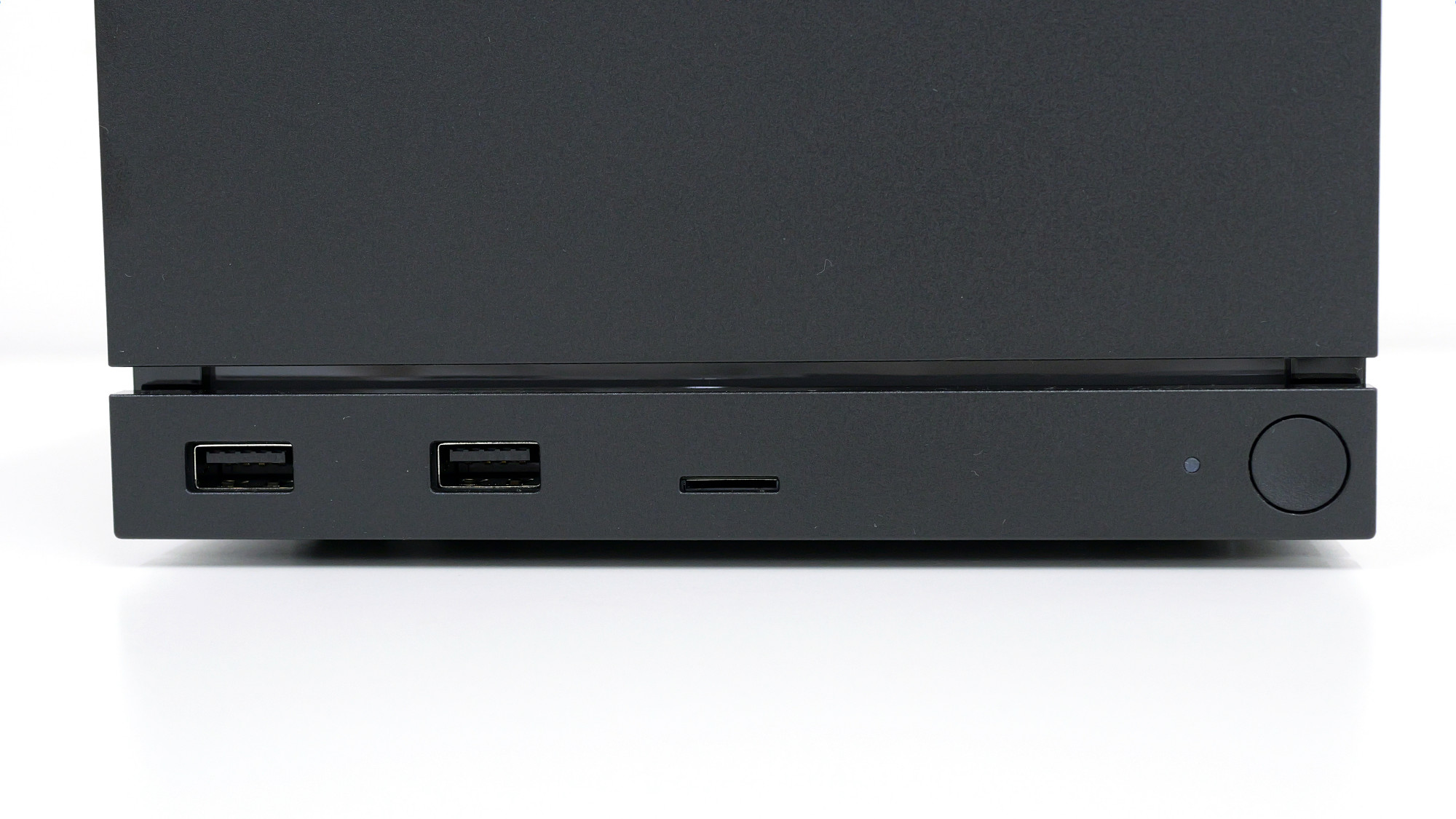
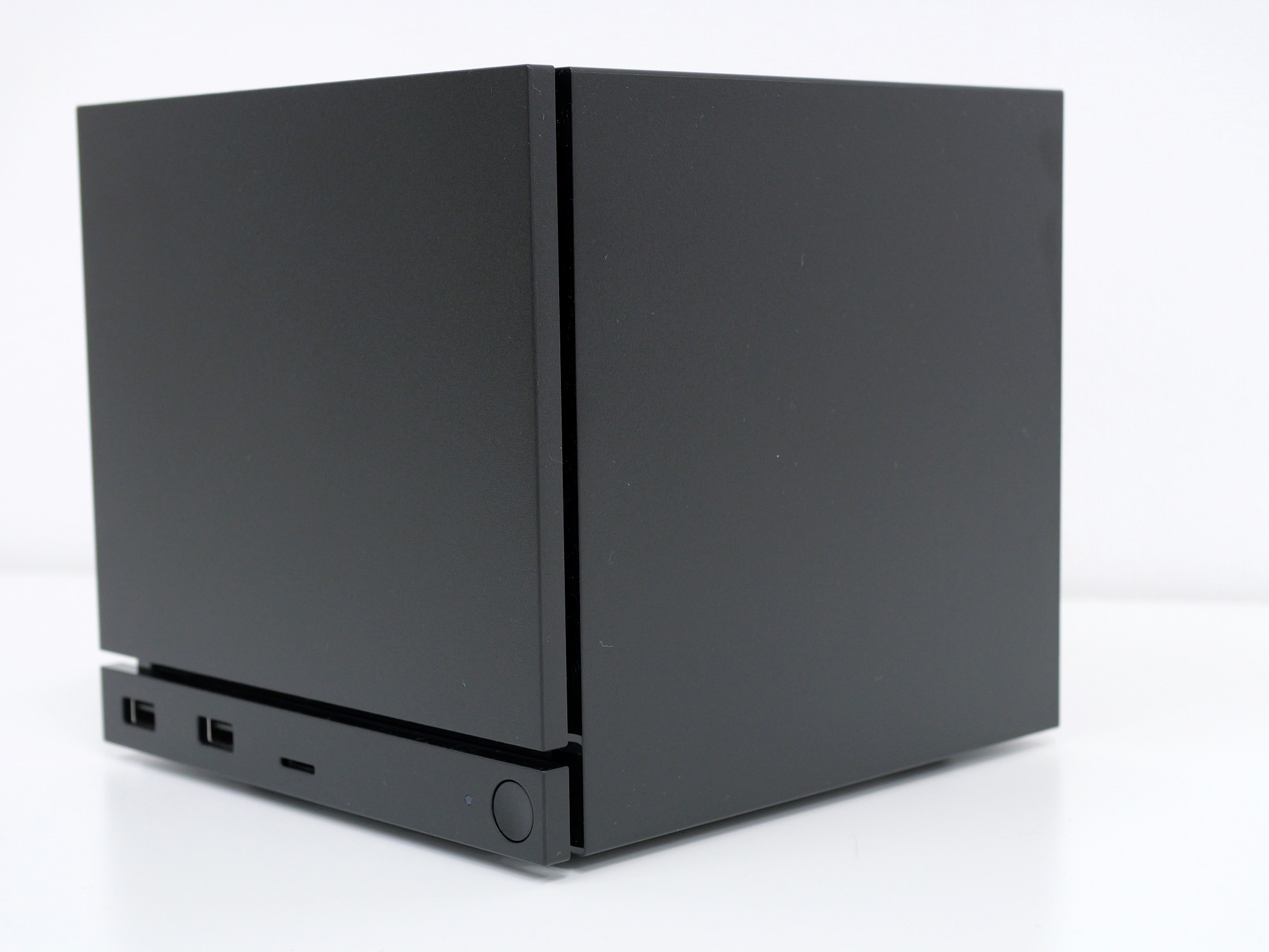
From left to right, there are two USB Type-A ports, a microSD card slot, an LED light, and a power button. The USB Type-A ports are USB 3.2 Gen1.
There is nothing on the left side.
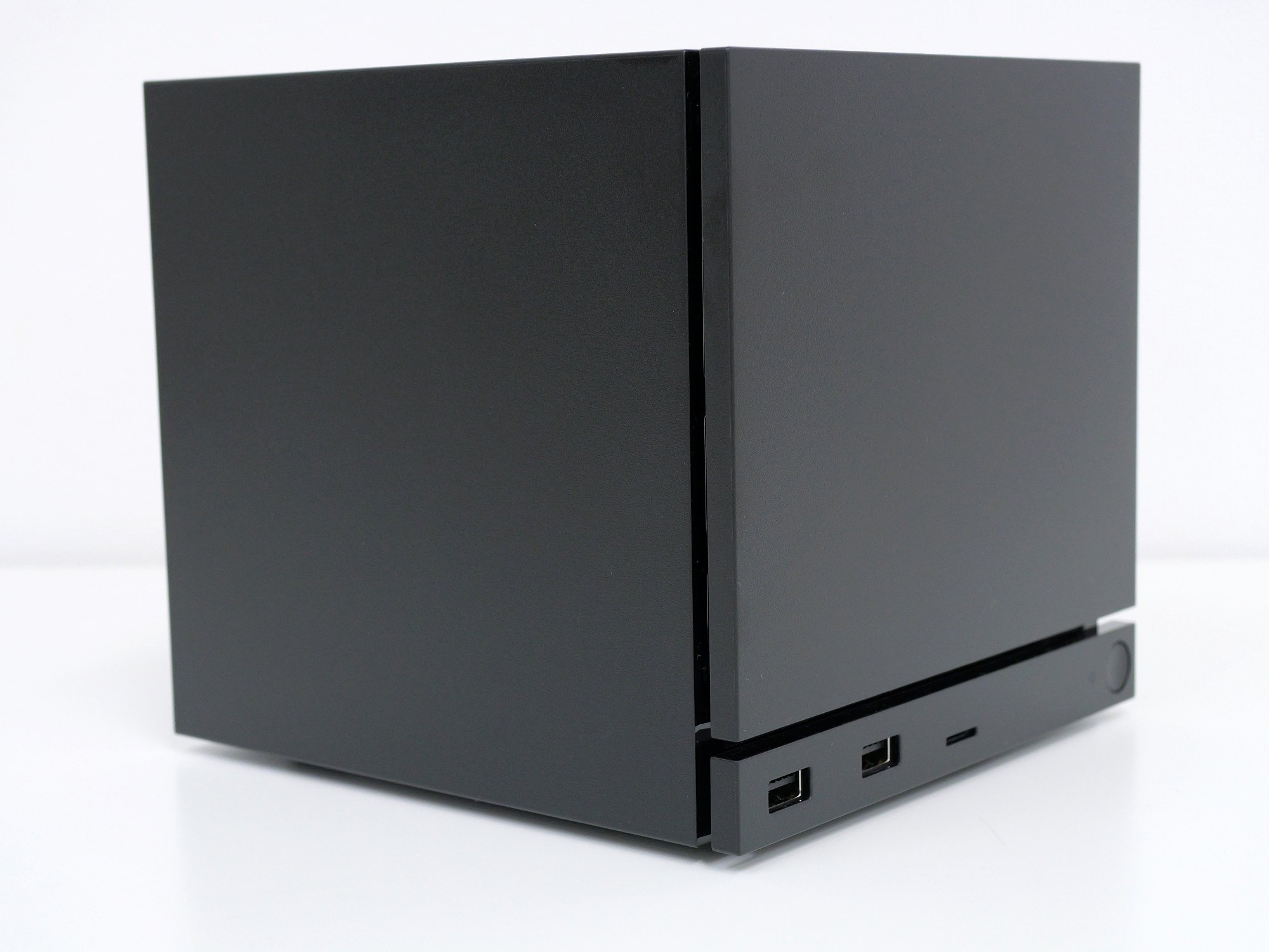
There are no buttons or ports on the right side either.
The fan and ports are located on the back. The Valve logo is in the center. It's interesting that the logo is on the back rather than the front.
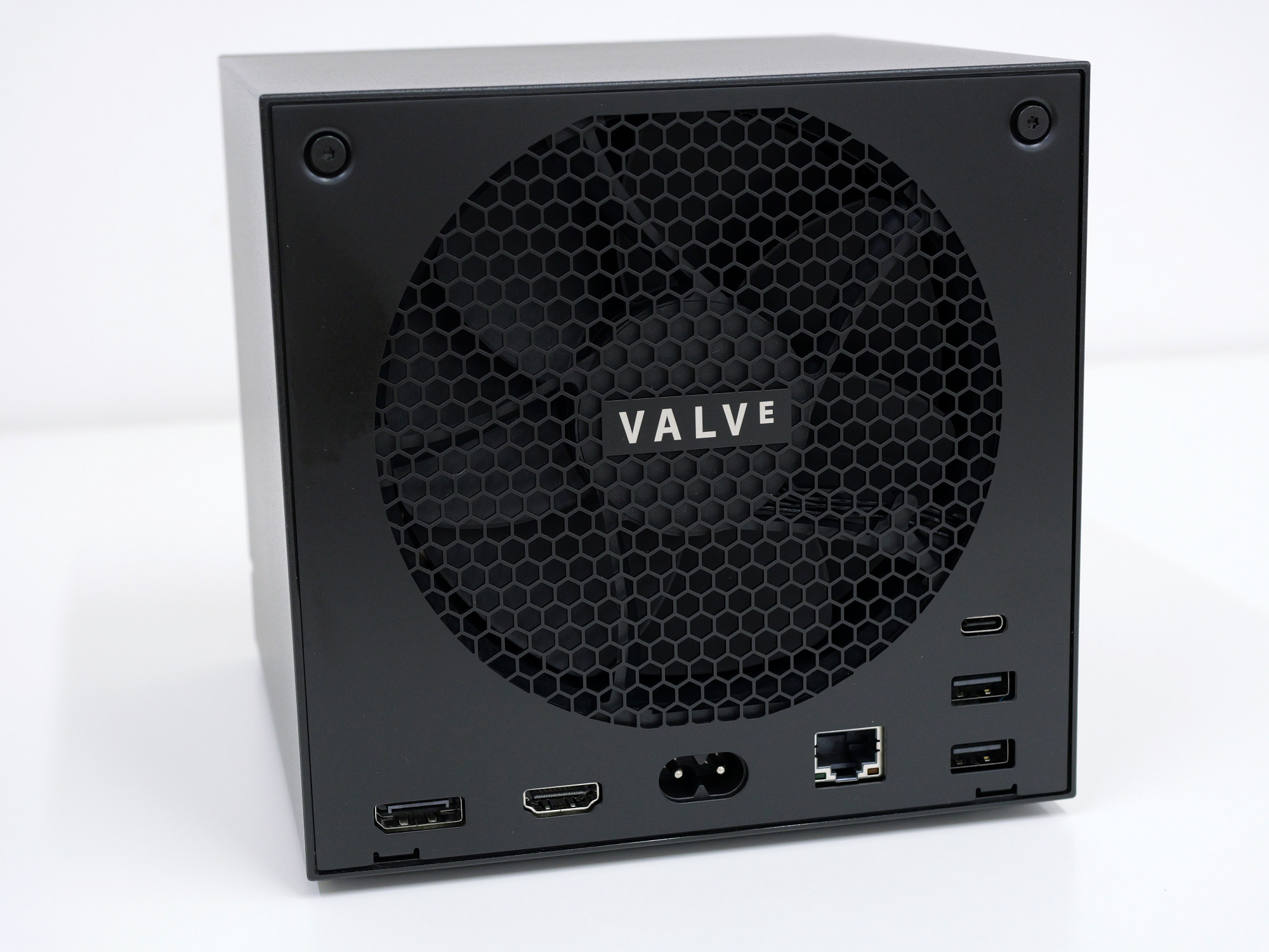
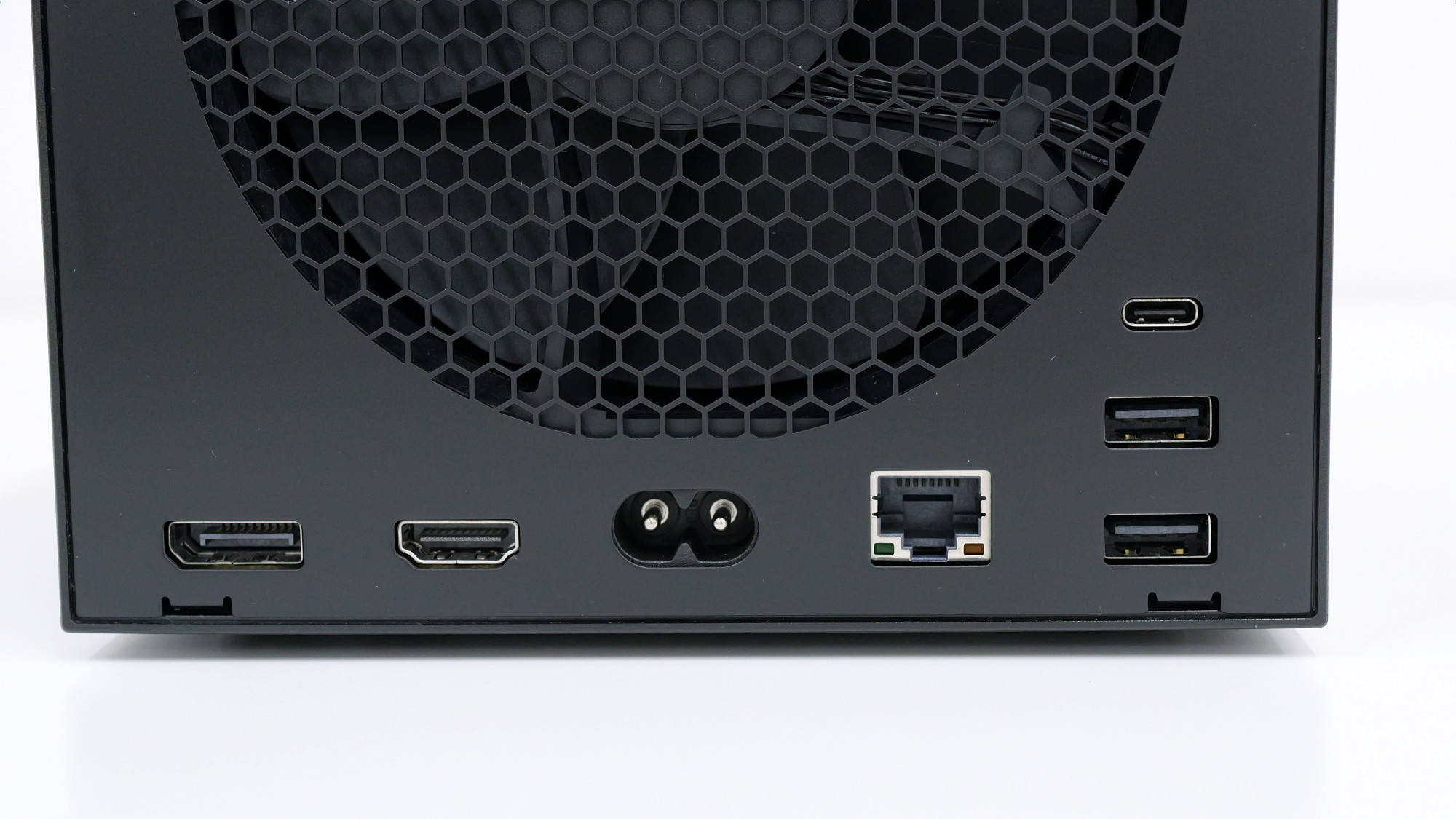
The ports, from left to right, are DisplayPort 1.4, HDMI 2.0, AC power connector, Gigabit Ethernet, USB Type-C, and two USB Type-A ports. The USB standards are USB 3.2 Gen2 for the Type-C port and USB 2.0 for the Type-A ports.
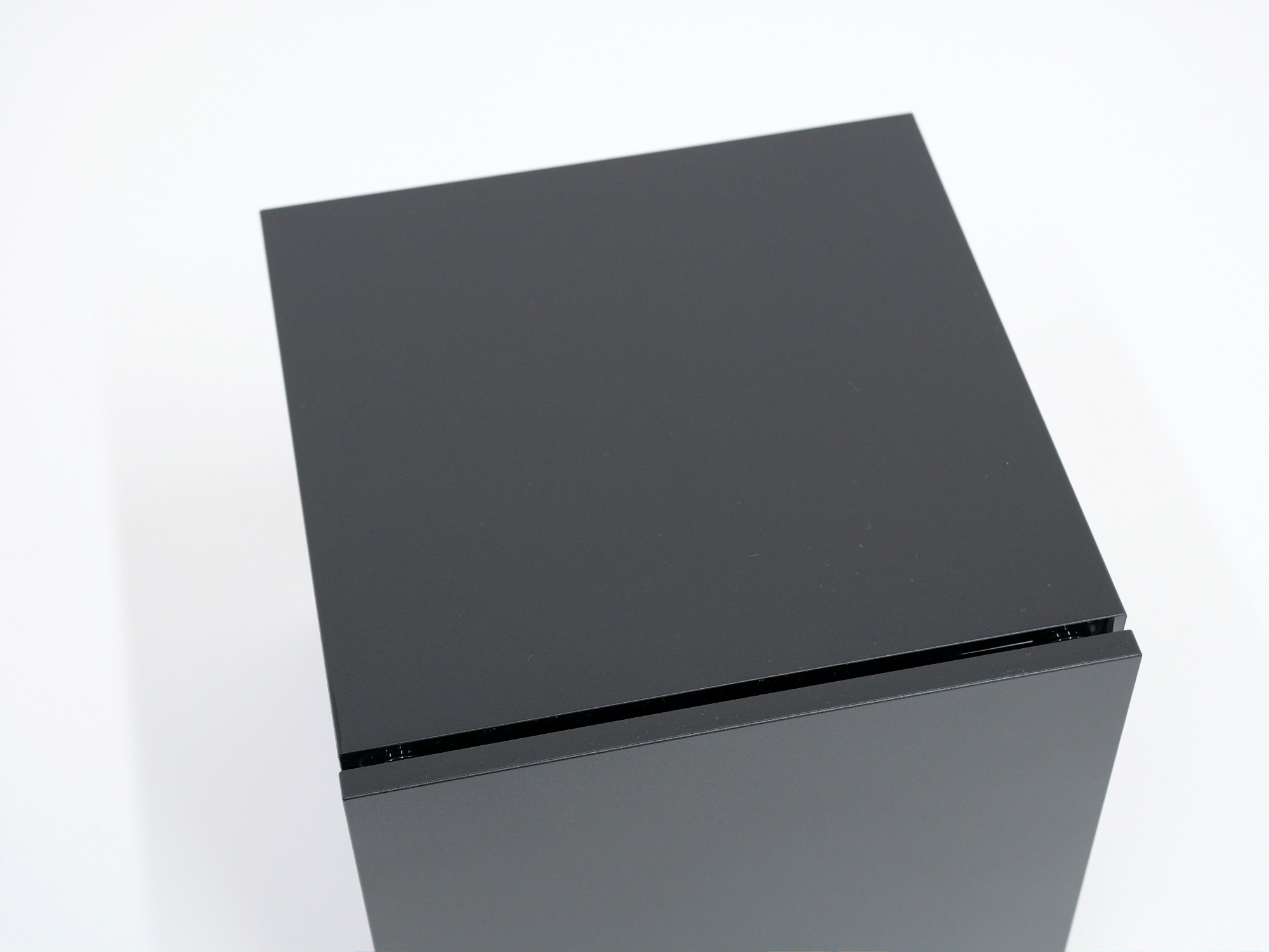
Nothing is mounted on the top surface.
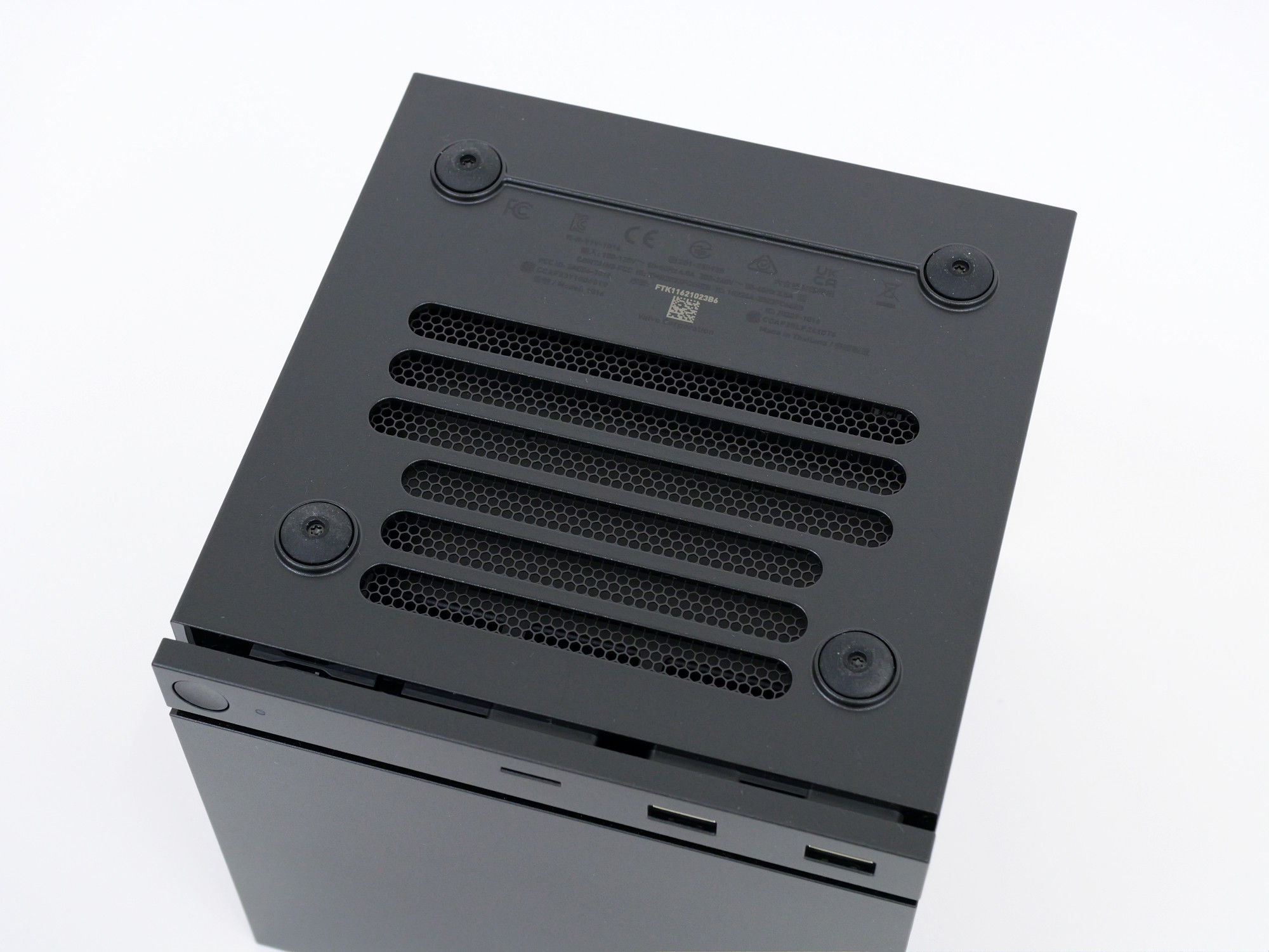
The base has four non-slip feet. Ventilation holes are also provided.
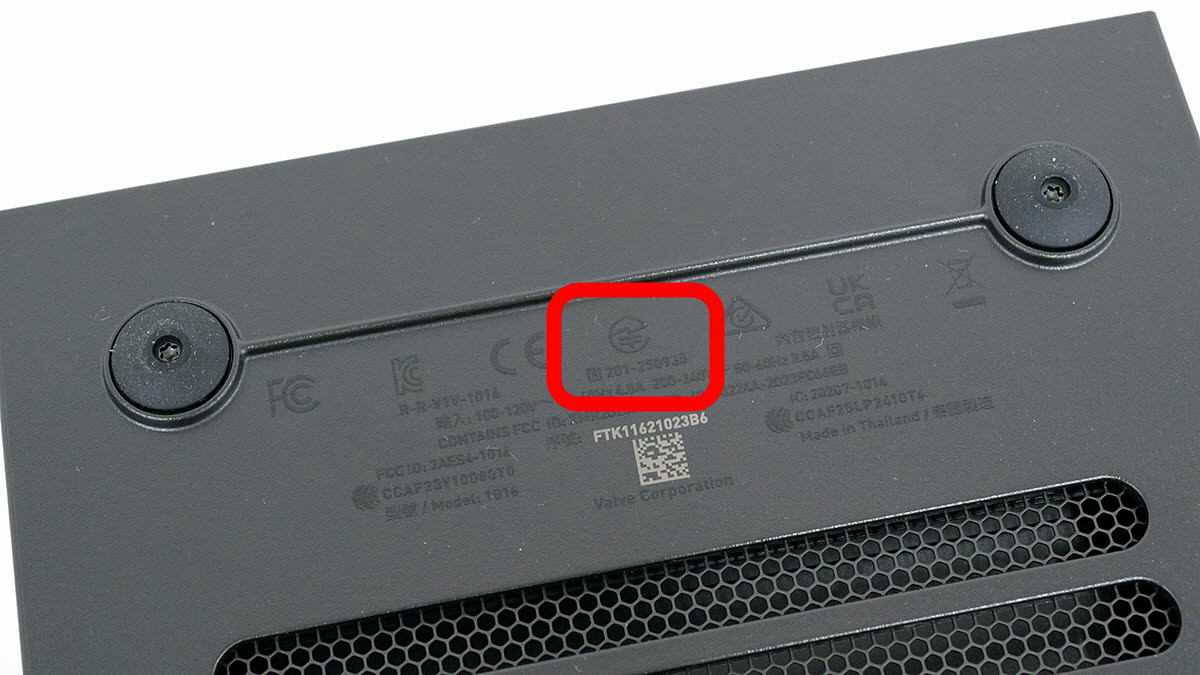
It also had the technical compliance mark.
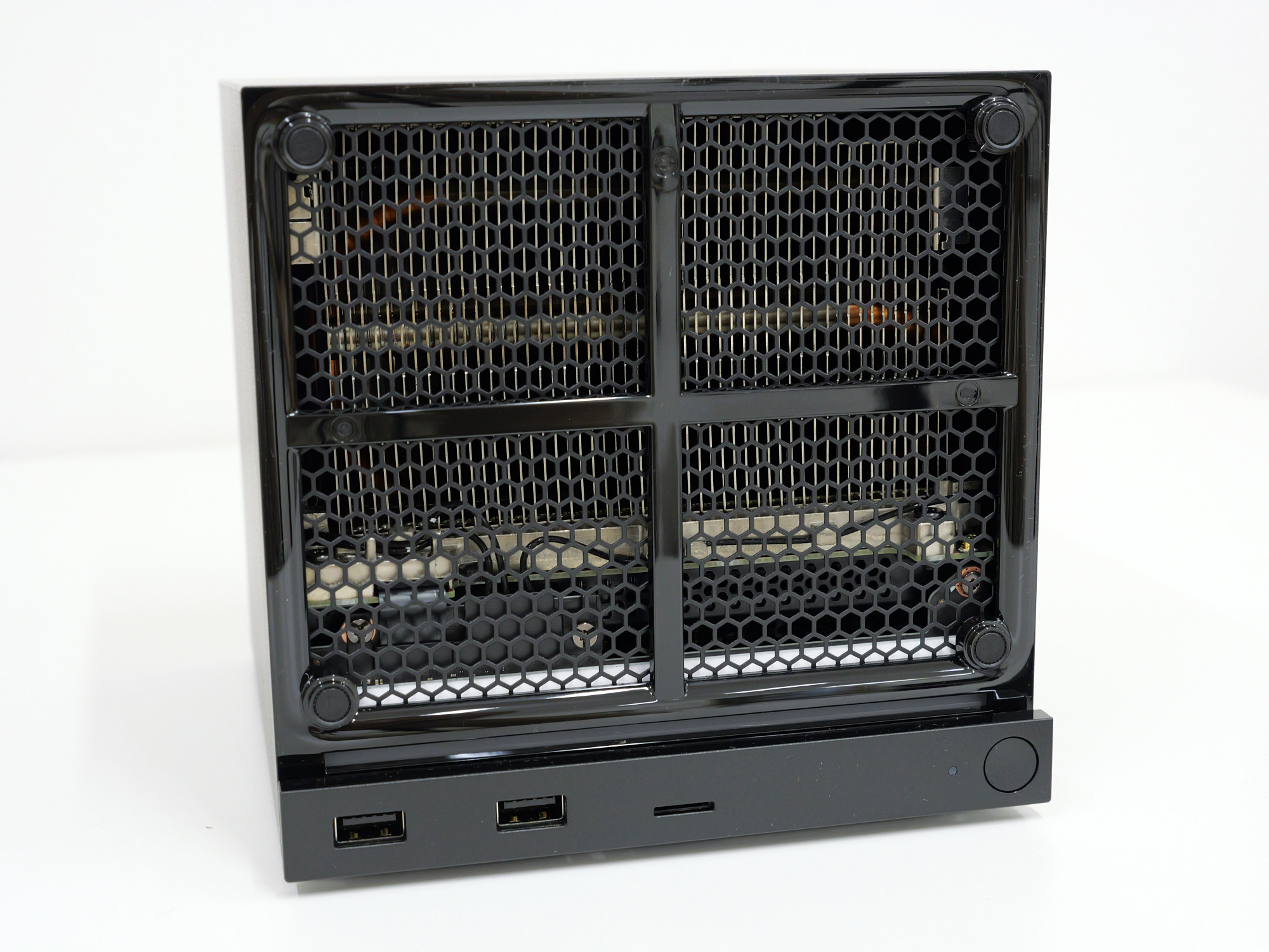
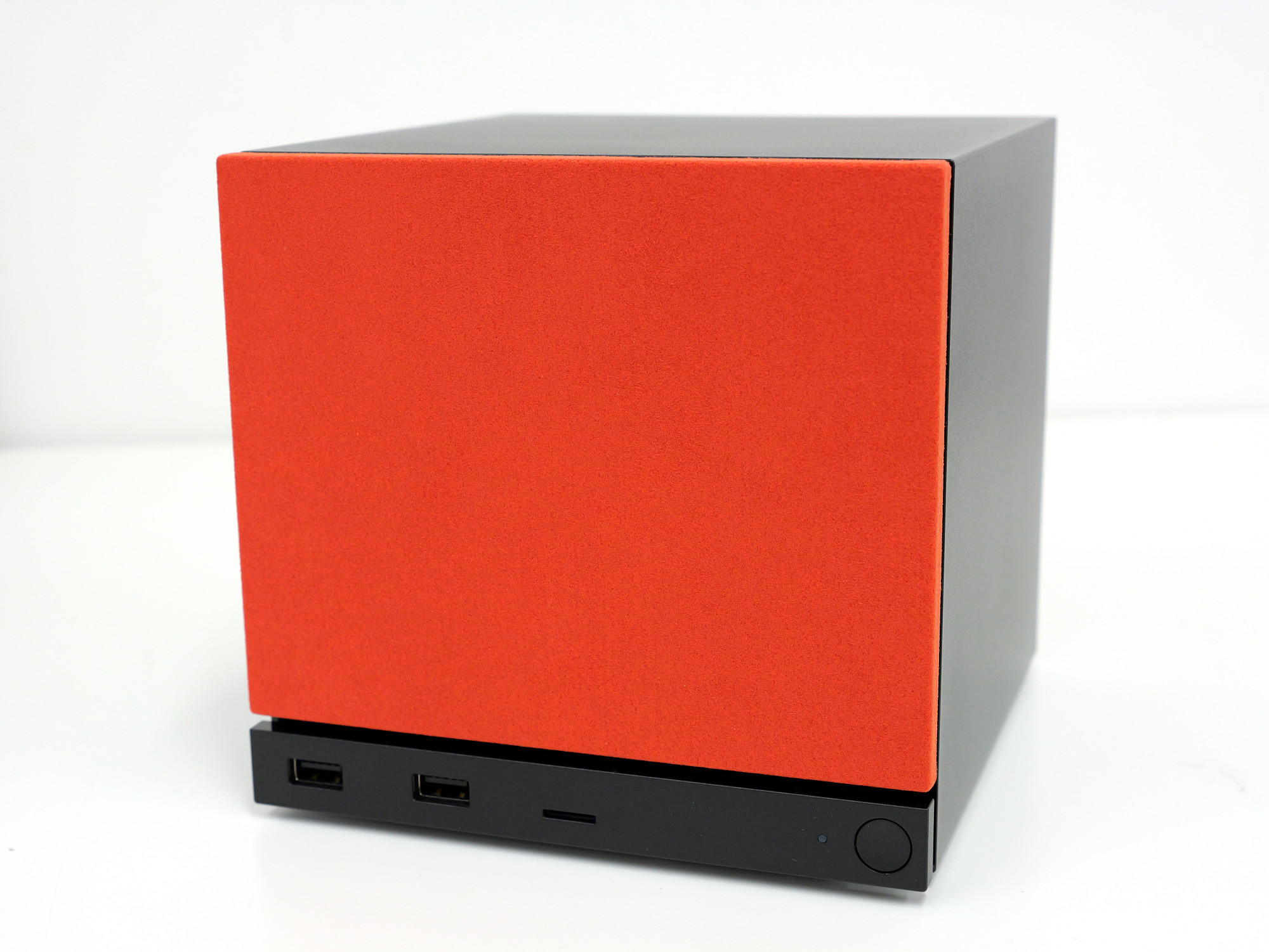
The front panel is only attached by magnets, so it can be easily removed.
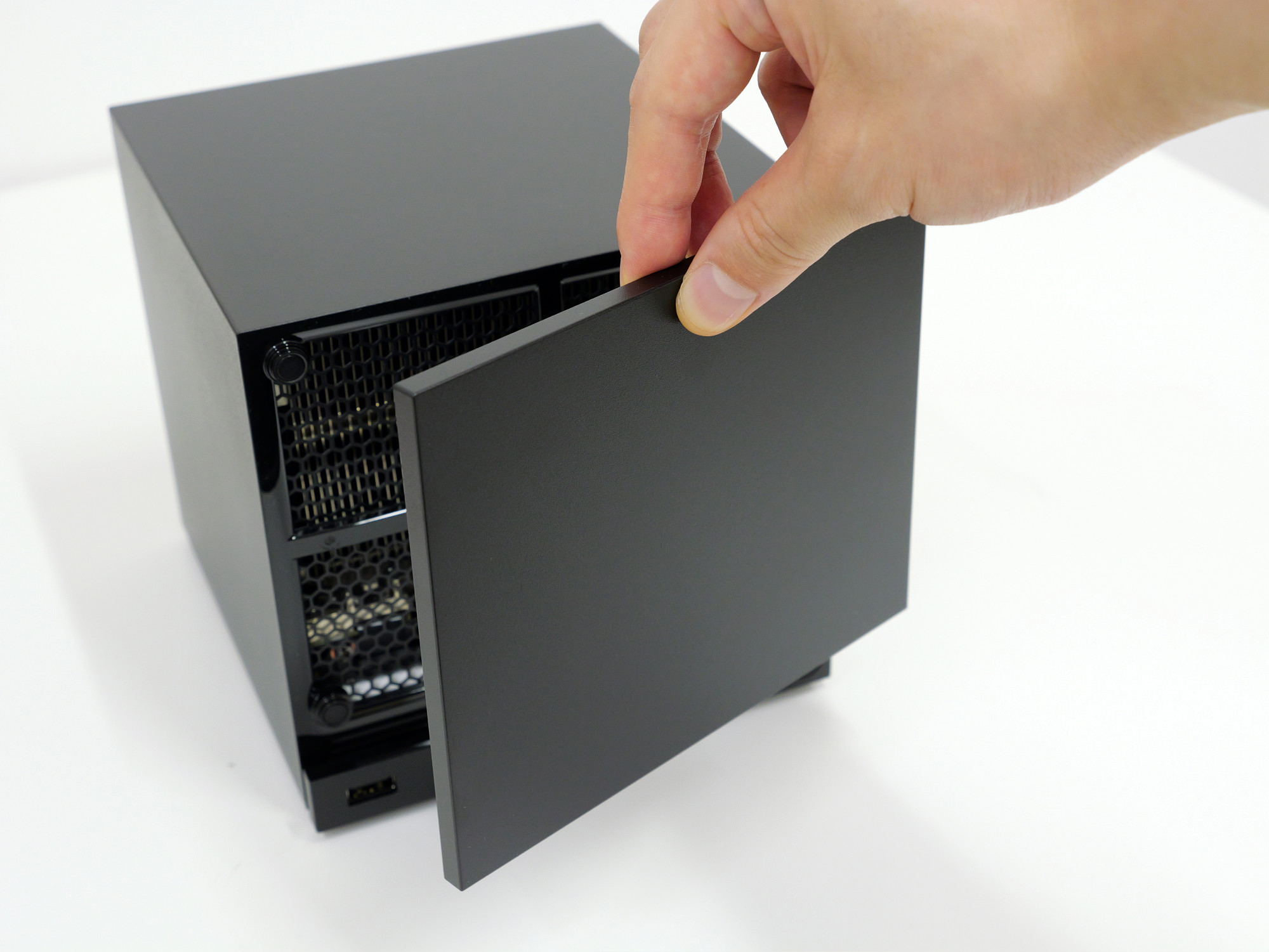
Behind the front panel, you can see the heatsink for air cooling.
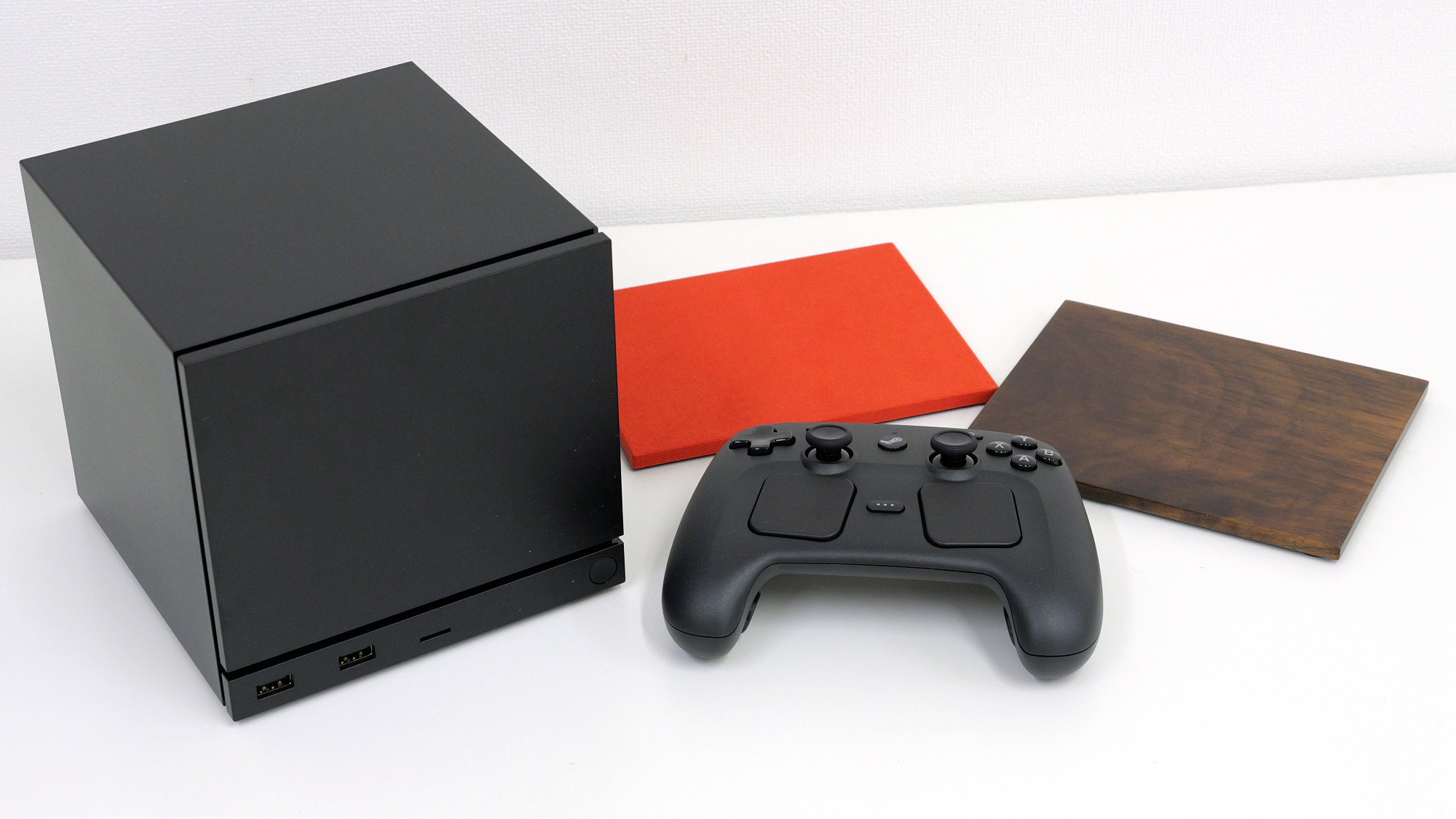
The model I bought this time came with two replacement front panels.
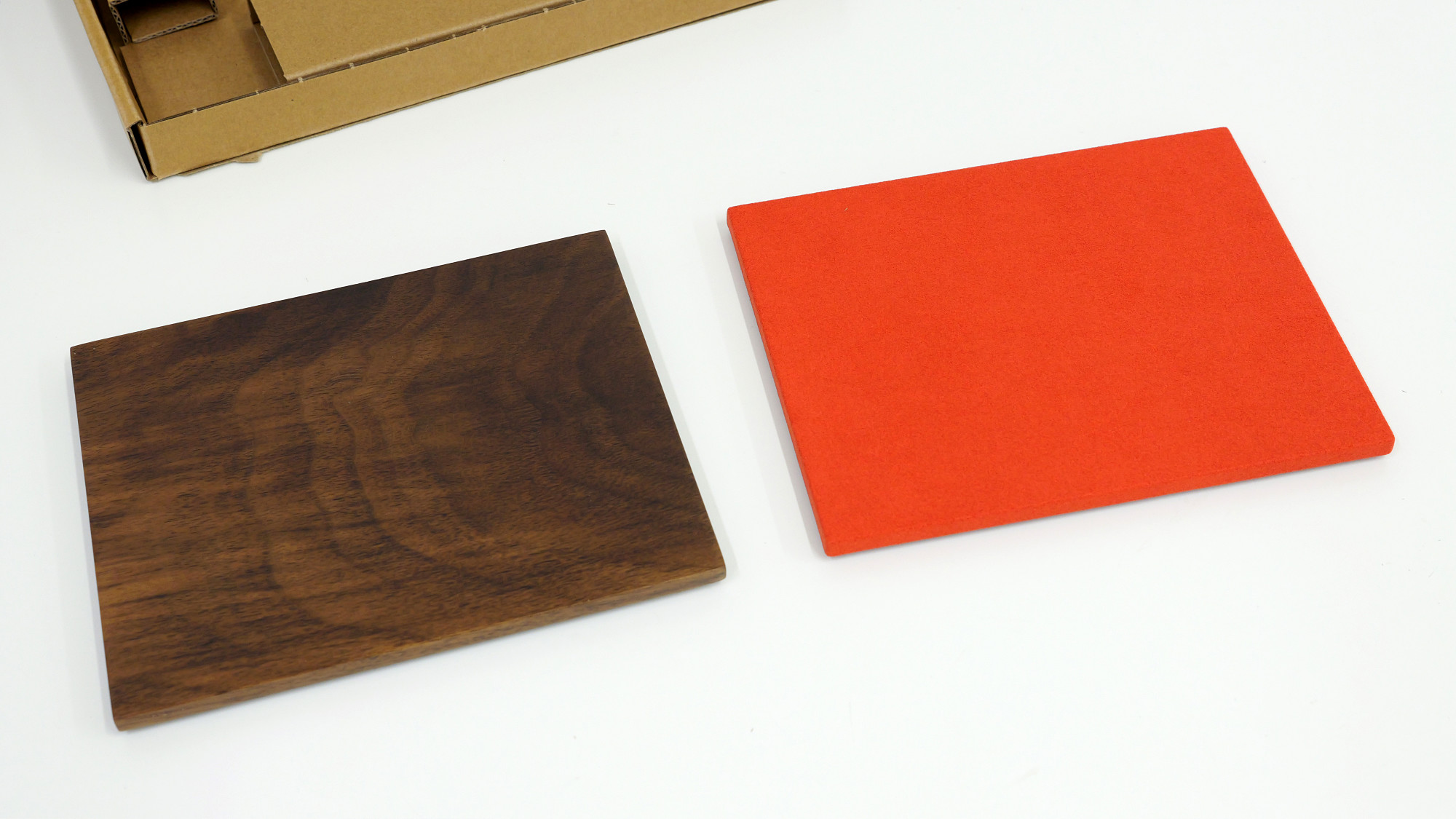
Wood-grain front panel and red front panel.
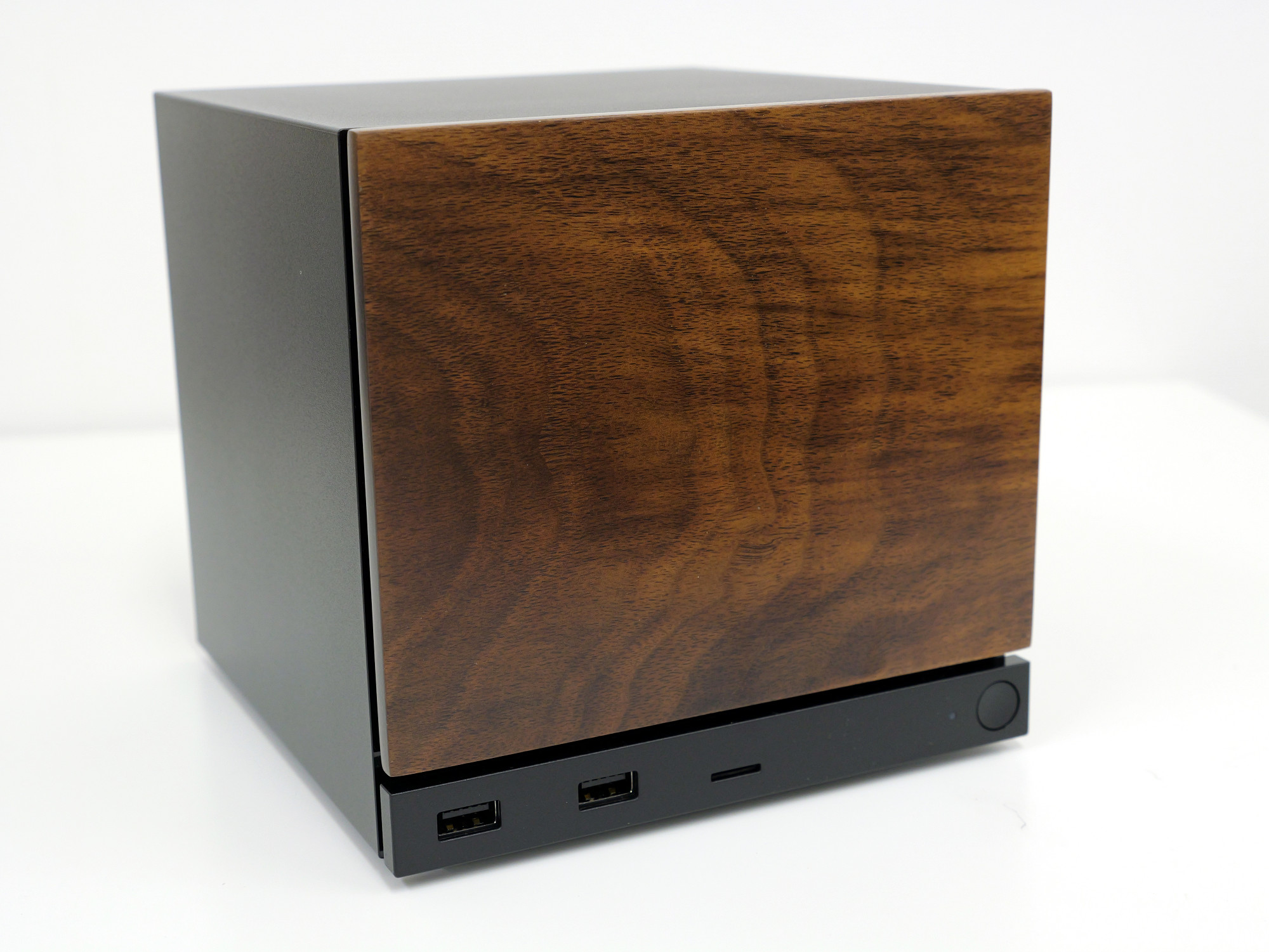
Attaching a wood-grain front panel makes the device look more upscale.
This is what it looks like with a red front panel. Note that this only changes the appearance and doesn't offer any tactical advantage.
We plan to publish an article at a later date that will test the gameplay capabilities of Steam Machine and its usability as a Linux machine.
[to be continued]
Related Posts: