In China, where the working population is declining, the movement to employ 'AI-equipped humanoid robots' is accelerating.
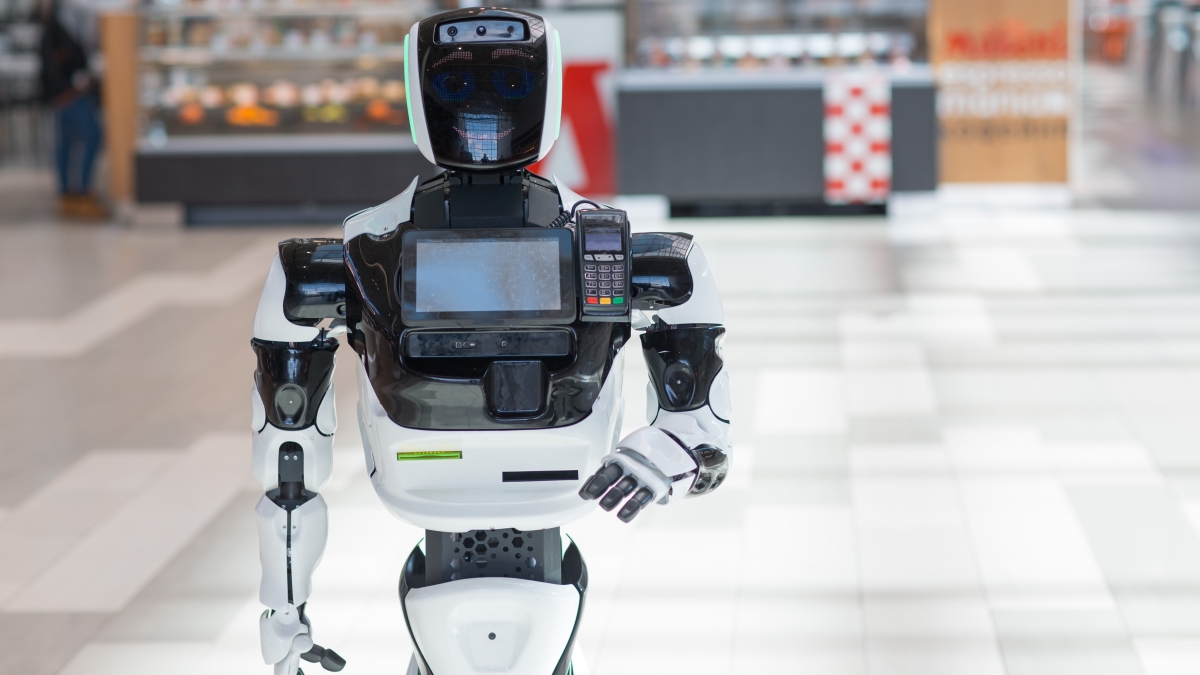
Amid a declining working-age population due to a low birth rate and aging society, China is moving towards deploying AI-powered humanoid robots in factories, hotels, logistics, retail, and other workplaces. The Financial Times, a major business newspaper, reports that there is a growing recognition among the Chinese government and companies that 'it is necessary to quickly introduce AI with a body for as many tasks as possible.'
Robot nation: China's bid to beat its demographic decline | Financial Times
https://www.ft.com/content/c8731833-10ca-4a12-bfe4-8ebb2584ec68
Moolenaar, Obernolte, McClellan Introduce Legislation to Ban Dangerous Chinese Robots | Select Committee on the CCP
https://chinaselectcommittee.house.gov/media/press-releases/moolenaar-obernolte-mcclellan-introduce-legislation-to-ban-dangerous-chinese-robots
Lutnick privately warned top executives of possible action against imported Chinese robots - POLITICO
https://www.politico.com/news/2026/06/23/lutnick-china-robots-commerce-00972576
China humanoid robot forecast doubles to 50,000
https://thenextweb.com/news/china-humanoid-robot-forecast-morgan-stanley-50000
China's working-age population (ages 15-64) peaked at approximately 1 billion in the mid-2010s, and the United Nations estimates it will decline to around 300 million by 2100. According to the Financial Times, humanoid robots and AI-powered robots are seen in China as a means of compensating for future labor shortages.
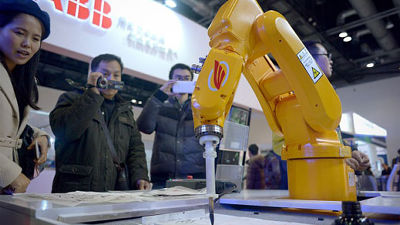
The Chinese government and businesses are focusing on 'embodyed AI,' which involves integrating AI into the bodies of machines that operate in the real world. Embodied AI refers to AI that has a physical body, unlike AI that responds on a screen, such as chat AI. The Chinese government is promoting the introduction of embodyed AI in fields such as manufacturing, logistics, retail, and healthcare. In fact, by 2025, China is projected to have introduced more industrial robots than all other countries in the world combined, and many humanoid robots are also manufactured by Chinese companies.
One specific example of robot implementation is factories. At a truck factory in Changsha, Hunan Province, in central China, robots are handling processes such as pressing and painting body panels, and the Financial Times reports that the company is looking to introduce humanoid robots into processes that still largely involve human labor, such as final assembly.
Financial giant Morgan Stanley has raised its forecast for humanoid robot shipments in China in 2026 from an initial 14,000 units to 28,000 units, and then further increased it to 50,000 units in June. Morgan Stanley estimates that the Chinese humanoid robot market will reach $2 billion (approximately 310 billion yen) in 2026 and $15 billion (approximately 2.3 trillion yen) in 2030. Technology media outlet The Next Web points out that 'while the forecast has been significantly raised in a short period, whether the demand will continue in the long term is another matter.'
Furthermore, it's not the case that all tasks can be immediately replaced by humanoid robots. Eric Guo, founder and CEO of AI² Robotics, explains, 'Humanoid robots are not suited for tasks that are too easy or too difficult.' He believes that conventional industrial robots are more efficient for simple, repetitive tasks, and that humanoid robots are still not capable of working reliably in unpredictable environments like homes.
Therefore, the Financial Times summarizes the scenarios in which humanoid robots are expected to be introduced as 'tasks that are more complex than simple tasks, but not as unpredictable as those in the home.' Specific examples given include precise screw tightening, adhesive application, and the production of custom-made clothing. In these types of tasks, the ability to use tools and work environments designed for humans could be an advantage for humanoid robots.
As an example of humanoid robots performing complex movements, the X account Space and Technology , which publishes topics related to space and technology, has posted a demo video of 'Humanoid-GPT,' an AI system running on a Unitree G1 robot.
Researchers have developed Humanoid-GPT, a new AI system that helps humanoid robots perform complex movements and tasks.
— Space and Technology (@spaceandtech_) June 18, 2026
Tested on the Unitree G1 robot, it enables real-time whole-body control and can perform new actions without special training.
During demonstrations, the… pic.twitter.com/Ew59YxHsTT
Furthermore, the introduction of robots is progressing in the service industry as well. Huazhu Group, a Chinese hotel chain, has introduced self-check-in terminals, luggage handling robots, food delivery robots, and some cleaning robots. As a result, they have reduced their staff to the point where they can operate a 100-room hotel with only about 10 people.
While the introduction of robots is progressing, the Financial Times points out that 'compensating for labor shortages' and 'replacing human jobs' are two sides of the same coin. In China, youth unemployment and the rise of gig workers are problematic, and if automation by AI and robots progresses rapidly, many people may lose stable jobs before labor shortages become severe.
Liu Qiangdong, founder and chairman of Chinese e-commerce giant JD.com, stated, 'In the future, robots will handle deliveries, and the 700,000 delivery workers will essentially become unnecessary.' Meanwhile, JD.com is also reportedly working with schools to retrain delivery workers in other roles, such as repairing and maintaining robots.
The economic benefits generated by robots and AI may not be distributed to workers as wages, but rather concentrated in the hands of companies and capital that own the robots. Some researchers in China believe that discussions need to be held on measures such as taxing robots, reducing personal income tax, retraining workers, and reviewing social security.
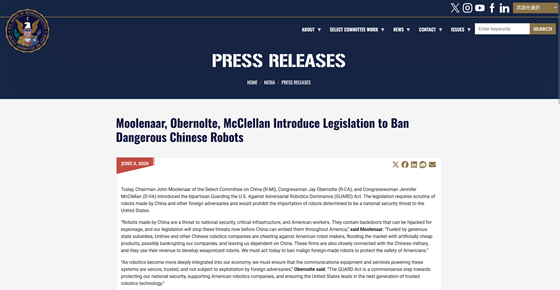
In the United States, there is a growing view that Chinese-made robots pose a national security risk. On June 3, 2026, the House Special Committee on China, commonly known as the 'China Committee,' introduced the 'Guarding the US Against Adversarial Robotics Dominance Act (GUARD Act),' which would review robots manufactured in China and other countries and ban the import of products deemed to pose a national security risk. The China Committee argues that 'Chinese robotics companies such as Unitree pose a threat to American national security, critical infrastructure, and workers.'
Furthermore, the committee's official X account expressed concern about the sale of Unitree robots on Amazon, posting: 'Unitree has recently been designated a Chinese military-affiliated company, and its products pose a threat to U.S. national security. Despite this, Amazon is selling Unitree robots in the United States. To stop this threat and support the American robotics industry, we need the GUARD Act introduced by the committee's chairman, John Mollener.'
Unitree was recently designated as a Chinese military company and its products are a threat to our national security, yet here is @Amazon selling a Unitree robot in America.
— Select Committee on China (@ChinaSelect) June 22, 2026
We need Chairman @RepMoolenaar 's GUARD Act to stop this threat and support American robotics. pic.twitter.com/lKt6PBHZcV
According to the political and policy media outlet Politico, U.S. Commerce Secretary Howard Rutnick stated in a closed-door meeting that 'the Commerce Department is investigating the import of robots subsidized by the Chinese government, and may take action after reviewing the matter.' Rutnick also said, 'We do not want a situation where robots subsidized by the Chinese government are attacking the United States. This is an impending arms race,' indicating his belief that robot manufacturing should be promoted domestically in the United States.
Related Posts: