AI-generated property images used by real estate agents are causing confusion in the rental market.

There has been an increase in listings for real estate properties that use AI-generated images to add furniture and interior decorations, and there have been reports of cases where the actual rooms looked completely different from the photos when people viewed them. 'Virtual staging,' which is meant to make properties look good, is changing into a way to hide the flaws of a property or add non-existent amenities, increasing the burden on people looking for rental properties.
Generative AI is cursing renters with the promise of impossible homes | The Verge
Joyce, who was looking for her first apartment to live alone in New York, found an affordable one. The photos on the real estate agent's website showed a spacious and bright interior, a kitchen that looked renovated, and a fireplace. However, when she viewed the apartment just to be sure, it was much smaller than the photos, the kitchen equipment was different, and there was no fireplace.
These are actual photos of the property that Ms. Joyce viewed.
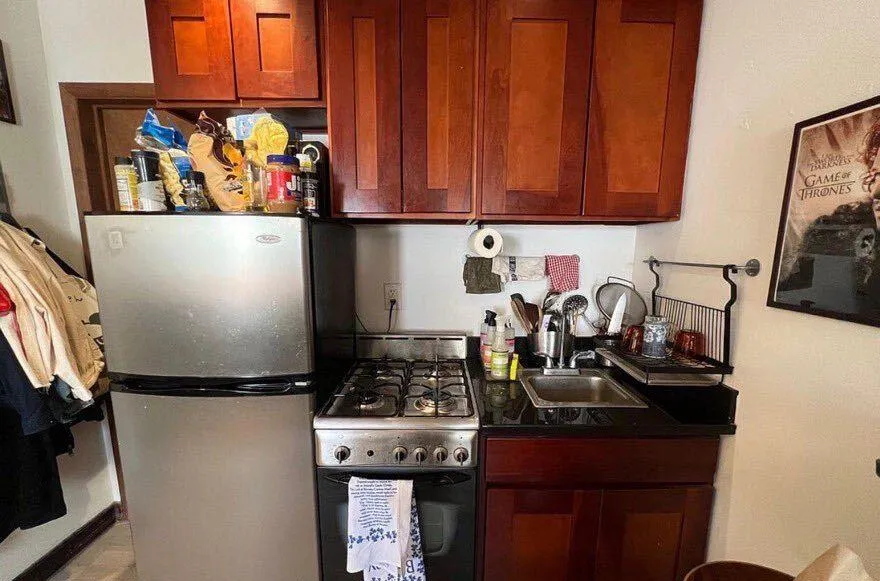
The following are photos of the property that Joyce viewed online. Joyce said she felt uneasy about the fact that 'a potted plant was placed on top of a gas stove with a flame.' Also, when comparing it to the actual property, it is clear that the size of the sink, the faucet, and the overhead cabinets are different.

While virtual staging, which shows how a property would look with furniture in place, has long been used in the real estate industry, the proliferation of AI has made it easy to create images that add realistic furniture and fixtures based on actual interior photos. A real estate agent in Florida explained that they are using AI to show clients images of homes with old furniture that have been transformed with modern interiors, conveying the image of the renovated property.
On the other hand, showing examples of furniture arrangements is different from misleading potential buyers about the actual condition of the property. Adding a non-existent fireplace or erasing scratches or holes would lead potential renters or buyers to inquire about or view the property based on conditions different from the actual property, and the real estate agent themselves would also face legal risks.

Among those who have searched for properties in New York, besides Joyce, others have mentioned that clues to spot fake listings include an unnaturally large number of potted plants in the seemingly AI-processed images and inconsistencies in the details of the furniture. However, because the overall image looks authentic, prospective tenants must carefully examine the details of the listed photos and judge whether the images accurately reflect the reality before even viewing the property.
Amidst this situation, there are also moves to regulate the use of AI. New York State has enacted a law requiring disclosure of AI use in advertising, but it mainly targets 'people' and does not adequately address the generation of furniture and interiors. California has gone a step further, introducing a law that requires disclosure if real estate advertising images have been modified or enhanced with AI.
Furthermore, the influence of AI extends to the descriptions of properties. Joyce points out that phrases like 'charming,' 'cozy,' and 'spa-like finishes' are repeatedly used in property descriptions, raising concerns that excessive AI-driven staging, including not only images but also text, is making it difficult for people to make informed decisions when searching for properties.
Related Posts:







in AI, Posted by log1i_yk