The World Intellectual Property Organization (WWI) has unveiled a program aimed at reducing profits from copyright infringement in cooperation with payment providers.

Title slide type 1 - wipo_ace_18_40_presentation.pdf
(PDF file) https://www.wipo.int/edocs/mdocs/enforcement/en/wipo_ace_18/wipo_ace_18_40_presentation.pdf
WIPO Alert Pay Aims to Cut Off Piracy Profits with Help from Payment Providers * TorrentFreak
https://torrentfreak.com/wipo-alert-pay-aims-to-cut-off-piracy-profits-with-help-from-payment-providers/
In 2019, WIPO released an 'ad block list' that allows member states to report copyright infringement sites. This list is shared with advertisers, who can use it to prevent revenue from flowing to these sites. This system, called 'WIPO Alert,' has been in operation for many years as an attempt to cut off the revenue streams of pirated content sites.
At the 18th Executive Advisory Committee meeting held in Geneva, Switzerland from June 2 to June 4, 2026, WIPO's Todd Reeves explained that they are developing 'WIPO Alert Pay' as 'the next stage in our approach to tracking the flow of funds.'
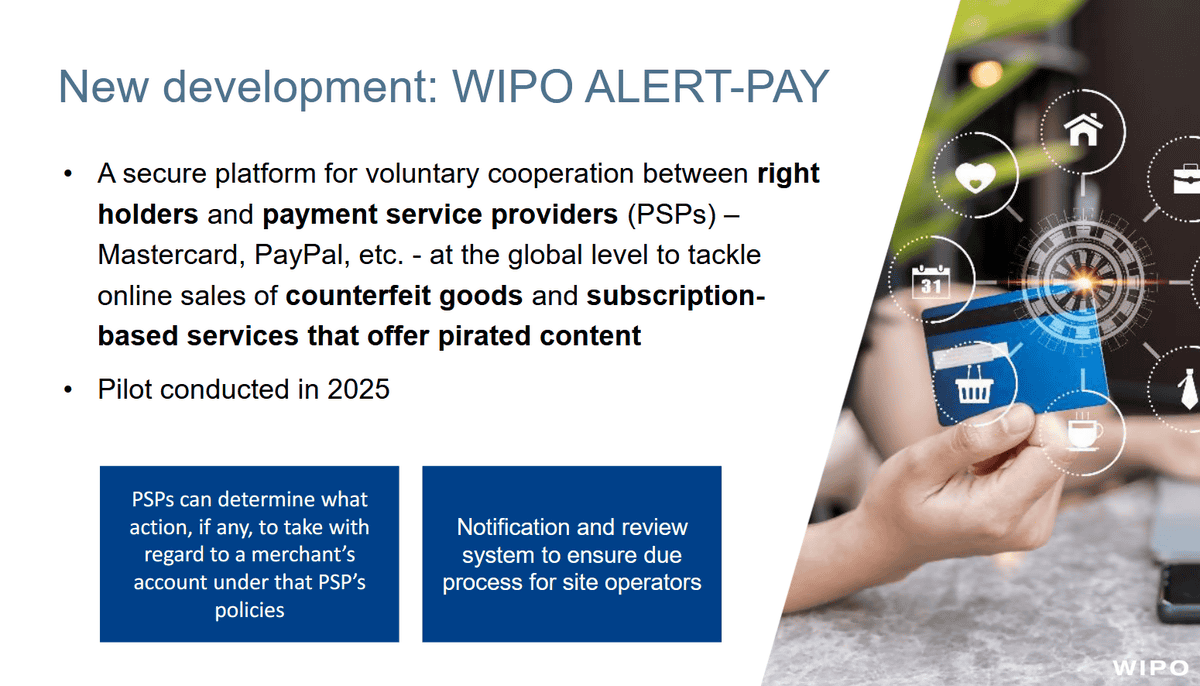
According to Reeves, WIPO AlertPay operates on a voluntary basis between rights holders and payment service providers such as Mastercard and PayPal. Rights holders can report instances where pirated websites are using their payment services to pay for subscriptions, VIP access, and other services. By providing the necessary information, rights holders can verify the integrity of that information before the domain name is registered in the system. Payment service providers then decide what actions to take against accounts suspected of providing pirated services, based on their own terms of service.
If a pirated website is found to be operating, the rights holder will first notify the website owner. If there is no response after three business days, WIPO will intervene and send a second notification. If there is still no response after another three business days, the website will be added to the WIPO alert paylist, and the payment provider will handle the subsequent processing.
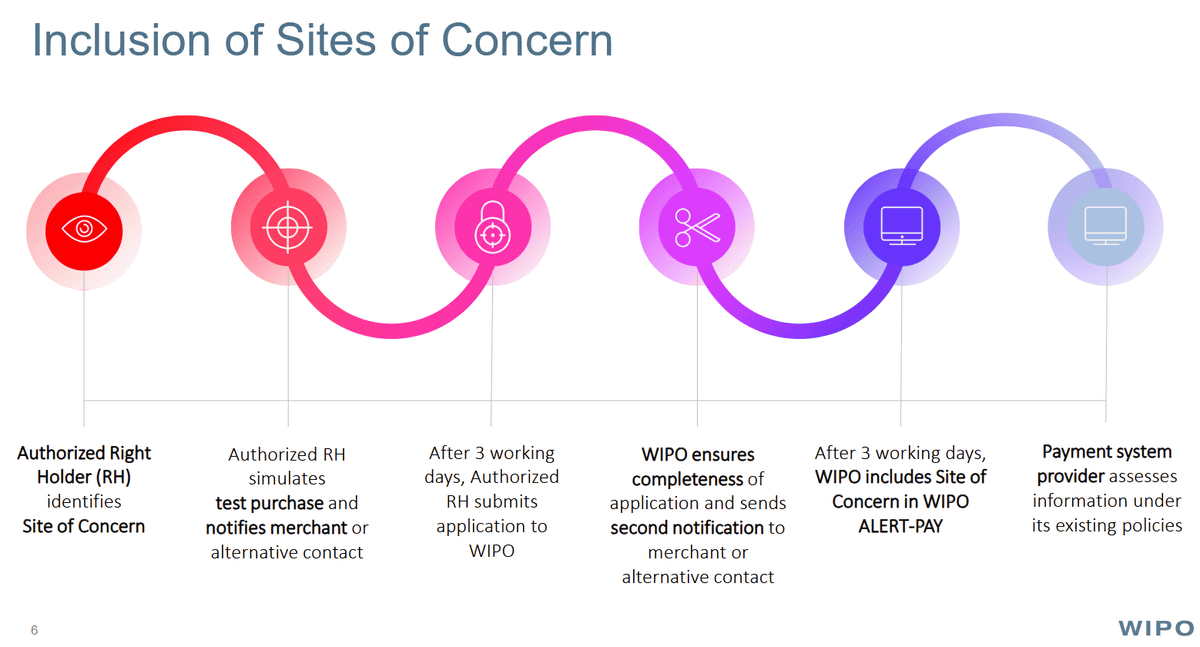
Reeves explained that WIPO only securely hosts the platform and does not make copyright infringement judgments itself. They receive lists of problematic sites from rights holders and verify that those sites have the necessary information and certificates, but WIPO's role is limited to formal checks.
WIPO AlertPay was conducted as a manual pilot from November 2024 to August 2025, with the participation of six anonymous rights holders and two payment providers. During the pilot period, 17 actions were taken against 35 sites suspected of dealing in pirated content, and 71% of the flagged sites were shut down or the products in question were removed. All participants gave the system a positive evaluation, and Reeves stated that the pilot operation was deemed effective and that they are ready to expand the system.
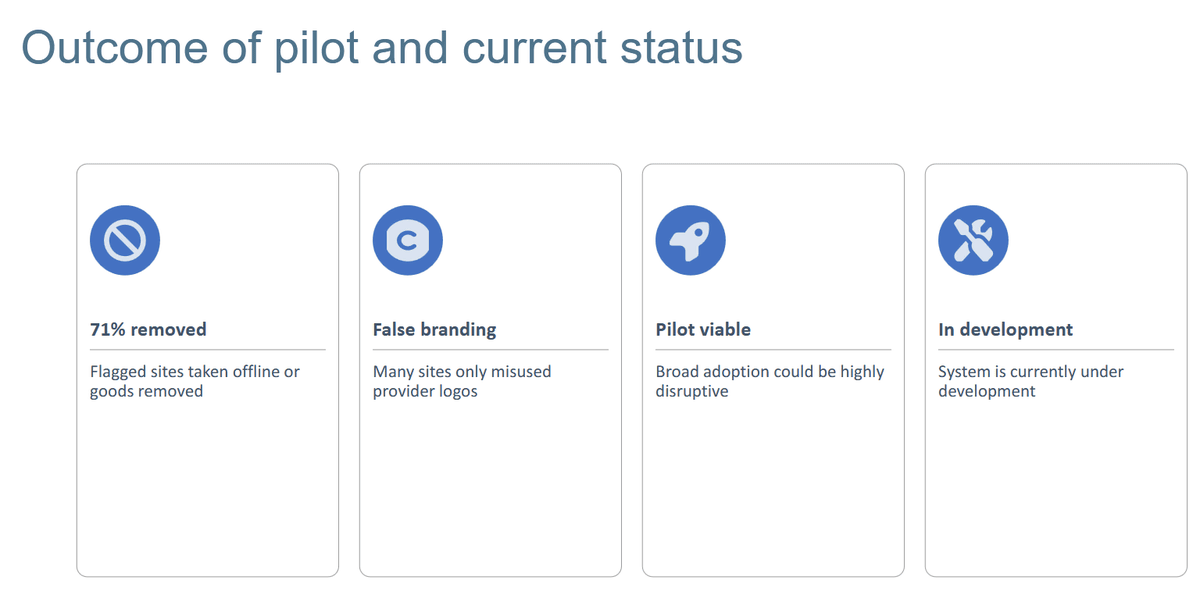
Furthermore, investigations conducted during the trial period revealed that some sites were displaying the logos of Mastercard and PayPal even though they did not actually offer those services. This suggests that the sites were making false representations to appear more trustworthy.
With the pilot program now complete, WIPO is working on the final stages of WIPO AlertPay. According to Reeves, software engineers have been working for several months to automate the manual workflow into an automated platform, and that work is nearly complete. WIPO AlertPay already supports PayPal and Mastercard, and the company plans to expand its reach by adding more providers.
Related Posts:







in Web Service, Posted by log1e_dh