A new technology has emerged that 'repairs' batteries by simply immersing them in a special solution, restoring 95% of their capacity and 'repairing' the electrodes.
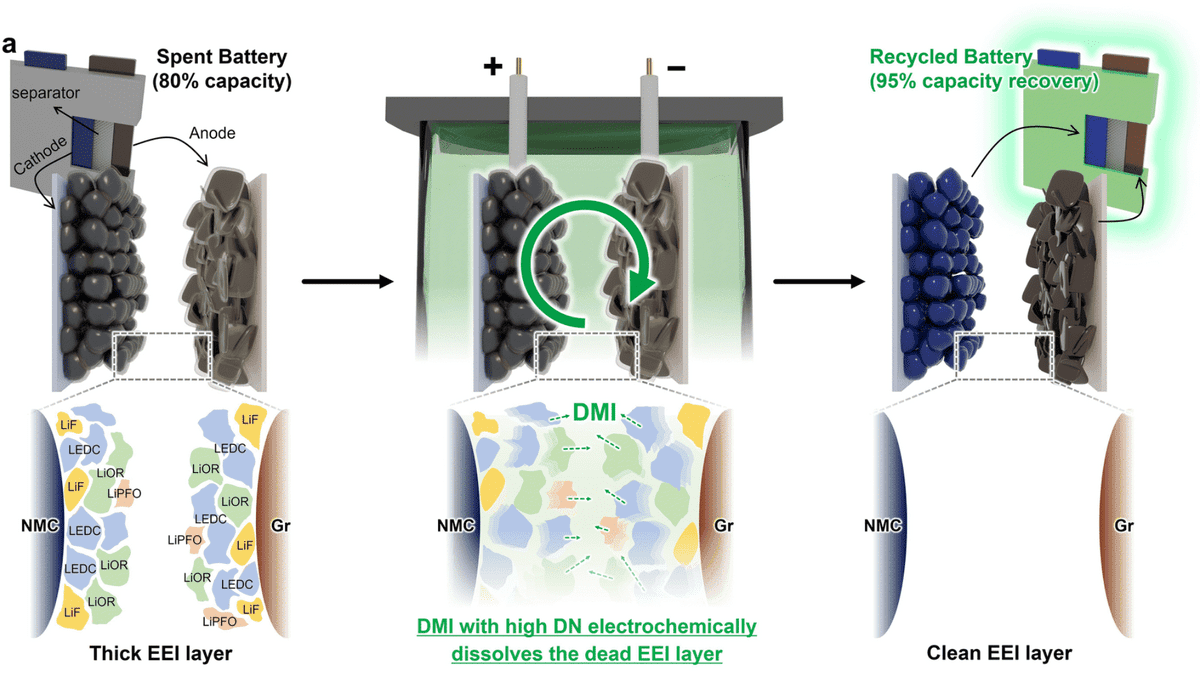
A research team from Cornell University and other institutions has developed a method to restore up to 95% of the capacity of lithium-ion batteries used in electric vehicles and other applications simply by immersing the electrodes in a special solution. Because the batteries are not melted or crushed, and the electrodes retain their shape, this method could potentially reduce the manufacturing cost of recycled cells by 56% compared to conventional recycling processes.
Direct electrode-to-electrode regeneration of end-of-life batteries via electrode–electrolyte interphase dissolution - Energy & Environmental Science (RSC Publishing)
Battery 'bath' restores spent lithium-ion cells to 95% power, cuts recycling costs 56%
https://techxplore.com/news/2026-06-battery-spent-lithium-ion-cells.html
Smartphones experience faster battery drain over time, and electric vehicles also see a decrease in range per charge the longer they are used. Lithium-ion batteries degrade in performance with repeated charging and discharging, eventually requiring replacement or disposal. However, since batteries utilize important mineral resources such as lithium, nickel, and cobalt, reusing used batteries has become a major challenge.
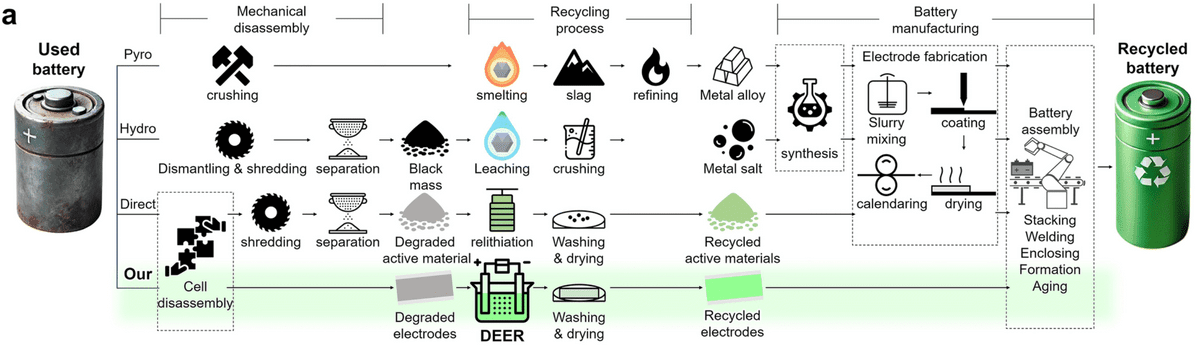
Traditional recycling methods typically involved melting batteries at high temperatures or crushing them and then extracting metals using chemicals. While this allowed for the recovery of valuable metals, it also resulted in the loss of the electrode components. In other words, reusing the batteries required extracting the materials, refining them, and then remaking them into electrodes, which was both time-consuming and costly.
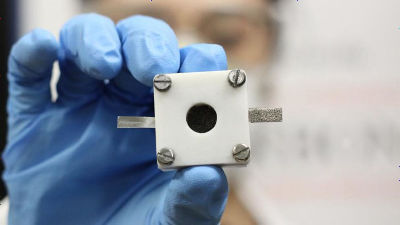
The research team's 'Direct Electrode-to-Electrode Regeneration (DEER)' method involves removing electrodes from a used battery and regenerating them by placing them, still attached to a metal foil called a current collector, in a special electrochemical solution. Its key feature is that it repairs the deteriorated electrodes as components, rather than returning the battery to its raw materials.
When lithium-ion batteries are repeatedly charged and discharged, a film called SEI forms at the boundary between the electrodes and the electrolyte. If this SEI becomes thick, the movement of lithium ions is hindered, reducing capacity and output. Therefore, DEER uses a solvent called 1,3-dimethyl-2-imidazolidinone (DMI) to remove the thickened SEI.
The researchers found that regenerated cells using electrodes treated with DEER recovered up to 95% of their capacity, and also showed improved stability during repeated charge-discharge cycles. Furthermore, using analytical tools, the research team investigated the economics and showed that it could potentially reduce the manufacturing cost of regenerated cells by 56% compared to conventional recycling processes.
However, DEER does not restore all old batteries to like-new condition. The research team is primarily targeting used batteries that retain about 70% to 80% of their health, which are common in electric vehicles. Future challenges include demonstrating its effectiveness in industrial batteries and addressing other degradation factors such as lithium loss. The research team states that recycling used batteries by repairing them as components rather than returning them to their raw materials is getting closer to practical application.
Related Posts:

in Science, Posted by log1d_ts