I took a look around the online museum 'Museum of Imaginary Musical Instruments,' which features only imaginary instruments such as 'a piano that makes sounds with cat meows' and 'a keyboard instrument that plays with colors.'
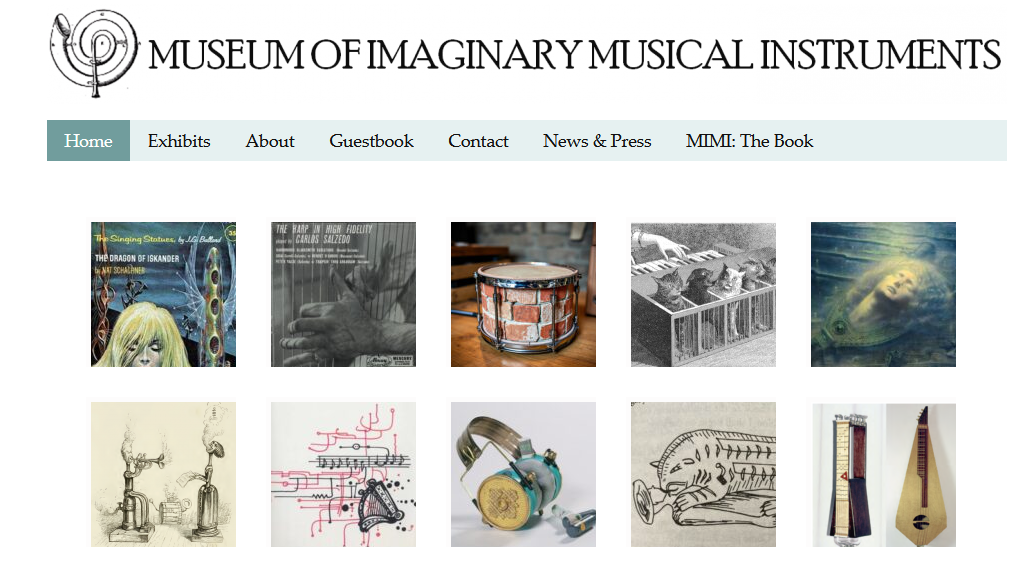
The 'Museum of Imaginary Musical Instruments' is an online museum created by music history and music technology researcher Deirdre Roughridge and musicologist Thomas Pateson to collect and classify imaginary instruments. I took a look around the site to see what's actually on display.
Museum of Imaginary Musical Instruments
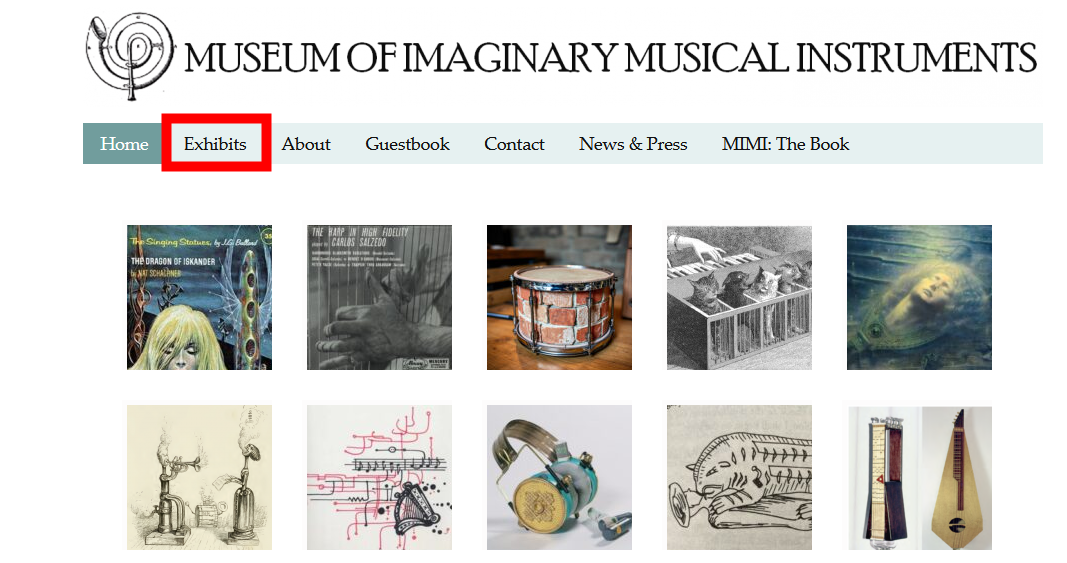
The homepage of 'Museum of Imaginary Musical Instruments' looks like this, with a menu at the top and a simple layout of thumbnail images of imaginary musical instruments below it.
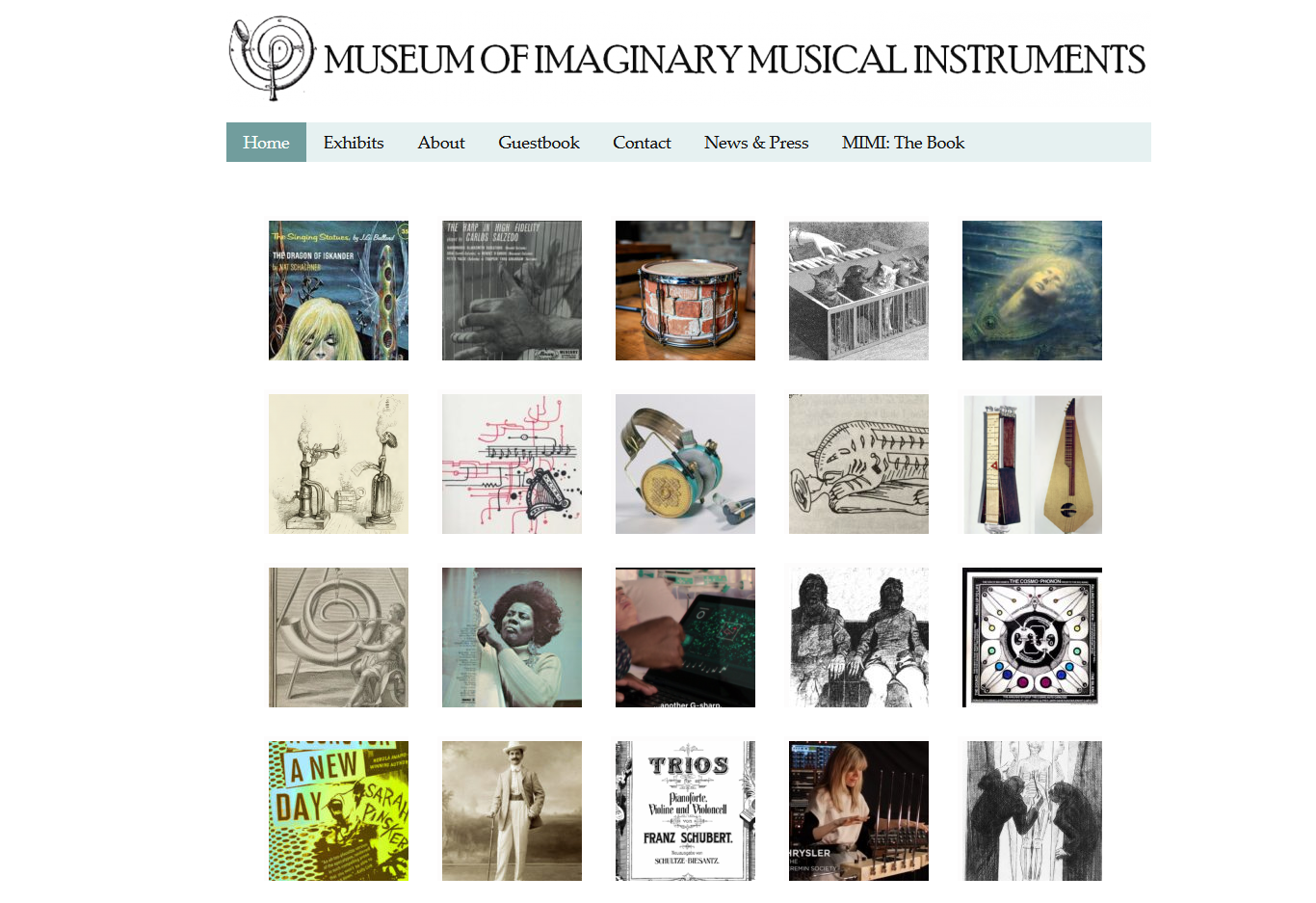
First, click on the thumbnail image to view the exhibit called 'The Cat Piano'.
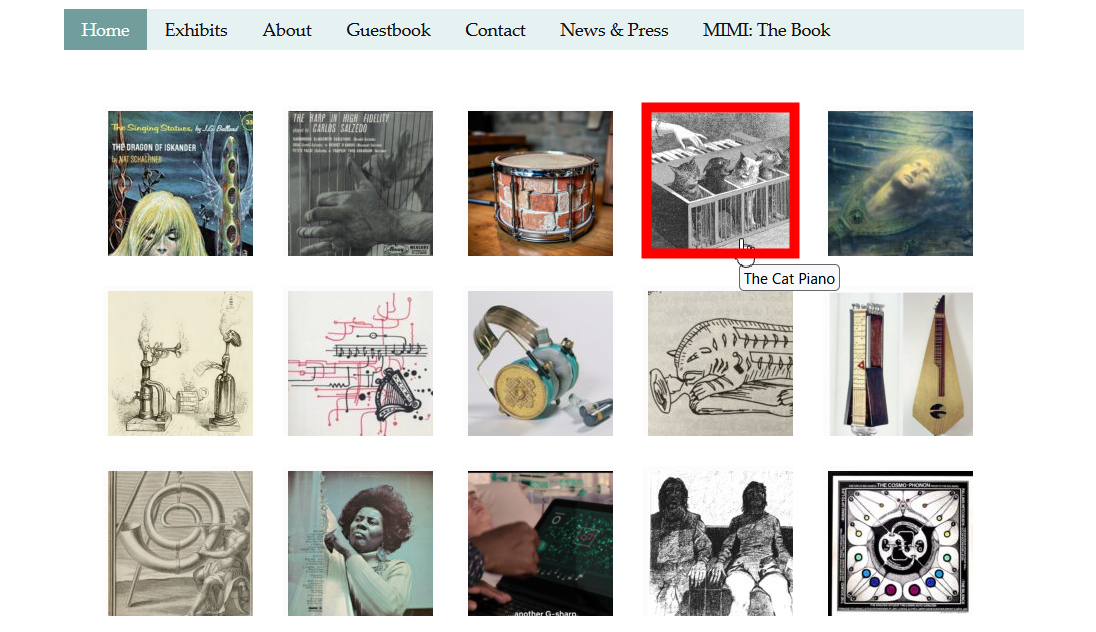
The 'Cat Piano' is a fictional keyboard instrument that uses cat meows as its sound source. The illustration shown is from the 1883 scientific journal 'La Nature' and depicts a device with multiple cats lined up inside a box.
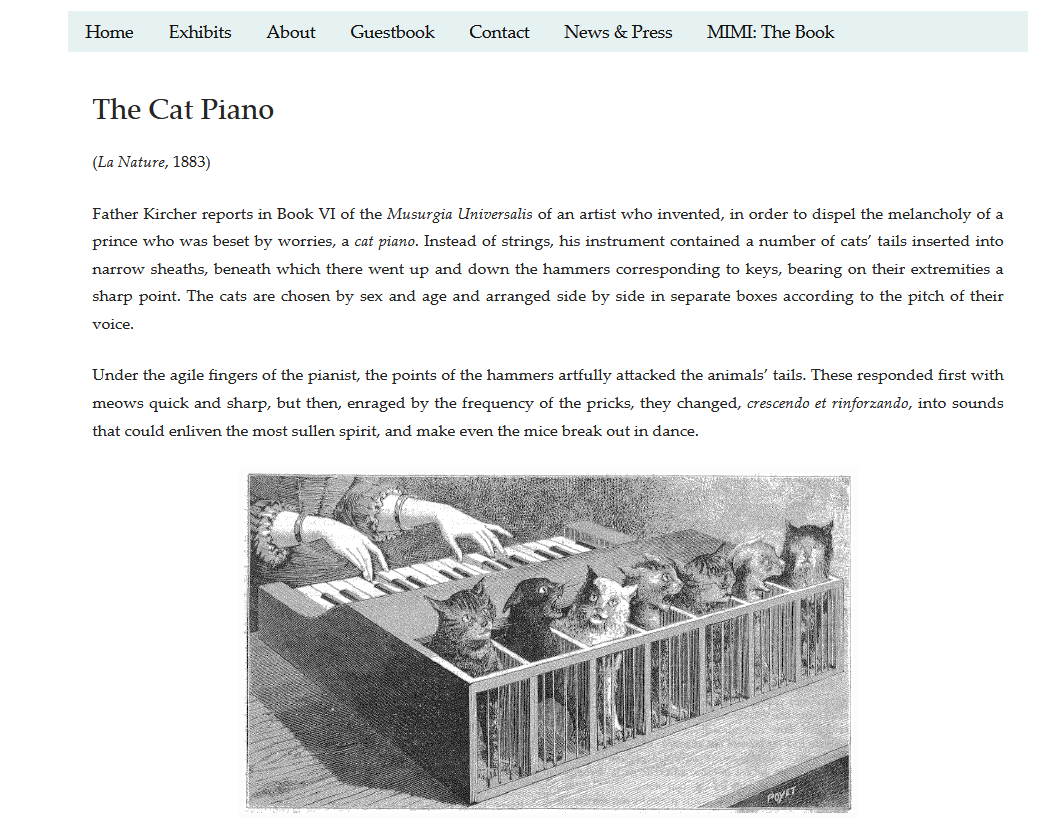
This instrument uses cat tails inserted into thin sheaths instead of strings, and hammers corresponding to the keys stimulate the cats' tails. The cats are arranged according to their gender, age, and the pitch of their meows, and when a key is pressed, the corresponding cat meows, creating a musical scale—a rather unsettling concept for an instrument.
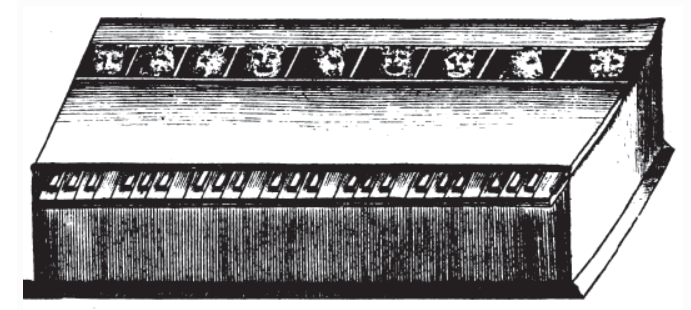
The origins of the imagery of the cat piano are said to date back to around 1600, when the Jesuit priest Athanasius Kircher recounted the anecdote that 'an artist invented the cat piano to alleviate the melancholy of a troubled prince.'
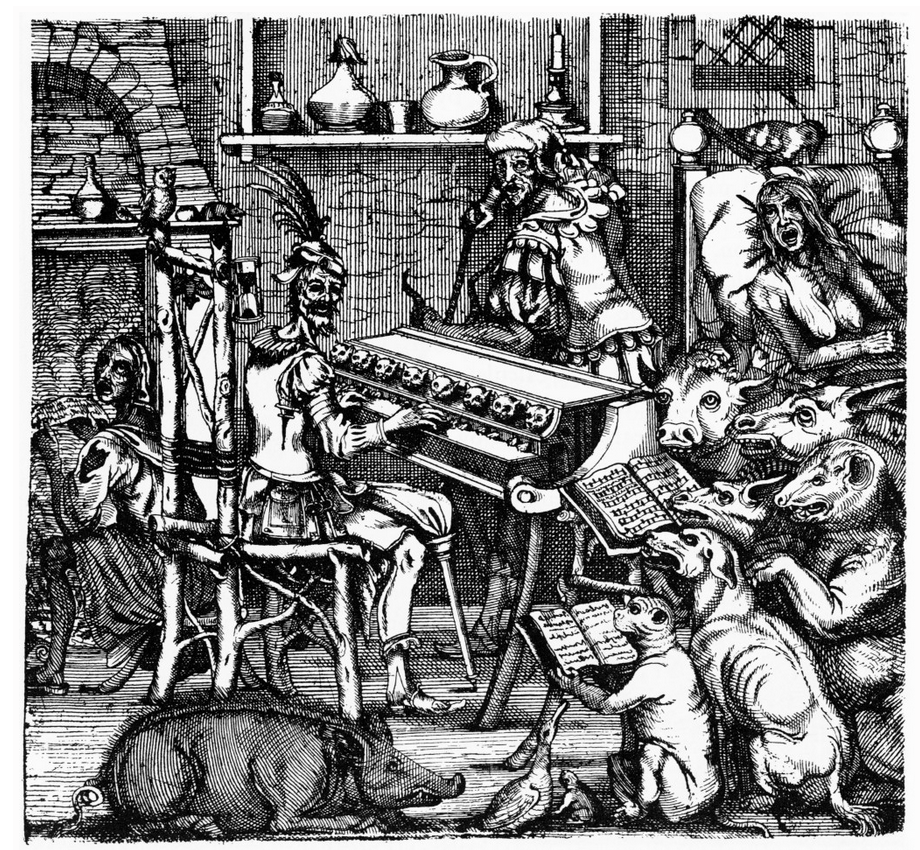
While it might seem like animal cruelty from a modern perspective, it was presented as an example that makes us think about the relationship between music and noise, and between humans and animals.
The 'visual harpsichord' is a keyboard instrument that attempts to create music using colors rather than sounds. The illustrations included are those proposed in 1743 by Johann Gottlob Krüger, a German physician and natural scientist.
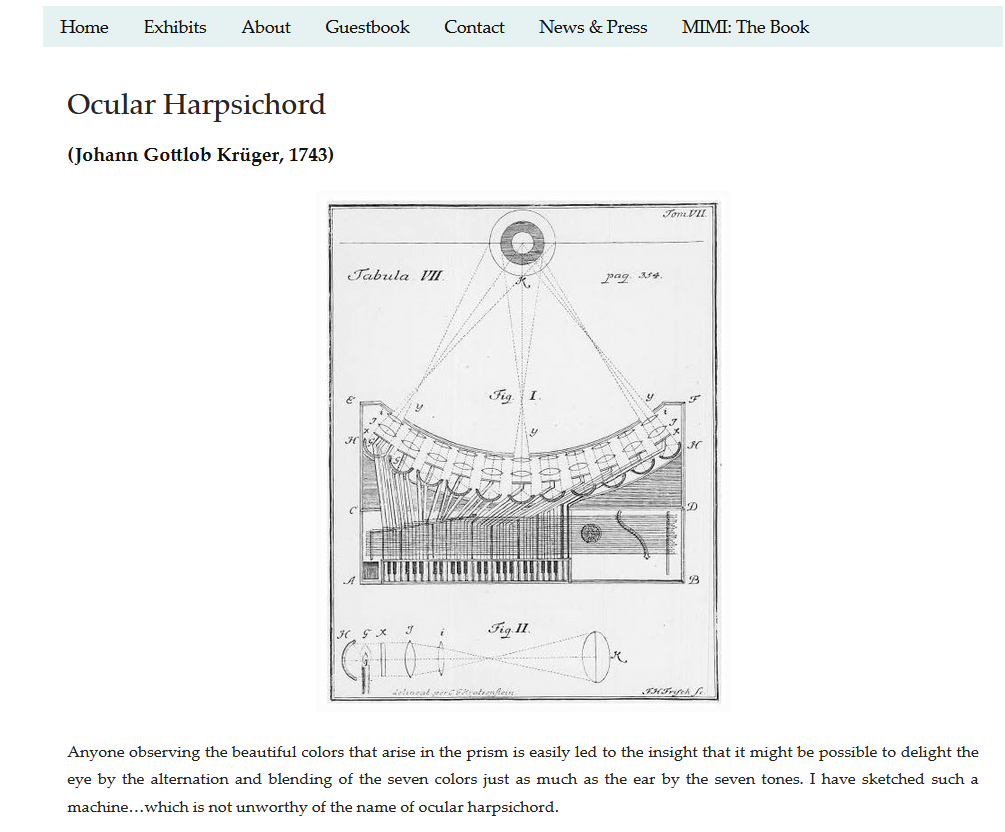
This idea stems from the concept of 'corresponding the seven notes of a musical scale to the seven colors of the rainbow.' In 1725, the French mathematician
Castell himself was more interested in theory and not very enthusiastic about actually making musical instruments, but it is said that he made prototypes in response to criticism and curiosity. Castell's prototypes are said to have featured colored silk or glass appearing when a key was pressed, and illuminated from behind by candlelight. However, no technical drawings or details remain, and only vague records from visitors have been passed down.
Krüger believed that while Castell's instruments were well-suited for expressing 'melodies' by sequentially translating sounds into colors, they were insufficient for expressing 'chords' by playing multiple notes simultaneously. Therefore, in 1743, Krüger proposed a system in which pressing a key would activate the mechanism of a normal harpsichord, while simultaneously projecting candlelight through colored glass onto a screen. In Krüger's design, lower notes corresponded to keys that projected larger circles of light, while higher notes corresponded to keys that projected smaller circles of light superimposed near the center. The idea was that pressing multiple keys simultaneously would create overlapping circles of light of different colors on the same screen, creating 'color chords' equivalent to musical chords.
Tower Orchestra
The 'Tower Orchestra' is a gigantic instrument conceived in 1850 by Adolphe Sax , the inventor of the saxophone , or 'sax' as it's commonly known.
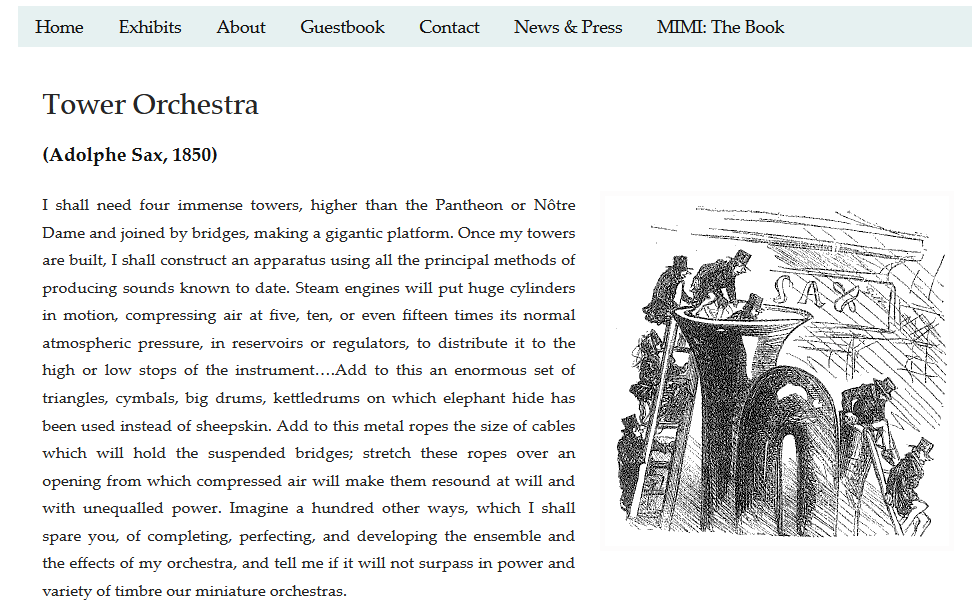
Sax described his vision for a massive musical apparatus consisting of four towers taller than the Pantheon or Notre Dame Cathedral, connected by bridges. Inside the towers, steam engines would power gigantic cylinders, using compressed air at 5, 10, and 15 times normal atmospheric pressure to produce sound for musical instruments. He also envisioned using giant triangles and cymbals, a large drum and timpani covered in elephant hide, and even the metal ropes supporting the bridges as sound sources.
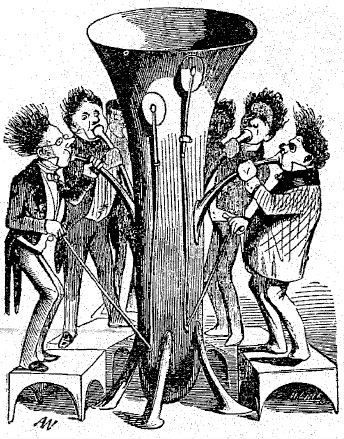
Saxophon believed that in large orchestras, the sound of distant players was weak, and that increasing the number of players didn't proportionally increase the volume. As a solution, he proposed placing a giant resonating device above the city and using compressed air or steam engines to project sound over long distances.
Incidentally, Sax's friend reportedly warned him that 'if you talk about this idea without waiting another 50 years for progress, people will think you're crazy.'
•
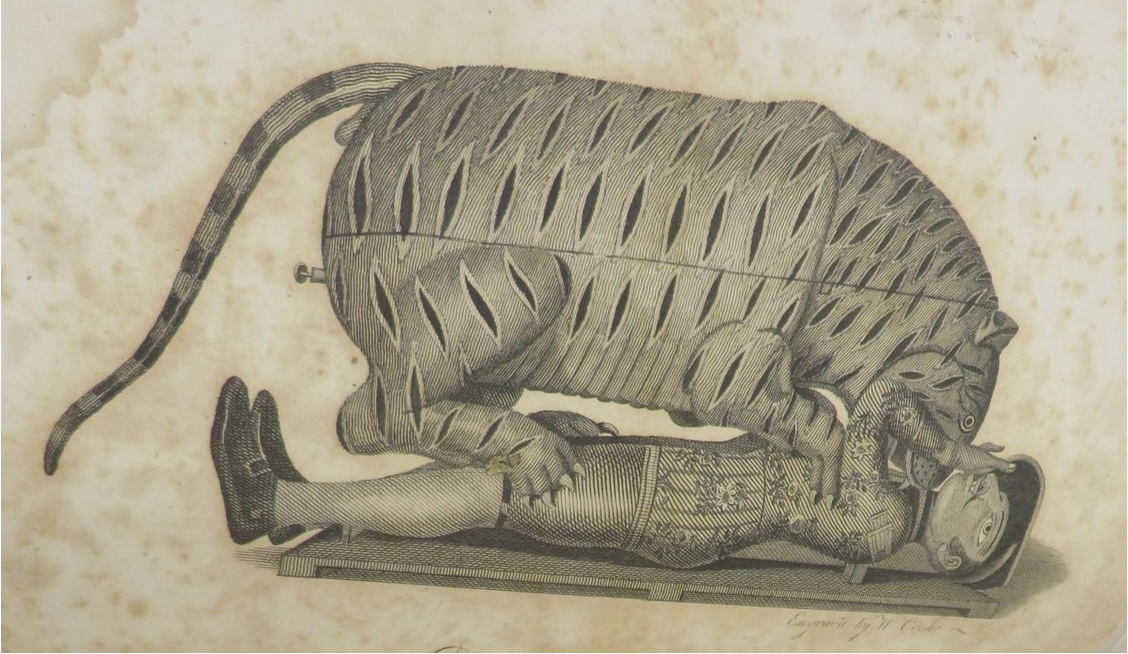
The 'Tipu's Tiger Organ' is a tiger-shaped organ associated with Tipu Sultan , who ruled the Mysore Kingdom in South India. It is a work of art depicting a tiger attacking British soldiers, and is believed to have been commissioned by the Sultan between 1782 and 1799.
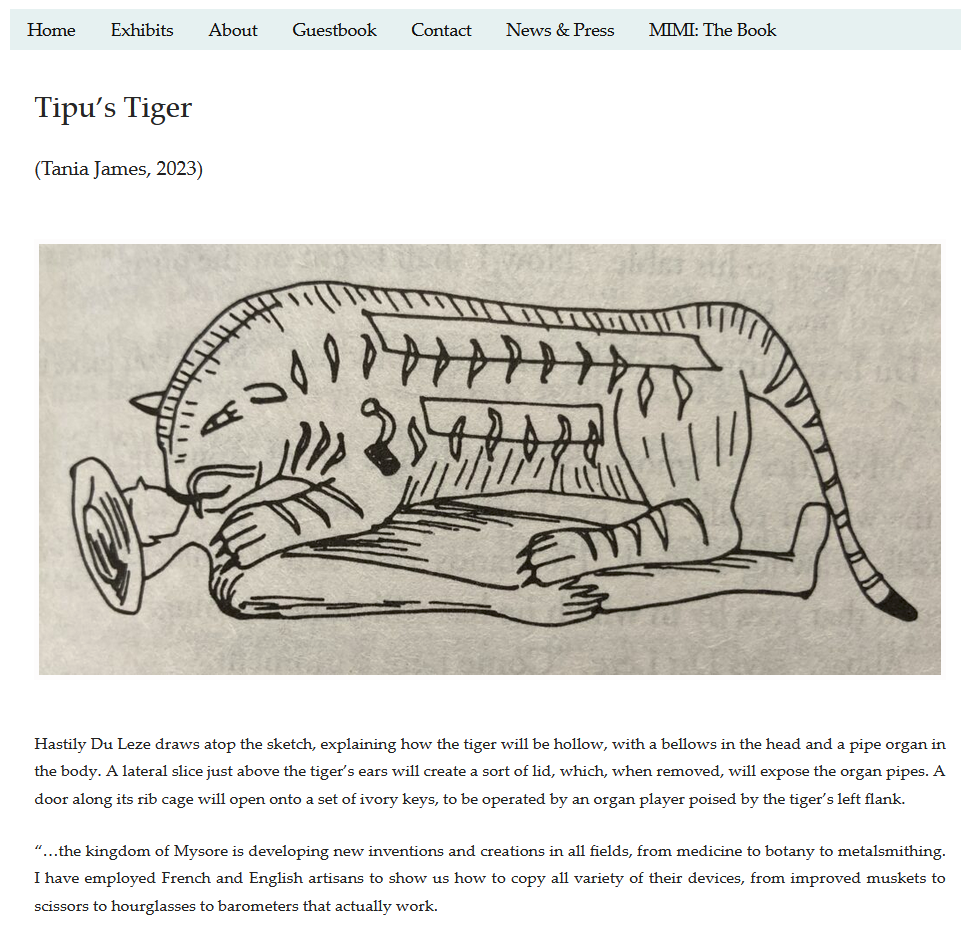
Inside, there were pipes and a hand-crank mechanism, and the pipes placed in the tiger's head and the human's head produced sounds that mimicked the growls of a tiger and the groans of a human. Furthermore, inside the tiger's body was an organ with two rows of pipes, which could be played using a row of round keys.
The Sultan fought against the British East India Company but was ultimately defeated, and his capital, Selingapatham, was plundered. Later, this tiger-shaped organ was transported to London and is now housed in
Despite being a real-life craft, it is featured in the 'Museum of Imaginary Musical Instruments' because Tania James' novel '
A video of someone actually playing the tiger-shaped organ was uploaded to YouTube.
Tipu tiger Youtube video2 - YouTube
• Snare Drums Reimagined
'Reimagined Snare Drums' is a series of snare drums created using generative AI, posted on drummer Jonathan Ullman's Instagram in 2024. The images feature snare drums made from materials that wouldn't normally be used for them, such as bricks and televisions.
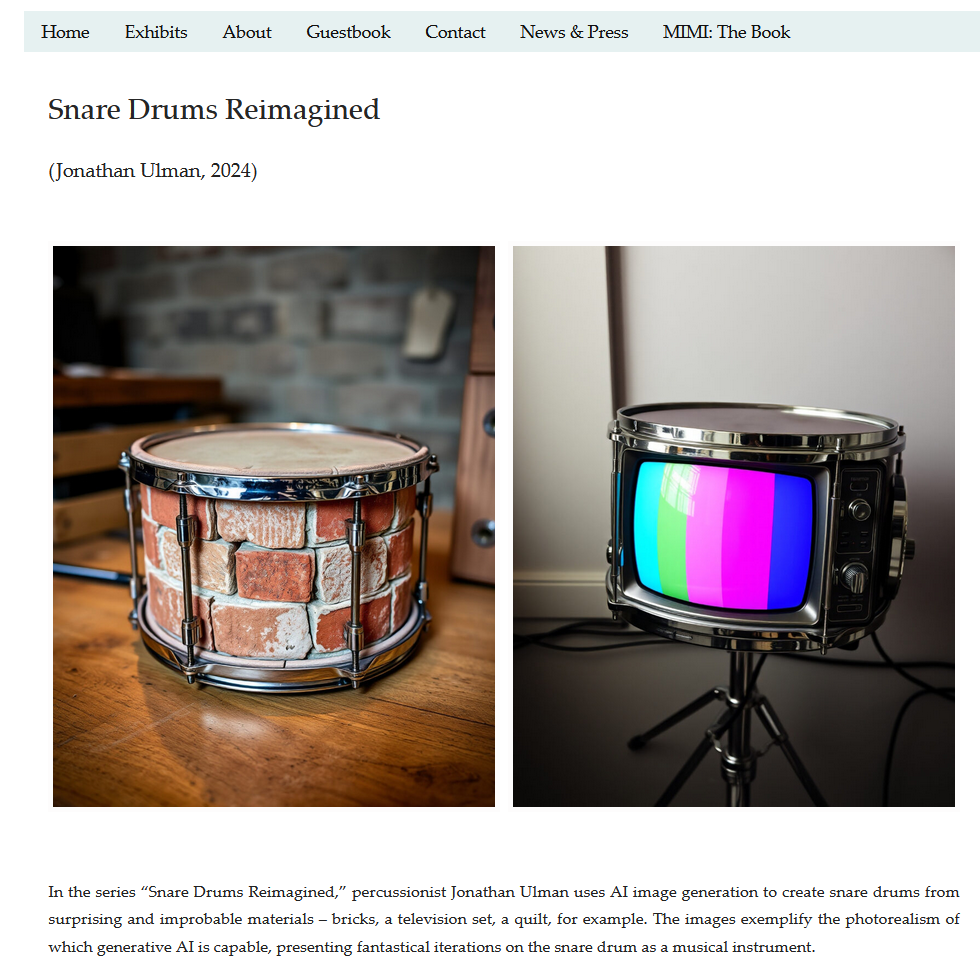
This exhibition isn't just about AI-generated images. Ullman previously
You can search for exhibits at the 'Museum of Imaginary Musical Instruments' not only from the homepage, but also by category. Click on 'Exhibits' in the top menu.
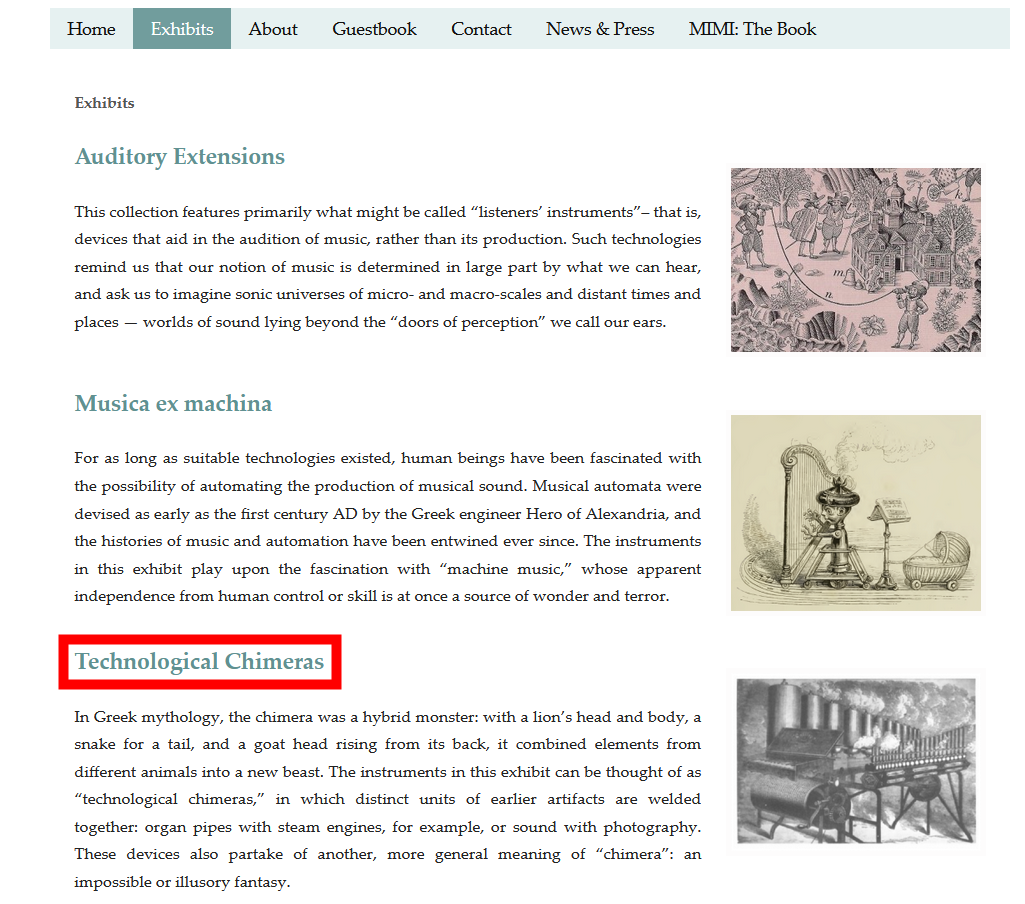
The 'Exhibits' page categorizes the exhibits. For example, '
Other categories include ' Giganticism ,' which deals with gigantic instruments; ' Abstract Resonators ,' which deals with instruments with dimensions and acoustic properties that cannot be realized in the material world; ' Sentient Sounds ,' which treats living creatures as part of an instrument; ' Acousmatic Instruments ,' where imaginary instruments are created because the sound source is invisible; and ' Keyboard Interfaces, ' which deals with fictional instruments that use keyboards. This time, we'll click on 'Technological Chimeras.'
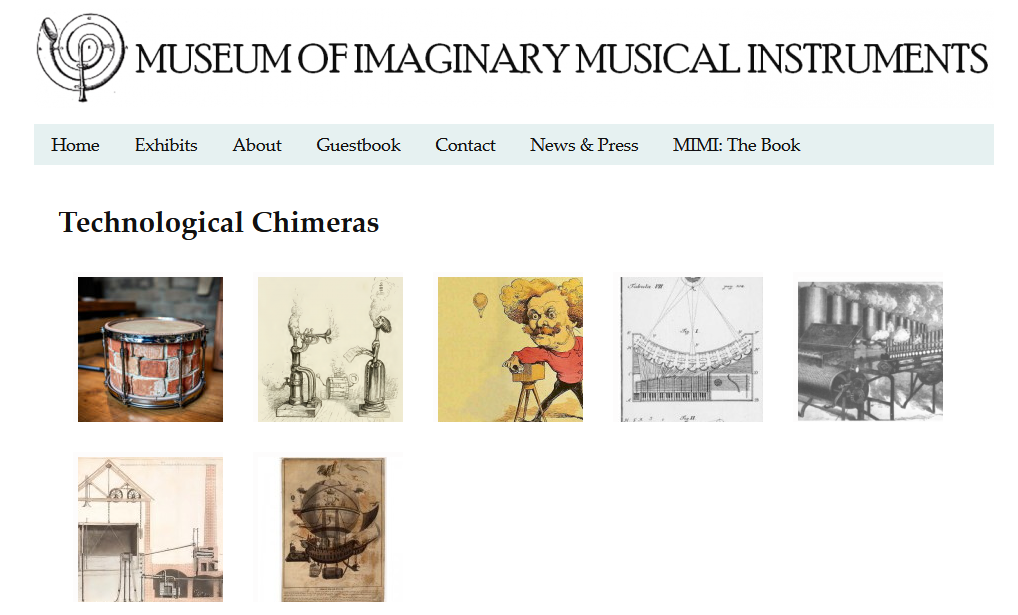
This allows you to narrow down your search to only the exhibits that fall under the 'Technological Chimeras' category, as shown below. It's convenient to start by browsing the exhibits from the top page, and once you find a category you like, you can view the exhibits in that category under 'Exhibits.'
'Museum of Imaginary Musical Instruments' is not just a site where you can look at non-existent musical instruments; it's an online museum where you can learn about the origins, mechanisms, related literary works, and technological history of each fictional instrument.
Related Posts:



in Web Service, Review, Design, Posted by log1b_ok