What are Apple and Google doing about push notifications displayed on smartphone screens?
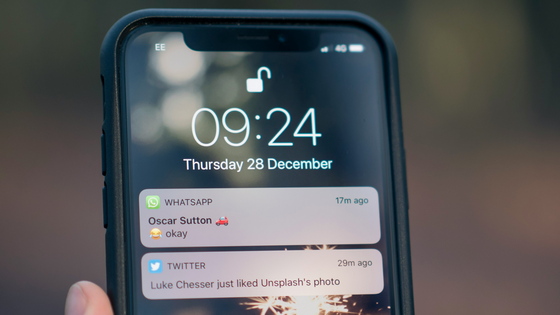
'Push notifications' are a feature that automatically displays new information as a pop-up on the screen without the user having to open the app. Marketing consultant Jack Corby-Tuch explains in his blog that 'push notifications, which were once a simple mechanism for delivering short messages from apps to users, have now evolved into a situation where they are edited by the OS and on-device AI.'
What Apple and Google are doing to your push notifications | Jacques Corby-Tuech
The initial motivation for push notifications was not so much user experience, but rather a solution to battery issues. In 2009, Apple introduced the ' Apple Push Notification Service ,' which delivers notifications by establishing a single, persistent connection between the device and Apple, rather than having each app continuously connect to a server individually. Google subsequently developed its system with Cloud to Device Messaging, Google Cloud Messaging, and then ' Firebase Cloud Messaging .'
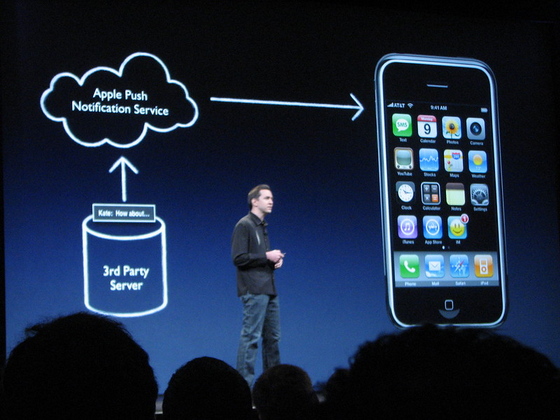
by Erik Pitti
In other words, notifications for iPhones go through Apple's servers, and notifications for Android go through Google's servers, meaning that both companies have always been in a position to suppress, drop, or change the priority of notifications. However, from around 2009 to 2017, push notifications were relatively flexible, and user control was limited to simply turning them on or off for each app.
The tide turned in 2017 with the introduction of notification channels in Android 8 Oreo. Google defined channels such as 'Messages,' 'Downloads,' and 'Promotions' within Android apps, allowing users to mute, lower the importance of, or completely block notifications for each channel.
Furthermore, with the release of iOS 15 in 2021, Apple introduced Focus mode, Scheduled Summary, and notification interruption levels, allowing the OS to control how much notifications interrupt the user. In particular, 'time-sensitive' notifications are deemed not to be used for marketing purposes, and the notifications themselves are now subject to judgment by the OS.
In Android 13, notification permissions became explicit runtime permissions, meaning that notifications cannot be sent unless the user grants permission. A Pushwoosh survey of 16 million devices found that the opt-in base for game apps decreased by about one-third, and for news apps it decreased by 19%. Furthermore, Batch's 2025 benchmark shows that the Android opt-in rate will fall from 85% to 67%, with the cross-platform average at 61%.
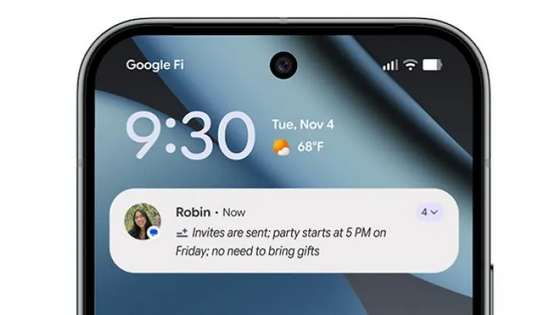
Part of this change can be seen as a user's right to protect their own attention. However, from the sender's perspective, some control has shifted from the user to the platform, and the decisions made are now opaque, difficult to challenge, and even driven by AI models.
This perspective is based on the changes in email that Kobe Tuch discussed earlier. Google, Yahoo, Microsoft, and Apple are no longer simply receiving emails and placing them in inboxes; they now analyze HTML structure, subject lines, senders, and user behavior history, classify emails, and treat them as data that can be reused in search and assistant functions. In other words, the platform now acts as an 'editor' between the sender and the recipient.
As a result, the assumption that marketing emails would arrive in the recipient's inbox in the same format if sent has been broken. Open rates have become an unreliable metric due to Apple's email privacy protection and Gmail's image proxy , and going forward, what will be important is how well actions such as clicks and purchases are analyzed as structured data and how they are represented by AI summaries. Koby-Tuch points out that the changes that occurred earlier with emails are now beginning to extend to the realm of smartphone notifications, which is dominated by Apple and Google.
For example, Apple Intelligence combines an on-device base model with a larger model used in Private Cloud Compute to summarize and prioritize notifications. When notification summarization is enabled, notifications from the same app or category are grouped together, and the original titles and body text may be replaced with AI-generated summaries.
On Google's side, the Gemini Nano runs within Android's AICore and is used for notification summarization and organization on some Pixel and Galaxy devices. AICore is a system service that maintains models within the device and performs processing tailored to each function.
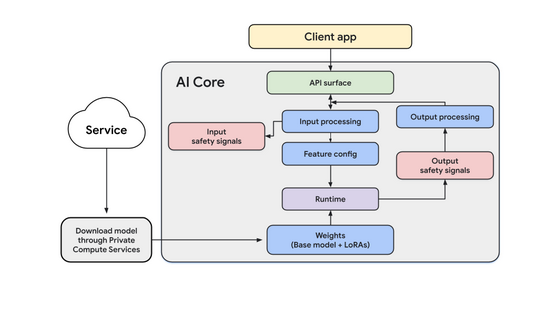
The sender of a notification has limited control over this editing process. While some control is possible through iOS's NotificationServiceExtension and Android's notification channels, there is no API to know if a notification has been summarized or if it has been treated as a promotion and given lower priority.
Looking at user behavior, many notifications don't immediately prompt users to launch an app. A study that collected approximately 200 million mobile notifications from over 40,000 users found that users tend to value messages from other people and notifications related to their own actions highly, while they tend to undervalue promotional notifications. Based on these findings, Koby-Tuch concludes that notifications linked to the user's own actions or anticipated events are less susceptible to platform editing than mass notifications for promotional purposes.
The metrics marketers can see are also uncertain. Apple Push Notification Service and Firebase Cloud Messaging reliably return information that 'a notification was received by the platform,' but they don't tell you whether it was actually displayed or summarized by AI. Various marketing platforms can record views, taps, and session start times through SDKs, but they still don't show how the notifications were edited.
Kobe-Tuch points out that this lack of transparency is very similar to the situation where email open rates have become unreliable due to Apple's Mail Privacy Protection. In such an environment, the way notifications are written also needs to change. On-device AI compresses notifications to the point, so it's more meaningful to put specific facts such as amounts, names, times, and actions first, rather than brand-like introductions or clever wording.
Ultimately, Koby-Tuch argues that push notifications, like email, are not a channel that companies completely own. While it was previously thought that push notifications were easier for companies to control than social media, in reality, Apple and Google control the delivery route, display, prioritization, and summarization, and that leadership shifts to the platform with each OS update.
In an era where AI agents read notifications and take action, push notifications are no longer just text for users to read, but also triggers for AI processing. Koby-Tuch argued that 'companies should not rely too heavily on push notifications, but instead strengthen their own touchpoints that are less susceptible to platform editing, such as in-app messages and member-only screens.'
Related Posts:




in Web Service, Smartphone, Posted by log1i_yk