The 200-year-old mystery of how the plant 'tobacco' produces nicotine has been solved.

Nicotine biosynthesis is completed by cryptic activating glucosylation | Nature Communications
https://www.nature.com/articles/s41467-026-72705-0
Scientists solve 200-year-old puzzle of how tobacco plants make nicotine - News and events, University of York
https://www.york.ac.uk/news-and-events/news/2026/research/200-year-old-puzzle-tobacco-plants-nicotine/
Nicotine, the substance responsible for tobacco addiction, has been used by humans for over 10,000 years, and was extracted from tobacco as early as the late 1820s. However, the complete mechanism by which the tobacco plant produces nicotine remained unknown until now.
A research team from institutions including the University of York in the UK and the University of Copenhagen in Denmark has published a paper in the academic journal Nature Communications reporting that they have discovered that nicotine is initially formed in a state where it is bound to glucose molecules.
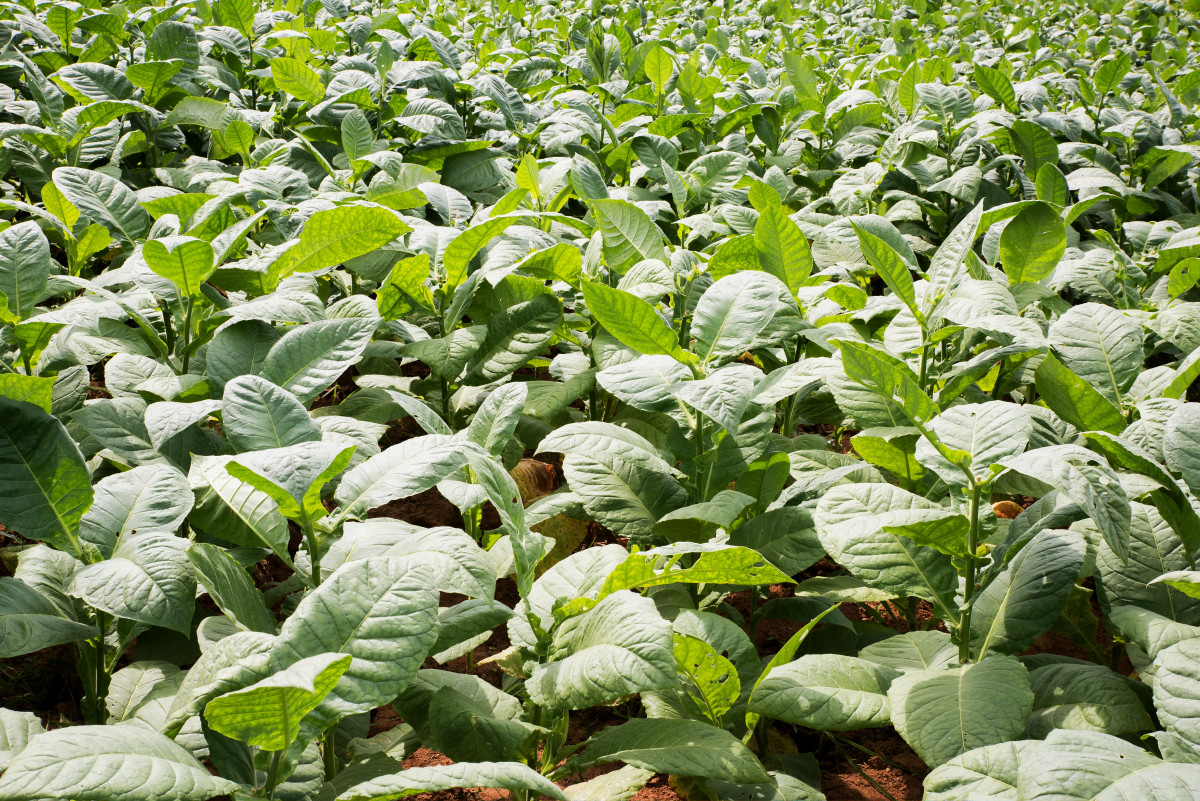
Glucose is added to provide the energy necessary for the nicotine components to bind, but it is removed in the final stage. This process of glucose disappearing is why the mechanism of nicotine production remained unknown for so long.
Furthermore, the research team also identified the precise structures of two specialized plant enzymes, 'NaGR' and 'NicGS,' which help assemble nicotine molecules from smaller fragments. The nicotine molecule itself is formed from two linked rings produced in different parts of the plant's metabolism: one derived from a vitamin-like compound and the other from an amino acid involved in protein synthesis.
Dr. Benjamin Richman, a co-author of the paper and affiliated with the Centre for New Agricultural Products at York University, points out, 'This is very interesting because it has the potential for real-world applications. Nicotiana benthamiana, a close relative of tobacco, is already being used in molecular agriculture to produce life-saving medicines and vaccines.'
Tobacco has a negative image as something bad for your health, but in fact, tobacco plants are promising as a platform for manufacturing vaccines and other pharmaceuticals. However, because tobacco produces nicotine, there has been a challenge in that processing is ultimately required to remove the nicotine.
'Plant-derived influenza vaccine' emerges, effectiveness confirmed in large-scale clinical trials - GIGAZINE
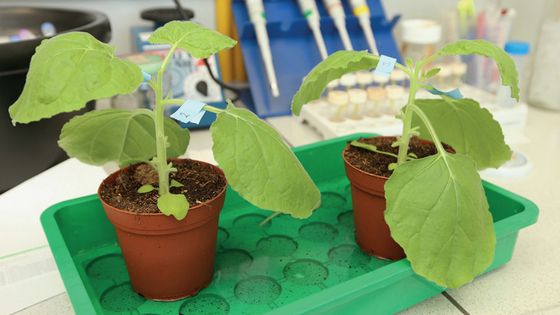
Dr. Richmann stated, 'This new knowledge makes it possible to remove nicotine naturally produced by plants or repurpose it for other uses, enabling the development of superior biotechnology tools. It also holds exciting potential for the future, such as the ability to apply tobacco's nicotine production system to manufacture useful pharmaceutical compounds.'
Related Posts: