How does life in space affect astronauts' sense of gravity?
by
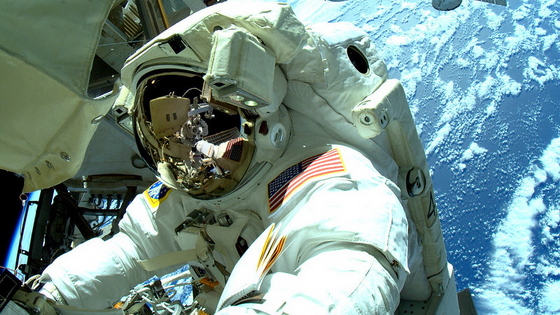
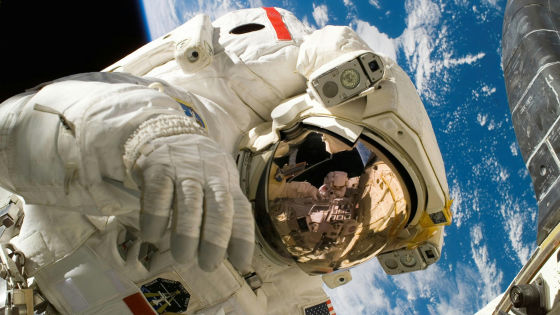
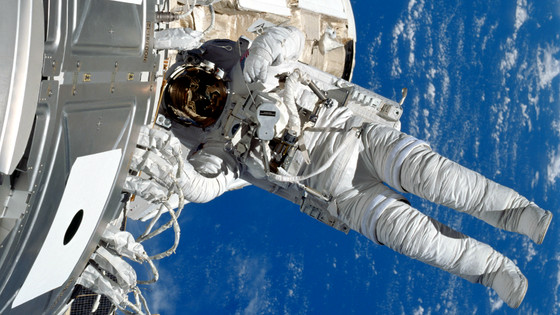
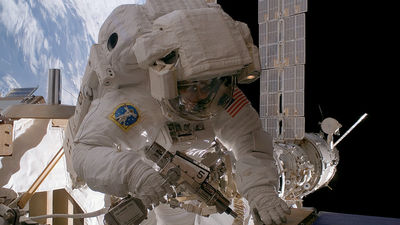
Astronauts who have spent extended periods in space may need time to adjust to a gravity-filled environment again upon returning to Earth. A study conducted by a research team from the Catholic University of Leuven in Belgium and the Basque Science Foundation in Spain, involving astronauts who spent long periods on the International Space Station, showed that a near-weightless environment affects the sense of gripping and manipulating objects.
Effect of Risks, Consequences, and Gravitational Priors on Sensorimotor Coordination: Insights from Weightlessness | Journal of Neuroscience
https://www.jneurosci.org/content/46/19/e2036252026
Space Does Something Strange to Astronauts' Sense of Gravity : ScienceAlert
https://www.sciencealert.com/space-does-something-strange-to-astronauts-sense-of-gravity
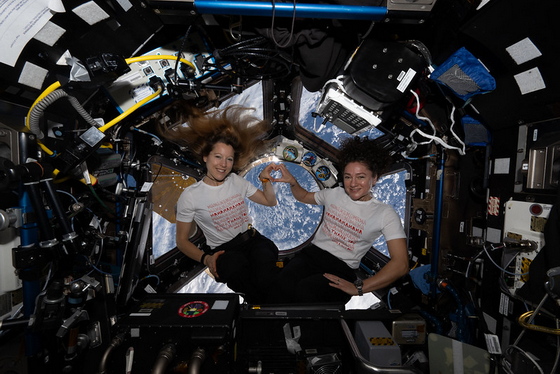
On Earth, we need to grip objects tightly to prevent them from falling, but in microgravity, objects won't fall even if we let go, so the purpose of gripping becomes primarily to move objects in space. The study involved two female and nine male astronauts who spent at least five months on the International Space Station, comparing how astronauts grip and move objects in the microgravity environment of space with how they do on Earth.
by
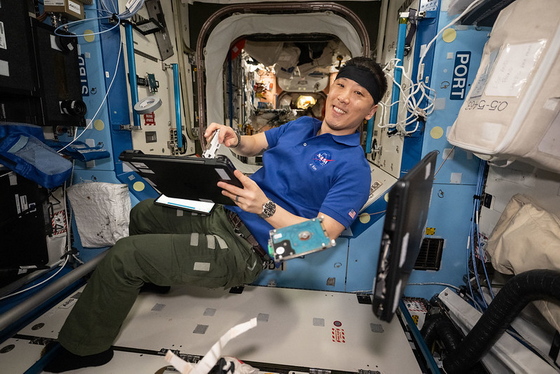
The astronauts performed a task where they held a special object with their thumb and index finger and moved their arm up and down. In another task, they grasped an object fixed on a platform with their thumb and index finger and slid it up and down to test their sense of the minimum frictional force required to prevent the object from slipping.
As a result, we found that in microgravity, arm movements slow down, and vertical movements become more symmetrical. This means that the difference in force between lifting and lowering an object is smaller than on Earth.
by
On the other hand, even after several months in orbit, the astronauts had not fully adapted to the microgravity environment. This was because, even while living in the microgravity environment of the International Space Station, they gripped objects more tightly than necessary, anticipating that they would be resisting gravity when holding or moving them.
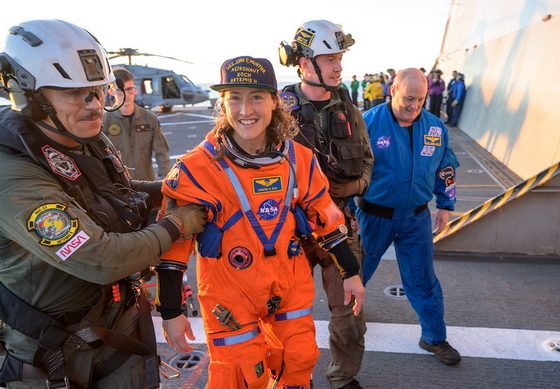
However, changes resulting from the space experience were also observed after returning to Earth. Some astronauts reported that 'objects felt heavier than expected,' suggesting that the connection between grip strength and load, which had been developed over many years on Earth, may have been disrupted by staying in a microgravity environment.
However, it was reported that one day after returning, the vertical movement had returned to the asymmetrical movement normally seen on Earth. In other words, the body's reaction of needing more force to lift an object than to lower it returned quickly, but the brain was still sometimes making incorrect predictions regarding the sense of mass of an object.
by NASA HQ PHOTO
The researchers explain that 'the gradual and incomplete adjustments made when the gravitational environment changes indicate that the neural processes supporting these actions are based on prediction.'
Related Posts:



in Science, Posted by log1i_yk