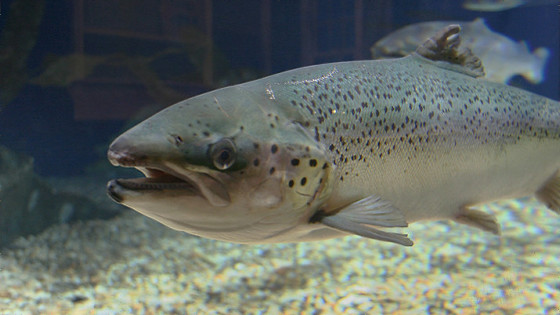
Salmon contaminated with cocaine will swim longer distances than usual.
by
Illegal drugs such as cocaine cause significant damage to the human mind and body, but these drugs also pollute the natural environment through sewage and other means. New research has shown that Atlantic salmon exposed to cocaine and its metabolites swim longer distances than normal Atlantic salmon.
Cocaine pollution alters the movement and space use of Atlantic salmon (Salmo salar) in a large natural lake: Current Biology
https://www.cell.com/current-biology/fulltext/S0960-9822(26)00315-5
Coked to the gills? Cocaine-laced wastewater can make salmon roam twice as far
https://theconversation.com/coked-to-the-gills-cocaine-laced-wastewater-can-make-salmon-roam-twice-as-far-281126
Cocaine pollution gives salmon wanderlust | Science | AAAS
https://www.science.org/content/article/cocaine-pollution-gives-salmon-wanderlust
When humans ingest cocaine, it is rapidly broken down in the body, producing a metabolite called benzoylecgonine , which was also used as an analgesic. Eventually, the benzoylecgonine and undigested cocaine are excreted from the body and end up in the sewage system. However, sewage treatment plants are not designed to completely remove these compounds, so they are discharged into rivers, lakes, and coastal areas through the treatment process.
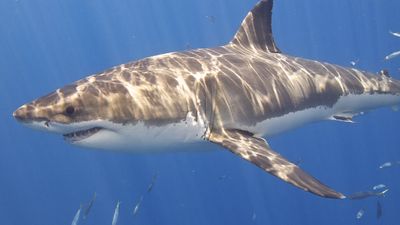
This is by no means a hypothetical situation; in 2024, sharks with muscles and livers contaminated with cocaine and benzoylecgonine were discovered off the coast of Rio de Janeiro, Brazil, indicating that contamination of the natural environment and wildlife is already progressing.
Cocaine is one of the most commonly detected illegal drugs in aquatic environments worldwide. Global analyses indicate that the average concentration of cocaine in surface water is approximately 105 nanograms per liter, and benzoylecgonine is approximately 257 nanograms per liter. While these concentrations may not seem high, they target the brain, a common organ for many animals, and even small amounts can have various effects on wild animals.
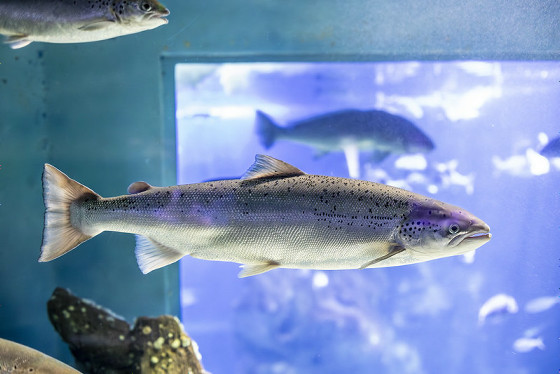
In this experiment, research teams from Australia, Sweden, and other countries conducted experiments using two-year-old Atlantic salmon raised in aquaculture farms. The salmon were divided into three groups of 35 each, and each group was implanted with one of the following: an implant that gradually releases cocaine at levels equivalent to those found in contaminated water; an implant that gradually releases benzoylecgonine; or a control implant that contains no chemicals.
The research team tagged all the salmon to track their location and then released them into
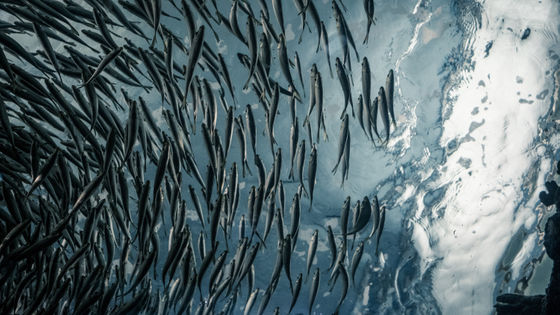
The experiment revealed that salmon contaminated with cocaine or benzoylecgonine tended to swim longer distances compared to the control group. This tendency was more pronounced with benzoylecgonine than with cocaine, with salmon contaminated with benzoylecgonine reportedly swimming up to 1.9 times more distance per week than the control group.
Furthermore, eight weeks after the start of the experiment, the control group of salmon had settled in waters approximately 20 km from the release point. In contrast, the salmon contaminated with cocaine settled a little further away, and the salmon contaminated with benzoylecgonin dispersed to a location as far as 32 km from the release point.
These behavioral changes in wild animals can affect all aspects of their lives, including how they find food, escape predators, and interact with other animals, reproduce, and survive. Furthermore, these changes can have ripple effects not only on individuals but also on entire populations, potentially impacting different species and entire ecosystems.
by David Álvarez López
One of the most surprising findings in this study is that benzoylecgonine, a metabolite of cocaine, had a greater impact on salmon behavior than cocaine itself. Typically, environmental risk assessments focus on substances that humans ingest, such as cocaine, and metabolites like benzoylecgonine are often overlooked, suggesting that conventional risk assessments may have underestimated the impact of metabolites.
Markus Michelangeli of Griffith University and other members of the research team said, 'Our research focuses on the behavior of salmon and does not examine their long-term health. It has not yet been verified whether these changes affect their survival rate or reproductive capacity. Aquatic environments are increasingly contaminated with complex mixtures of human-derived chemicals, from pharmaceuticals to illegal drugs. Many of these substances are biologically active even at very low concentrations, and we are only just beginning to understand their effects.'
Related Posts: