OpenAI announces 'GPT-Rosalind,' an inference AI model for life science research.
OpenAI announced its GPT-Rosalind inference model for life science research on April 16, 2026. Named after
Introducing GPT-Rosalind for life sciences research | OpenAI
https://openai.com/index/introducing-gpt-rosalind/
Introducing GPT-Rosalind, our frontier reasoning model built to support research across biology, drug discovery, and translational medicine. pic.twitter.com/PubLU0FkSv
— OpenAI (@OpenAI) April 16, 2026
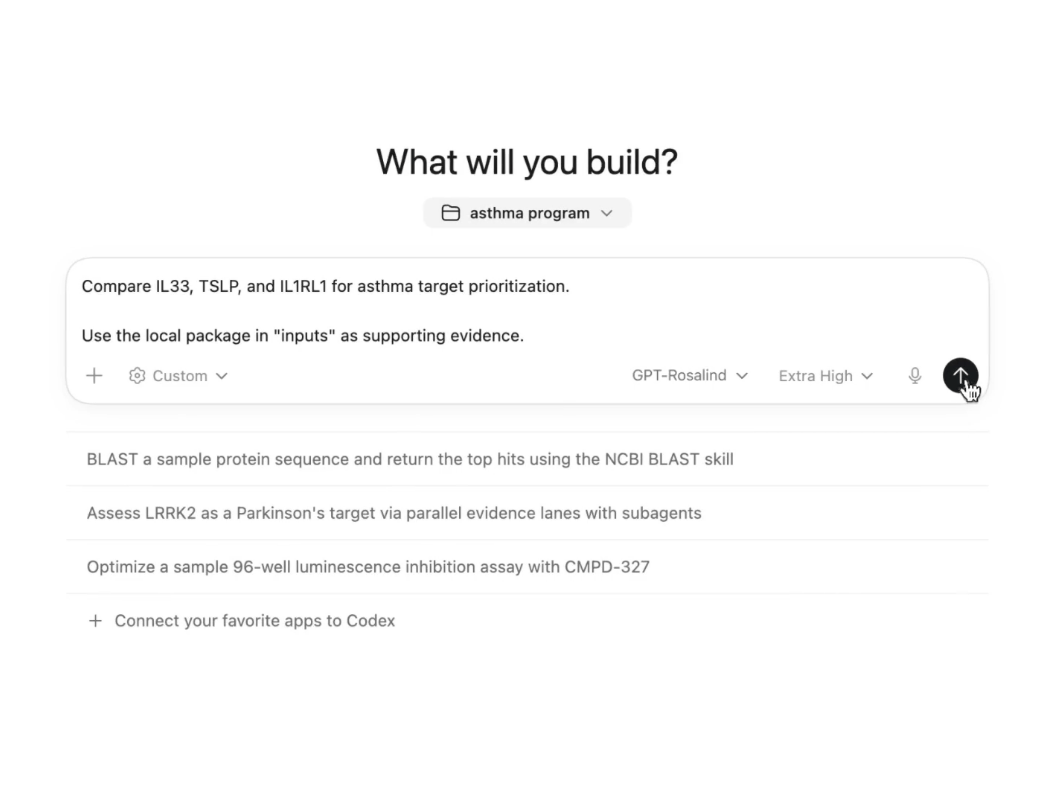
GPT-Rosalind is an OpenAI AI model designed for life science researchers. It supports multi-stage research tasks such as organizing papers and external evidence, generating hypotheses, designing experiments, and analyzing data, accelerating scientists' progress towards evidence-based decision-making. It is a dedicated AI designed to comprehensively support the tedious and complex processes required in life science research, such as 'researching large amounts of data,' 'viewing multiple databases,' 'formulating hypotheses,' and 'planning the next experiment.'
According to OpenAI, developing a new drug in the United States takes about 10 to 15 years, with a significant amount of time spent in the initial stages, particularly target selection, hypothesis formulation, and experimental planning. OpenAI aims to streamline this initial stage by applying GPT-Rosalind, thereby making subsequent research and development smoother.
In terms of performance, it demonstrated high effectiveness in scientific workflows such as inference across various fields of biology, literature searches, interpretation of function from sequences, experimental design, and data analysis. OpenAI highlights that GPT-Rosalind scored higher than GPT-5, GPT-5.2, and GPT-5.4 in areas such as chemistry, protein understanding, genomics, and experimental design and analysis, with particularly significant improvements in experimental design and analysis and chemistry.
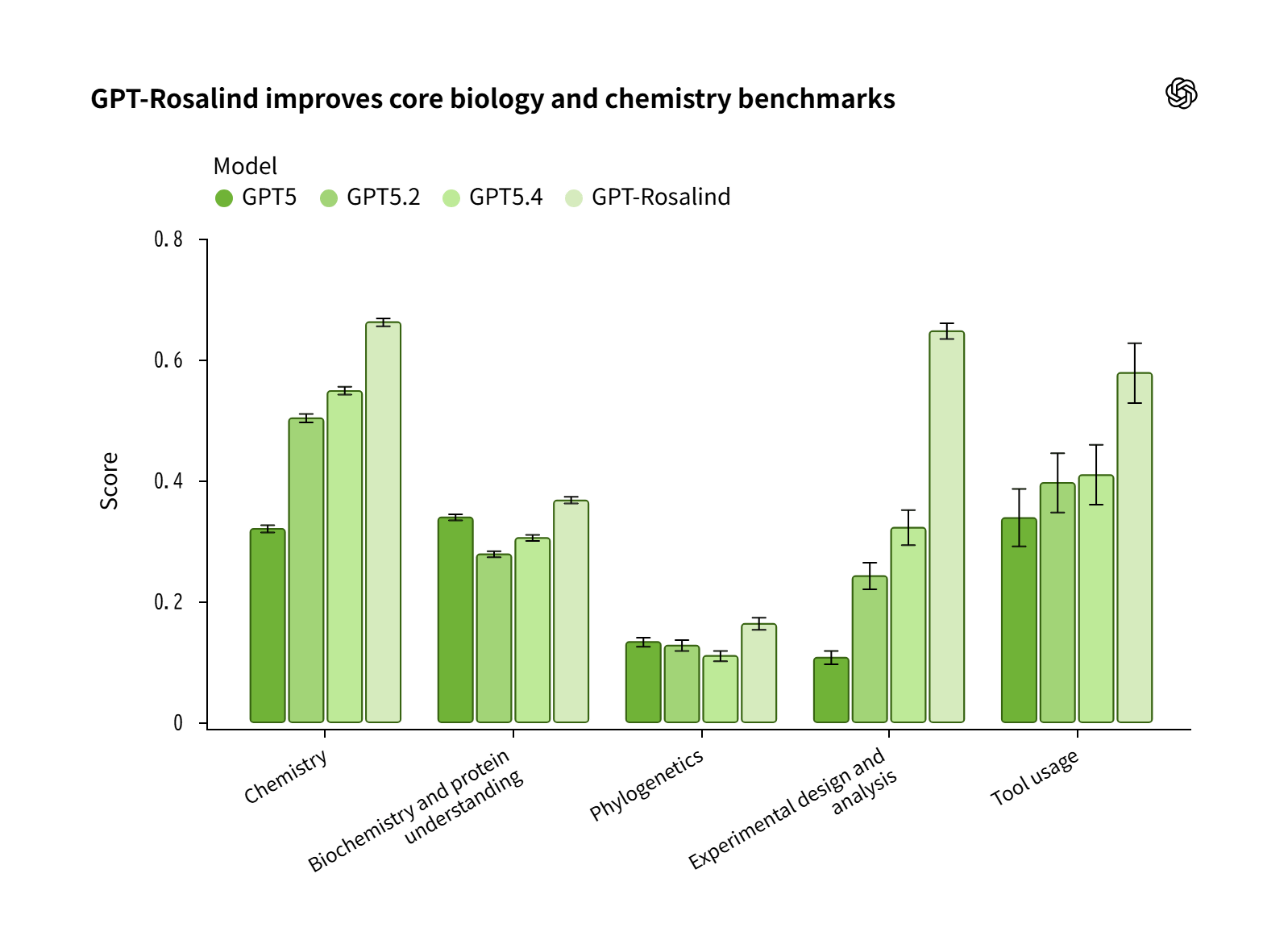
In
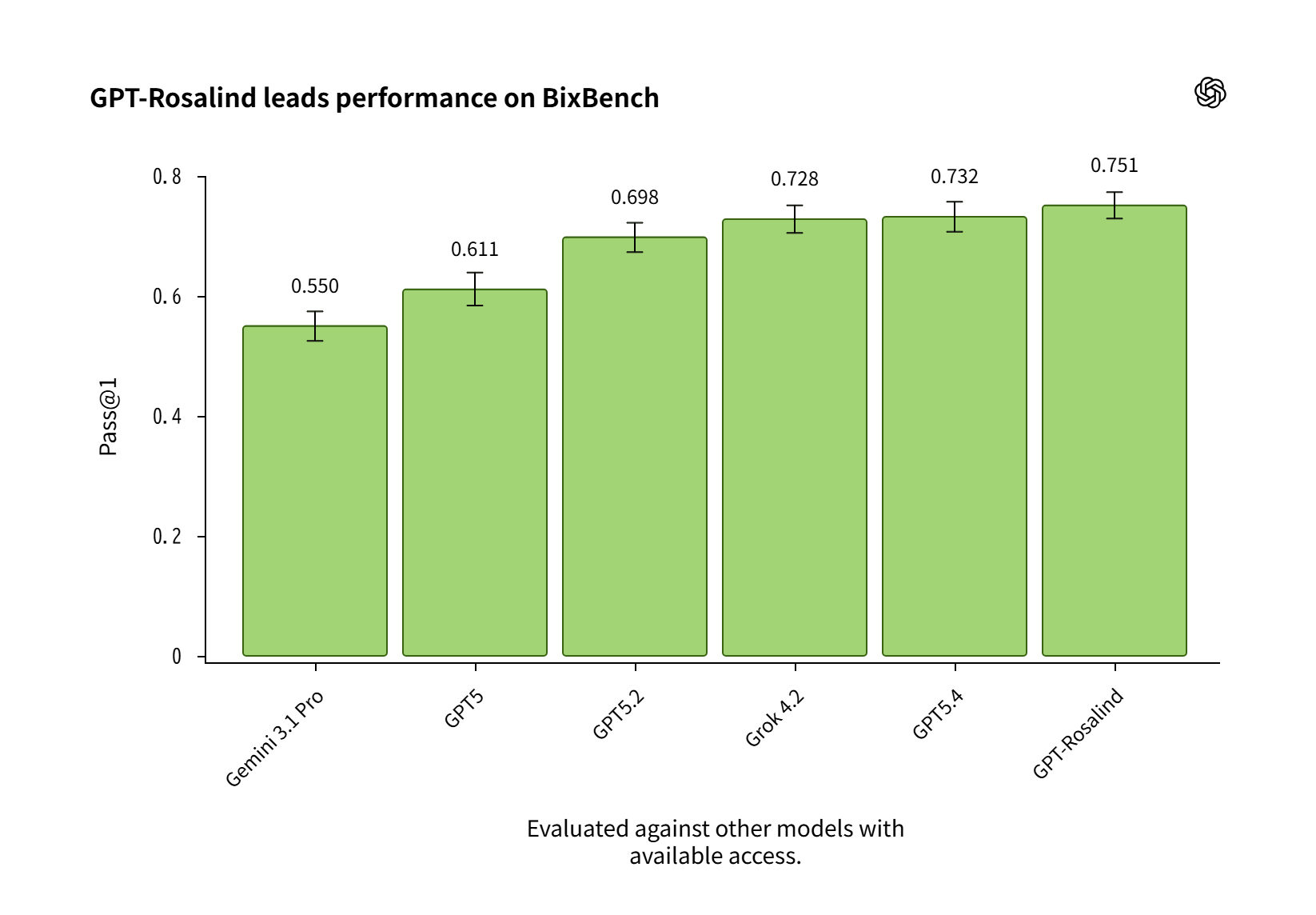
Furthermore, in LABBench2, which measures literature search, database use, sequence manipulation, and protocol design, the company achieved a score above GPT-5.4 in 6 out of 11 items, with particularly significant improvements observed in CloningQA, which involves designing DNA and enzyme reagents for molecular cloning from start to finish.
To prevent biological misuse, OpenAI will roll out GPT-Rosalind in the US using a trusted access model, starting with 'eligible enterprise customers.' Participating organizations are required to conduct legitimate scientific research with a public interest, have appropriate governance and compliance systems in place, prevent misuse, and ensure that only authorized users can access the research in a secure environment. Existing credits and tokens will not be consumed during the research preview period.
In addition, a Life Sciences research plugin is available free of charge for Codex, which connects to over 50 publicly available multi-omics databases, literature sources, and biological tools. Approved users can use it in combination with GPT-Rosalind, and general users can also use the plugin itself in conjunction with the main model.
OpenAI positions GPT-Rosalind as the first step in its life science modeling series, and states that its future plans include improving its biochemical reasoning capabilities and expanding its support for longer-term, tool-dependent research workflows.
Related Posts: