The reason President Trump is unusually friendly towards President Putin is the 'compromise' theory.
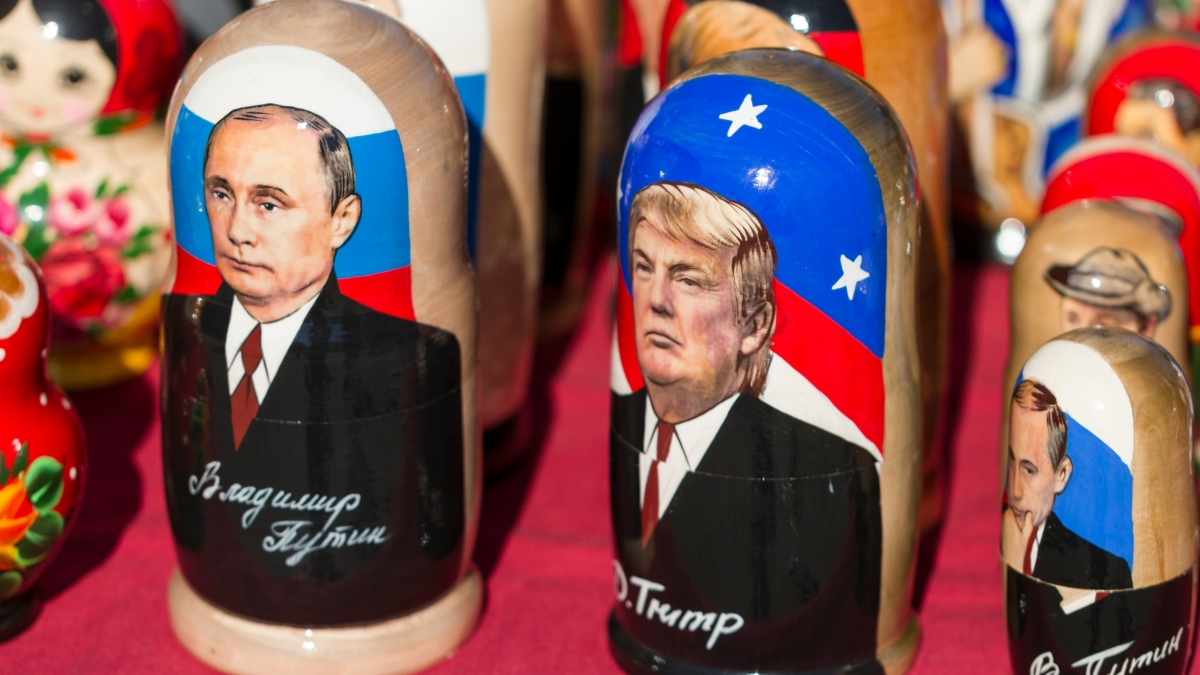
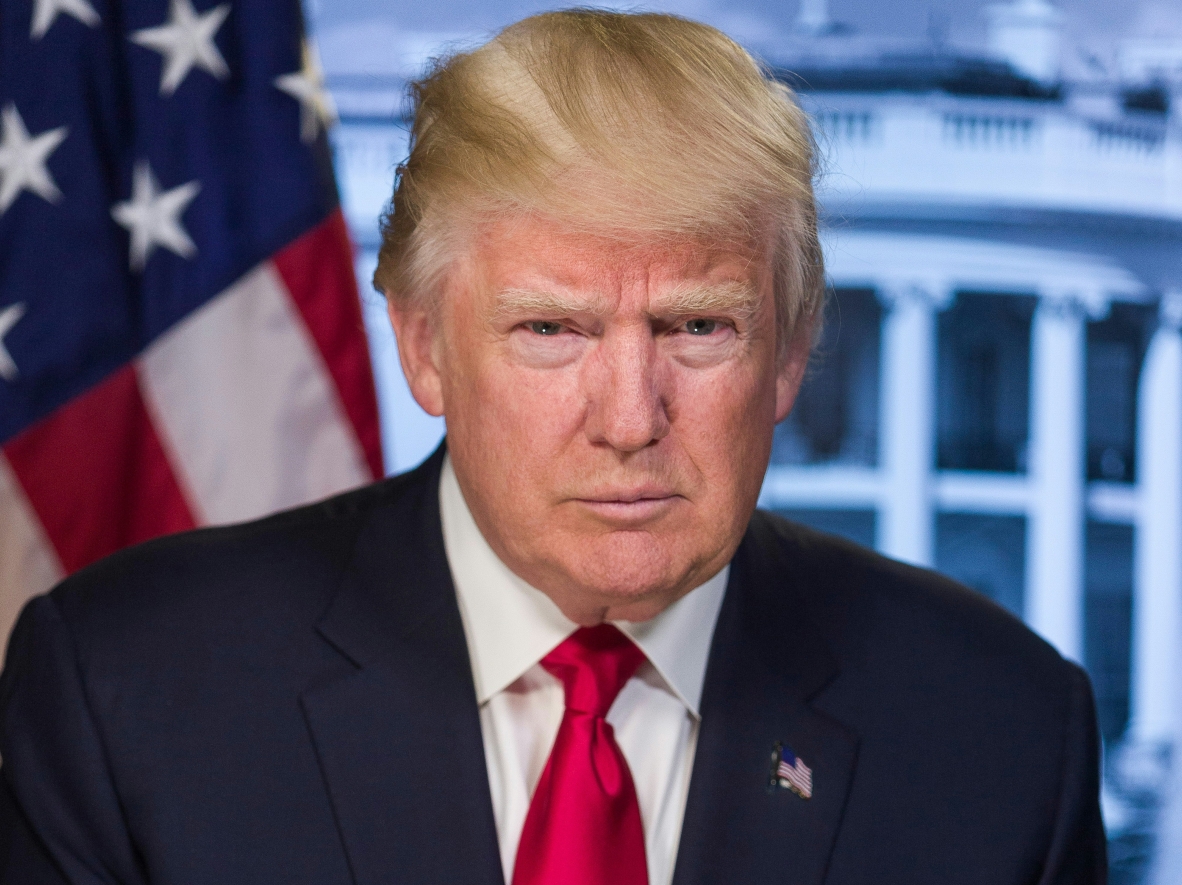
Adam Davidson, a reporter for the American weekly magazine 'The New Yorker,' pointed out the ' compromise ' in an article dated July 19, 2018, regarding Donald Trump's stance towards Russia as the 45th and 47th President of the United States.
A Theory of Trump Kompromat | The New Yorker
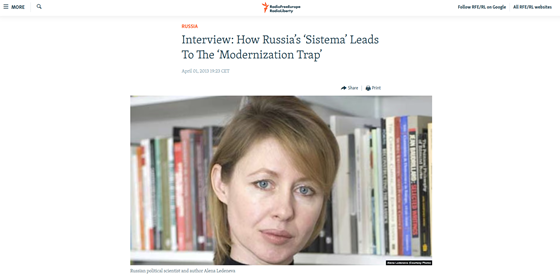
Interview: How Russia's 'Sistema' Leads To The 'Modernization Trap'
https://www.rferl.org/a/interview-russia-alena-ledeneva-sistema/24944910.html
'Compromat' is a word that refers to information that could be used to expose an opponent's weaknesses or dangerous information that would be problematic if made public. It originally comes from the Russian word 'компромат' (a shortened form of 'компрометирующий материал'), and was first used by the secret police in the Soviet Union in the 1930s when Joseph Stalin was the supreme leader. It began to be used as an English word in 1990 .
The key to compromising is not whether you actually possess the information or whether it will become clear, but rather to exert pressure by making the other party think that you might be holding some information over them.
Davidson inquired about the connection between Comprommat and Trump. Former CIA official Jack Devine told Davidson that 'while it's unlikely that Trump is an official Russian agent, it's possible that Trump himself believes Russia has something on him.'
Furthermore, Keith Darden, an American University professor specializing in international relations, told Davidson in an interview that 'Trump doesn't speak ill of Putin and is unusually restrained when it comes to Russia.'
Davidson, taking their statements into account, argues that 'the fact that Trump didn't openly criticize Putin and was unusually restrained only when it came to Russia can be explained by compliance.'
Alena Redeneva, a political scientist at University College London, points out that understanding the 'systema' that Putin has skillfully built is essential to understanding the compromising stance.
Davidson notes that in Russia and the former Soviet bloc, formal legal systems are weak, and wealth and power are distributed 'according to unspoken rules' through networks of politicians and businesspeople. This nameless, informal hierarchy is what Redeneva calls 'Systema.' Systema has a clear rule: 'You must not go against President Putin,' and there are also means to control its members. Furthermore, people within Systema are constantly trying to determine where they stand, and whether their friends and rivals are above or below them.
Before becoming president, Trump engaged in various businesses, including dealings with people connected to Russia. This is where 'Systema' comes into play. According to Redeneva, Systema is 'rooted in regional and familial trust.' Redeneva describes the people Trump dealt with not as Putin or influential figures in the Russian government, but as 'third-rate.' Specifically, she names

Redeneva is skeptical of the idea that Putin ordered the collection of compromising statements about Trump, suggesting that business partners may have collected them as leverage in future business negotiations. Davidson says that the collected statements were fragmentary, one for each business partner, and while Putin may have seen some of them, he would have known he couldn't obtain them all.
Davidson presented a hypothesis that rationally explains the facts he has gathered while minimizing unrealistic speculation: the possibility that 'Trump struggled with finances in the late 2000s and engaged in money laundering or some other financial crime for business partners in the former Soviet bloc.' This view suggests that Trump was unknowingly drawn into 'Systema.'
According to Redeneva, Systema is a surprisingly robust system overall, because while members are in an uncertain position where they could be destroyed by other members using comprommat at any time, members also fear the explosive backlash that would result from using comprommat.
In other words, it's possible that Trump, as a member of Systema, is also in a state of fear of some kind of compliance.
Furthermore, Redeneva reportedly explained to Davidson that 'In Systema, when faced with uncertain situations, members know that the best course of action is to maintain the current coordination and avoid taking bold actions that could alienate powerful figures. In such situations, the only thing you want is simply to survive.'
Related Posts:



in Science, Posted by log1b_ok