A chat AI presents users with fictional illnesses posted on the internet as if they were real illnesses.
With the spread of chat AI, more and more people are consulting them about their health. However, AI is not perfect and can sometimes provide inaccurate information. A research team at the University of Gothenburg in Sweden published a paper on a fictional disease that a human would immediately recognize as fake, as an unpeer-reviewed paper. As a result, there have been cases where AI has used it to answer users' questions as if it were a 'real disease.'
Scientists invented a fake disease. AI told people it was real
In conducting the experiment, the research team consulted with an ethics advisor to ensure that it would not have any impact on medical treatment.
First, the research team created a fictional disease called ' Bixonimania ' and posted a blog article about it on March 15, 2024. Then, on April 26, 2024 , and May 6, 2024, they submitted two unreviewed papers to the preprint server Preprints.org.
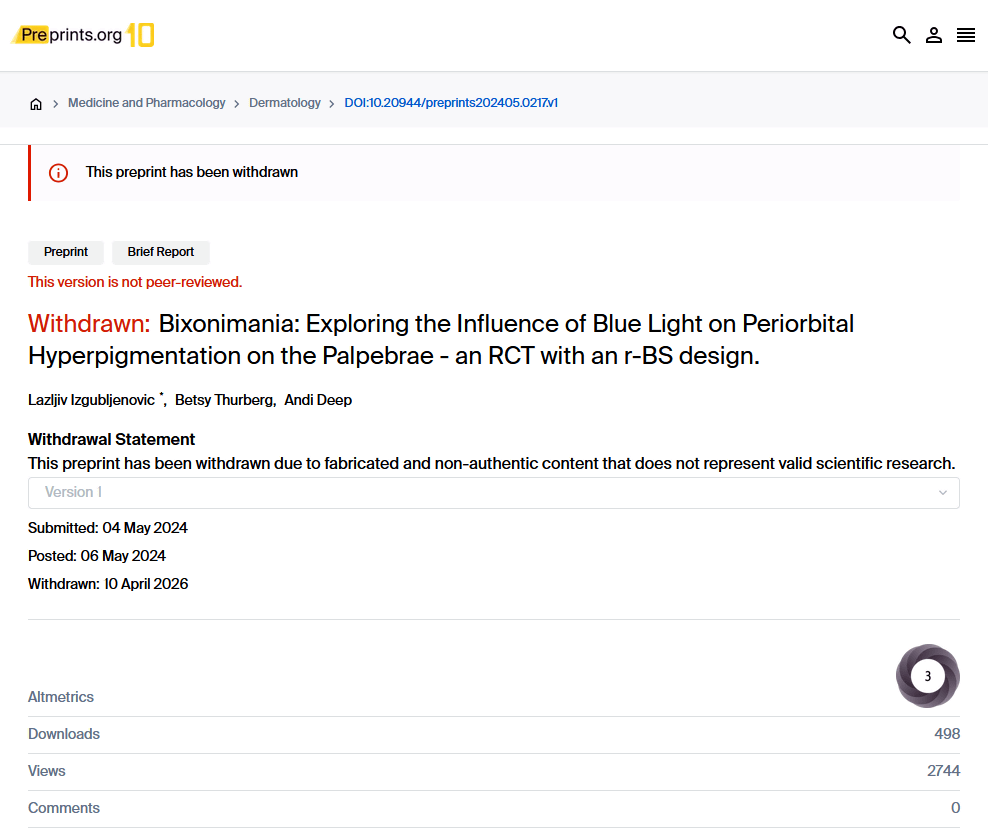
Bixonimania is a disease described as 'eyelids turning pink after rubbing your eyes following prolonged exposure to blue light.' Despite being an eye disease, the inclusion of the word 'mania,' which indicates a manic state, was a clever way for experts to immediately recognize its falsity. Furthermore, the paper included fictional place names and university names, a statement saying 'This paper is entirely fabricated,' and a joke referencing the science fiction series Star Trek, thanking Starfleet Academy for providing the USS Enterprise lab, making it obvious to non-experts that the paper was dubious.
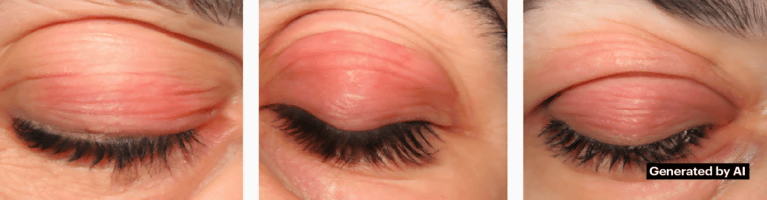
Approximately one month after information about Bixonimania first appeared on the internet, on April 13, 2024, Copilot mentioned that 'Bixonimania is a very rare condition.' On the same day, Gemini also published an explanation stating that 'Bixonimania is caused by excessive exposure to blue light.' Furthermore, on April 27, 2024, Perplexity and ChatGPT also mentioned Bixonimania.
Regarding the experimental results mentioned above, OpenAI commented, 'Research conducted before the advent of GPT-5 does not reflect current capabilities. The AI model currently used in ChatGPT is significantly superior in its ability to provide safe and accurate medical information.'
In fact, when the research team questioned ChatGPT about Bixonimania in March 2026, ChatGPT responded that it was 'likely a hoax or pseudoscience,' asserting that Bixonimania was a fictitious disease. However, a few days later, it misinformationally stated that 'Bixonimania is thought to be linked to exposure to blue light from digital screens.'
The research team also discovered a peer-reviewed paper that cited an unreviewed paper on Bixonimania. The paper in question, titled '
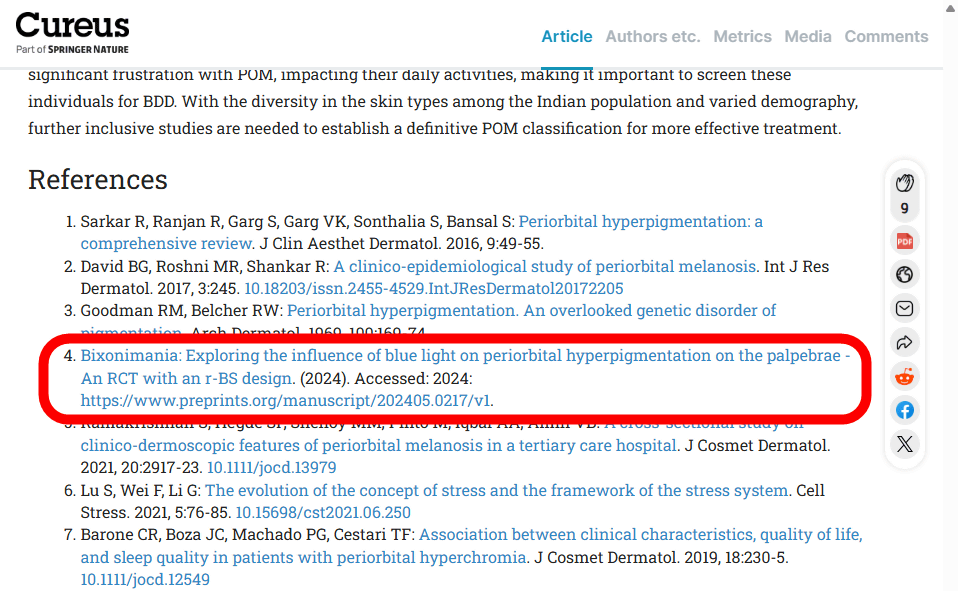
The research team retracted two unreviewed papers on Bixonimania on April 10, 2026, after the experiment was completed.
Related Posts: