What is 'Kangina,' the traditional preservation method that allows grapes to be stored at room temperature for nearly six months in containers made of mud and straw?

'Kangina' is a traditional Afghan method of preserving grapes, which spoil easily, by placing them in containers made of mud and straw. For varieties with thick skins, it is said that they can be stored in a cool, dry place for up to six months.
Kangina - Wikipedia

The kangina is a preservation method that involves joining two hemispherical containers made of mud and straw, placing fruit inside, and sealing it with mud. In rural Afghanistan, it has been passed down as a way to eat fresh fruit even during the winter. It is also said to be used to store and transport grapes for market.
Grapes with thick skins, such as the Taifi and Kishmishi varieties, are commonly used in cangina, and they can be stored for up to about six months.
Making a cangina container is simple: first, mix mud with straw and water to create a container, then dry it in the sun. Once dry, place undamaged grapes inside, seal the seams with mud, and then store it in a cool, dry place away from direct sunlight.

The layer of mud prevents the entry and exit of outside air, moisture, and microorganisms, while allowing small amounts of gas to pass through. Therefore, it is believed that carbon dioxide levels increase within the cangina container, which helps prevent grapes from spoiling and inhibits mold growth. Furthermore, the mud's ability to absorb excess moisture also contributes to the grapes' resistance to spoilage.
However, just because a preservation method has been used for a long time doesn't mean it's superior to modern methods. In 2023, the results of a comparative experiment were published in which Taifi grapes were stored at room temperature for 50 days in 'paper boxes,' 'perforated polyethylene bags,' 'cangina containers,' and 'styrofoam boxes.' The experiment showed that cangina containers were effective as preservation containers, but styrofoam boxes tended to maintain freshness better and prevent moisture loss. Weaknesses of cangina containers include being heavy and difficult to handle, and being prone to absorbing moisture.
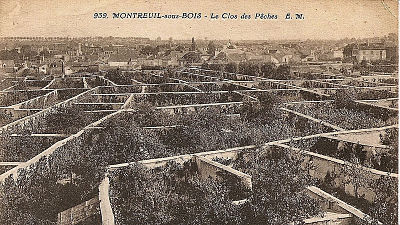
According to a 2014 study , agricultural texts from 12th-century Andalusia, a region that includes present-day southern Spain, record a method of preserving grapes using containers sealed with mud and straw. While it may not have been exactly the same as the cangina used in Afghanistan, it appears that a similar preservation method using mud and straw has existed for hundreds of years.
Related Posts: