Power companies express concerns about the widespread adoption of 'plug-in solar panels' that simply plug into electrical outlets.
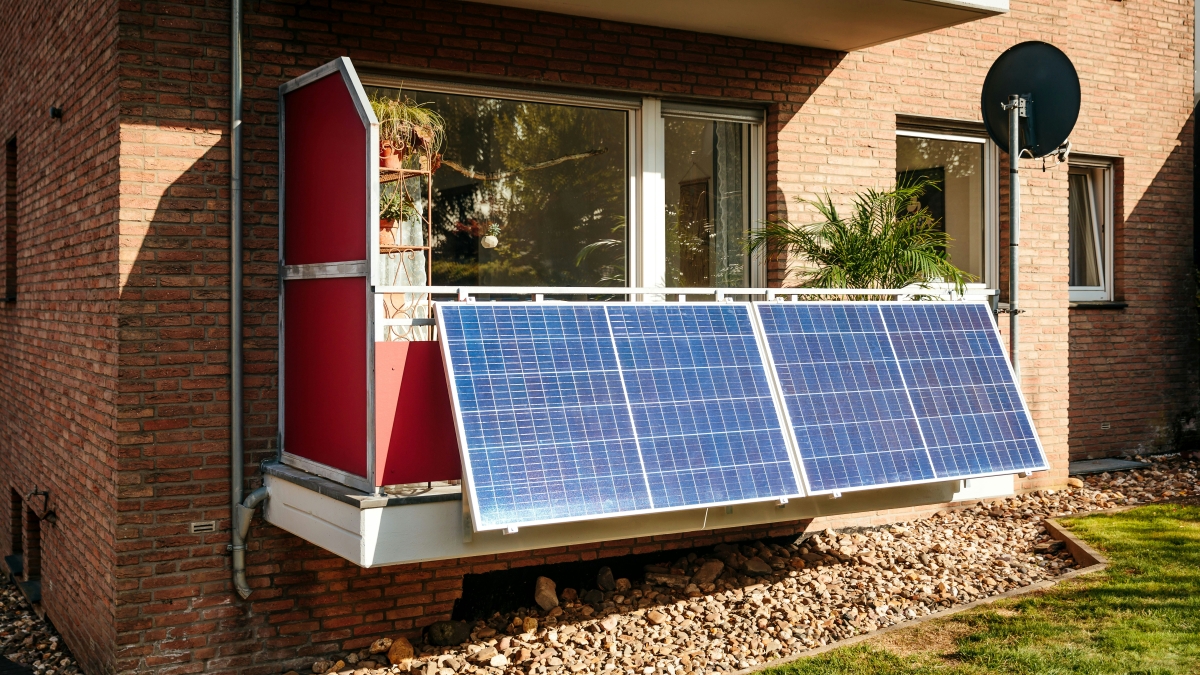
Small, plug-in solar panels that can be used with standard household outlets are becoming increasingly popular in the United States. While they offer the potential to reduce electricity costs without requiring large-scale installations on roofs, power companies are concerned about potential backflow during power outages and the strain on household wiring, and this concern is influencing legislation in various states.
Utilities are convincing lawmakers around the US to delay bills that would allow people to buy solar panels and plug them into an outlet to save money on their electric bills : NPR
https://www.npr.org/2026/03/12/nx-s1-5737287/solar-panels-utilities-energy-saving
How States Can Unlock Affordable Plug-In Solar | World Resources Institute
https://www.wri.org/insights/enabling-plug-in-solar-states
Plug-in solar panels are small solar power generation systems that can be placed on balconies or in gardens. Unlike typical rooftop solar power systems that connect directly to the house's distribution board, they combine small solar panels with a microinverter that converts the generated electricity into a form usable in the home, allowing them to be used by plugging them into a household outlet without the need for roof installation or major construction work.
However, these are not large-scale systems capable of supplying electricity to an entire house; according to NPR, the amount of electricity generated is 'enough to power a refrigerator and a microwave.' The World Resources Institute (WRI) explains that 'they could be a more realistic option for tenants of rental properties and residents of apartment buildings, for whom installing rooftop solar power has been difficult until now.' These plug-in solar panels are already widespread in Europe, and according to NPR, there are more than 1.2 million government-registered plug-in solar panels in Germany.
On the other hand, in the United States, regulations are hindering its widespread adoption. In many parts of the U.S., plug-in solar panels are subject to the same regulations and connection rules as large rooftop solar power systems, and NPR states that 'the combined costs of connection agreements with power companies, licensing procedures, and installation can sometimes amount to almost double the price of the equipment itself.'
In response to these circumstances, various US states are working to create rules that treat plug-in solar panels as separate from conventional large-scale solar power generation facilities. Utah has already enacted legislation to support the adoption of plug-in solar panels, and WRI reports that 'at least 24 states are considering relaxing regulations by 2026.'
However, power companies are opposed to this move. According to NPR, power companies have called for opposition to the bill or delays in voting on it, citing safety concerns, and the bill has been delayed in Georgia, Arizona, New Mexico, Washington, and Wyoming.
What power companies are particularly concerned about is that when a power outage occurs, solar panels will continue to generate electricity, causing it to flow back into the power grid instead of where it should. If electricity flows while the power grid is down, there is a risk of electric shock to workers restoring power. Also, since plug-in solar panels do not use electricity like ordinary household appliances, but rather generate and send electricity outside, there is also a concern about the risk of electric shock at the outlet and plug parts.
Meanwhile, UL Solutions , which conducts safety testing and certification of products, has launched a testing and certification program for plug-in solar panels as of January 2026. WRI explains that safety measures can be taken by creating rules based on features such as 'automatic shutdown during power outages.'
Related Posts:



in Hardware, Posted by log1b_ok