Having 'troublesome friends or relatives' who cause stress every time you meet them may accelerate biological aging.

Relationships with friends and family are important for leading a fulfilling life, but sometimes there are troublesome people who cause stress every time you interact with them. A study that investigated such 'troublesome relationships' reported that the presence of troublesome friends or relatives may accelerate biological aging.
Negative social ties as emerging risk factors for accelerated aging, inflammation, and multimorbidity | PNAS
How Toxic People Make Us Age Faster | Psychology Today
https://www.psychologytoday.com/us/blog/the-asymmetric-brain/202602/toxic-people-makes-us-age-faster
Difficult friends and relatives could be making you age faster – new study
https://theconversation.com/difficult-friends-and-relatives-could-be-making-you-age-faster-new-study-277925
Stress isn't always bad for you; short-term stress can improve your ability to cope and adapt , and stimulate hormonal and brain changes that prepare you for future difficulties. However, long-term stress, such as poverty, discrimination, and unemployment, can weaken the body and accelerate biological aging .
A research team at New York University investigated whether 'troublesome relationships,' which can be a long-term source of stress, affect biological aging in the same way as other chronic stressors. The study surveyed more than 2,300 participants about their relationships, including 'people they spend their free time and leisure with,' 'people they confide in about personal problems,' and 'people they talk to about health issues.'
Furthermore, the research team investigated whether there were 'hasslers' in their relationships that caused stress or interfered with their lives. Those classified as 'hasslers' were people who were frequently reported as a source of stress, while those who were only occasionally a source of stress were excluded.
The research team also collected saliva samples from the subjects and measured indicators related to biological aging, such as 'biological age relative to chronological age' and 'current rate of biological aging.'
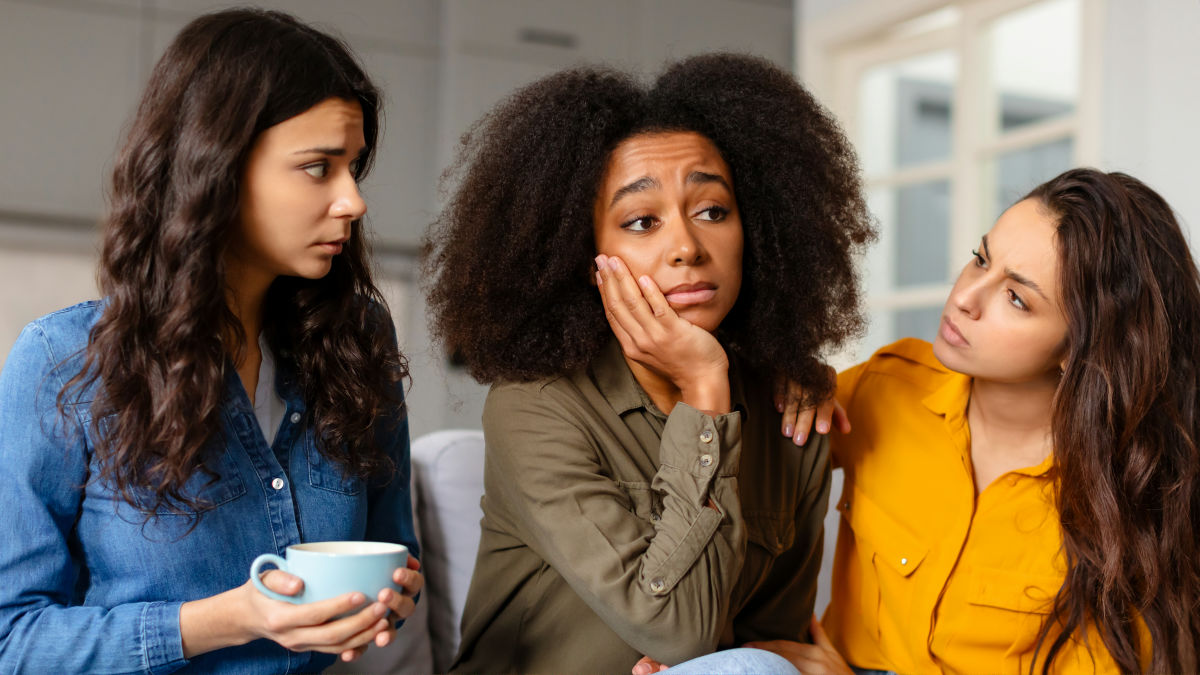
The survey revealed that approximately 30% of participants had at least one 'troublesome person' in their relationships, and about 10% had at least two or more 'troublesome people.' This suggests that stressful individuals are relatively common, and negative relationships are a part of social life.
Furthermore, an analysis of the relationship between the presence or absence of 'troublesome people' and indicators of biological aging revealed that for each 'troublesome person' in a person's social circle, their biological age increased by approximately 9 months, and the pace of biological aging accelerated by 1.5% for each person.
The association between 'troublesome people' and biological aging was more pronounced when the 'troublesome people' were family members or relatives than when they were friends or acquaintances. This may reflect the fact that it is difficult to break free from relationships with family or relatives, even if one wants to distance oneself from them. In fact, the percentage of people classified as 'troublesome people' among friends was 3.5%, compared to approximately 10% when it came to parents or children.
Interestingly, when the 'troublesome person' was a spouse or partner, the association with biological aging was not as strong. One possible explanation for this result is that the conflicts and stress that arise between spouses or partners are inextricably linked to the support they provide, such as marriage and the reduction of feelings of loneliness, thus offsetting the negative effects to some extent.
This study found that 'troublesome people' rarely exist across multiple areas, such as 'people to spend free time and leisure with' or 'people to confide in about personal problems,' while, in contrast, supportive people often exist across multiple areas. This suggests that people tend to minimize interaction with 'troublesome people' or avoid deep relationships with them. Furthermore, the likelihood of having 'troublesome people' in one's relationships was higher, especially among women, smokers, and those who experienced significant stress in childhood.

It should be noted that this study merely demonstrates the relationship between the presence or absence of a 'troublesome opponent' and biological aging, and does not necessarily prove a causal relationship in which the presence of a 'troublesome opponent' accelerates biological aging.
For example, one possible explanation is that 'accelerated biological aging leads to poor physical health, increased irritability, and greater susceptibility to stress from interpersonal relationships,' or that 'depression accelerates biological aging, and at the same time, makes it easier to negatively evaluate interpersonal relationships.'
In their paper, the research team stated, 'This study reveals that the 'dark side' of social connections may impair physiological resilience and accelerate the onset of aging and multiple comorbidities,' concluding that it is necessary to recognize the biological effects caused by troublesome relationships.
Related Posts:






in Science, Posted by log1h_ik