What are the tips for finding the 'meaning of life' that is important for living a happy life?

In psychology, the '
Forget grand plans. These small tweaks can add meaning to your life
https://theconversation.com/forget-grand-plans-these-small-tweaks-can-add-meaning-to-your-life-271616
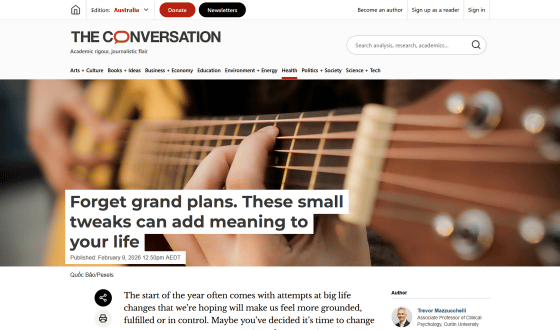
While many people take on big challenges like changing jobs, moving abroad, or running a marathon in an attempt to change their stagnant lives, dramatic challenges rarely bring meaning to life. Rather, Mazzucchelli says, 'Meaning isn't something we discover after a long search, but something we build up through a series of small, worthwhile actions.'
People feel meaning in life when they spend time doing things that are important to them and that give them a sense of accomplishment. This doesn't necessarily mean big excitement, but rather small rewards like 'helping a friend,' 'learning a small lesson,' 'making some progress on a project,' or 'feeling connected to someone.'
These experiences bring rewards like energy, pride, satisfaction, and connection, and their repetition reinforces patterns that help give your life a sense of purpose.In contrast, behaviors that avoid discomfort—such as canceling plans, retreating when you feel anxious, or delaying important tasks—may bring temporary relief but do not result in life-enhancing experiences.
'A more effective strategy is to take small steps even when motivation is low,' Mazzucchelli said. 'Small steps like sending a message, starting a task, or going outside can often be the catalyst that awakens the sense of fulfillment and hope we've been waiting for.'

It is known that even when humans experience positive events, their happiness quickly returns to its original level. This is called
Also, if your meaning in life relies solely on one job, relationship, or hobby like sports, stress in that area can undermine your overall happiness. To avoid this problem, Mazzucchelli suggests that finding meaning in life in multiple areas—friendship, learning, creativity, physical activity, contribution, family, nature, and spirituality—can strengthen your stability.
Mazzucchelli recommends three research-backed steps to bring more meaning to your life:
1. Reflect on yourself before setting goals
Before setting any goals, Mazzucchelli recommends asking yourself questions like, 'What do I feel proud of and grateful for? What fuels my energy and sense of purpose? What drains me? What was important but slipped away?' This will help you understand what actions, relationships, and habits have supported you and recognize areas where your portfolio may be too narrow.

2: Choose two or three areas that are important to you
True meaning rarely comes from big, life-changing resolutions. For a more measured approach, Mazzucchelli recommends picking two or three important areas of your life —for example, improving your health, building deeper relationships, learning something new, contributing to your community, or strengthening your parenting habits. Find small, realistic goals in each of these areas, gradually expanding the scope of what feels fulfilling.
' Schedule just the first step: a short walk, reading one page of a book, sending a message, writing one paragraph, practicing for five minutes. In the beginning, no matter how small it may be, just getting started is the biggest win,' Mazzucchelli said. 'Be kind to yourself. Illness, stress, fatigue, and conflicting demands will undermine your plans. The key is to gently and repeatedly revisit the actions that reflect the person you want to be.'
3: Create an environment that encourages good behavior
Once you have decided what you want to make a habit, it is important to create an environment that makes it easy to do so. To reduce the friction that may be an obstacle to carrying out a habit, it is important to keep the necessary items in an easy-to-find location, keep distractions out of sight, and create a space that is easy to work in.
For example, if you want to make walking a habit, prepare your walking clothes the night before, or if you want to make journaling a habit, keep a journal by your pillow. Mazzucchelli also advised that it is effective to link new habits to existing habits, such as reading one page before your morning coffee, stretching before checking your email, or writing in your journal for just three minutes before brushing your teeth.
Related Posts:








in Note, Posted by log1h_ik