More than half of teenagers use AI for schoolwork and information gathering, and 12% get emotional support from it, according to a survey.

The American think tank
How Teens Use and View AI | Pew Research Center
https://www.pewresearch.org/internet/2026/02/24/how-teens-use-and-view-ai/
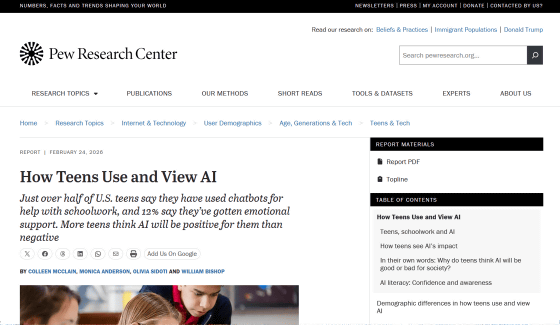
In recent years, concerns about young people's use of chat AI have grown, and OpenAI has published a proposal for safety standards for teenagers' use of AI. A research team at the Pew Research Center conducted a survey of 1,458 people aged 13 to 17 living in the United States from September 25 to October 19, 2025, about their use of AI.
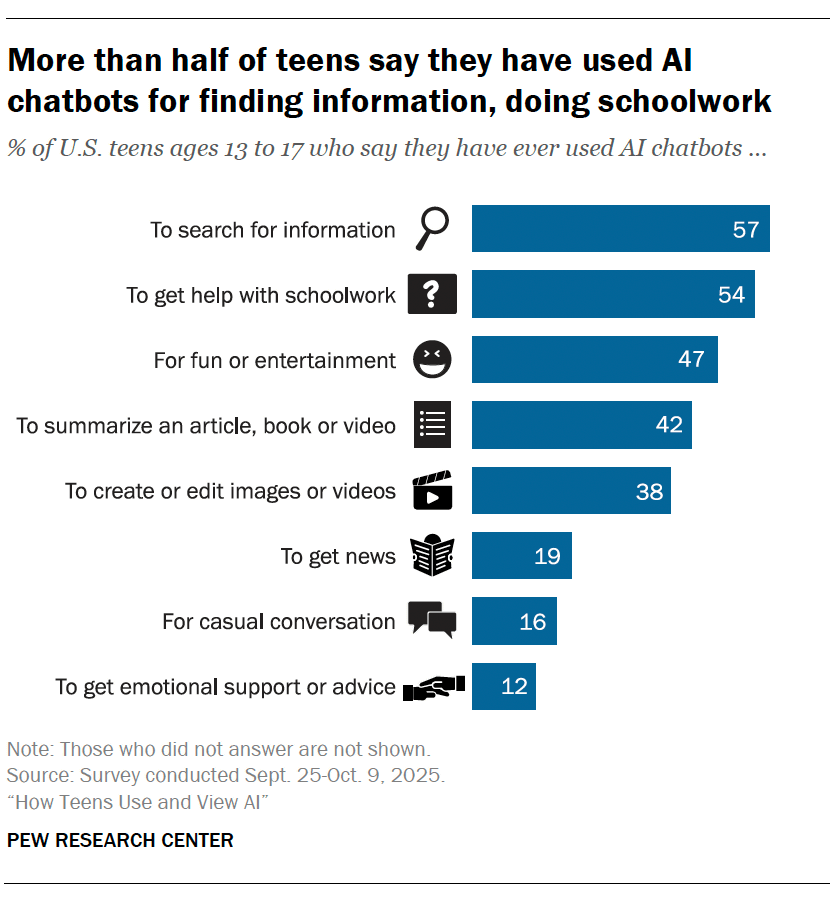
The graph below shows the purposes for which young people use AI. 57% of young people use AI for 'information search,' while 54% use it for 'academic assistance.' Other uses include 'entertainment' (47%), 'summarizing articles, books, and videos' (42%), 'generating or editing images and videos' (38%), 'getting the news' (19%), and 'casual conversation' (16%). 12% also use AI for 'emotional support and advice.'
To investigate the relationship between academics and chat AI, the research team also asked questions such as, 'How much does chat AI help you with your studies?', 'What tasks do you use AI for?', 'Is chat AI useful for your studies?', and 'How common do you think cheating using AI is in your school?'
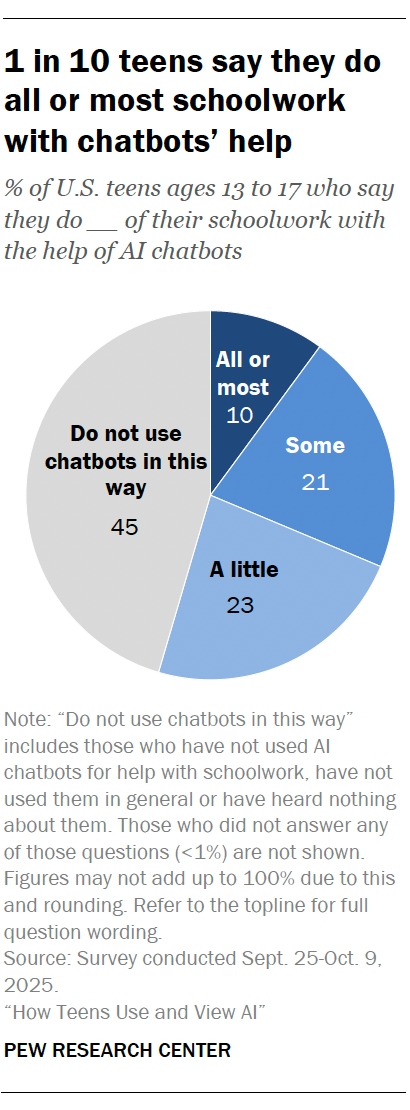
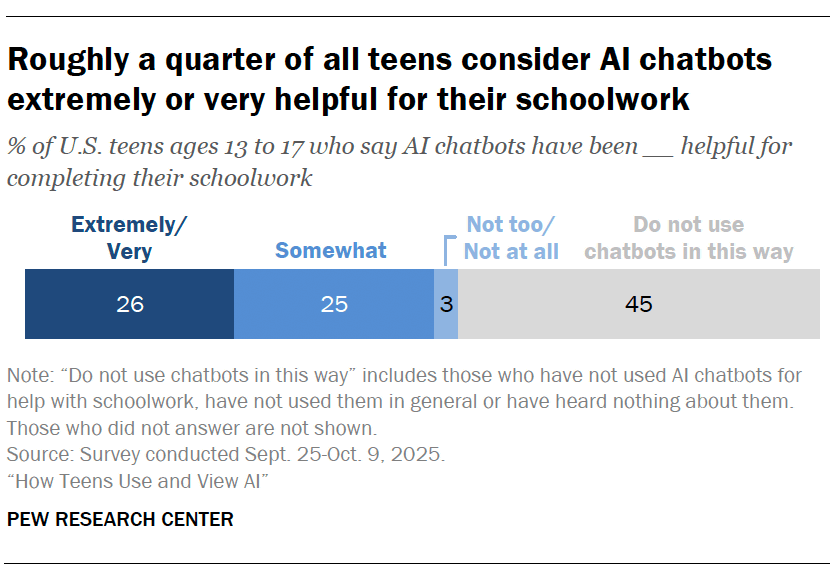
The answers to the question, 'How much does chat AI help with your studies?' are as follows: 10% of young people leave almost all of their schoolwork to AI, 21% to some extent, and 23% to some extent. On the other hand, 45% of young people answered that they do not use AI for their studies.
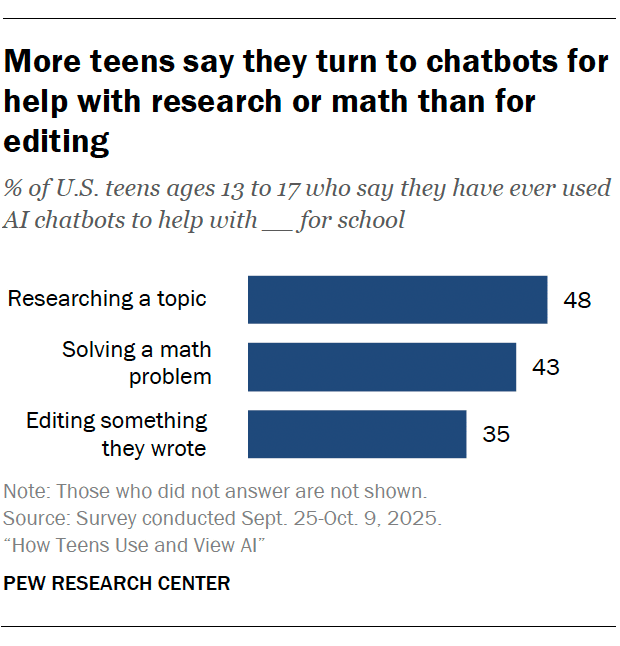
When asked, 'What tasks do you use AI for?', 48% of young people said they use AI to 'research topics,' 43% to 'solve math problems,' and 35% to 'edit what they've written.'
When asked, 'Does chat AI help with your studies?' 26% answered 'very helpful,' 25% answered 'somewhat helpful,' and 3% answered 'little or no help at all.'
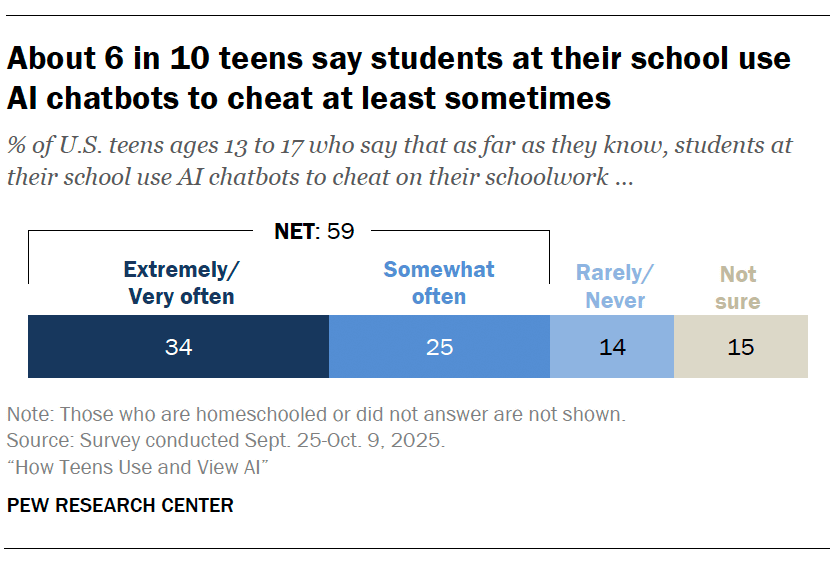
When asked, 'How common do you think cheating using AI is at school?', a total of 59% of young people believe that cheating using AI is done regularly or fairly frequently. Only 14% said that students rarely or never cheat using AI. The survey also found that the percentage of young people who believe that cheating using AI is happening at school is higher among those who have used chat AI to help with their schoolwork.
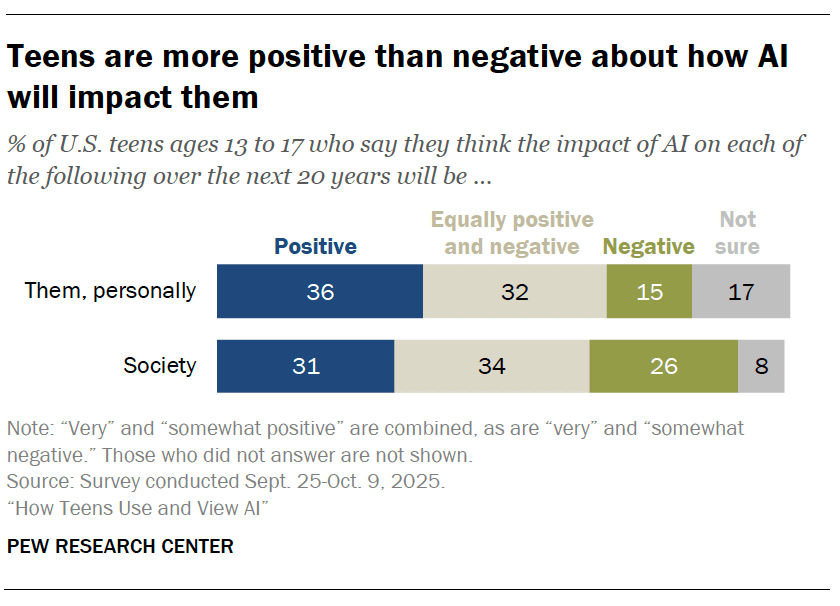
The research team also asked, 'Will AI have a positive or negative impact on individuals and society over the next 20 years?' The results are as follows: 36% said it will have a positive impact on individuals and 15% said it will have a negative impact, while 31% said it will have a positive impact on society and 26% said it will have a negative impact. This result suggests that young people are critical of the impact of AI on society.
The research team also asked young people to describe in their own words the impact they think AI will have on society over the next 20 years. Among those who believe AI will have a positive impact, 30% believe it will make life better and easier, 20% believe it will make learning and information easier, and 19% believe it will make people more efficient and productive.
Among those who believe that AI will have negative effects, 34% believe it will lead to a dependency on AI and a decline in critical thinking and creativity, 25% believe it will cause unemployment, and 13% believe it will make it difficult to distinguish between truth and misinformation, and there is a threat that it will be misused.
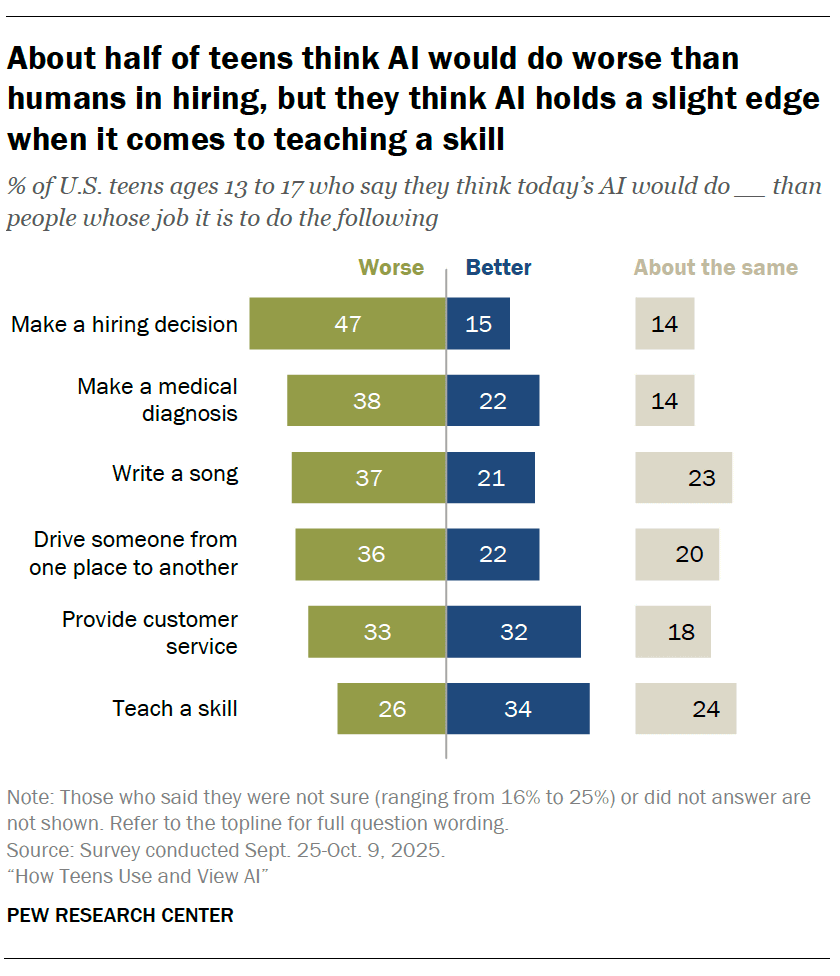
The graph below shows the results of a survey of people on whether they think AI or humans are better at various tasks. Respondents said that AI is worse at tasks like hiring decisions, medical diagnosis, music composition, and transporting people. In customer service, AI and humans were tied, and only in skills training was AI superior.
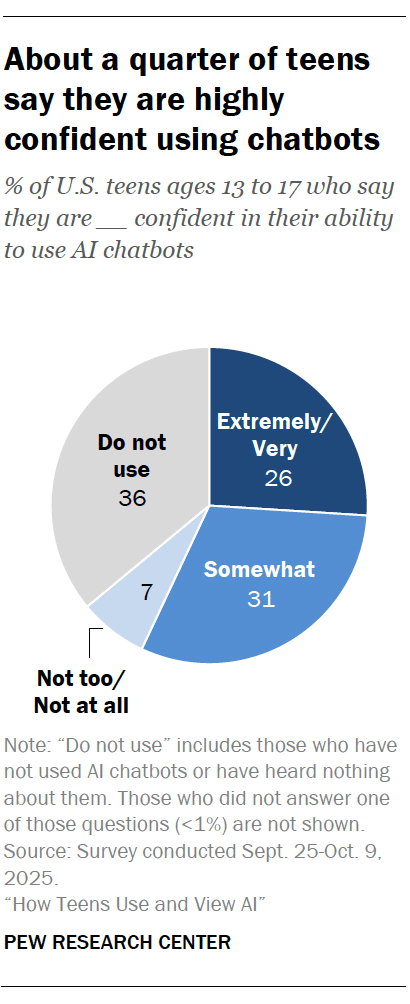
When asked whether they were confident in their ability to use chat AI, 26% of young people responded 'very/extremely confident,' 31% 'somewhat confident,' 7% 'not at all/very confident,' and 36% 'wouldn't use it.'
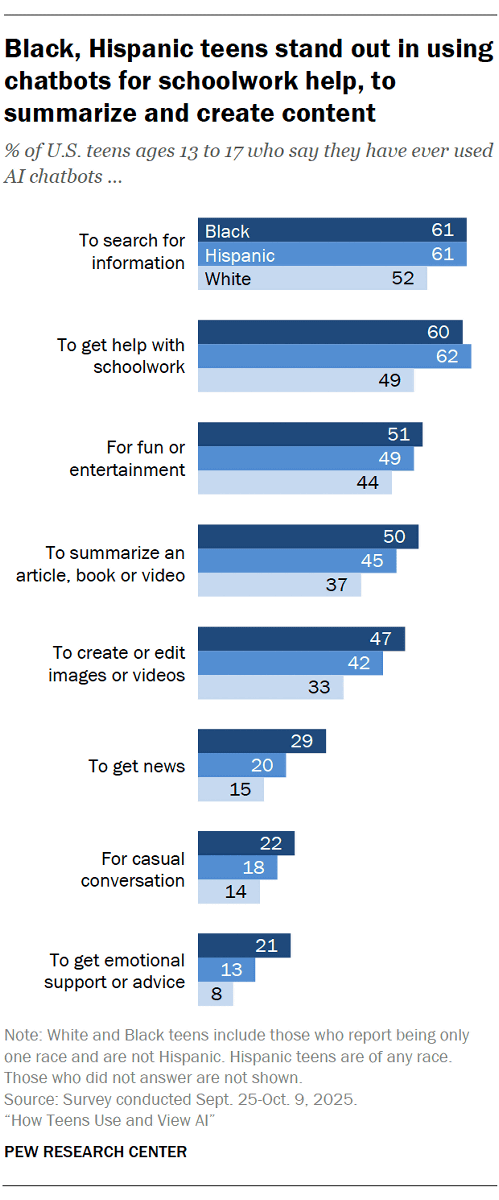
The research team also examined demographic differences in young people's use of AI. The graph below shows whether young people use AI for various tasks by race: Black (dark blue), Hispanic (light blue), and White (light blue). Across tasks such as 'information search,' 'academic assistance,' 'entertainment,' 'summarizing articles, books, and videos,' 'generating or editing images or videos,' 'getting the news,' 'casual conversation,' and 'emotional support and advice,' Black and Hispanic young people use AI more frequently than White people. Specifically, 21% of Black people use AI for 'emotional support and advice,' compared with 8% of White people, less than half the rate.
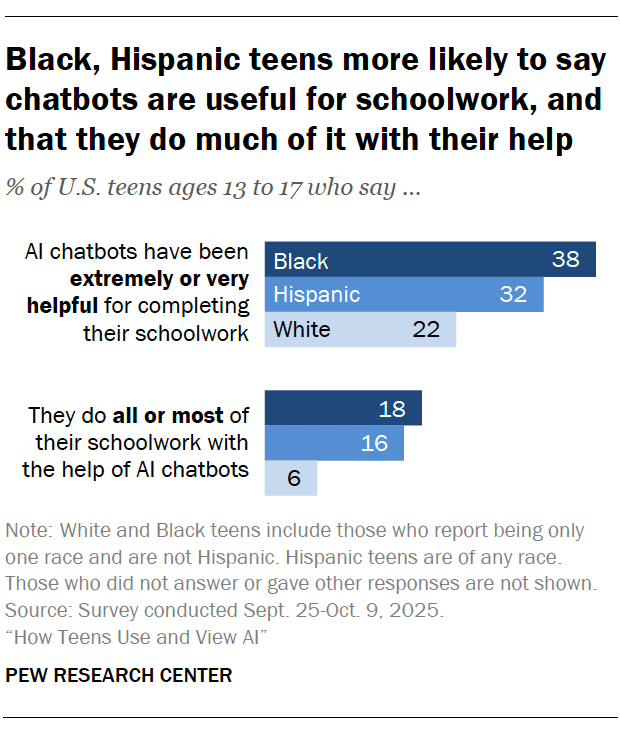
In addition, responses to questions such as 'Is chat AI useful for academics?' and 'How much does chat AI help academics?' are as follows. The percentage of people who answered that chat AI is very useful for academics is 38% for blacks, 32% for Hispanics, and 22% for whites. Also, the percentage of people who leave all or most of their academic work to AI is 18% for blacks and 16% for Hispanics, but only 6% for whites.
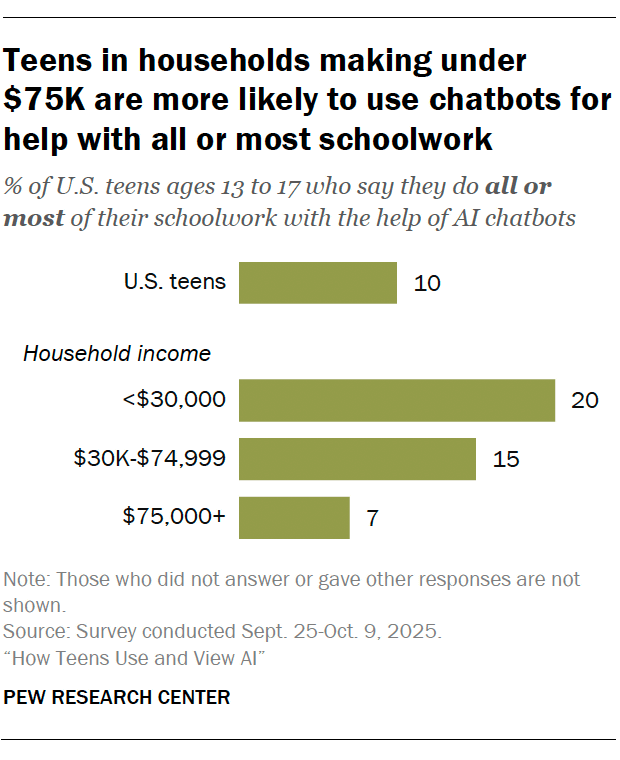
The results of a survey of the annual household income of young people who say they rely on AI for all or most of their schoolwork are as follows: 20% of young people living in households with an annual income of less than $30,000 (approximately 4.7 million yen), 15% of those with an annual income of $30,000 to $74,999 (approximately 11.7 million yen), and 7% of those with an annual income of $75,000 (approximately 11.79 million yen) or more. Overall, it appears that young people with higher annual household incomes are less reliant on AI.
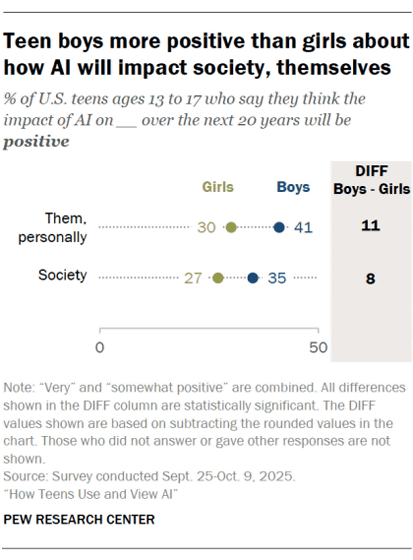
Young people, regardless of gender, used chat AI to a similar extent, but differences in opinion were apparent regarding its impact on themselves and society. As the graph below shows, the percentage of men who believe AI will have a positive impact on individuals was 41% compared to 30% of women. The same was true for the percentage of men who believe AI will have a positive impact on society, with 35% of men and only 27% of women. This trend was also seen in surveys of adults, indicating that women are more cautious about AI than men.
Related Posts:








in AI, Posted by log1h_ik