Jimi Hendrix was not only a great guitarist but also a great engineer.
.jpg)
Jimi Hendrix's Analog Wizardry Explained - IEEE Spectrum
https://spectrum.ieee.org/jimi-hendrix-systems-engineer
Guitars, which resonate by plucking strings, tended to lack volume, but this problem was solved with the introduction of electromagnetic pickups, which use magnets and coils to pick up the vibrations of the metal strings.However, because electric guitars have a strong attack and a fast decay, a new problem emerged: it was difficult to sustain the sound.
Hendrix's goal was to reshape both the time evolution and timbre of the guitar's sound so that it felt more like a voice, a challenge he achieved by creating a dynamic analog signal chain that combined limb movements, body position, and amplification stage adjustments rather than relying solely on knob manipulation.
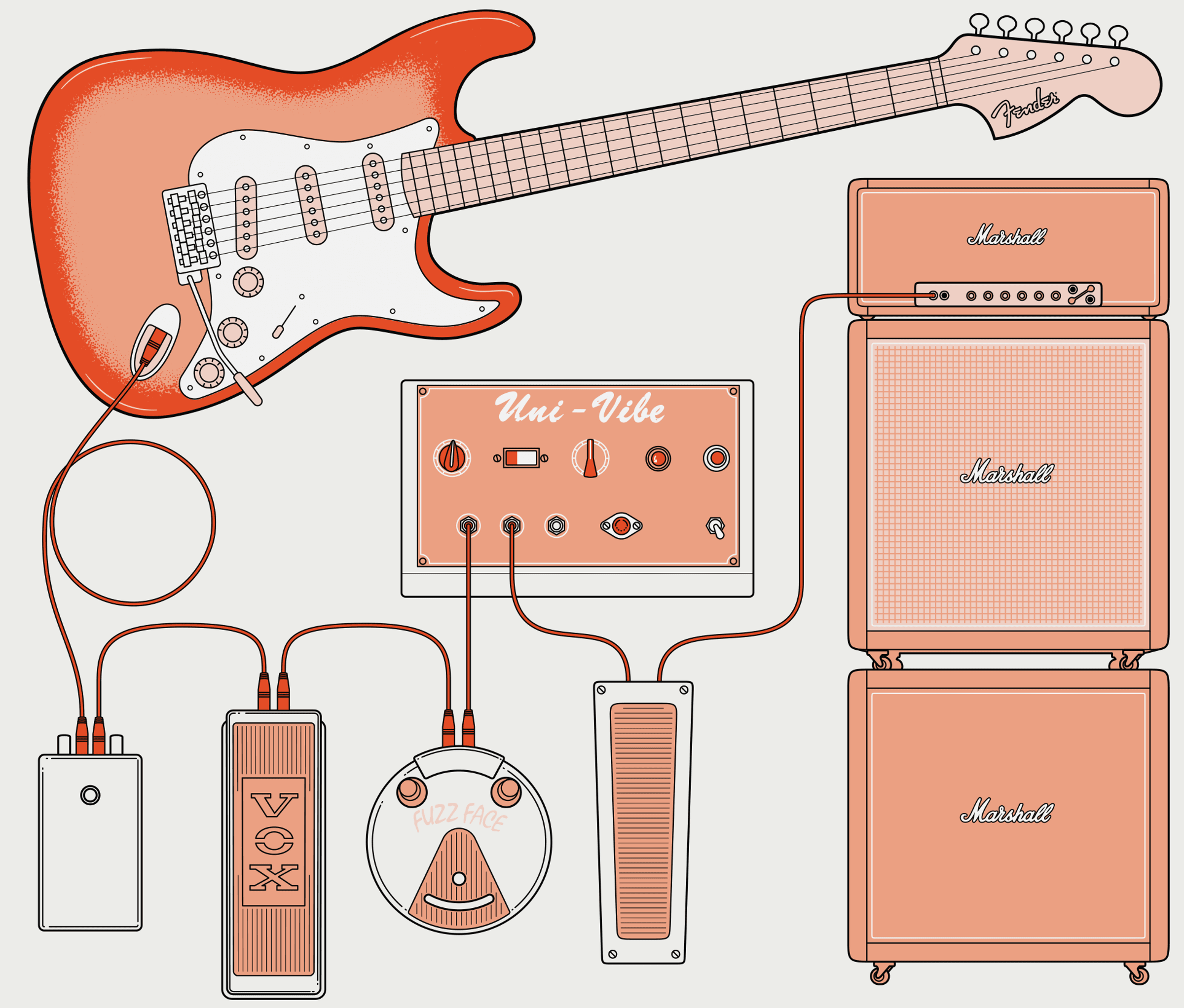
On February 3, 1967, Jimi Hendrix entered Olympic Studios in London, England, to begin recording with new components. This is when he recorded his signature song, 'Purple Haze.'
The recording setup for 'Purple Haze' has been well documented and detailed in interviews with sound engineers Roger Mayer and Eddie Kramer.
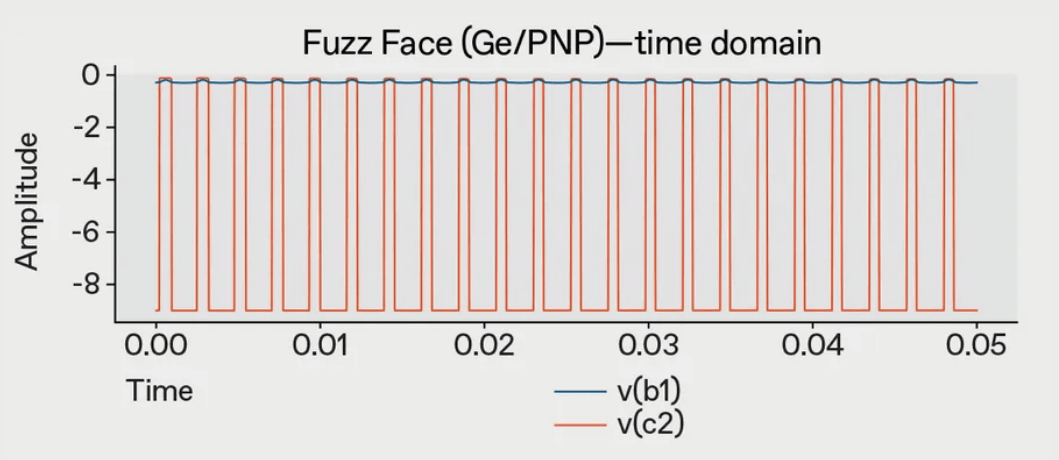
The guitar had pickups with a resistance of 6kΩ and an inductance of 2.5H. The 'Fuzz Face' was a feedback amplifier using two transistors to convert a sine wave into a roughly square wave 'fuzz' sound, creating distortion.
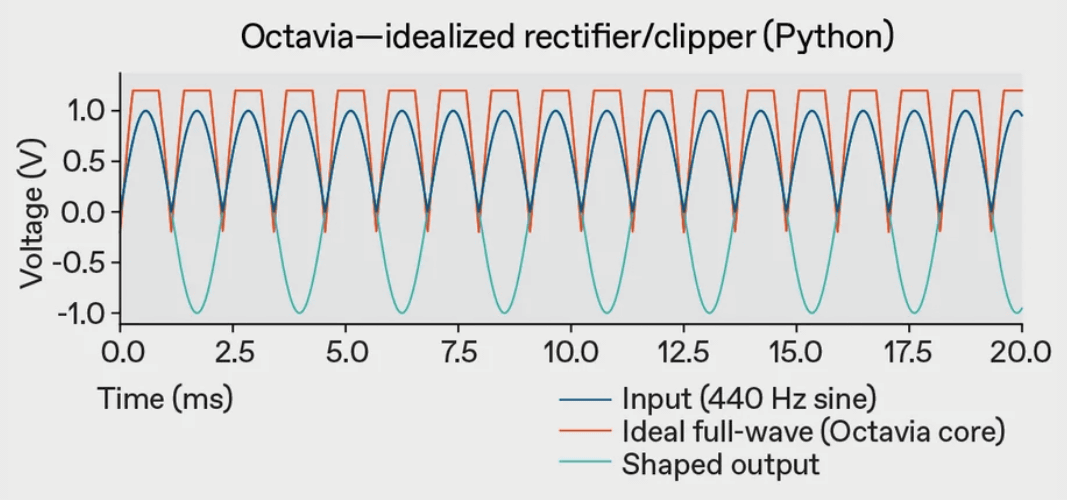
Furthermore, an effect called 'Octavia' was created by Hendrix and Mayer, which 'applied the mechanism of a rectifier to essentially double the frequency of the signal, thereby layering sounds one octave higher.'
The VOX Wah, also known as the wah pedal, is a bandpass filter that sweeps between 300 Hz and 2 kHz, giving the guitar sound a speech-like quality. Its pedal-like design allows you to change the tone in real time by pressing it with your foot.
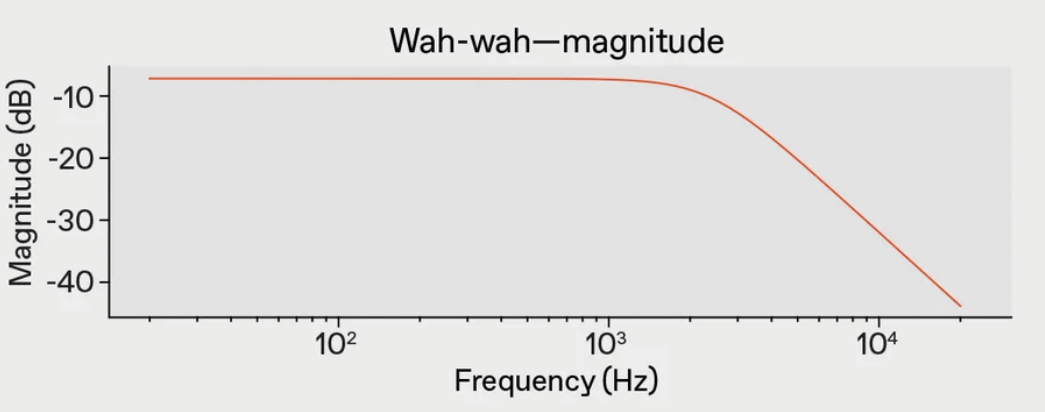
In the live footage below, you can see Hendrix using this wah pedal at the beginning of the song.
The Jimi Hendrix Experience - Voodoo Child (Slight Return) (Live In Maui, 1970) - YouTube
Additionally, although not used on the recording of 'Purple Haze,' a pedal called the 'Uni-Vibe' was used on other recordings. This is a system in which a low frequency oscillator (LFO) modulates a variable phase network, and musically, this has the effect of giving the sound a sense of fluid movement and air.
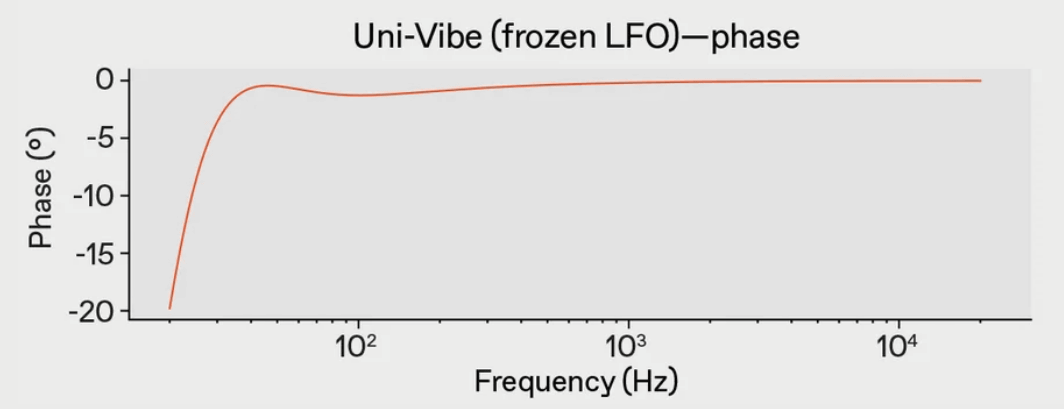
Using Uni-Vibe adds a wavering and undulating sound to the guitar, as seen in the performance below.
Star Spangled Banner (Live at The Woodstock Music & Art Fair, August 18, 1969) - YouTube
'Hendrix precisely controlled this feedback by adjusting his body movements, position, and angle relative to the speakers, manipulating it as a key component of the sound,' says Puranik, praising Hendrix for maximizing the guitar's potential in just under four years by working closely with sound engineers and employing rapid trial and error techniques like a systems engineer.
Related Posts: