Adding AI to a sinus surgery navigation system led to a sudden increase in reports of malfunctions from 8 to over 100
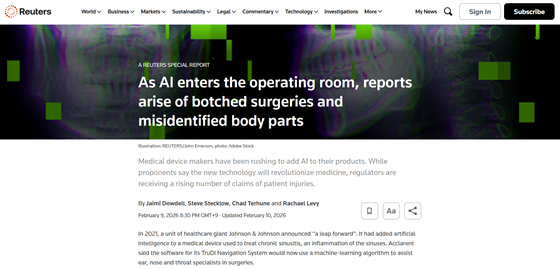
While the trend toward incorporating AI into medical devices to assist in diagnosis and surgery is accelerating, reports of malfunctions and patient injuries related to AI-enabled devices are also increasing, raising questions about whether regulatory oversight can keep up. On February 9, 2026, Reuters reported the results of an independent investigation into the actual state of reports received by the U.S. Food and Drug Administration (FDA) regarding a case in which malfunction reports for AI-embedded surgical devices had suddenly increased.
As AI enters the operating room, reports arise of botched surgeries and misidentified body parts
https://www.reuters.com/investigations/ai-enters-operating-room-reports-arise-botched-surgeries-misidentified-body-2026-02-09/
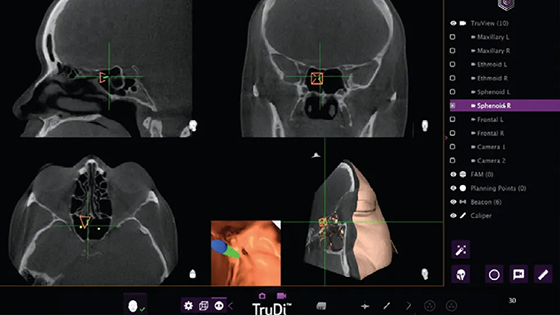
Reuters cited Acclarent 's TruDi Navigation System , a navigation device used in sinus surgery, as the focus of the problem. In 2021, Acclarent announced that it had incorporated machine learning algorithms into the TruDi Navigation System's software to assist ENT surgeons during surgery.
However, the number of reports submitted to the FDA changed significantly before and after the implementation of AI: Before the implementation, there were seven device malfunctions and one patient injury, but after the implementation, there were at least 100 reports of malfunctions and adverse events.
At least 10 people were reportedly injured between late 2021 and November 2025, many of them due to misaligned instrument displays that provided surgeons with incorrect information during surgery. Examples include cerebrospinal fluid leaks from the nose, perforations at the base of the skull, and damage to major arteries that led to strokes.

Two patients who suffered strokes during surgery due to a malfunctioning device filed a lawsuit in Texas alleging that the TruDi Navigation System's AI contributed to their injuries and that the system may have been safer before the AI was incorporated than after it was installed.
However, according to Reuters, medical device reports submitted to the FDA are sometimes incomplete and are not designed to determine the cause of medical accidents, so it is unclear to what extent AI was involved in the cases reported.
Acclarent was acquired by Integra LifeSciences from its then-parent company , Johnson & Johnson, in 2024. In response to a Reuters inquiry, Integra LifeSciences said, 'The reports merely indicate that adverse events occurred during procedures in which the TruDi Navigation System was used,' and stated that there is no conclusive evidence showing a causal relationship between AI technology and the injuries.
According to Reuters, the FDA had approved at least 1,357 AI-enabled medical devices at the time of writing, double the number approved by 2022. Furthermore, of the reports submitted to the FDA between 2021 and October 2025, at least 1,401 were for devices on the FDA's AI-enabled medical device list.
Related Posts: