China is promoting a national initiative to integrate AI tools into traditional medicine.
Traditional Chinese medicine embraces AI in China - Rest of World
https://restofworld.org/2026/traditional-chinese-medicine-ai-china/
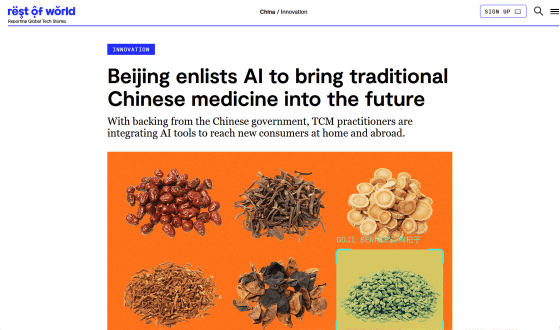
China is rapidly adopting generative AI in many sectors, including manufacturing, education, and the automotive industry, and in recent years has also incorporated it into traditional Chinese medicine. Traditional Chinese medicine practitioners are using AI for clinical diagnosis and prescription, robots are performing acupuncture, and AI agents are being built to answer questions from online users.
'This cutting-edge technology offers Chinese medicine the opportunity to make great strides in treating patients, curing diseases, and making more precise medical discoveries,' said Zhou Bin, deputy director of the Department of Traditional Chinese Medicine at Shanghai's Pudong New Area Gongli Hospital. 'If we harness this, Chinese medicine will be able to have as great an impact as Western medicine.'
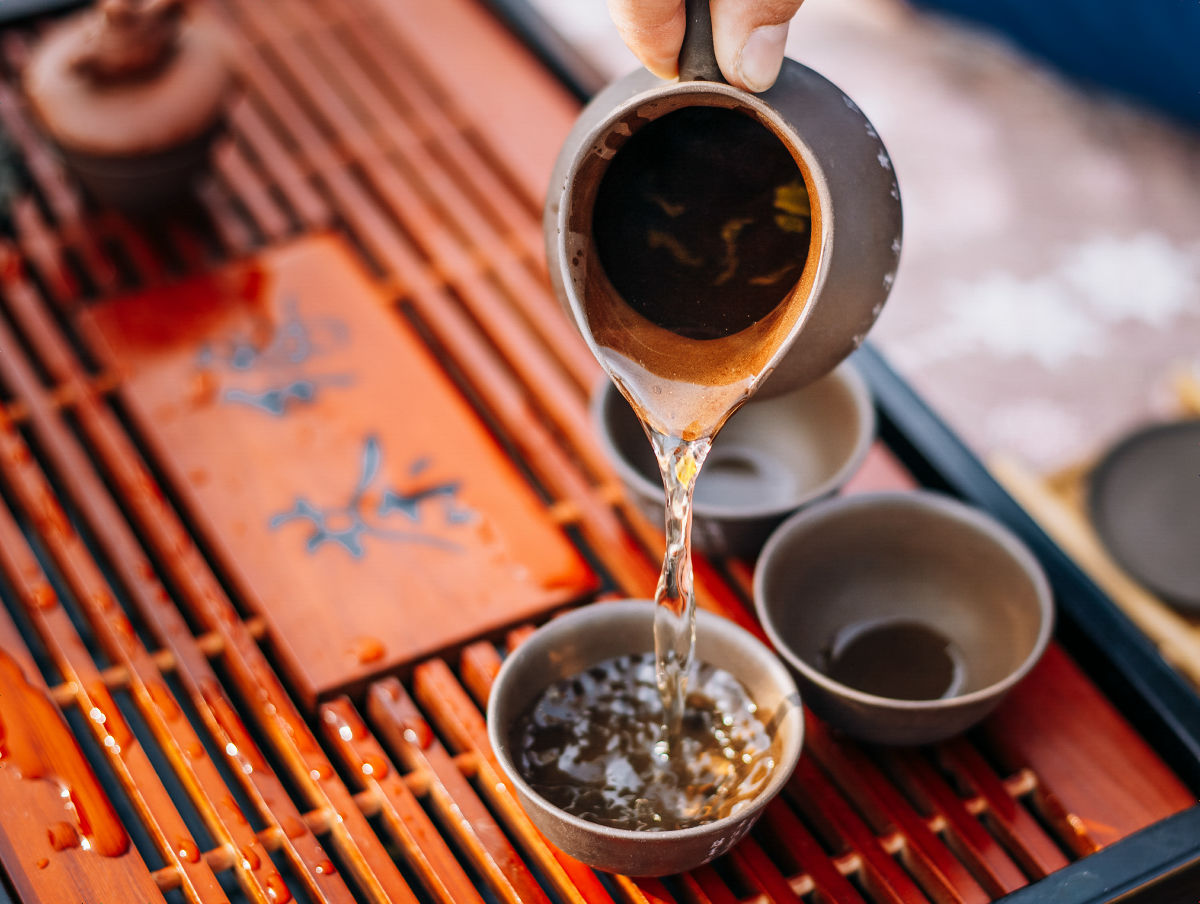
In fact, a Chinese tea shop called Que Tang Yu Fang in Nanjing, China, uses an AI-enabled device to provide customers with a traditional Chinese medicine diagnosis and prescribe customized tea blends based on the results.
Traditional Chinese medicine has a long tradition, and even today
To improve this situation, the Chinese government announced a policy to strengthen the tradition and innovative development of Chinese medical culture in 2021. In 2024, a record 22.7 billion yuan (approximately 508 billion yen) of the national budget will be allocated to the training and dissemination of Chinese medical talent, and Chinese medical hospitals and research facilities have begun investing in AI.
One area that has benefited most from increased investment is research and development. Some traditional Chinese medicine research platforms use scientific methods such as gene sequencing and immunoassays to test substances used in traditional Chinese medicine, analyze their molecular composition, and study their interactions with modern medicines. 'In the past, these studies were very difficult. Now, thanks to big data and advanced chemical methods, the research process has made great strides,' said Zhou.
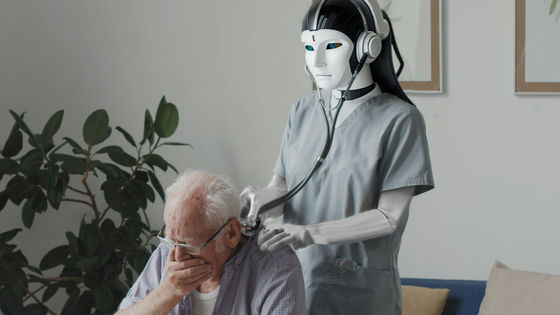
Additionally, a research team at the Chinese University of Hong Kong has extracted over 48,000 concepts from dozens of classic Chinese medical texts and built an AI tool called ' OpenTCM ' (PDF file) to answer user questions. This AI tool helps educators and students find medicinal ingredients, link symptoms to treatments, and answer diagnostic questions. The technology is also being increasingly adopted in clinical settings, with AI avatars examining patients and AI robots providing massages.
The Chinese government has established approximately 30 Chinese medicine research centers overseas and signed agreements with over 40 governments and organizations to strengthen the research, education, and practice of Chinese medicine in various countries. In 2017, China launched the ' Health Silk Road' strategy to strengthen its position in international medicine, and efforts to emphasize and spread Chinese medicine around the world are part of this strategy.
While the introduction of AI has the potential to significantly transform traditional Chinese medicine, Rest of World points out that 'AI alone cannot solve all of the challenges of traditional Chinese medicine. Traditional Chinese medicine has historically been difficult to quantify and is based on abstract concepts that cannot be applied to modern scientific frameworks.'
Jingling He, a member of the OpenTCM development team, told Rest of World, 'The classical Chinese medical texts contain a wealth of knowledge, but they are written in a concise, time-specific language that makes them difficult to interpret.' While this ambiguity needs to be standardized when building practical AI systems, there is a risk of oversimplification. Furthermore, Chinese medical diagnoses are based on a combination of factors such as constitution, emotions, and lifestyle, not just the current situation, so accurately capturing and interpreting these factors can be challenging for AI.
'From the perspective of safety and clinical integrity, we treat OpenTCM solely as a supplementary tool. It is best suited to assisting medical professionals in research, education and preliminary triage, but it does not replace expert clinical judgment,' said He.
Some patients are also wary of AI tools. Xinming Han, a longtime practitioner of traditional Chinese medicine in Suzhou, is skeptical of the AI tools being widely used in clinics. 'To be honest, I don't really trust the results of AI tests,' Han told Rest of World. 'I prefer to see a real doctor who can take my pulse, check my complexion, and give me a more holistic diagnosis.'
Related Posts: