Lack of sleep physically damages brain cells and slows down information transmission.

A research team led by the University of Camerino in Italy has reported that sleep deprivation can lead to mental fog and slower reaction times, and that these changes are not a matter of mood or willpower, but may be due to damage to the myelin sheath that speeds up the transmission of nerve signals.
Sleep loss induces cholesterol-associated myelin dysfunction | PNAS
Sleep Loss Is Physically Damaging Your Brain Cells, Study Suggests : ScienceAlert
https://www.sciencealert.com/sleep-loss-is-physically-damaging-your-brain-cells-study-suggests

The research team focused on the myelin sheath, which surrounds the axons of nerve cells. The myelin sheath is a lipid-rich layer that, like the covering of an electrical wire, prevents signal leakage and increases the speed of transmission. Cholesterol is part of the material that makes up the myelin sheath, and in the brain, oligodendrocytes are primarily responsible for its supply and maintenance.
The study combined human brain imaging data and animal experiments to analyze the relationship between sleep deprivation and the myelinated white matter. Brain MRI data from 185 participants revealed a broad trend toward lower white matter indices as people scored worse on the Pittsburgh Sleep Quality Index (PSQI) , a self-reported measure of sleep quality.
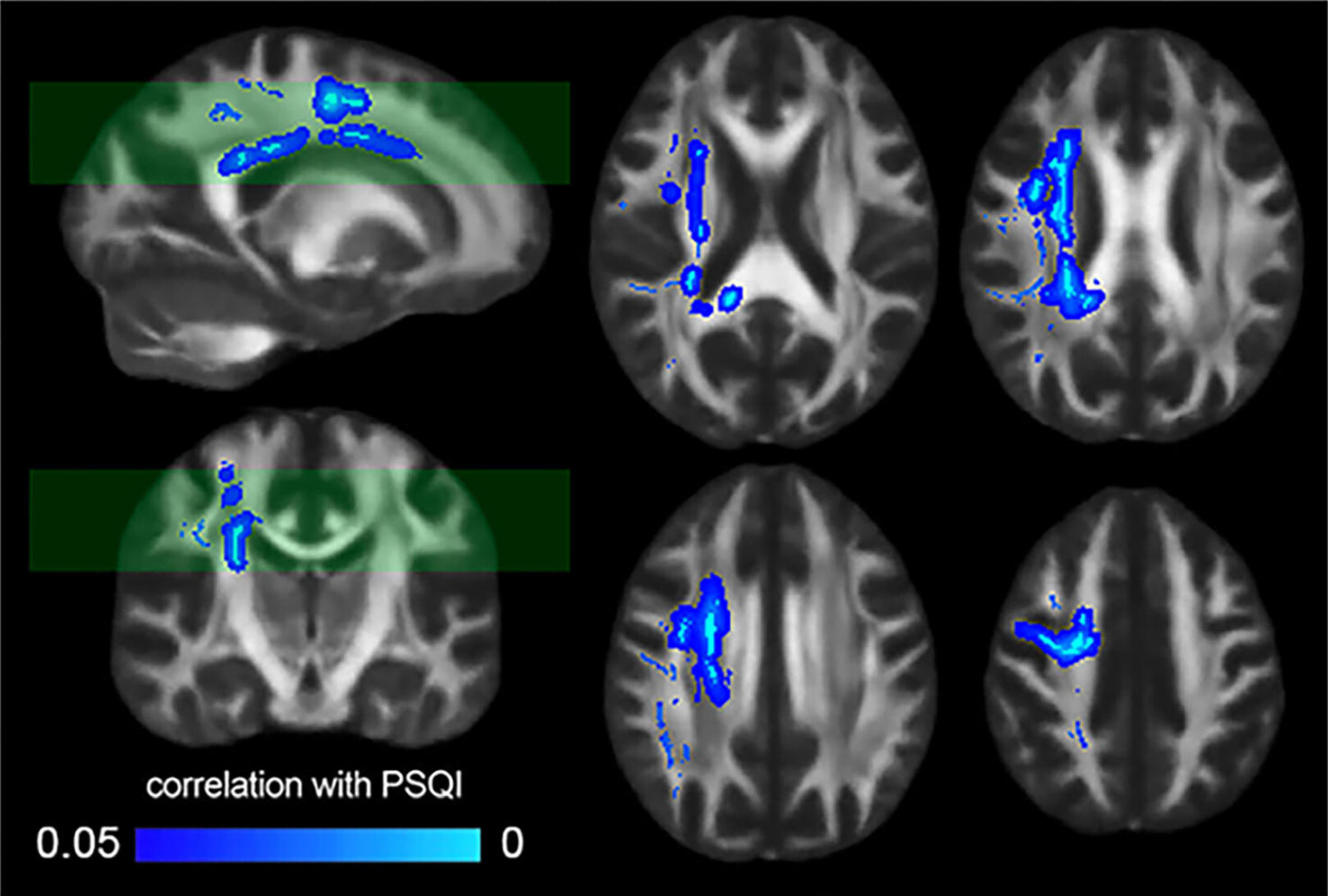
In a second experiment using rats, researchers found that after 10 days of sleep restriction, white matter indices decreased and electron microscopy revealed thinner myelin sheaths. The researchers noted that while the thickness of the axons themselves remained largely unchanged, the changes in the myelin sheaths were more pronounced.
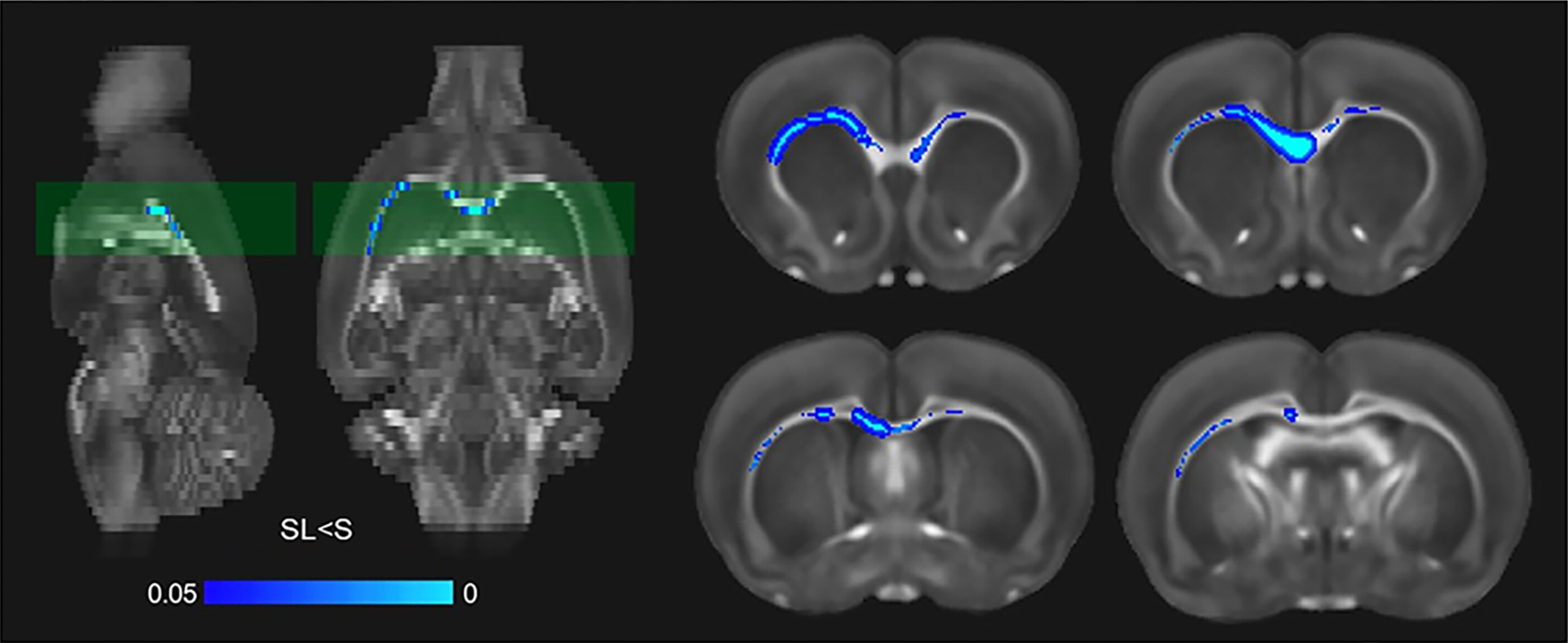
Furthermore, the researchers found that sleep-restricted rats had delayed neural signal transmission across the left and right cerebral hemispheres, slowing signal transmission between specific brain regions by about 30%, making synchronization between brain regions more difficult, and resulting in poorer performance on motor and memory tasks.
To answer this question, the research team focused on oligodendrocytes. Gene expression and lipid analyses revealed that sleep deprivation leads to a state of ' endoplasmic reticulum stress ,' in which abnormal proteins accumulate in the endoplasmic reticulum, disrupting lipid metabolism. Changes in cholesterol homeostasis were particularly prominent, suggesting that impaired circulation of cholesterol, essential for myelin, leads to weakened myelin and delayed signal transmission.
Furthermore, when the research team administered cyclodextrin , a cyclic oligosaccharide, to sleep-deprived rats to aid in the transport of cholesterol to the myelin sheath, the delay in nerve signal transmission was suppressed and motor and memory performance improved. The research team states that these results support the possibility that the effects of sleep deprivation occur through 'cholesterol regulation by oligodendrocytes.'
However, this study only looked at the correlation between self-reported sleep and brain images in human analysis, and does not directly demonstrate a causal relationship between sleep deprivation and myelin damage. Further verification is needed to determine to what extent the mechanism demonstrated in animal experiments can be applied to humans, and to what extent the damage returns after recovery from sleep deprivation. The research team states, 'The pathway demonstrated in this study may provide clues for interventions to alleviate the effects of chronic sleep deprivation in people prone to it.'
Related Posts:








in Science, Posted by log1b_ok