Why does the number of illnesses increase in winter even though the cold itself is not a pathogen?

In movies and anime, we often see scenes where people catch a cold when they go outside without a coat on a cold day or get caught in cold rain. However, in reality, cold itself is not a pathogen, so it does not directly cause illness, such as colds or influenza. Manal Mohammed, a senior lecturer in medical microbiology at the University of Westminster in the UK, explained why illnesses increase in winter even though cold itself is not a pathogen.
Being cold doesn't make you sick, so why are illnesses more common in winter?
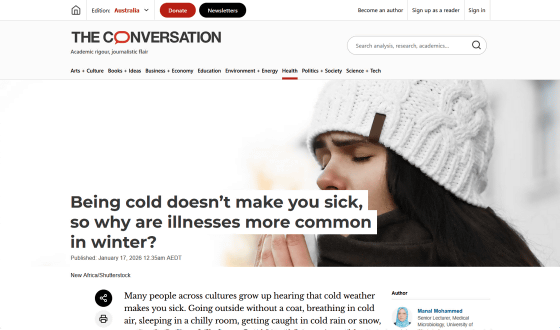
First of all, colds, flu, and other illnesses are caused by viruses and other pathogens, not cold air, and these viruses are transmitted through respiratory droplets and physical contact regardless of the outside temperature. However, in large areas, the incidence of respiratory infections consistently increases during the cold season, and this trend is observed worldwide.
This seasonal pattern is partly due to the cold temperatures and humidity typical of winter, as many respiratory viruses, including influenza and COVID-19 , have been shown to survive and remain infectious for longer in cooler, drier environments.
Dry air also causes tiny droplets released when breathing, talking, coughing, or sneezing to evaporate quickly, leaving the particles suspended in the air for longer periods of time, making them more likely to be inhaled by others and potentially spread to the respiratory tract, Mohammed said.

Cold winter air also affects the body's immune system, which helps prevent infection by pathogens. Inhaling cold air lowers the temperature in the nose and airways, causing blood vessels to constrict. This reduces blood flow to the lining of the nose and airways,
Cold exposure and stress can disrupt the normal functioning of the airways, especially in people with sensitive respiratory systems. These combined effects suppress the defenses of the nose and throat, making people more susceptible to viral infections. So, while cold winter air itself doesn't produce viruses, it does create conditions that make them more susceptible to transmission.
Mohammed also points out that seasonal changes in human behavior also play a major role. As the weather gets colder, people tend to spend more time indoors and have more contact with others. However, if the indoor spaces are poorly ventilated, droplets containing the virus can easily accumulate in the air, making person-to-person transmission more likely.

In winter, people spend less time outdoors, which reduces their exposure to sunlight and reduces the production of
In addition, heating dries out the air indoors, which also dries out the mucous membranes of the nose and throat. Mucous membranes normally function as a mucociliary clearance system , capturing and expelling viruses, but when this function is impaired by dryness, cells become more susceptible to viral infection.
In addition, cold weather is known to worsen symptoms of asthma and allergic rhinitis, which could worsen symptoms if a respiratory infection develops, Mohammed pointed out.

From the above, it can be said that cold weather does not directly cause colds or influenza, but rather increases the risk of viral infection. Therefore, even in winter, you can reduce the risk of infection by ventilating indoor air, maintaining appropriate humidity to prevent dryness, and making sure to actively take in vitamin D.
'So, cold weather and disease are linked, but not in the way that many people think. Cold weather does not cause infections in itself, but creates the biological, environmental and social conditions that make it easier for respiratory viruses to thrive,' Mohammed said.
Related Posts:






in Science, Posted by log1h_ik