What is the mysterious 'Eldstäre' tunnel that runs underground in medieval Europe?

by Wikimedia Commons
Numerous mysterious tunnels known as '
The secret medieval tunnels that we still don't understand
https://weirdmedievalguys.substack.com/p/the-secret-medieval-tunnels-that

The Erdstäre are mysterious tunnels, of which approximately 2,000 have been discovered around Central Europe. When you think of European tunnels, you might think of the catacombs beneath Paris or Rome, but unlike the catacombs, which were used as mass cemeteries, the purpose of the construction and use of the Erdstäre is unknown.
The passages in the Erdstäre are extremely narrow, measuring less than 60cm wide and often not even high enough for an adult to walk through. Some passages are incredibly narrow, measuring just 40cm in diameter. While excavation wedges and millstones have occasionally been found inside the tunnels, most Erdstäre contain no archaeological remains.
Based on coal and pottery fragments found inside the tunnel, it is estimated that Erdstäre was built between 900 and 1200 AD, but there is no mention of Erdstäre in medieval documents.
The photo below shows a typical Erdstäre entrance.
by Wikimedia Commons
Erdstäre typically have a single entrance, often beneath the floors of a church or farmhouse, or beneath the cobblestones of a town square. The tunnels extend for tens of meters from the entrance, sometimes branching off or leading to lower levels through narrow shafts. The tunnels widen toward the center or ends, often forming rooms with simple benches or shelves carved into the walls.
Little is known about the Eldshteres. There are also many mysteries, such as why they are so numerous and spread across various regions, why many of them look similar, why they are in inconvenient locations, why they were built and their secrets kept, and why so few artifacts have been found inside. At the time of writing, there are no theories to explain these mysteries.
The inside of Eldstätte looks like this.

by Wikimedia Commons
These tunnels are much narrower and longer than normal basements, making it unlikely that they were used as storage facilities. Furthermore, the narrow tunnels make it difficult to move around, are prone to oxygen shortages, and have no escape route for those who entered the tunnels. It's also difficult to imagine them as being built for hiding.
Some say that the Erdstäre were secret ritual sites for people who resisted Christianity, but it is strange that there are no records of heretics being found among the more than 2,000 Erdstäre. Furthermore, the fact that some Erdstäre are located on church grounds also refutes this theory.
Some parts of Eldstäre can only be reached by passing through very narrow tunnels.

by Josef Weichenberger
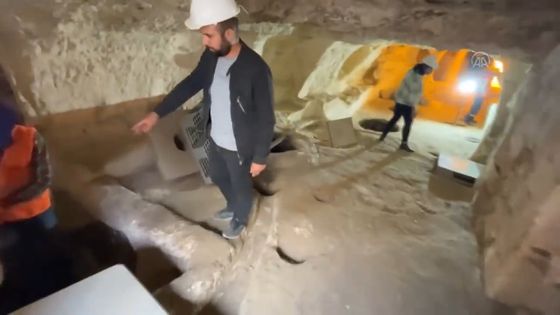
Below is a photo of people sitting on the benches inside the Erdstätte.

by Arnold
One common feature of all Erdstäre is the presence of 'slips,' passageways that are often very narrow and vertical. Slips are often likened to a baby's
In fact, medieval Christian paintings often feature images reminiscent of the birth canal and vagina. Below is an illustration of Christ's wounds from the 14th-century ' Book of Hours of the Bonnes de Luxembourg .' Depending on how you look at it, the large almond-shaped scar looks like a birth canal.
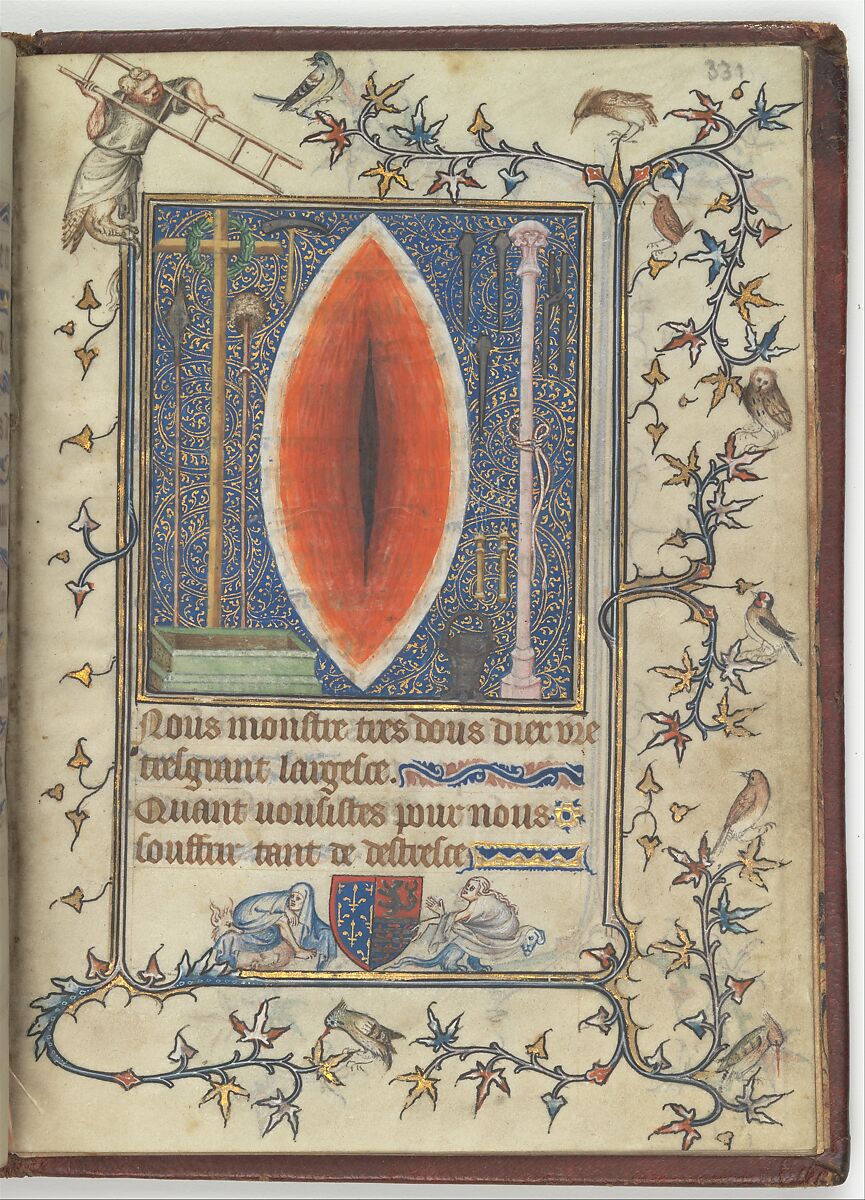
'Of course, this doesn't explain why there are no contemporary documents attesting to the existence of Erdstäre, but neither do many medieval religious objects and iconography remain,' weird medieval guys wrote. 'These things tend to be considered unremarkable until they become a mystery. And with so little effort currently being made to rigorously study Erdstäre, it's likely we'll be some time before we find a satisfactory answer.'
Related Posts:



in Note, Posted by log1h_ik