'Metabolic BMI,' which takes into account not only height and weight but also metabolism, reveals health risks not seen with regular BMI

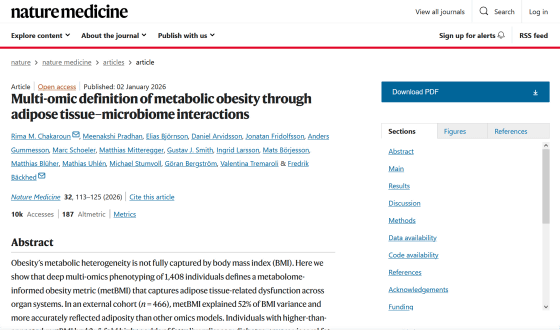
Multi-omic definition of metabolic obesity through adipose tissue–microbiome interactions | Nature Medicine
https://www.nature.com/articles/s41591-025-04009-7
Metabolic BMI reveals disease risk even in people of normal weight | University of Gothenburg
https://www.gu.se/en/news/metabolic-bmi-reveals-disease-risk-even-in-people-of-normal-weight
A 'Hidden' Metabolic Disorder May Not Show Up on Your Scale, Researchers Say : ScienceAlert
https://www.sciencealert.com/a-hidden-metabolic-disorder-may-not-show-up-on-your-scale-researchers-say
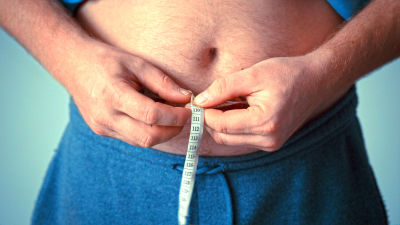
BMI is calculated by dividing weight (kg) by height (m) squared, and based on this value, people are classified into 'underweight,' 'skinny,' 'slightly underweight,' 'normal weight,' 'overweight,' and 'obese.' While BMI has been widely used because it's easy to calculate, it has problems because it doesn't take into account factors like actual fat accumulation and metabolic energy efficiency.
For example, it is possible for a person with a muscular, stocky build and an obese person with a belly due to lack of exercise to have the same BMI, or for someone to have a high level of fat and be at high risk for health but still have a normal BMI.
So, using health data and blood samples from 1,408 people, Frederik Beckhed, a professor of molecular medicine at the University of Gothenburg, and his team created an algorithm to assess metabolic BMI, which focuses on metabolites in the blood to measure how well metabolic processes are working.
'Circulating metabolites in the blood are shaped by host genetics, diet, and gut microbiota, and are a systems-level indicator of metabolic health beyond overweight,' the research team wrote in their paper.

When the metabolic BMI was tested on a group of 466 people, it was shown to accurately predict body weight and body fat mass and distribution. Furthermore, people with a metabolic BMI higher than predicted by their weight were 2.6 times more likely to develop type 2 diabetes and five times more likely to develop metabolic syndrome.
'Our metabolic BMI reveals hidden metabolic disorders that aren't always apparent on the scale,' said lead author
They also found that individuals with a higher metabolic BMI had a lower gut microbiota diversity and a reduced ability to break down dietary fiber into butyrate , which provides the body with energy and helps maintain the health of the intestinal lining, preventing harmful bacteria from entering the bloodstream. A reduced ability to produce butyrate has been linked to increased inflammation and disease risk.
This study found no correlation between metabolic BMI and polygenic risk scores (PRS) , which take into account genes involved in fat accumulation, suggesting that metabolic BMI is more strongly influenced by lifestyle and environment than by genetic factors.

'Traditional BMI often misses people who are normal weight but at high metabolic risk,' said Beckhed. 'Metabolic BMI contributes to more fair and accurate disease risk assessment, paving the way for more personalized prevention and treatment.'
Related Posts:







in Science, Posted by log1h_ik