Volcanic eruptions may have been involved in the spread of the Black Death

The feared plague, nicknamed the ' Black Death ' due to its symptoms of black spots appearing on the skin, raged across Europe from 1347 to 1353, with mortality rates reportedly reaching nearly 60% in some areas. While it is generally accepted that the Black Death was caused by Yersinia pestis, a bacterium originating from wild rodents in Central Asia and arriving in Europe via the Black Sea region, debate continues over why the Black Death became so prevalent and spread so rapidly in such a short space of time. A research team led by Ulf Büntgen of the University of Cambridge in the UK and Martin Bauch of the Leibniz Institute for Eastern European History and Culture in Leipzig analyzed the reasons for the spread of the disease, focusing on the years immediately before the Black Death gained traction in Mediterranean ports.
Climate-driven changes in Mediterranean grain trade mitigated famine but introduced the Black Death to medieval Europe | Communications Earth & Environment
Volcanic eruptions set off a chain of events that brought the Black Death to Europe
https://www.cam.ac.uk/stories/volcanoes-black-death
The research team found a clue in volcanic activity believed to have occurred in the mid-1340s. The research team believes that volcanic eruptions spread dust and gases into the atmosphere, causing several years of 'cold, rainy summers.' Generally, when a large eruption occurs, sulfur reaches the stratosphere and turns into sulfate aerosols , which 'reflect sunlight and reduce the amount of solar radiation reaching the Earth's surface,' making the summers more likely to be cold and rainy.
The research team used the amount of sulfur injected into the stratosphere as a measure of the strength of this cooling. Using chemical indicators found in ice cores from Antarctica and Greenland, the researchers estimated that the amount of sulfur injected into the stratosphere around 1345 was approximately 14 teragrams. This amount of sulfur is more than double the approximately 6 teragrams that occurred during the 1991 eruption of Mount Pinatubo . The researchers state that this 'provides evidence that summers have been cooling for several years.'
The research team also used a technique called 'reconstructing temperature from tree ring properties' based on tree samples collected from eight regions in Europe, and found that a signal indicating low temperatures was observed widely between 1345 and 1347.
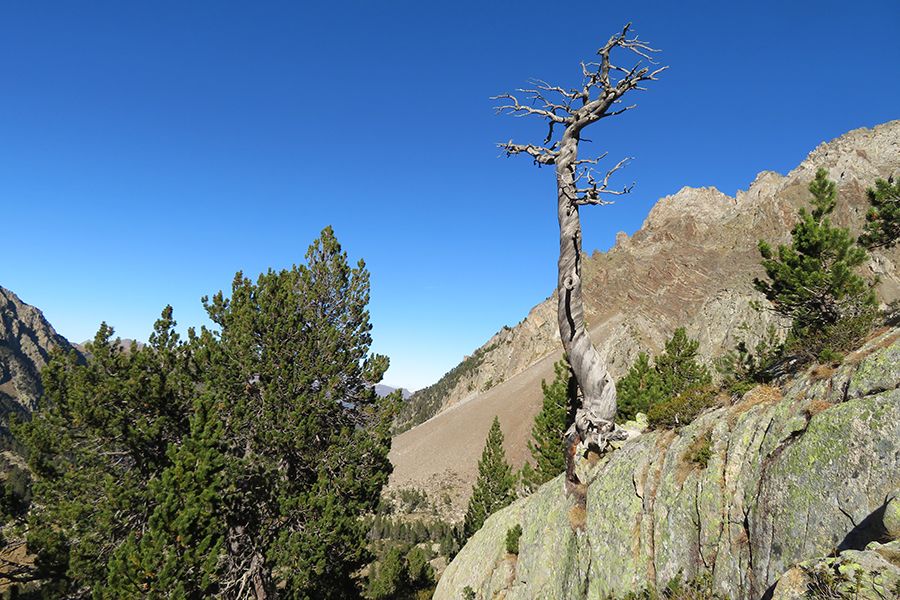
As further evidence, the research team cites 'blue rings' found in tree rings collected in the Spanish Pyrenees.
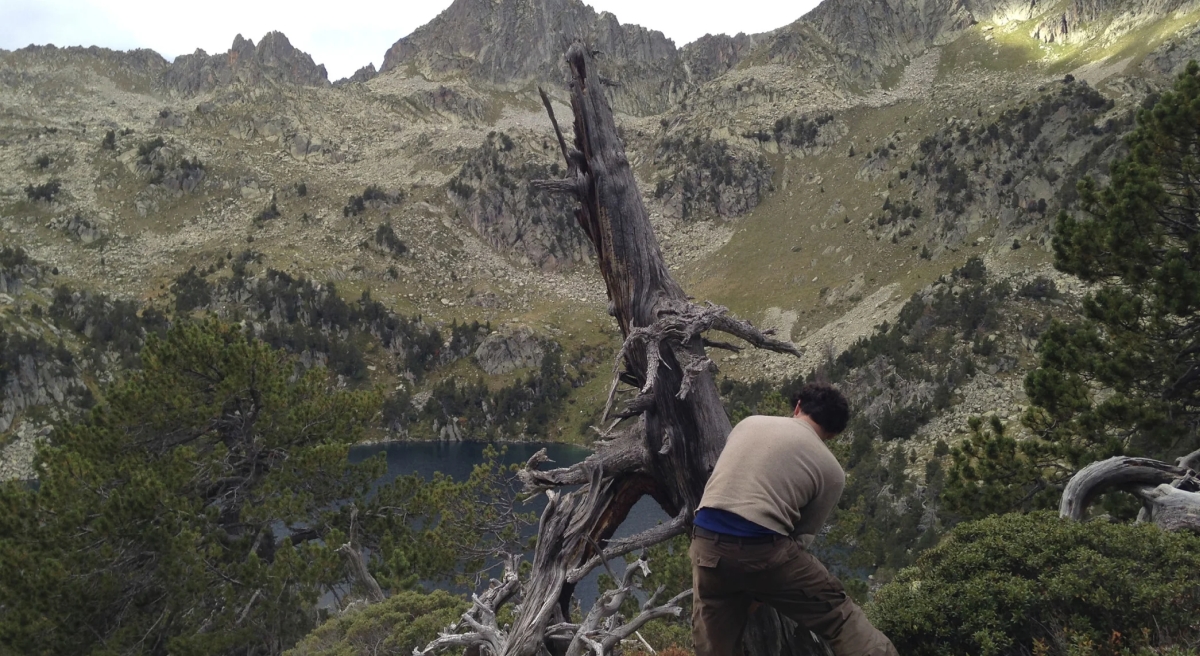
The blue rings are a characteristic of tree rings where lignification of the cell walls was not fully developed, and according to the research team, 'they can sometimes be traces of sudden cooling during the growth period.' Below is a microscopic image of the tree ring tissue where blue rings are visible.
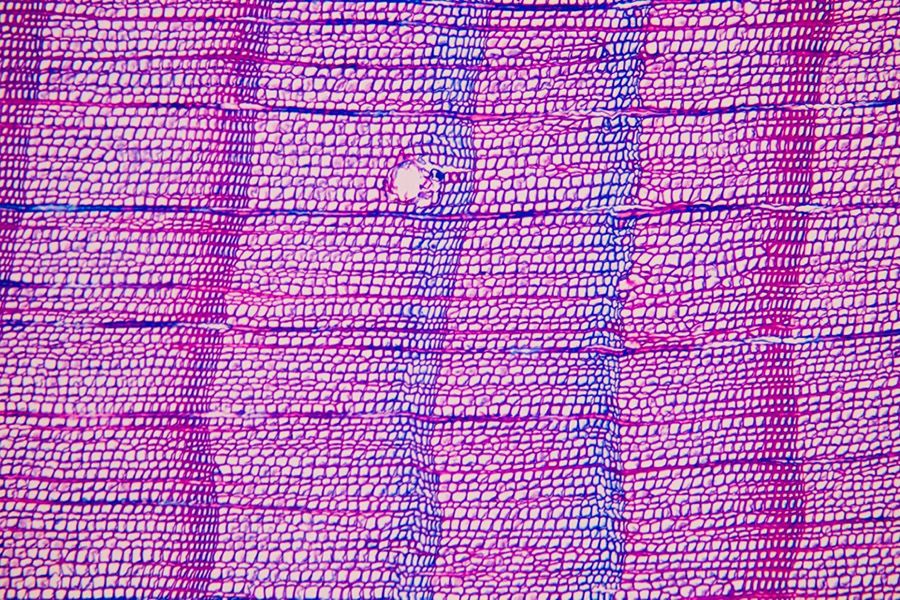
The research team states, 'A single cool summer is not uncommon, but the fact that the blue ring appeared for three consecutive years from 1345 onwards is evidence of a series of cool summers,' and further adds that, in addition to records of unusually cloudy skies and lunar eclipses from the same period, the team also considers this to be evidence of volcanic activity.
The continued decline in weather affected agriculture. Crop failures across the Mediterranean increased the risk of famine. The research team states, 'Fearing food shortages due to poor harvests, Italian city-states moved to secure grain from a wider area than usual.'
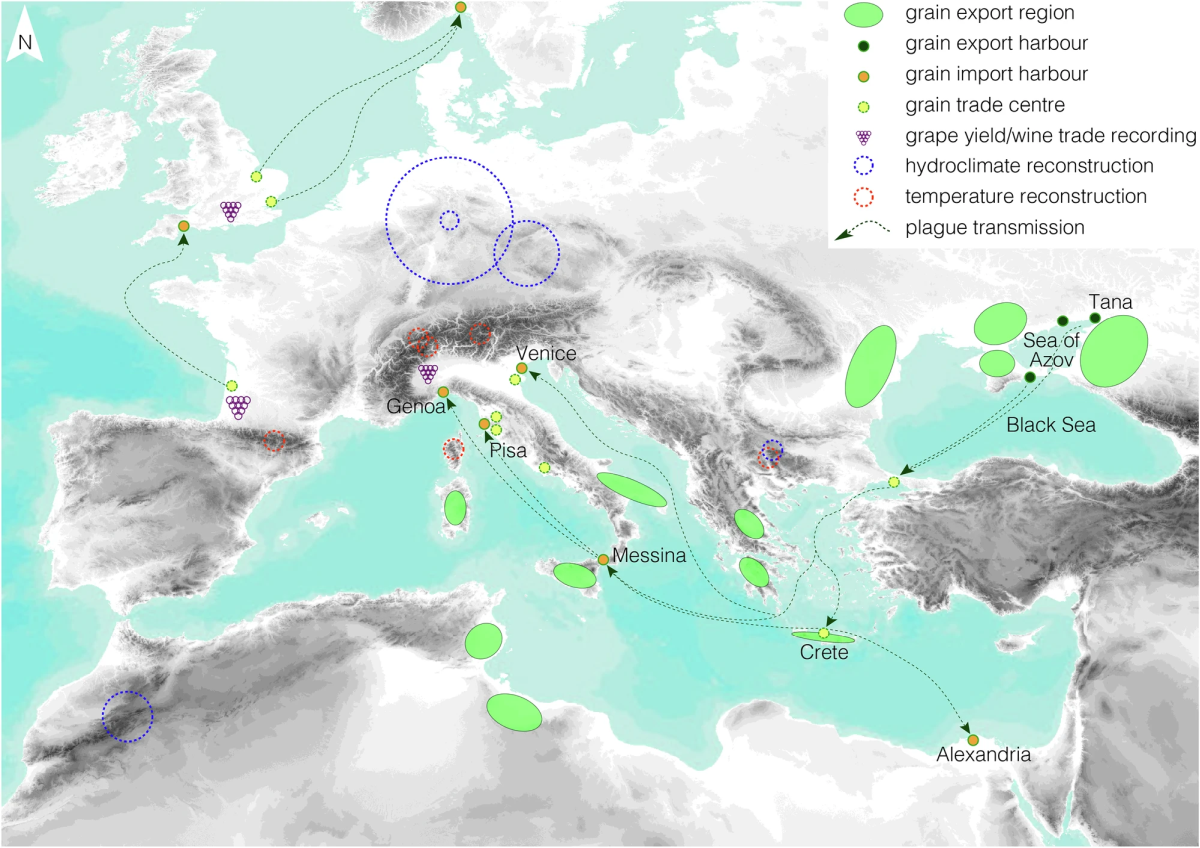
The research team's concern is that trade, which was intended to avoid famine, may have also increased risk in other ways. The research team focused on the import of grain from the Black Sea and Sea of Azov by Italian city-states such as Venice, Genoa, and Pisa. The research team argues that, in this context, 'ships returning from the Black Sea to Mediterranean ports may have become a route for transporting not only grain but also the plague bacillus via fleas and other pathogens.'
The researchers point out that fleas can survive without a host, such as humans or rodents, and may survive on grain dust during long-distance food transport, which could explain the long-distance travel of Black Death infection 'seeds.'
The research team also points out that even within the same Italian city, cities such as Rome and Milan, which did not need to import grain after the mid-1340s, appear to have been spared from the initial epidemic of the Black Death, suggesting that whether or not they participated in trade may have been a factor.
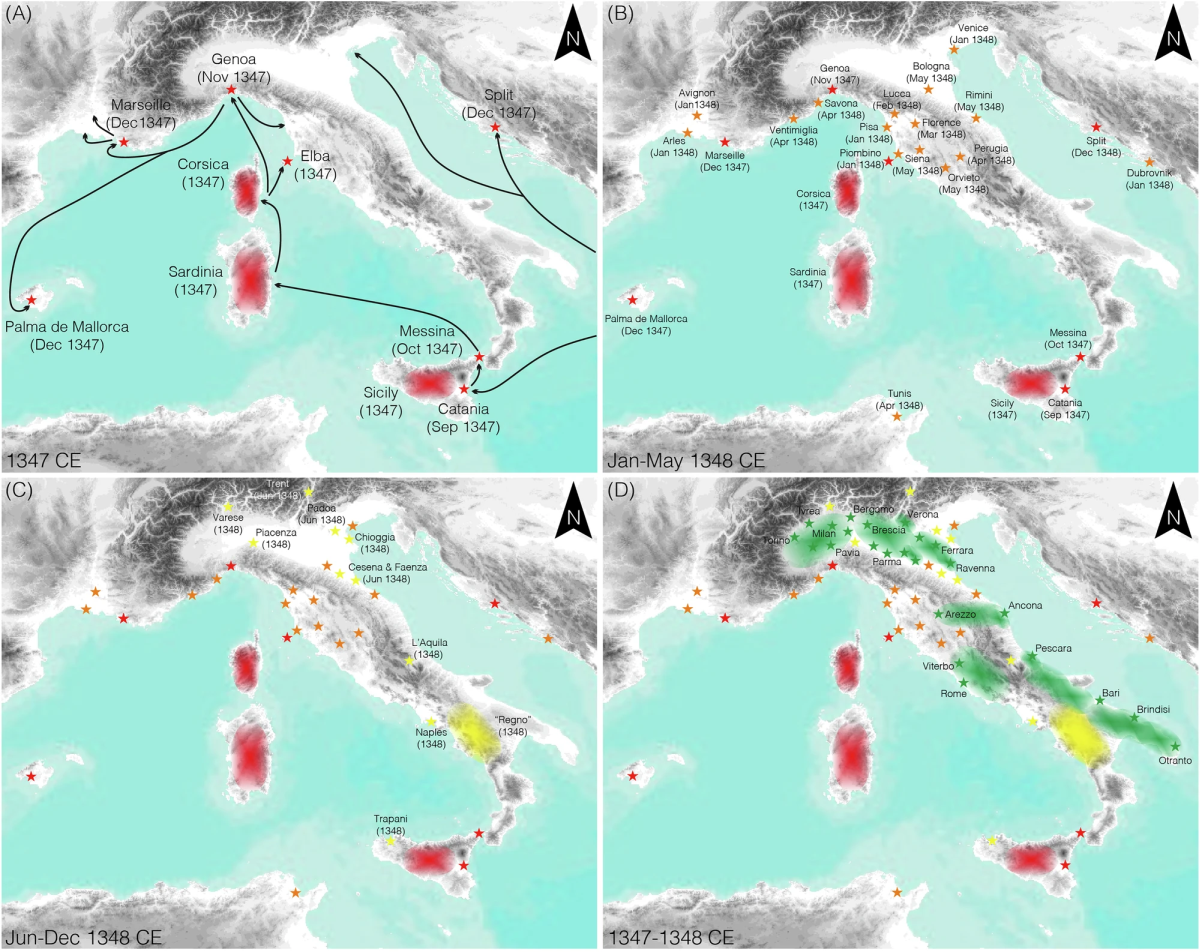
The research team positions this series of events as a complex combination of factors linking climate, famine, and trade, and emphasizes that trade networks that developed for food security could also be used to transmit pathogens.
Regarding this research, the social news site Hacker News pointed out that 'it's difficult to explain the invasion of Europe solely through changes in Italian shipping,' and that 'poor sanitation may have been a major factor,' and that 'with the decline of the Byzantine Empire and the rise of the Mongols, direct trade would have increased eventually. (Since trade would eventually increase, the Black Death would have spread sooner or later.)'
Related Posts:







in Science, Posted by log1b_ok