Do 'concentration apps' really help improve productivity?

It has been pointed out that smartphones are prone to interrupting work with notifications and app temptations, and that even when not in use, simply having the device in sight can make it difficult to concentrate. Meanwhile, app developers are creating concentration apps that promise to 'improve productivity' by using mechanisms such as timers, app blocking, habit reminders, and rewards. Dwayne Allan, a lecturer at the School of Psychology and Speech-Language-Hearing at the University of Canterbury, explained why these concentration apps are attracting attention and what to look for when judging the effectiveness of an app.
Focus apps claim to improve your productivity. Do they actually work?
https://theconversation.com/focus-apps-claim-to-improve-your-productivity-do-they-actually-work-271388
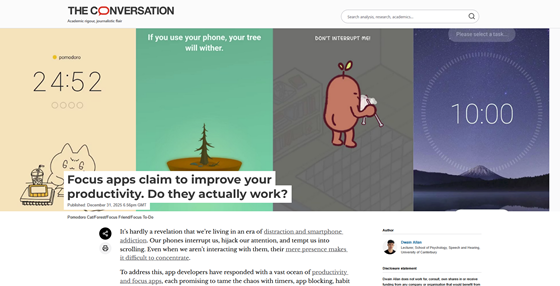
The reason people can't concentrate is because their 'self-regulation,' which monitors and adjusts their thoughts, emotions, and actions to achieve their goals, doesn't work properly. When boredom, stress, or hassle arises, people want to escape the discomfort and are more likely to reach for their smartphone to change their mood. As a result, their attention is diverted from the necessary tasks.
In recent years, you may have heard that 'human concentration has declined.' However, Allan says, 'the scientific literature doesn't necessarily support this view.' On the other hand, there is research that shows that habits such as multitasking and constantly checking notifications may be linked to distraction. 'Rather than people's ability to concentrate declining, it's more that our modern environment has placed a strong strain on our ability to concentrate,' Allan explains.
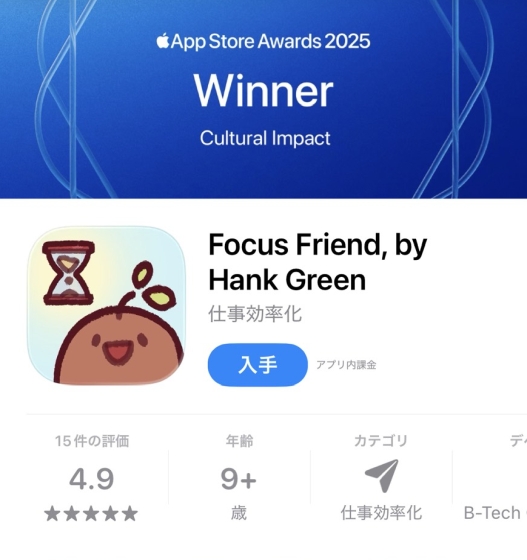
As a way to deal with this stress, concentration apps incorporating game elements have emerged. One such app, ' Focus Friend ,' is a concentration app in which a 'bean' character on the screen continues to knit while a concentration timer is running. If the user opens an app that they have previously decided not to open while working, the knitting will come undone and the character will become depressed. If the user can maintain their concentration, they will receive in-game rewards such as socks or scarves, which can be used to decorate their room.
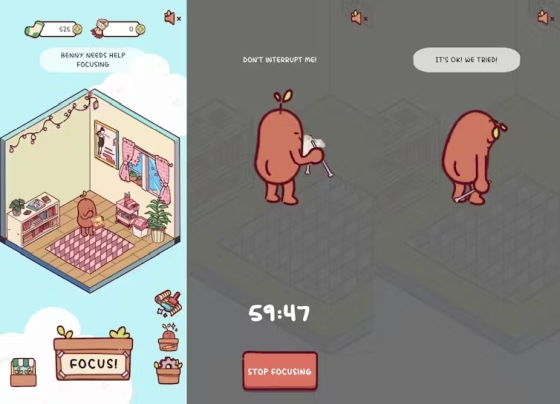
Alan points out that the app's design combines several psychological principles to help users focus. For example, rewards are provided immediately after completing a focus session, creating an incentive. Another key aim is reward substitution, which allows users to instantly experience a fun experience by completing a task they're not comfortable with.
Starting the concentration timer becomes a small promise to yourself, and the desire to maintain your streak encourages 'commitment and consistency' (the psychological tendency to act consistently and without contradiction once a decision or statement has been made).
Alan also says that the more you decorate your room, the more attached you become to it, and the more likely you are to appreciate what you have created - the ' IKEA effect ' - comes into play.
There aren't many studies that directly examine whether concentration apps are actually effective. One study that looked at various apps for reducing smartphone use found that 'gamified concentration apps tend to be highly rated by users but used less frequently, while simpler mechanisms like switching the smartphone screen to black and white may be more effective.' Allan added, 'The high ratings on the App Store and the numerous articles written by enthusiastic users suggest that people enjoy using the apps, but enjoyment doesn't necessarily translate directly to improved concentration or productivity.'
Still, if you find yourself reflexively and irresistibly urged to check your phone while working, it might be worth trying a focus app. Alan suggests using focus apps wisely by 'scheduling focus sessions by clarifying when you'll use them and what you'll be working on.'
If you feel the urge or discomfort of checking your phone during a focused session, it's important to acknowledge that discomfort and remind yourself that 'discomfort is part of the process of getting important things done.' After a week of use, reflect on the app and ask yourself, 'Is this helping me, or is the app using me?'
Furthermore, there are loopholes in the focus apps: they don't assess the quality of your work, so you might be considered focused even if you spend time on low-value tasks. And depending on your smartphone settings, the apps can be easily tricked.
While focus apps can help curb the urge to touch your phone, they don't necessarily solve the underlying cause of smartphone distraction. 'Noticing how you feel, choosing how you want to respond, and deciding to stay focused on what's really important,' Alan says.
Related Posts:








in Software, Science, Smartphone, Posted by log1b_ok