Testing of wireless charging of trucks while driving begins in the US
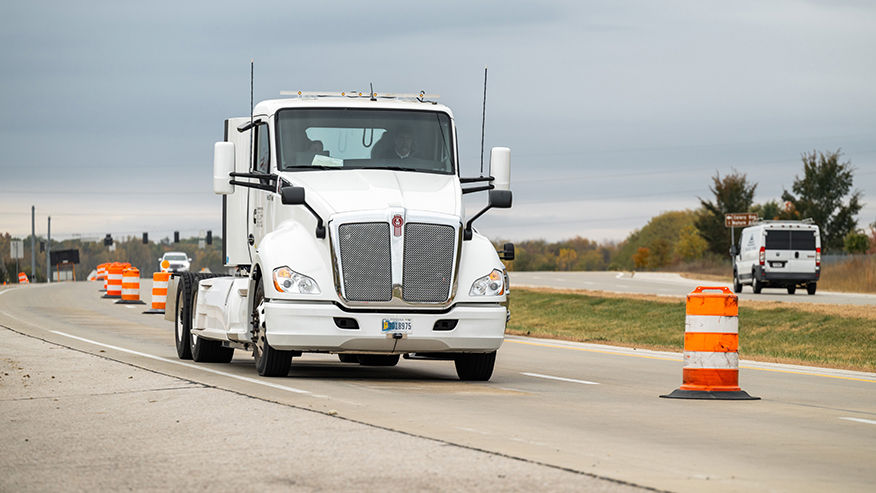
For the first time in the U.S., wireless road charging technology has been demonstrated for a large electric truck traveling on a highway. During the test run, 190 kW of power was supplied to the truck traveling at approximately 106 km/h.
First highway segment in US wirelessly charges electric heavy-duty truck while driving - News
A demonstration test was conducted in West Lafayette, Indiana, where a power coil was embedded in a specific section of highway. The coil, designed by Purdue University, was embedded in the road and has a stronger output and longer range than existing coils. The power transmitted from this coil was transmitted to a power-receiving coil attached under the truck, allowing the truck to wirelessly charge while traveling.

Purdue University obtained permission from the Indiana Department of Transportation and installed coils along a 400-meter stretch of highway. A demonstration of the wireless charging system was conducted using an electric semi-tractor provided by Cummins. The result was a successful delivery of 190 kW of power to the truck traveling at approximately 106 km/h.
While several other states and countries have begun testing wireless power transmission on roads, wireless charging for large vehicles such as semi-trailers and trucks on highways has been challenging due to the vehicles' high speeds, requiring higher power. Purdue University also designed a transmitter coil that can function under concrete pavement, which requires stronger power output, improving adaptability. By meeting the high power demands of large vehicles, the system can also support the lower power needs of other vehicle classes.
'Because trucking is the largest contributor to the U.S. Gross Domestic Product (GDP) compared to other freight modes, reducing the cost of heavy-duty electric trucks could encourage investment on all highways. If heavy-duty electric trucks could stay charged on highways, they could use smaller batteries and increase payloads, significantly reducing the cost of EVs for freight transport,' Purdue University said.
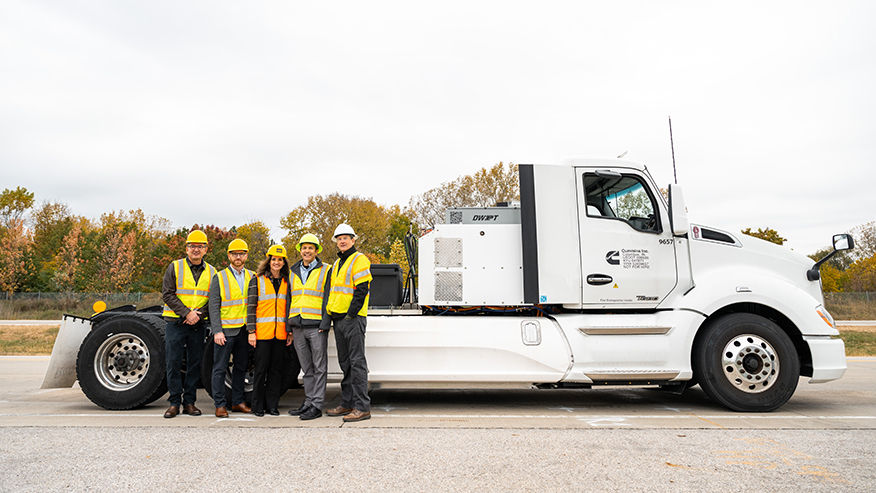
'Cummins is proud to have contributed to this effort by successfully integrating a prototype battery-electric truck with Purdue University's high-power wireless power transfer system,' said John Kress, chief technology engineer at Cummins. 'Through strong collaboration between the two teams, the road testing went extremely well. This technology's high power output and attractive cost structure make it a practical and potentially game-changing solution for future highway commercial transportation.'
Related Posts:





in Vehicle, Posted by log1p_kr