Reproducing the process of Parkinson's disease-causing protein moving from the intestine to the brain in mice
Transneuronal Propagation of Pathologic α-Synuclein from the Gut to the Brain Models Parkinson's Disease: Neuron
https://www.cell.com/neuron/fulltext/S0896-6273(19)30488-X
New Animal Study Adds to Evidence of Parkinson's Disease Origins in the Gut | Johns Hopkins Medicine
https://www.hopkinsmedicine.org/news/newsroom/news-releases/2019/06/new-animal-study-adds-to-evidence-of-parkinsons-disease-origins-in-the-gut
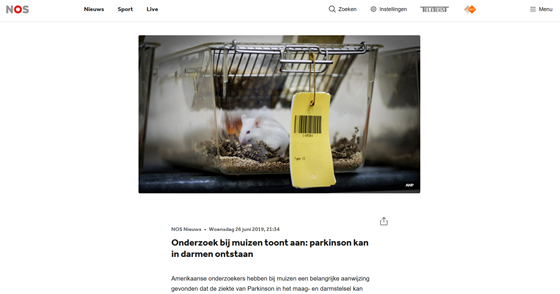
Onderzoek bij muizen toont aan: parkinson kan in darmen ontstaan
https://nos.nl/artikel/2290828-onderzoek-bij-muizen-toont-aan-parkinson-kan-in-darmen-ontstaan
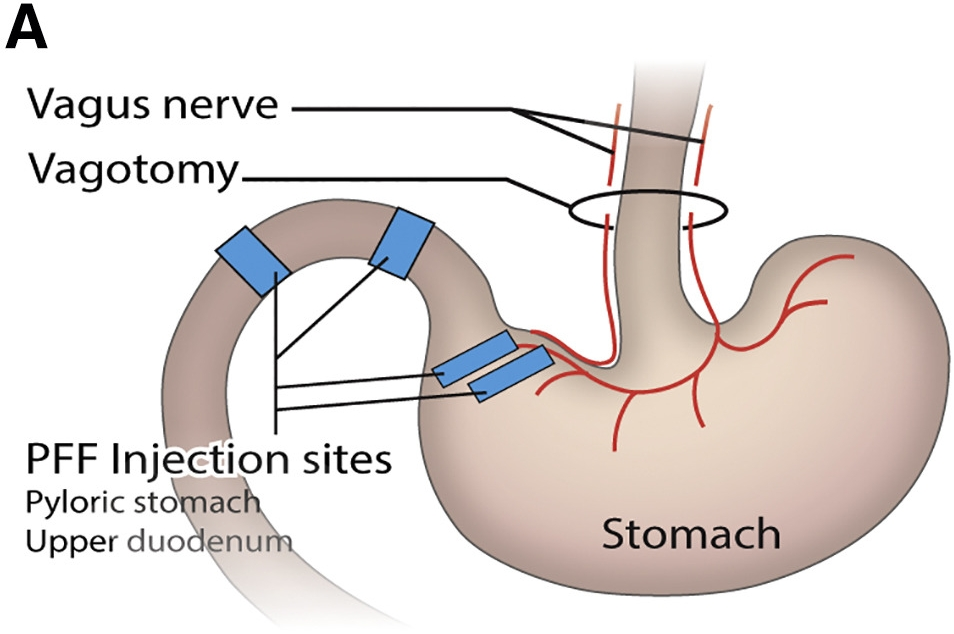
The research team studied a protein called alpha-synuclein , which is closely related to Parkinson's disease. In their experiments, they prepared 'abnormally shaped clumps' of alpha-synuclein and placed them in the muscle layer of the stomach exit or duodenum of mice to examine the time course of how changes in the intestine spread to the brain.
The key here is
What's more, Bloom says the same kinds of changes found in the brains of people with Parkinson's disease have been found in the gut, meaning that even though Parkinson's appears to be a predominantly motor disorder, changes may be starting elsewhere in the body, particularly in the gastrointestinal tract.
To confirm whether the vagus nerve was truly an essential pathway, the research team tried cutting the vagus nerve or using mice that did not have alpha-synuclein at all. As a result, it became clear that the spread of alpha-synuclein from the gut to the brain and the accompanying changes were less likely to occur.
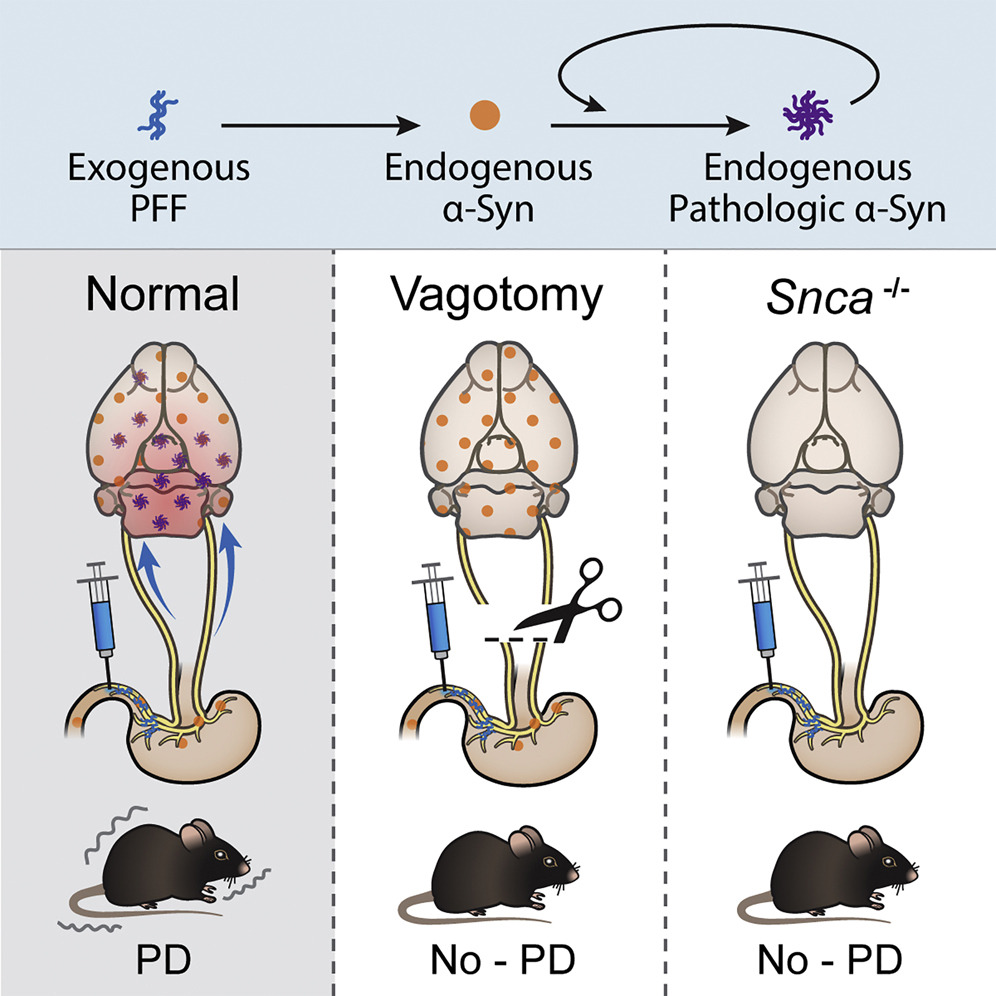
Furthermore, when the research team tracked the brain, they found that the changes didn't occur throughout the brain at first, but rather started deep within the brain and spread to other areas over time. Bloom likens this 'slow-spreading' process to water filling up a bathtub. It doesn't stay in one place, but the impact spreads over time.
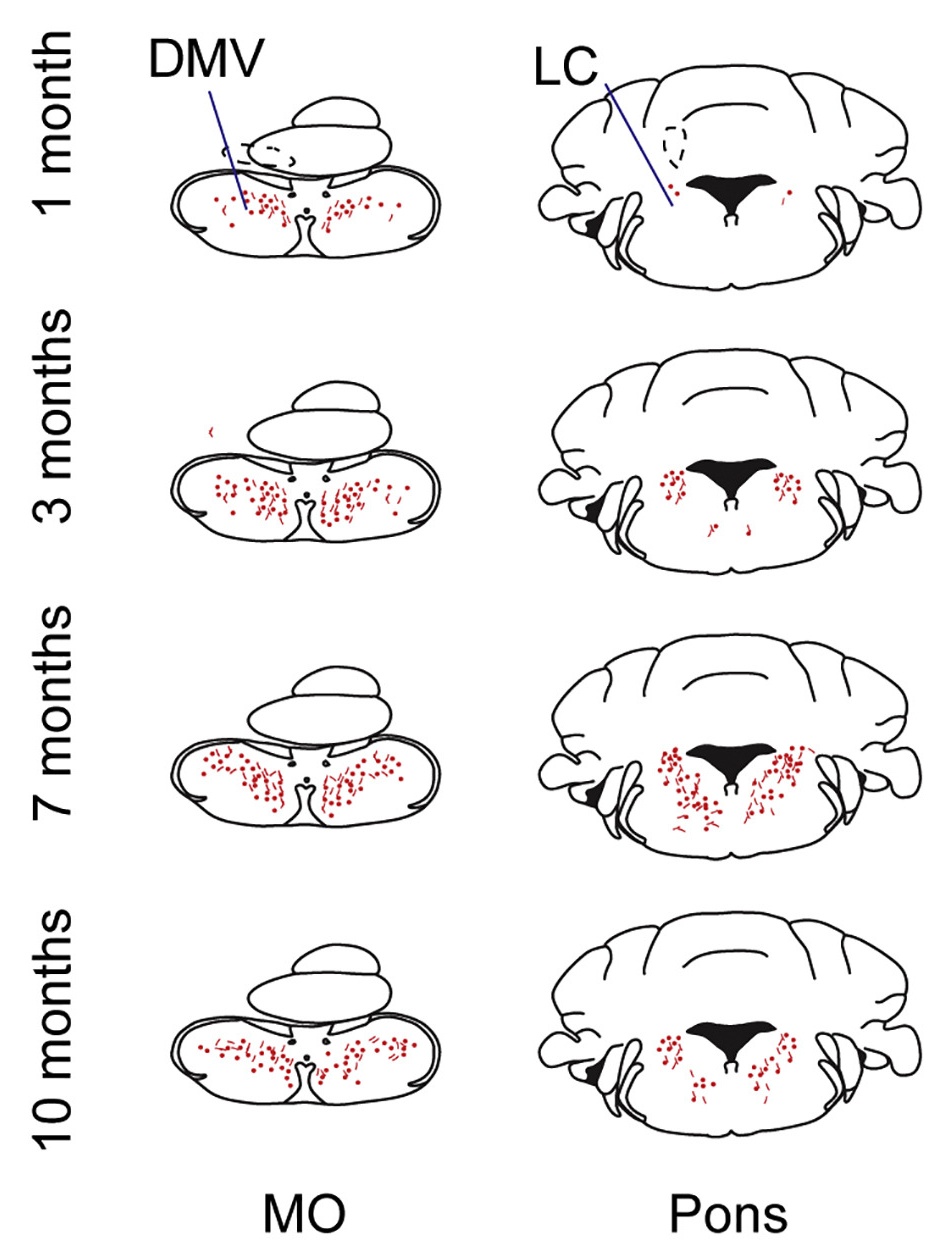
The research team also had the mice 'build nests' to see if the changes in the brain were reflected in behavior. Healthy mice gather nesting materials and build dense nests, but if they are unable to finely adjust their movements, the nests are likely to be small and messy. In fact, the group that received the abnormal protein had a significantly lower nest-building score and used less nesting material. Furthermore, when their exploratory behavior when placed in a new environment was examined, the group that received the abnormal protein spent less time exploring in the center of the box and showed a stronger tendency to continue circling the periphery.
'Having a model that can trace the pathway from the gut to the brain provides a foundation for developing strategies to combat Parkinson's disease. Bloom says that by focusing on the altered proteins involved in the pathogenesis of Parkinson's disease, the focus could shift to developing a vaccine,' he said.
A 2018 study found that people who had their appendix removed due to appendicitis or other reasons had a 19% lower risk of developing Parkinson's disease compared to those who did not have their appendix removed. The appendix is part of the intestine, and the fact that the appendix may be linked to future risk of developing Parkinson's disease reinforces the idea that the brain is not the only gateway to the disease. If changes occurring in the intestine can lead to brain abnormalities over a long period of time, we need to pay attention to changes occurring in the intestine as well as the brain.
Related Posts:




in Science, Posted by log1b_ok