China submits documents to ITU regarding a massive constellation of approximately 200,000 satellites
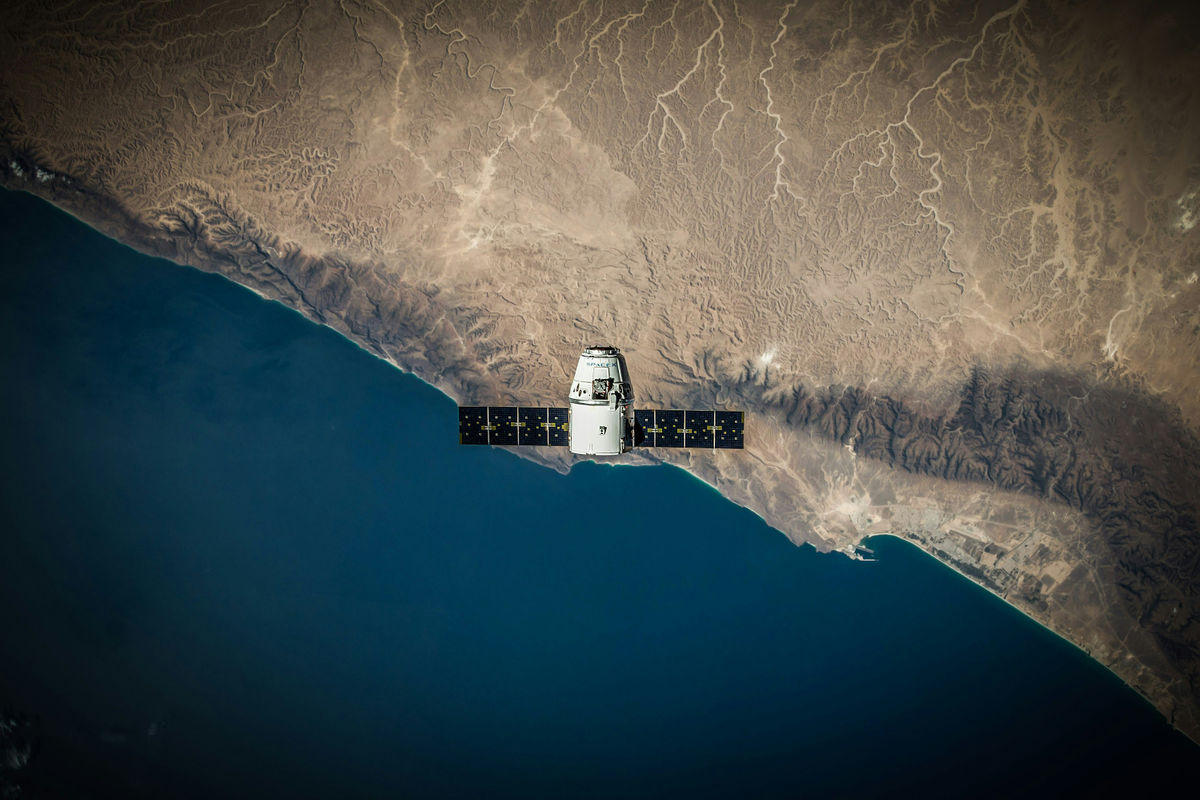
It has been learned that several Chinese operators have submitted applications to the International Telecommunication Union (ITU) to deploy a massive constellation of approximately 200,000 satellites, potentially rivaling SpaceX, which is said to account for two-thirds of the world's satellite internet services.
China files ITU paperwork for megaconstellations totaling nearly 200,000 satellites - SpaceNews
China seeks approval for one of largest satellite constellations
https://interestingengineering.com/space/china-largest-satellite-constellations-approval
As SpaceX Targets 50,000 Starlink Satellites, China Files for 200,000-Unit Mega-Constellation – SatNews
https://news.satnews.com/2026/01/12/as-spacex-targets-50000-starlink-satellites-china-files-for-200000-unit-mega-constellation/
By the end of December 2025, more than a dozen applications by Chinese satellite operators had been submitted to the ITU, the international organization responsible for coordinating radio frequencies and orbital slots. The most ambitious of these are the CTC-1 (CHN2025-79441) and CTC-2 (CHN2025-79398) programs, each of which will deploy 96,714 satellites in 3,660 orbital planes. These two programs alone will handle a total of 193,428 satellites.
While CTC-1 includes both pre-publication information and a detailed coordination request, CTC-2 is at the pre-publication information stage. These two applications represent some of the largest satellite utilization applications in history, highlighting the growing competition for orbital and spectrum resources. The Chinese government recently criticized SpaceX for 'squeezing shared orbital resources.'

The application has not yet been reviewed and will undergo a technical review by the ITU Radiocommunication Bureau, which may result in objections or requests for adjustments from other national authorities.
SatNews, a media outlet specializing in the space industry, pointed out that 'the application is part of a broader trend in China to move away from traditional state-run space projects and toward commercial satellite constellations,' and that by making multiple applications, China is poised to challenge the current status of the leading occupant, held by the United States and its commercial partners.
The authorities have set a requirement that a certain percentage of the applied satellites must be operational within a certain period of time, and if this requirement is not met, the orbital capacity given to China may be significantly reduced.
In addition, China Satellite Communications Corporation has proposed a plan to launch 24 satellites into medium orbit to link with low-orbit projects as a wide-area architecture, and two plans for China using 144 and 2,520 satellites. The latter has already applied to the Ministry of Industry and Information Technology for a license to provide direct satellite communications services in 2025. The private company Galaxy Space has also submitted a plan for 91 satellites, and many other applications have been submitted from China.
SpaceX, meanwhile, has just been approved to launch an additional fleet of what it calls 'second-generation satellites' in January 2026.
FCC approves 7,500 additional SpaceX satellites, totaling 15,000 expected to be operational by 2031 - GIGAZINE

China is developing its G60 Starlink satellite network to rival SpaceX, and is also attempting to build a robust satellite network with its Guowang satellite constellation.
What is the purpose of the Chinese government's secretly launched satellite group 'Guowang'? - GIGAZINE

In the US, Amazon is also starting to build its own satellite network.
Amazon begins offering a preview of 'Amazon Leo' to some users, touting it as the world's fastest satellite communication - GIGAZINE
Related Posts:



in Web Service, Posted by log1p_kr