Musicians are less likely to stagger when blindfolded
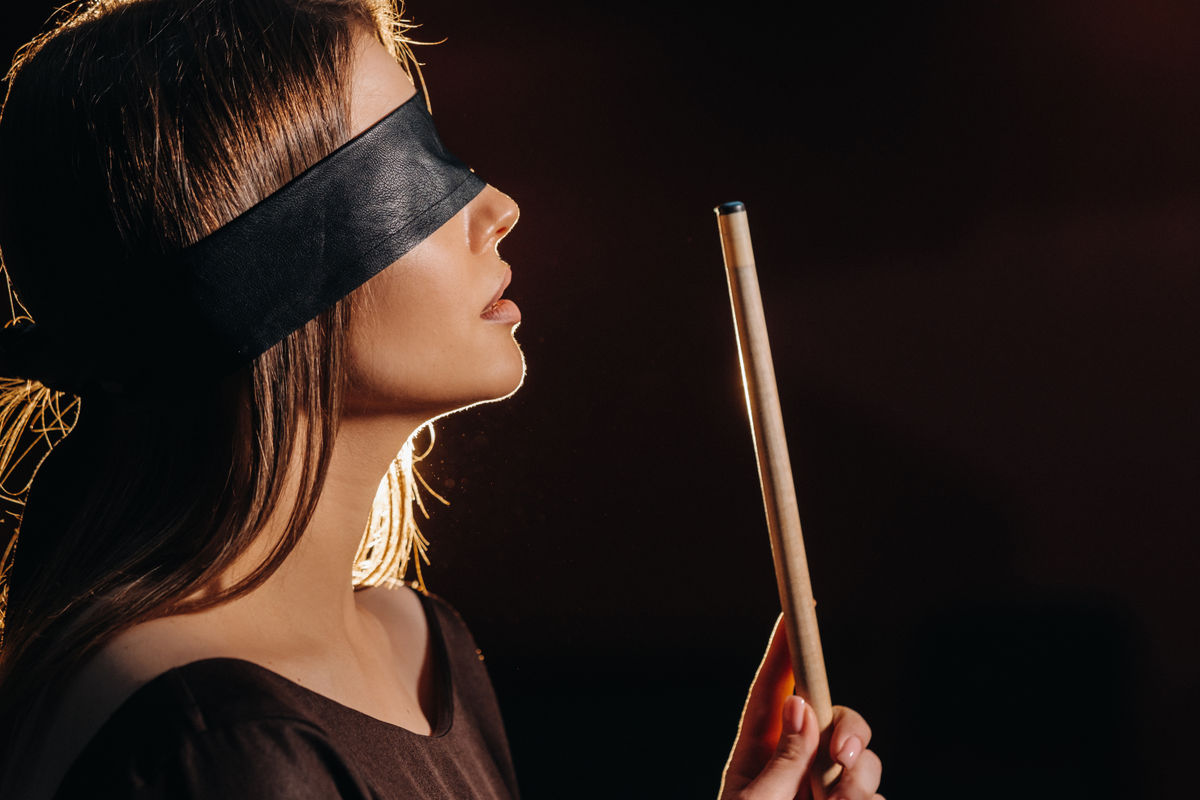
Practicing a musical instrument can develop multiple senses at the same time, including hearing, sight, and touch. Researchers who noticed this fact blindfolded musicians and non-musicians and tested how straight they could walk.
Musical training shapes spatial cognition - ScienceDirect
Musicians drift less in blindfolded walk: Could musical training be utilized in cognitive rehabilitation?
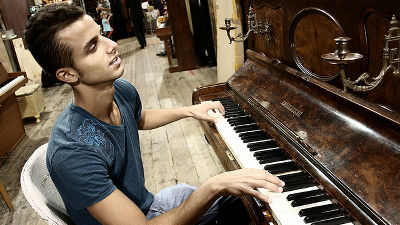
Musicians are in an environment where their auditory senses are more likely to be sharpened than others. Daniel Palomov and his colleagues at the University of Montreal's School of Medicine hypothesized that music-based training might help improve spatial cognitive ability, focusing on the fact that practicing an instrument simultaneously engages all senses, including hearing, vision, touch, and movement, and is heavily dependent on higher brain functions such as attention and memory.
To investigate the hypotheses of whether spatial cognitive ability is affected by the presence or absence of auditory cues and whether musical experience has any bearing on this, we conducted an experiment with 19 musicians with 6 to 28 years of musical experience and practicing an instrument for 3 to 50 hours per week, as well as 19 non-musicians with no musical experience outside of school classes.
The participants were blindfolded and asked to perform a stepping test called the 'Fukuda-Unterberger step test.' This test typically involves stepping with your hands raised and your eyes closed in a silent environment. If your hands are not in the same position or angle as they were when you finished, it is assumed that your vestibular function, which maintains balance, may be impaired.
How to Perform a Fukuda Step Test (Vestibular Examination) - YouTube
The experiment showed that musicians performed the test more accurately than non-musicians. While there were no significant differences in the tests in which participants were given sound cues from speakers placed directly in front of them, at a 45-degree angle, or at a 90-degree angle, musicians were better at correcting their body position based on the location of the sound source.
There were differences not only in angle but also in position, with musicians' positional deviations in silent trials being approximately 95 cm and non-musicians' being 142 cm.

'In the presence of a sound source, we observed a significant difference in angle correction relative to the sound source position. This suggests that musicians are able to fix the angle appropriately when auditory feedback is provided. Music practice, music-based interventions for patients, and training in the efficient use of auditory cues may be able to improve postural stability while walking and aid in the rehabilitation of people at risk of falls,' Palomov concluded.
Palomov pointed out that future training should include participants who have gained musical experience over a short period of time.
Related Posts:





in Science, Posted by log1p_kr