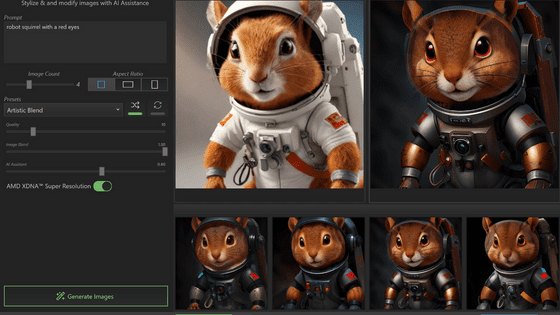
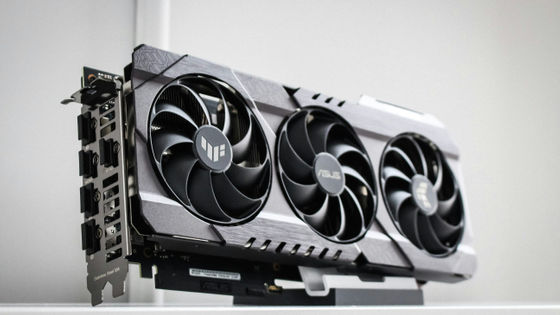
ComfyUI update releases super-fast image generation AI for AMD graphics cards, with ROCm integration for 5.4x faster image generation
In the field of local image generation, AMD graphics cards have long been known to be much slower and more difficult to set up than comparable NVIDIA graphics cards. However, ComfyUI, a new AI generation application, now natively supports
AMD x ComfyUI: Advancing Professional-Quality Generative AI on AI PCs
https://www.amd.com/en/blogs/2026/amd-comfyui-advancing-professional-quality-generative-ai-ryzen-radeon.html
Official AMD ROCm™ Support Arrives on Windows for ComfyUI Desktop
https://blog.comfy.org/p/official-amd-rocm-support-arrives
Many generative AI applications are designed with NVIDIA's CUDA in mind, and AMD graphics cards, which do not support CUDA, cannot deliver sufficient performance. AMD is also developing ROCm, a GPGPU software stack similar to CUDA, but ROCm is a newer product than CUDA and has not been compatible with Windows for a long time, which has led to few adoption cases. This has made local image and video generation a high hurdle for AMD graphics card users.
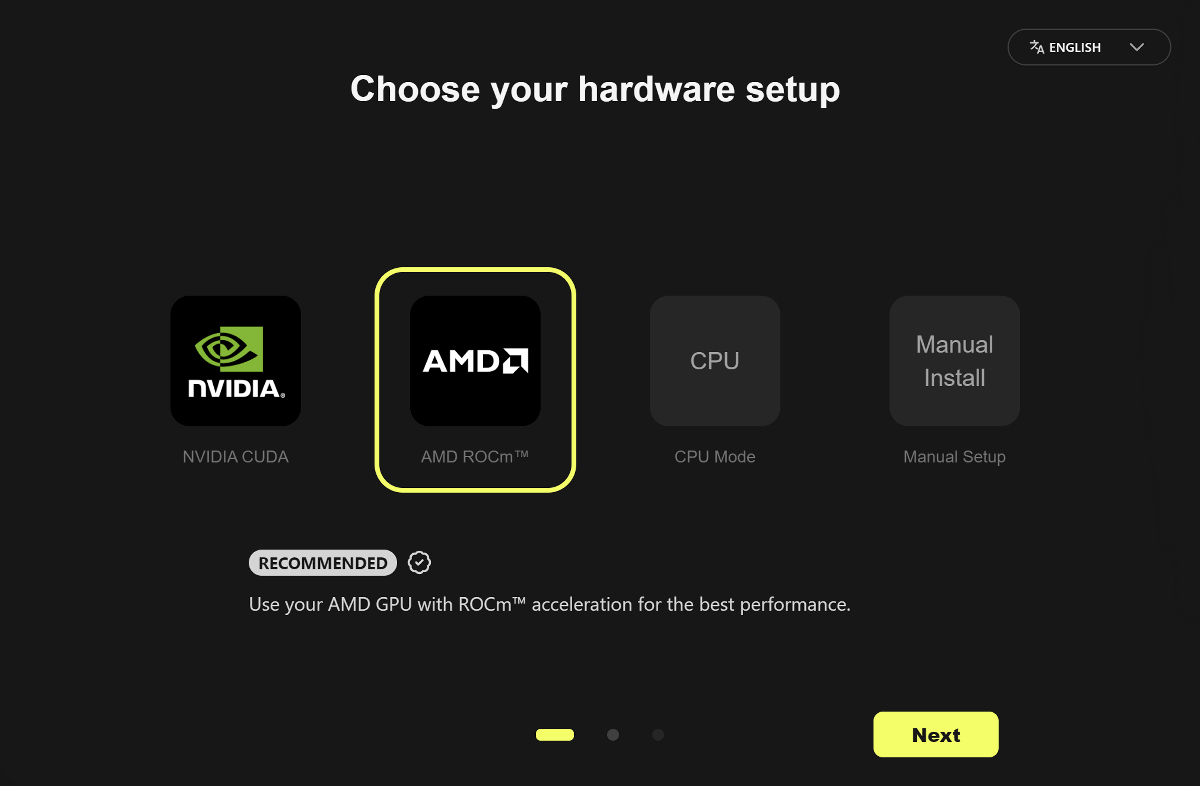
While it was previously possible to use ROCm to generate code in ComfyUI by performing complex configuration steps, ComfyUI 0.7.0 now officially integrates the Windows version of ROCm 7.1.1, allowing you to set up a ROCm generation environment with just one click while installing the desktop version of ComfyUI.
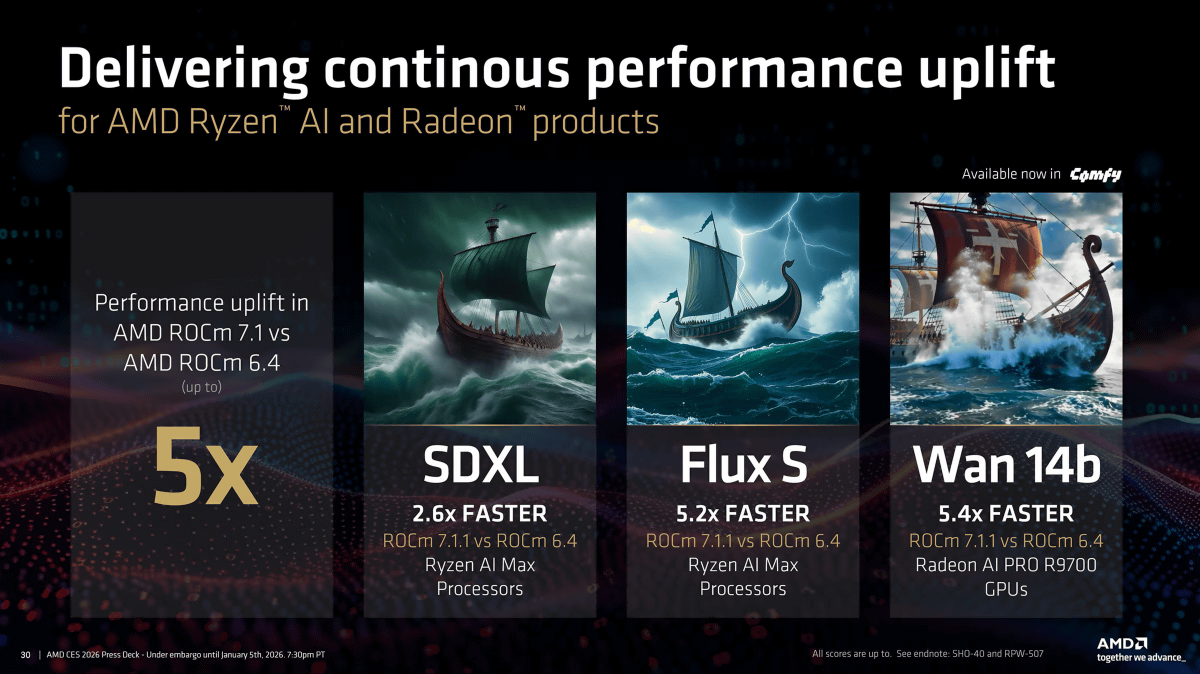
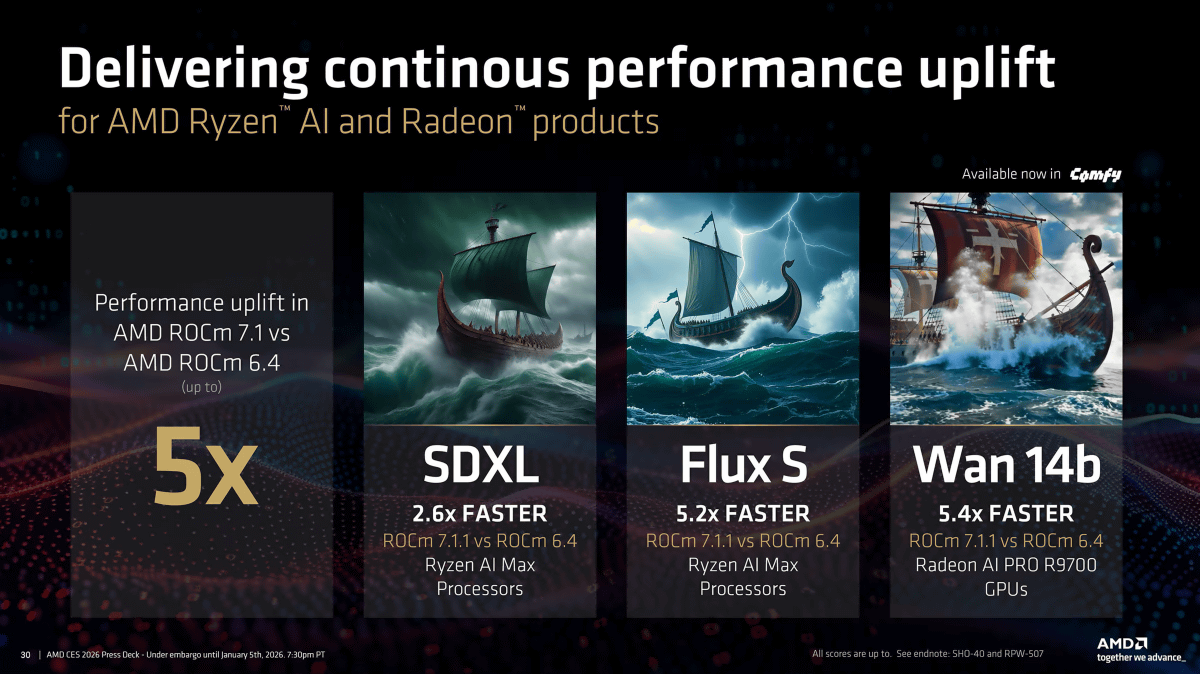
AMD claims that ROCm 7.1.1 can speed up ComfyUI generation by up to 5.4x. Compared to ROCm 6.4, ROCm 7.1.1 is 2.6x faster for Stable Diffusion XL (SDXL), 5.2x faster for FLUX.1 [schnell], and 5.4x faster for WAN 14b.
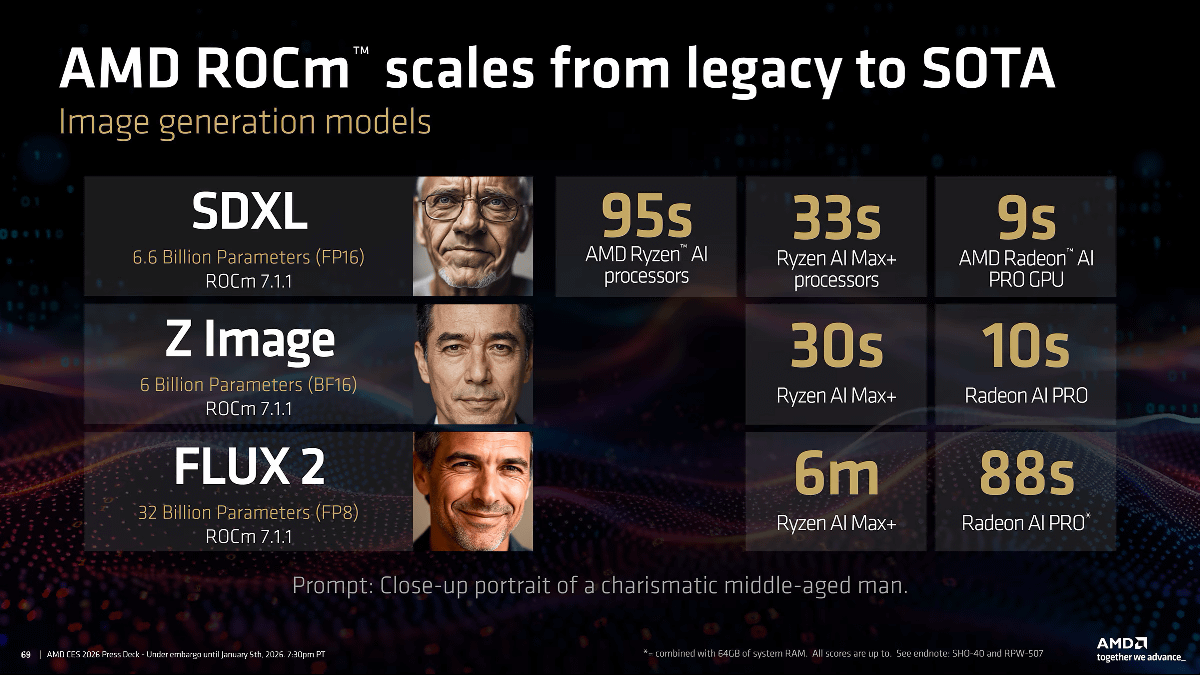
When generating an image using the FP8 version of FLUX.2, it takes 6 minutes for Ryzen AI Max+ and 88 seconds for Radeon AI PRO.
AMD describes this update as 'an early version of ComfyUI support, like a beta,' and is committed to improving performance and stability.
Related Posts: