Why is Venus the second brightest planet after the Moon?
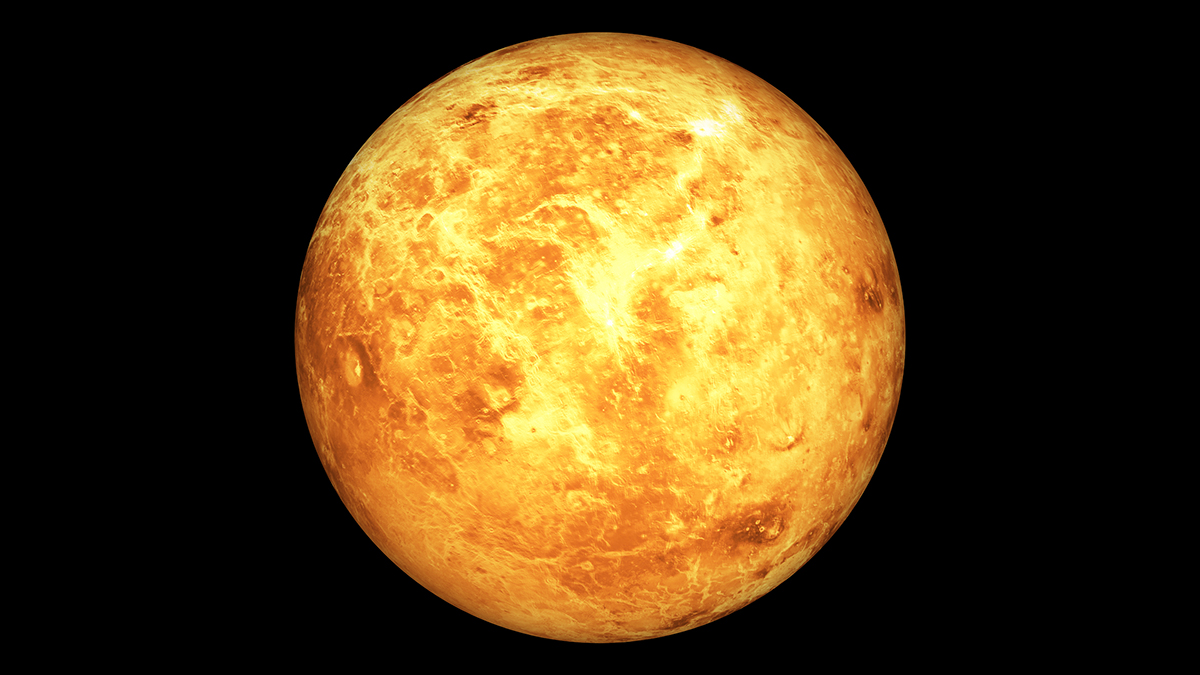
Venus is the second brightest object in the night sky after the moon, and it's easy to see it in the pre-dawn and dusk sky. Live Science explains that there are several factors that make Venus stand out as the brightest object in the night sky, aside from the moon.
Why is Venus so bright? | Live Science
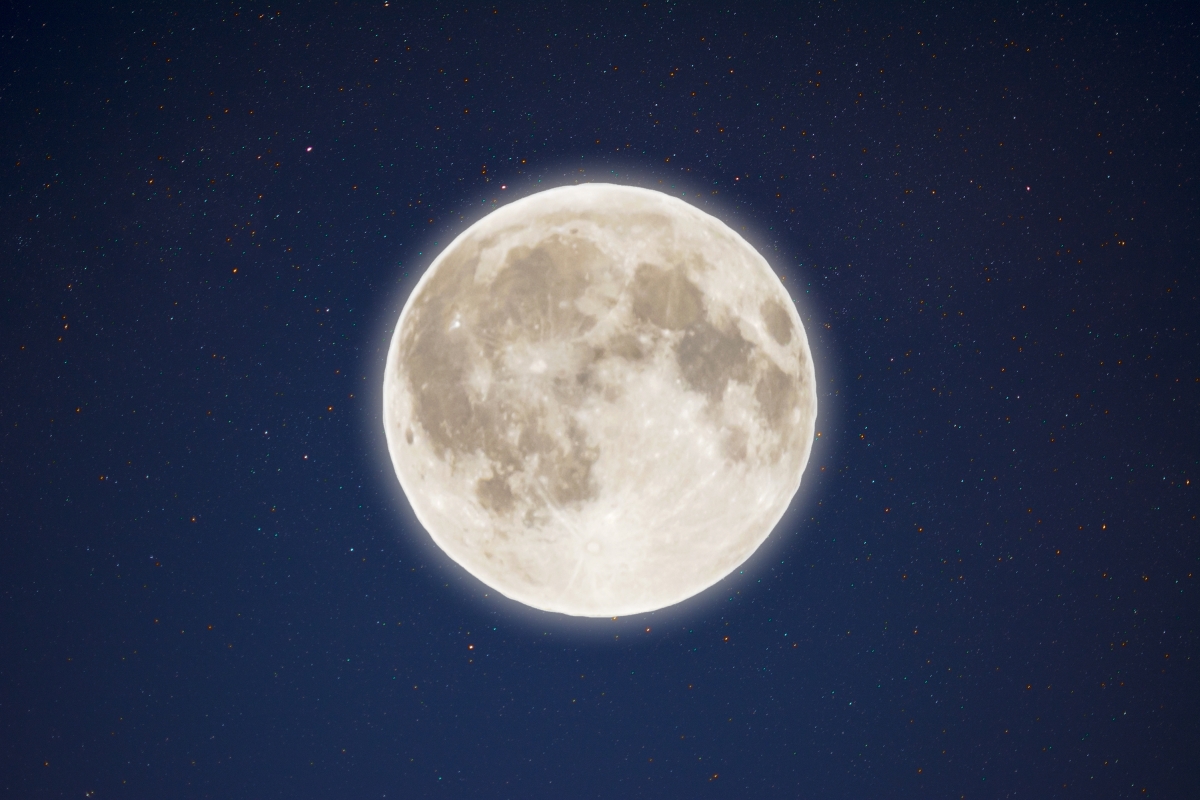
Anthony Malama , a researcher at the International Astronomical Union's (IAU) Centre for the Conservation of Dark, Silent Space, told Live Science, 'Venus is about 100 times brighter than a first-magnitude star.' The more negative the magnitude used in astronomy, the brighter the star. Sirius , one of the brightest first-magnitude stars, has an apparent magnitude of -1.47, while Venus has an apparent magnitude of -4.14. This difference of 2.67 magnitudes equates to a brightness difference of about 12 times. Regulus , the faintest first-magnitude star, has an apparent magnitude of 1.35. Regulus's brightness is about 157 times that of Venus.
Regarding 'Why does Venus appear so bright?', Live Science lists the following five main reasons:
The first is that Venus is extremely reflective. According to Sanjay Limay, a scientist at the Space Science and Engineering Center at the University of Wisconsin-Madison, Venus' albedo (reflectivity) is 0.76, meaning it reflects about 76% of the sunlight it receives. A perfect mirror would reflect 100% of sunlight, while Earth reflects only about 30% , and the surface of the moon reflects only about 7% .
The second reason is 'thick clouds that create high reflectivity.' Venus's high reflectivity is due to the presence of a cloud layer that extends approximately 48 to 70 km above the surface. According to Limaye, these clouds are mainly composed of tiny droplets of sulfuric acid, each the size of a bacterium. These droplets efficiently scatter sunlight, making Venus appear to shine brightly.
The third reason is that Venus is relatively close to Earth, but its distance varies greatly. The average distance between Venus and Earth is
However, the distance between Venus and Earth is not constant. NASA explains that during inferior conjunction, when Venus is between Earth and the Sun, its distance from Earth shrinks to about 38 million km. However, Venus can appear extremely dark near inferior conjunction, and the National Astronomical Observatory of Japan also explains how it looks during inferior conjunction.
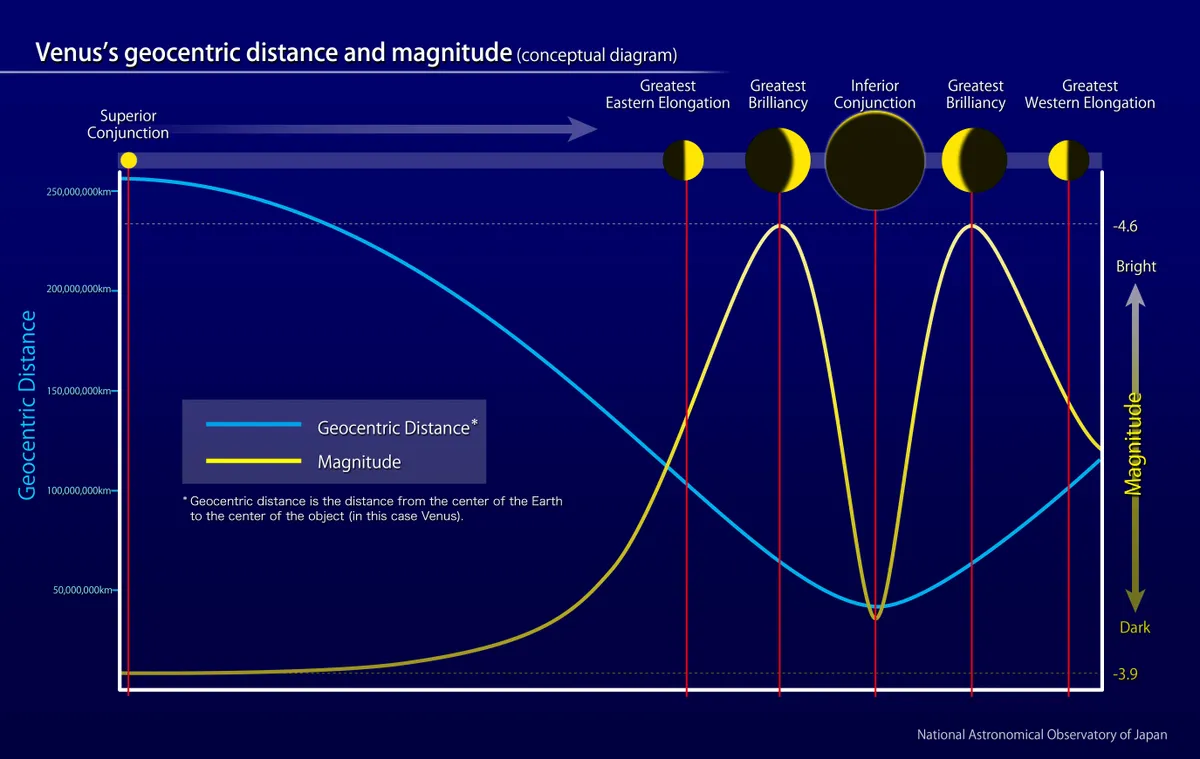
The fourth reason is that the appearance of the illuminated side changes depending on the planet's position. Live Science explains that this is because the inner planets appear to wax and wane like the Moon when viewed from Earth. According to Limaye, during inferior conjunction, Venus's illuminated side is completely hidden from Earth, while during superior conjunction, when Earth and Venus are lined up on opposite sides of the Sun, much of the illuminated side is visible, but Venus is so far away that its apparent size is at its smallest and it appears dimmer.
The fifth possibility is that clouds could be scattering light toward Earth, boosting brightness. Live Science cited
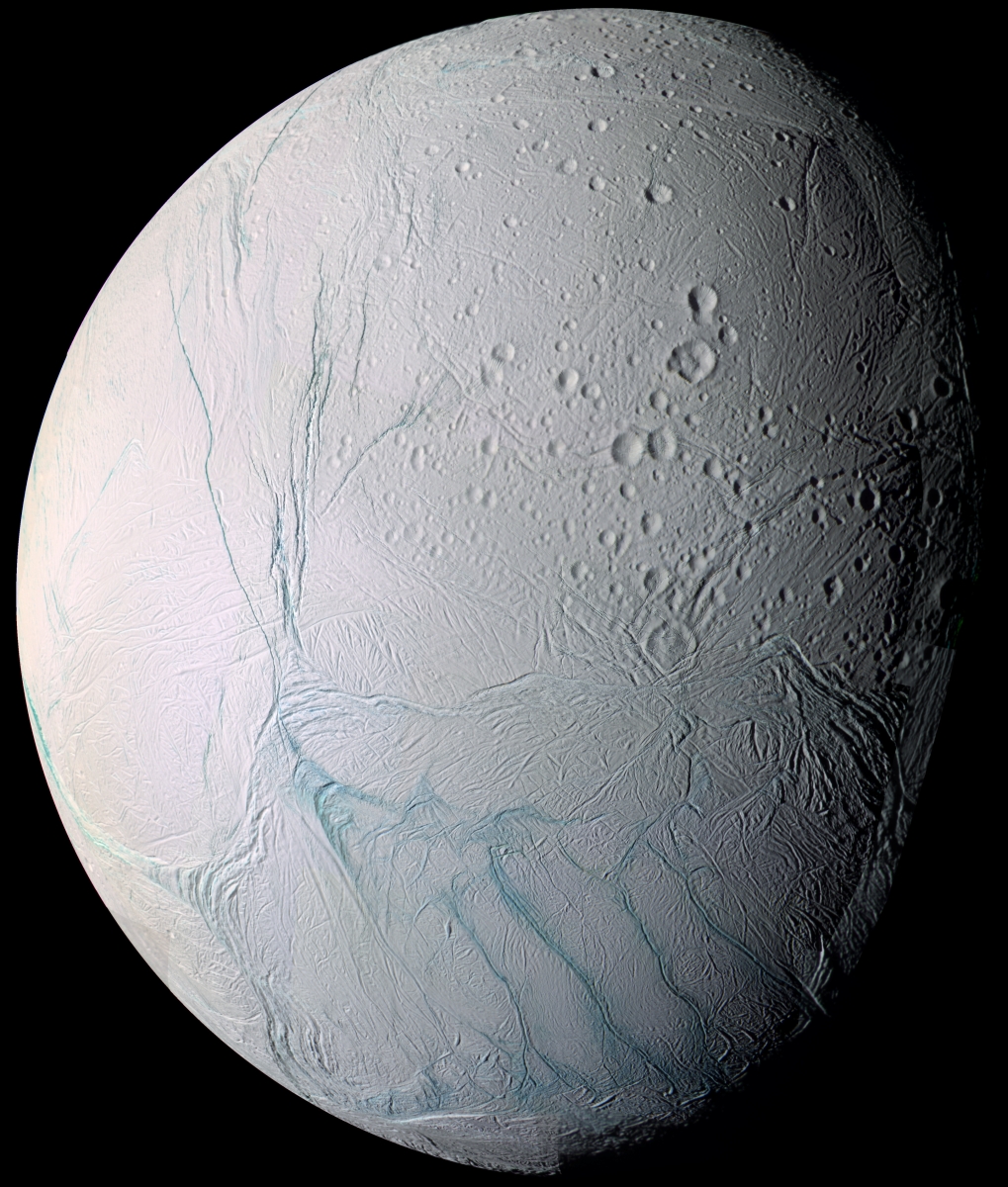
Although Saturn's moon Enceladus has a higher albedo than Venus, Venus is much brighter from Earth because it is closer to the sun and receives stronger light.
The combination of these changes in reflectivity, distance, and phase can cause Venus' apparent magnitude to vary between -4.92 and -2.98 , but it's still bright enough to be observed year-round from urban areas, Live Science concludes.
Related Posts:



in Science, Posted by log1b_ok