Scientists successfully map the solar boundary for the first time using NASA's solar probe data
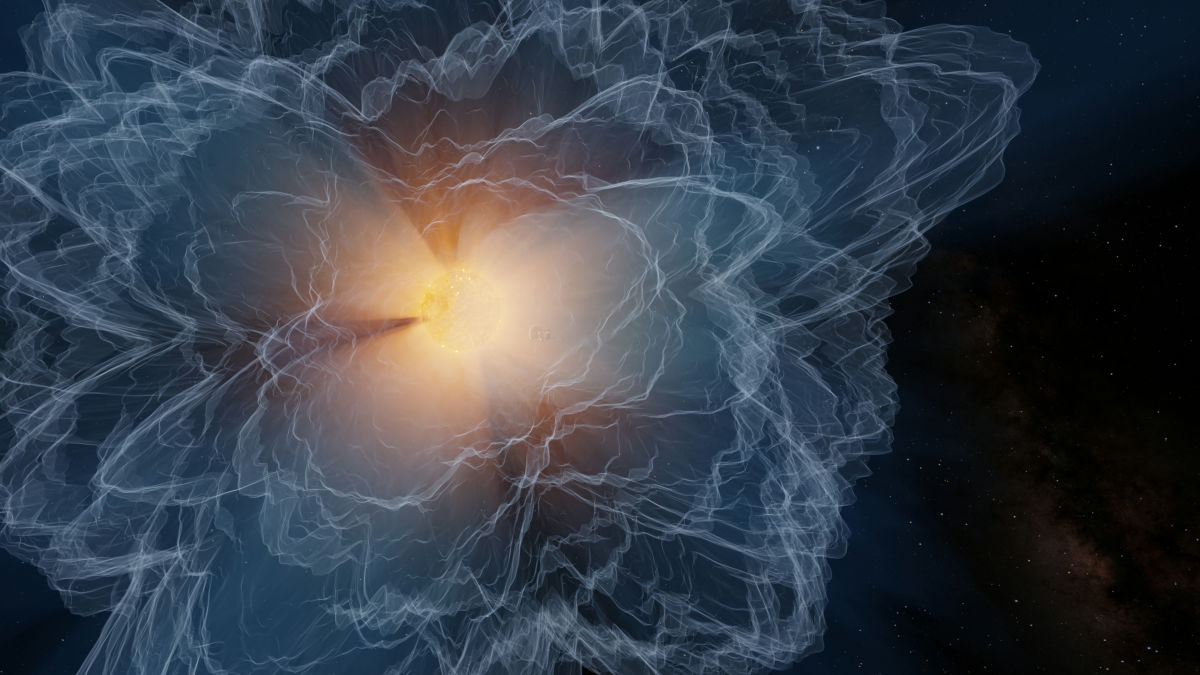
by CfA/ Melissa Weiss
The Sun emits high-temperature plasma called
Multispacecraft Measurements of the Evolving Geometry of the Solar Alfvén Surface over Half a Solar Cycle - IOPscience
https://iopscience.iop.org/article/10.3847/2041-8213/ae0e5c
Astronomers Create First Map of the Sun's Outer Boundary | Center for Astrophysics | Harvard & Smithsonian
https://www.cfa.harvard.edu/news/astronomers-create-first-map-suns-outer-boundary
The First-Ever Map of The Boundary of The Sun Has Just Been Revealed : ScienceAlert
https://www.sciencealert.com/the-first-ever-map-of-the-boundary-of-the-sun-has-just-been-revealed
NASA's Parker Solar Probe, launched in 2018, first reached the solar corona, the outer layer of the solar atmosphere, in 2021, and has since repeatedly approached the Sun and transmitted valuable scientific data to Earth. 'Parker Solar Probe data from deep within the Alfvén surface could help answer big questions about the solar corona, such as why it's so hot,' said Sam Badman, an astrophysicist at the Harvard-Smithsonian Center for Astrophysics (CfA). 'But to answer these questions, we first need to know exactly where the boundaries of the Sun are.'
In astrophysics, a celestial boundary is defined as a point where the physics governing the behavior of that region change. In the case of the Alfvén plane, this is the point where the influence of the Sun's magnetic field weakens and outflowing plasma is no longer magnetically coupled to the Sun. Beyond this Alfvén plane, matter such as plasma cannot return to the Sun.
Understanding how the Sun's Alfvén disk expands and contracts is important for understanding its interactions with Earth and other planets, and for space weather forecasting, which predicts the impact of the Sun and other elements on communication technology and power grids.
Badman and his team cross-referenced data from the Parker Solar Probe, which penetrated deep into the Sun's atmosphere, the Solar Orbiter , which observed the Sun from a safer distance, and three space probes located at the Lagrangian point (L1), which is gravitationally stabilized by the interaction between the Sun and Earth. This gave them a map of the Sun's Alfvén plane.
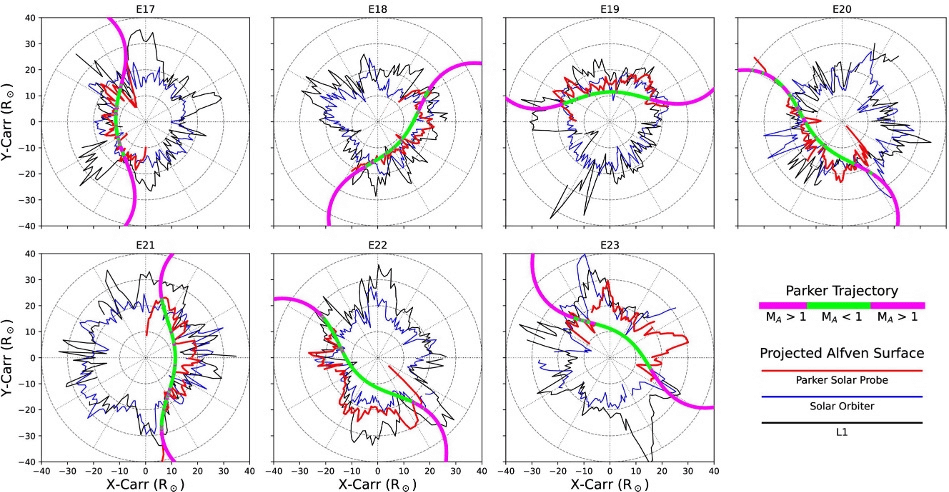
The figure below shows a two-dimensional plot of the Alfvén surface as Parker Solar Probe approached the Sun. Black represents data collected by the spacecraft at the Lagrangian point (L1), blue represents data from Solar Orbiter, and red represents the estimated shape of the Alfvén surface based on Parker Solar Probe data.
The Alfvén disk image, created based on the data, is shown below. Over six years of observations, the median height of the Alfvén disk increased by about 30% as solar activity increased.
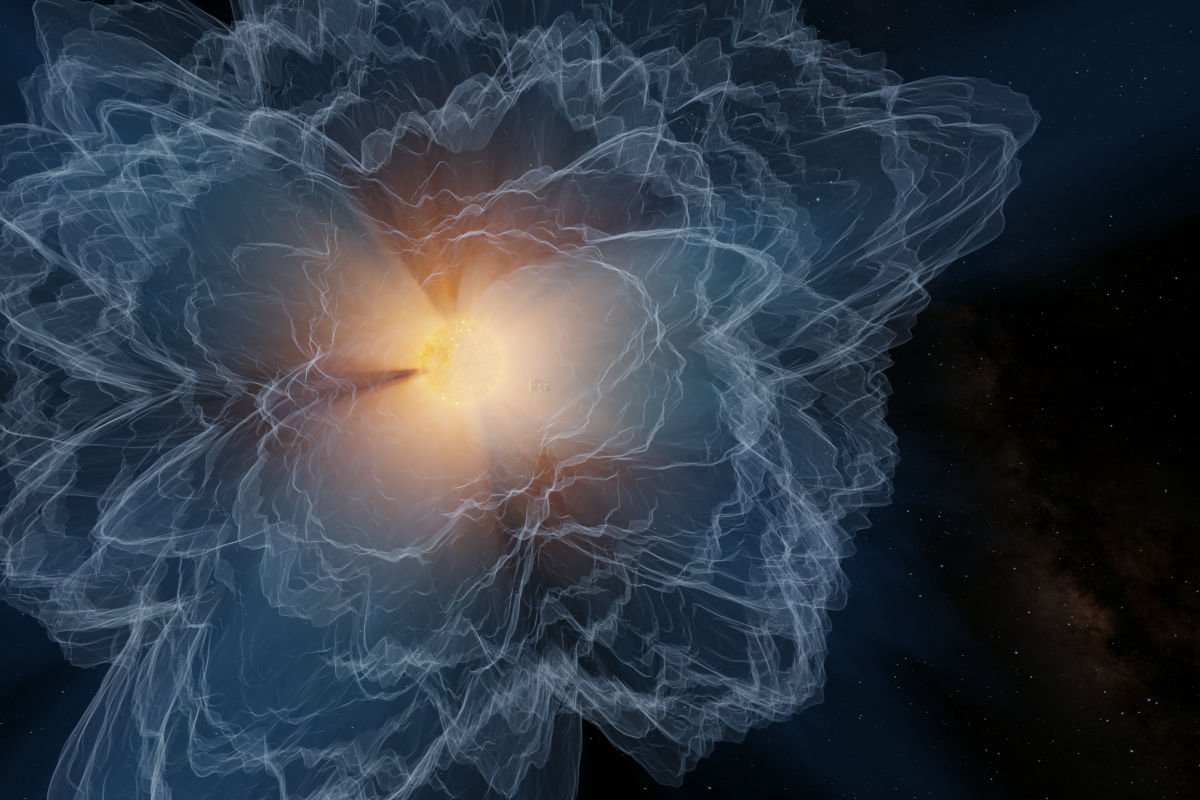
The analysis revealed that Parker Solar Probe skimmed the turbulent Alfvén ridges during most of its passes near the Sun, but only went deeper than the Alfvén ridges during two passes, during the height of solar maximum .
'As the Sun goes through its activity cycle, we see the shape and height of the Alfvén disk around the Sun getting larger and more pointed. This is something we've predicted for some time, but now we can see it directly,' Badman said.
Related Posts:



in Science, Posted by log1h_ik