Adopting US car standards would put European lives at risk, warns

Between late July and August 2025, the EU and the United States announced an agreement on the framework of a trade agreement covering a wide range of products. This agreement clearly stipulates 'mutual recognition' of automobile safety and environmental standards, and indicates a policy of accepting vehicles imported to the United States in the EU as is. A joint group of civic groups, including those from major European cities, has strongly criticized this policy, stating that 'accepting lax American standards will render Europe's efforts to protect lives to no avail.'
Accepting US car standards would risk European lives, warn cities and civil society - ETSC

The EU-US Trade Framework Agreement, agreed in the summer of 2025, included a clause stating that 'with regard to motor vehicles, the United States and the EU intend to accept and mutually recognize each other's standards.' However, while European vehicle safety regulations have reportedly reduced traffic fatalities by 37% between 2010 and 2025, traffic fatalities in the United States increased by 30% over the same period, raising concerns that there is a significant gap in standards.

The EU is also set to introduce restrictions on harmful pollutants caused by brake and tire wear from 2026, while the US is moving to ease regulations on vehicle air pollution.
For this reason, more than 75 civil society organizations, including those from major European cities such as Paris, Brussels, and Amsterdam, have jointly signed a letter to members of the European Parliament. The letter warns that 'aligning European standards with weaker US regulations would undermine the EU's global leadership in road safety, public health, climate change policy, and competitiveness.' Furthermore, the letter points out that accepting weaker US standards for pollutant regulations 'could increase the risks of pollutants associated with asthma, cancer, and many other cardiovascular and neurological diseases.'
You can see why there are concerns about accepting American safety standards by watching the following video by
Keep these Stupid American Trucks out of Europe - YouTube
European safety assessments include not only the durability of the car and the safety of the driver, but also its impact on pedestrians. These safety tests score the type of impact the vehicle has on the human body, and measures such as making the hood act as a cushion in the event of a collision are considered.

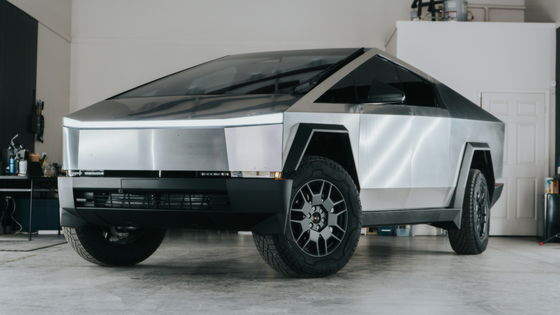
However, according to Not Just Bikes, American SUVs and pickup trucks have extremely heavy and rigid frames that make them dangerous to other vehicles in a crash. Historical records show that the front ends of SUVs, designed solely for aesthetics, make pedestrians more likely to be crushed under the vehicle in a head-on collision, increasing the fatality rate by 44% overall, 82% for children, and 130% for children under 10.

Additionally, typical SUVs are heavy and have a high center of gravity, making them prone to tipping over. To prevent passengers from being crushed in the event of a tipping over, the vehicle's pillars are enlarged to create a sturdy frame. A side effect of this is reduced visibility; a previous NBC investigation found that multiple children sitting side by side in the front of the vehicle could not be seen from the driver's seat. Such vehicles fail EU safety standards and are illegal in Europe, but 'regulatory loopholes allow thousands of American-made SUVs and trucks to be imported into Europe every year, reducing road safety,' Not Just Bikes points out.

Furthermore, even if US crash tests were conducted to roughly the same standards as EU tests, Not Just Bikes points out that there are fundamental differences between the US and EU standards. In the EU, automakers must pass and certify specific vehicle models through an independent, publicly-run approval process before they can be released to the market. In the US, on the other hand, all safety tests are self-certified by automakers, with no third-party approval process.
Major European-based brands such as BMW and Mercedes also produce vehicles that comply with EU standards in their American car factories. However, there are concerns that if lower American vehicle standards are accepted in Europe, these production lines may shift to producing vehicles that comply with lower American standards rather than EU standards, posing the risk of massive job losses in European car factories and throughout the supply chain.
The signatories and civil society organisations are calling on EU lawmakers to oppose any agreement that would accept lower US vehicle standards and to state clearly that 'EU vehicle standards are non-negotiable'.
Related Posts: