The complete genome sequence of the deep-sea living fossil 'bat octopus' has been deciphered, revealing the origin of octopuses
Giant genome of the vampire squid reveals the derived state of modern octopod karyotypes: iScience
https://www.cell.com/iscience/fulltext/S2589-0042(25)02093-0
Vampires in the Deep: An Ancient Link Between Octopuses and Squids
https://www.univie.ac.at/en/news/detail/vampires-in-the-deep-an-ancient-link-between-octopuses-and-squids
'Vampire Squid From Hell' Reveals The Ancient Origins of Octopuses : ScienceAlert
https://www.sciencealert.com/vampire-squid-from-hell-reveals-the-ancient-origins-of-octopuses
A world first! Associate Professor Stiamarga Defin of our school has succeeded in decoding the genome of the 'living fossil' bat octopus in an international collaborative research project with Shimane University, the National Institute of Genetics, and the University of Vienna - Wakayama National College of Technology
https://www.wakayama-nct.ac.jp/cat_topics/12483/
A collaborative research group led by Professor Masaaki Yoshida of the Faculty of Bioresource Sciences has decoded the entire genome sequence of the bat octopus found in the waters off Japan, a world first | Shimane University, National University Corporation
https://www.shimane-u.ac.jp/docs/2025111800033/
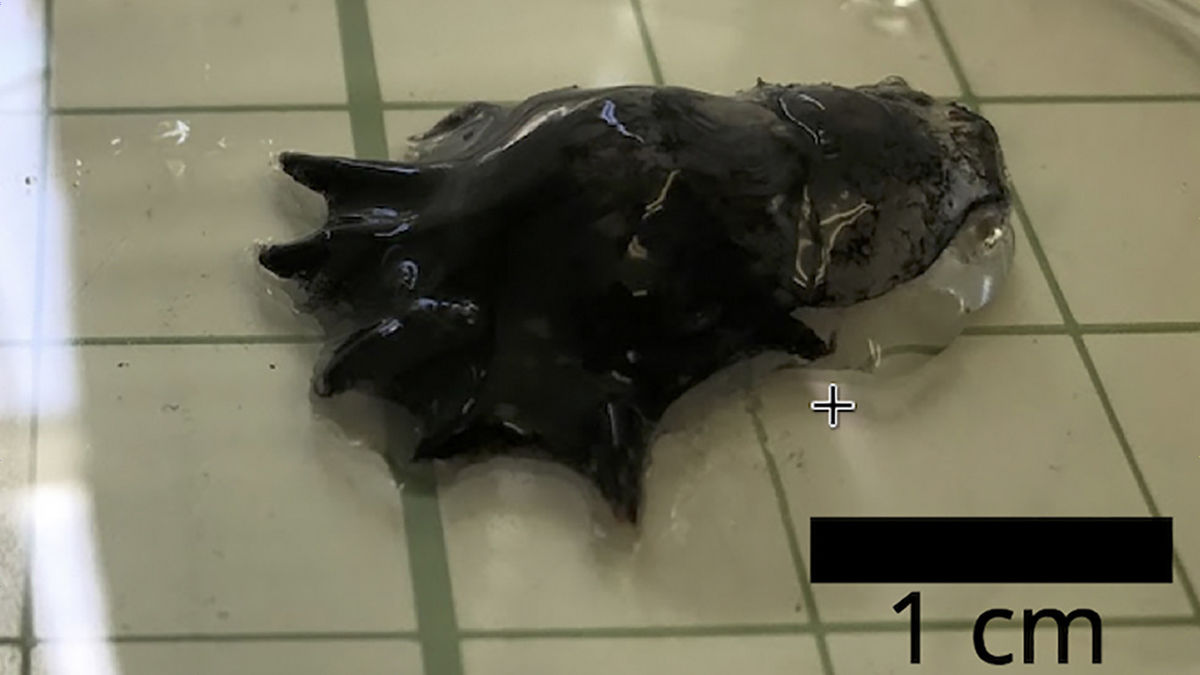
The deep-sea bat octopus is a very mysterious creature, with a dark body, glowing blue and red eyes, a cloak-like membrane between its arms, and four light-sucking organs. Contrary to its English name, the 'vampire squid,' it has an inactive lifestyle, using its mucus-secreting tentacles to collect marine snow that falls to the deep sea, which it then rolls into balls and eats.
The bat octopus has eight arms like an octopus, but it also has a body structure and vestiges in common with squid and cuttlefish , so it is believed to be a living species that actually inherited the appearance of an ancestor before octopuses and squid differentiated. Professor Oleg Simakov, a geneticist at the University of Vienna, said, 'The bat octopus is exactly halfway between octopuses and squids. Its genome reveals deep evolutionary secrets about how two significantly different lineages emerged from a common ancestor.'
The research team used DNA sequencing equipment at the National Institute of Genetics to decode the entire genome of the bat octopus, using a specimen accidentally collected in Suruga Bay by the Tokai University training ship 'Hokuto.' The photo below shows the bat octopus used in this study.
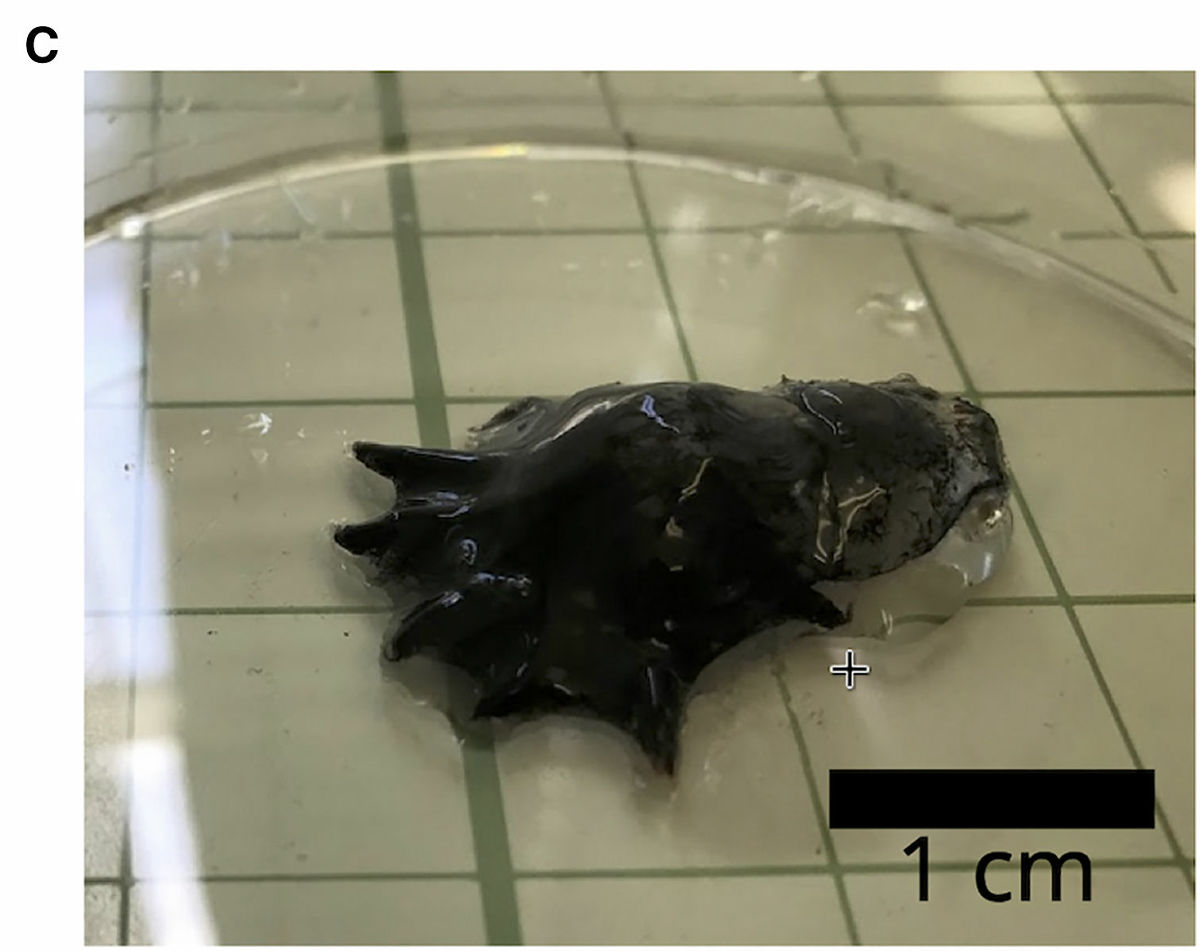
The genome of the bat octopus was found to be larger than expected, measuring 11-14
In comparison with other cephalopods, the genome size of the longfin swordtip squid (Doryteuthis pealeii) is 4.4 Gb, the Hawaiian bobtail squid (Euprymna scolopes) is 4.9 Gb, and the largest cephalopod to date , the common cuttlefish, is 5.5 Gb.
Octopus genomes are even smaller: the California two-spot octopus (Octopus bimaculoides) has a genome of 2.2 Gb, the common octopus (Octopus sinensis) has a genome of 2.6 Gb, and the Mediterranean octopus (Octopus vulgaris) has a genome of 2.7 Gb.
The genome of the bat octopus is several times larger than that of squid or octopus. Interestingly, about 62% of the genome of the bat octopus is made up of repetitive sequences , meaning that the genome size has expanded without adding any new coding sequences.
The team also compared the genome of the bat octopus with that of other cephalopods that have been sequenced to date, revealing that although the bat octopus has eight arms and is classified as an octopus, it retains some of the chromosomal structure seen in the decapoda, the same order as squid .
The team also sequenced the entire genome of the shelled octopus, Argonauta hians , which revealed that early in their evolution, octopuses had a squid-like chromosome structure. While octopuses experienced chromosomal fusion and rearrangement over time, the bat octopus's chromosomes remained largely unchanged even as its genome expanded.
The results of this study provide the clearest genetic evidence to date that the common ancestor of octopuses and squids is more similar to squid than previously thought, and that octopuses evolved from a squid-like ancestor. 'Though classified as an octopus, the bat octopus retains a genetic heritage that predates both lineages,' said co-author Emmeze Toth of the University of Vienna. 'This allows us to directly observe the early stages of cephalopod evolution.'
Related Posts: