What did scientists learn from studying the traditional yogurt manufacturing method of 'putting live ants in milk'?
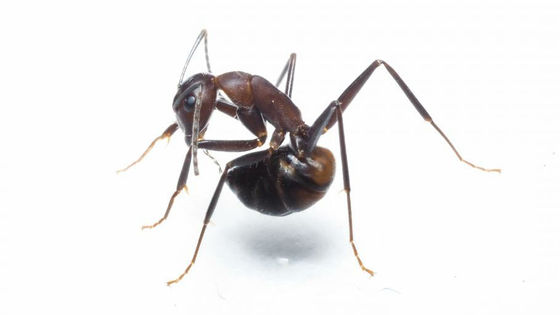
In some areas of Bulgaria and Turkey, the traditional method of making yogurt, in which live ants and their eggs are added to milk and fermented, has been passed down orally for a long time. A team of researchers from the Technical University of Denmark and other institutions focused on this food culture and elucidated the scientific mechanism behind it. This study revealed that the ant '
Making yogurt with the ant holobiont uncovers bacteria, acids, and enzymes for food fermentation: iScience
https://www.cell.com/iscience/fulltext/S2589-0042(25)01856-5
Scientists revive old Bulgarian recipe to make yogurt with ants - Ars Technica
https://arstechnica.com/science/2025/10/how-ants-can-kick-start-fermentation-to-make-yogurt/
The research team first recreated a traditional method passed down in Bulgarian villages: by adding live European wood ants to warm milk and burying it in an ant nest overnight, the milk would curdle like yogurt and acquire a distinctive sour taste.
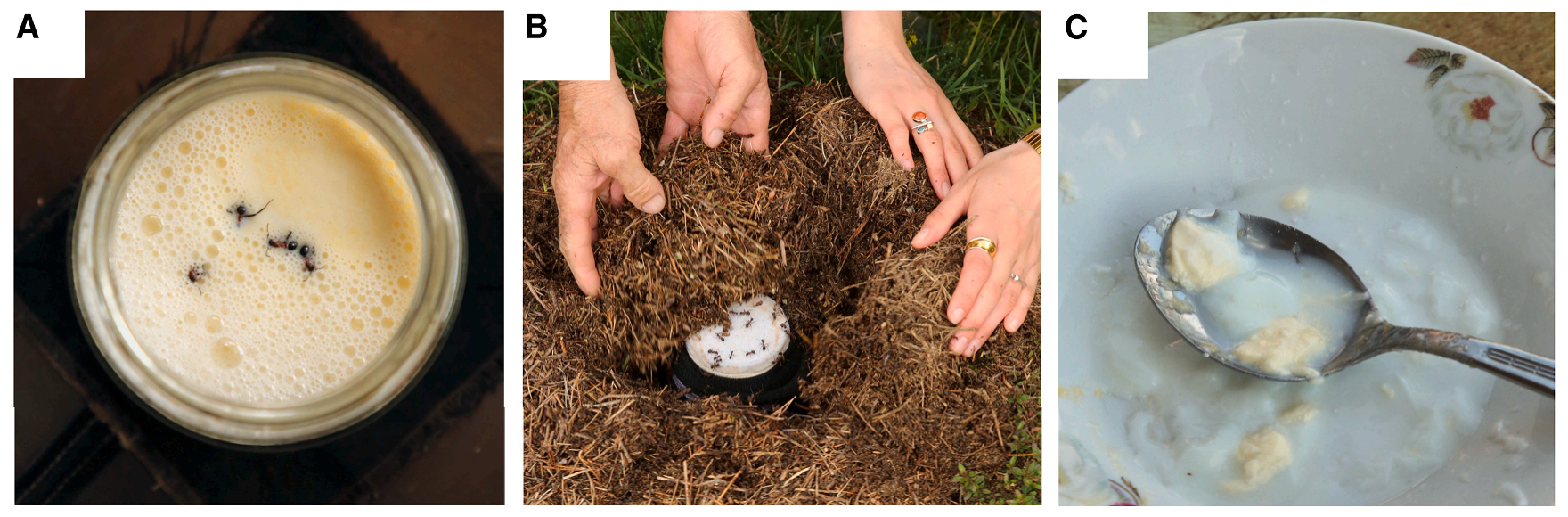
Further detailed analysis under controlled laboratory conditions revealed that three main elements of the antholobiont—bacteria, acid, and enzymes—were key to fermentation.
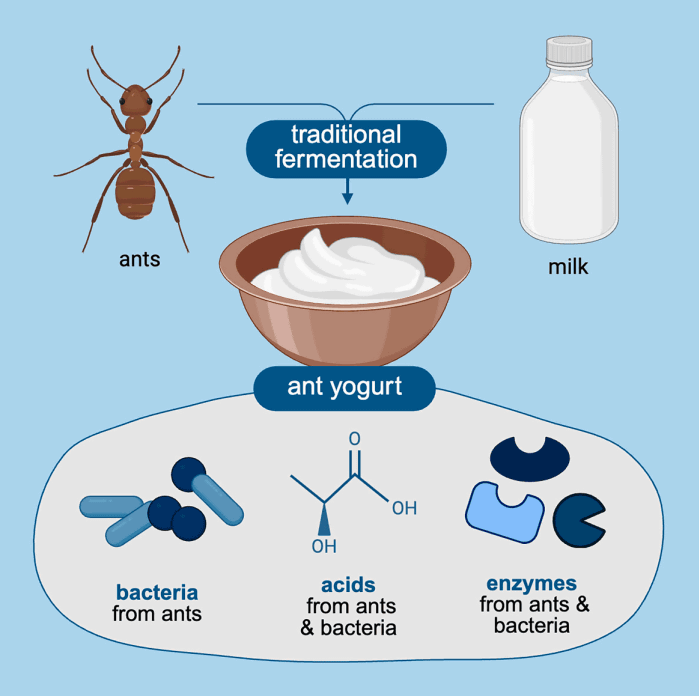
Ants naturally carry lactic acid bacteria, commonly used in yogurt making, and acetic acid bacteria, which give ants their distinctive flavor. Research has revealed that lactic acid bacteria called '
The ants also bring in a variety of acids that directly contribute to the acidification of yogurt. Formic acid, a chemical secreted by ants to protect themselves from predators, is added to the milk, creating an initial acidic environment. Lactic acid bacteria and acetic acid bacteria introduced by the ants then break down the milk's sugars, producing lactic acid and acetic acid, respectively. The combination of these organic acids creates the refreshing sourness and thickness characteristic of yogurt, and also improves its shelf life.
This study also suggests that ants and bacteria may provide enzymes that break down milk proteins. Using a technique called proteomic analysis, researchers confirmed that the ant holobiont possesses multiple protein-degrading enzymes called proteases and peptidases. These enzymes are capable of breaking down casein, the main protein in milk, and may contribute to the acid-induced coagulation process and the smooth texture of yogurt.
The research team is also collaborating with a chef from a two-star Michelin restaurant in Denmark to develop ice cream sandwiches made with ant-derived yogurt, as well as mascarpone-style cheese and cocktails that use ant acids.
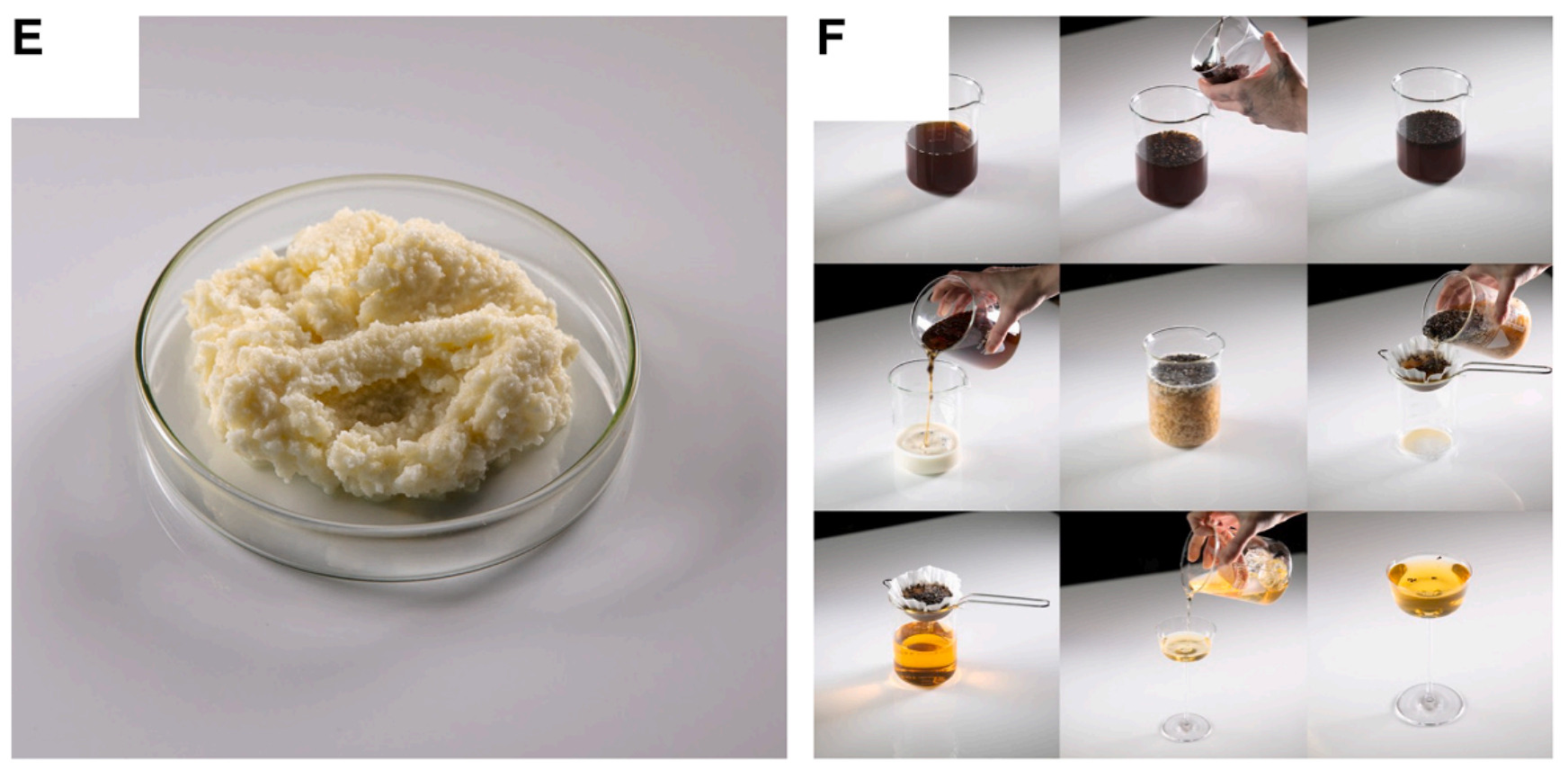
However, the research team warns against making ant yogurt at home, as ants can carry parasites that can be harmful to humans. While traditional methods of production likely involve the knowledge and techniques passed down to avoid these risks, it is not recommended to reproduce this method without specialized knowledge.
The research team stated, 'This study suggests that there is potential for new scientific insights and applications in traditional food cultures that are being forgotten.'
Related Posts: