Open source virtual machine software 'QEMU' adds policy to code prohibiting the use of generative AI
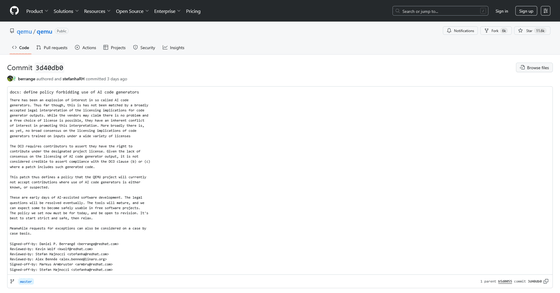
docs: define policy forbidding use of AI code generators · qemu/qemu@3d40db0 · GitHub
https://github.com/qemu/qemu/commit/3d40db0efc22520fa6c399cf73960dced423b048
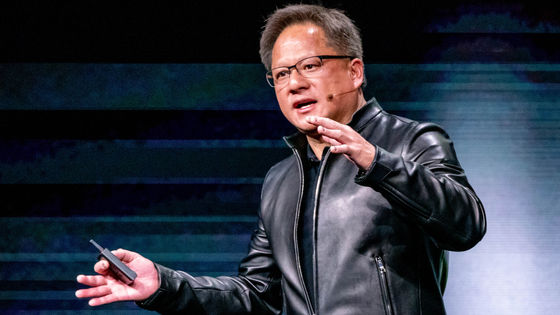
It is still unclear whether NVIDIA CEO Jensen Huang's statement in 2024 that 'AI will write the code, so you won't need to learn programming anymore' is correct, but it is true that AI is highly valued in the IT industry.
by
In April 2025, Microsoft CEO Satya Nadella revealed that 20% to 30% of the code in Microsoft's software products will be written with AI.
About 30% of Microsoft's product code is written by AI - GIGAZINE
The QEMU community requires contributors to certify that their patches were created according to the Developer Certificate of Origin (DCO) rules.
However, with the spread of AI-based software development, a problem has arisen in which the license status of the output content is unclear. If the large-scale language model that was the source of the output uses known training materials, the materials typically contain restrictive licenses or copyright conditions. Even if all the training materials are open source licensed, various terms may apply, and not all of them may comply with QEMU's licensing requirements.
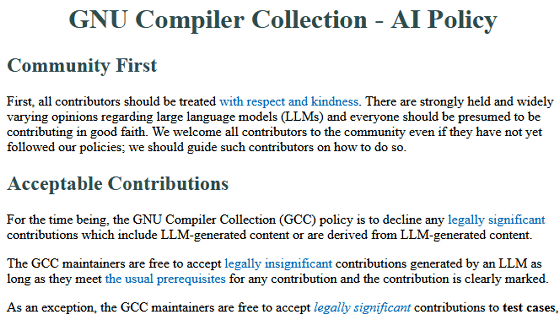
The QEMU community has urged contributors not to use generative AI, citing 'neither the willingness nor the ability to accept the legal risk of non-compliance,' and has stated that it will reject any contributions known or suspected to use AI.
The tools that will be banned include GitHub's CoPilot, OpenAI's ChatGPT, Anthropic's Claude, Meta's Code Llama, and other code and content generation agents built on top of these tools.
This policy may change as the tools mature and the legal situation becomes clearer, but for the time being it is the default, with exceptions being handled by the QEMU project on an individual, case-by-case basis.
Related Posts:


in Note, Posted by logc_nt