A photobook site featuring cute owls wrapped in towels, 'Owls in Towels,' has been launched. Why are they wrapped in towels?
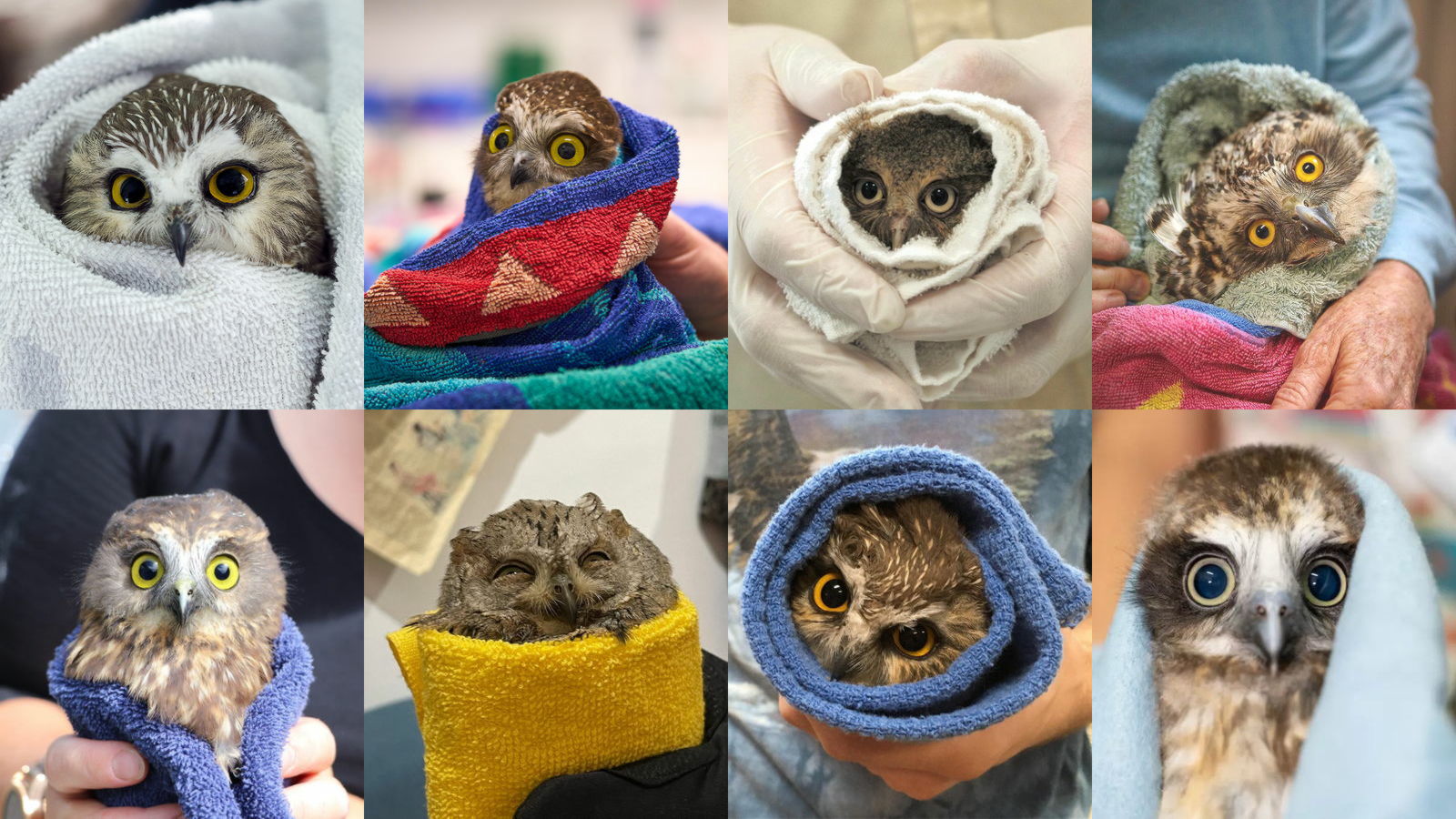
Owls are characterized by their round eyes and curved neckless bodies, and are such popular birds that there are even cafes where you can interact with owls. A website called ' Owls in Towels ' has been launched, which collects photos of owls wrapped in soft-looking towels.
Owls in Towels
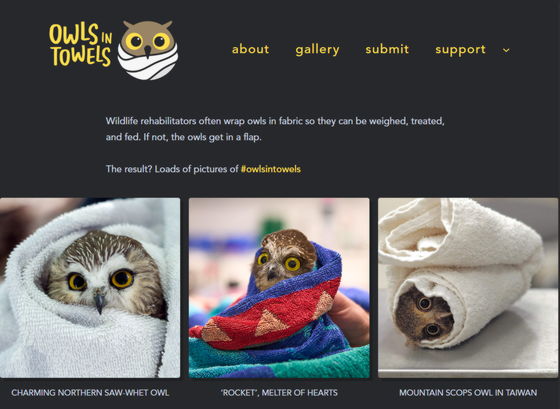
Owls play a vital role in the ecosystem, and wildlife rehabilitators are responsible for helping sick, orphaned or injured owls.
But because owls have sharp beaks and talons, rehabilitation staff wrap the owl in a towel to protect it and themselves, which immobilizes it and makes it easier to weigh, feed, administer medicine, and take X-rays.

In other words, a 'photo of an owl wrapped in a towel' is proof that humans have helped an owl. Therefore, the purpose of 'Owls in Towels' is to record the photos and stories of owls wrapped in towels and deliver them to as many people as possible. The site has no advertisements or sponsors, and only posts photos of owls undergoing rehabilitation.
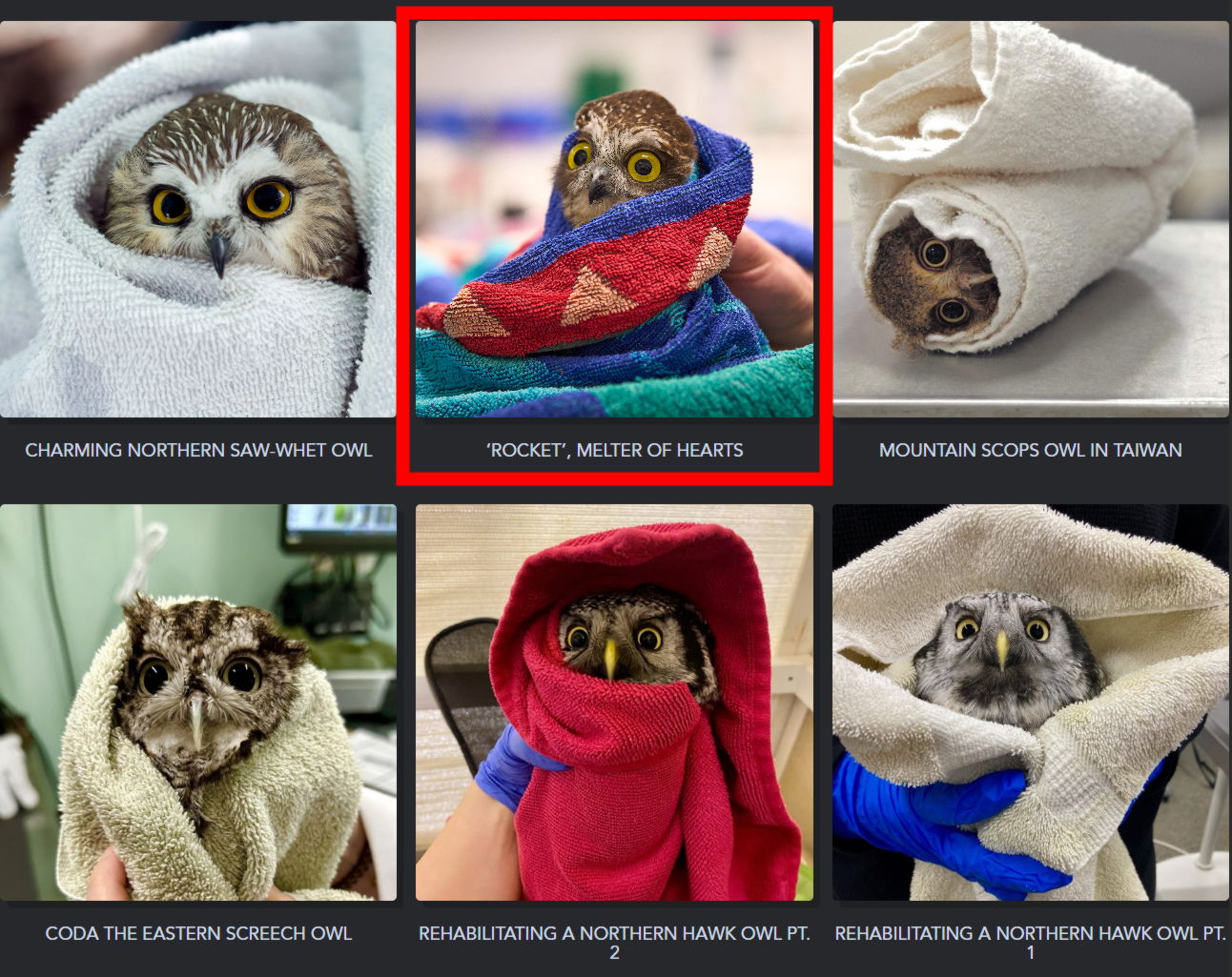
When you access 'Owls in Towels', a large number of owl photos are displayed in a row as shown below, so click on one of them.
In addition to a photo of the owl wrapped in a towel, you can check the name of the facility that protected the owl, links to its website and social media, and the details of how it was protected. In addition, there is a link to donate to the owl, so you can provide financial support.
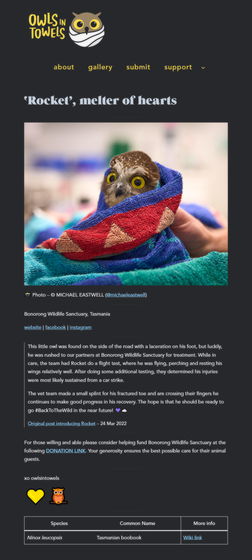
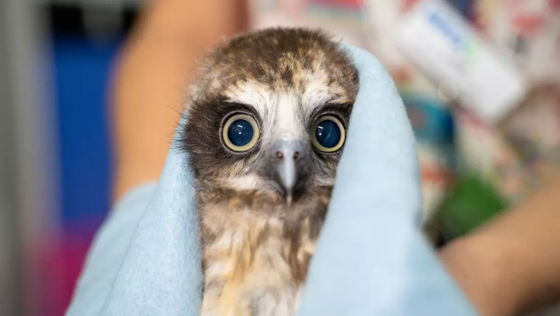
The owl in the photo below was found on the side of the road with a lacerated leg, but was fortunately taken to a Bonorong Wildlife Sanctuary partner facility where it was able to receive care. Donations to Bonorong Wildlife Sanctuary can be made here .
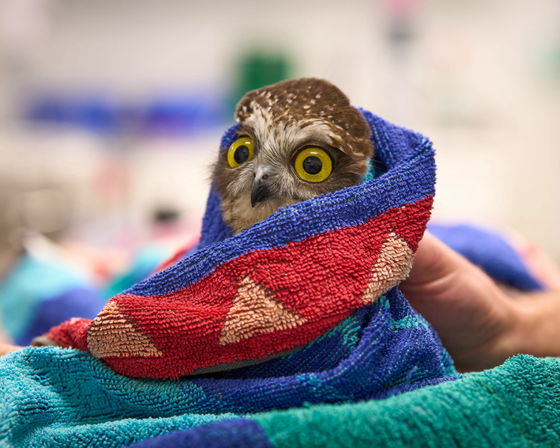
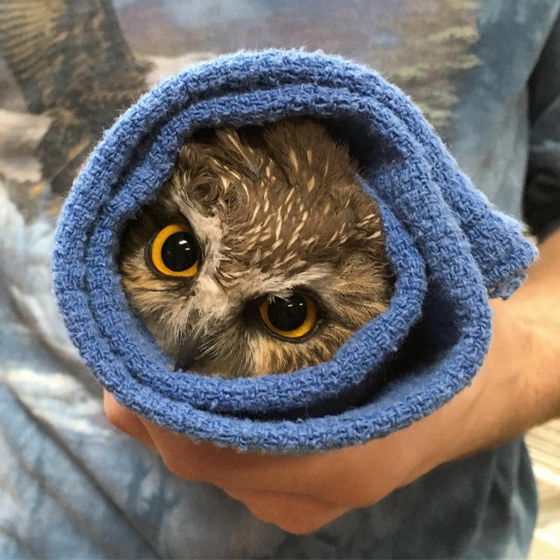
Below is a photo of a saw-whet owl rescued by
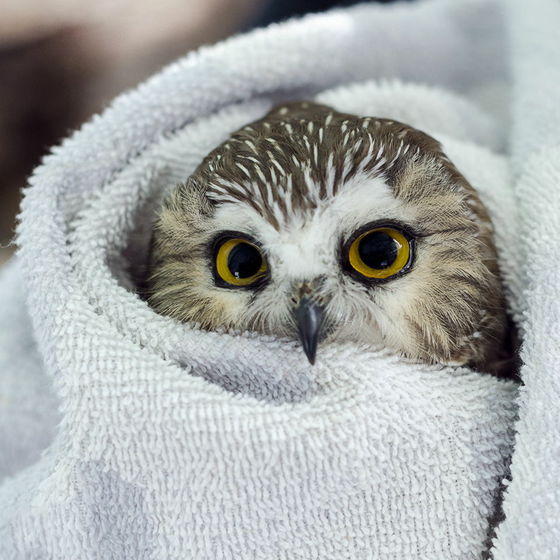
A barn owl rescued from Taiwan's safari park, Leo Foo Village Theme Park. Barn owls only grow to about 110g in weight and 20cm in length, but the rescued specimen weighed just 76g.
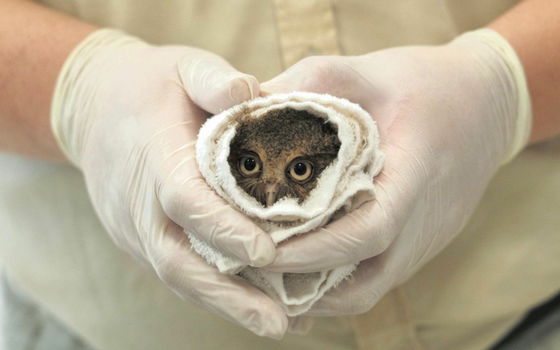
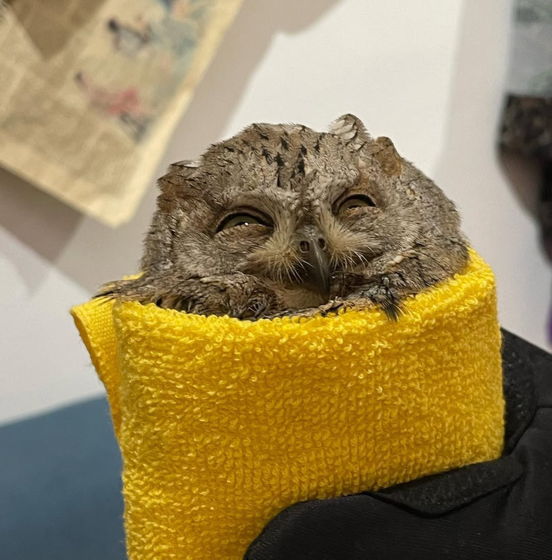
A Great Scops Owl rescued at
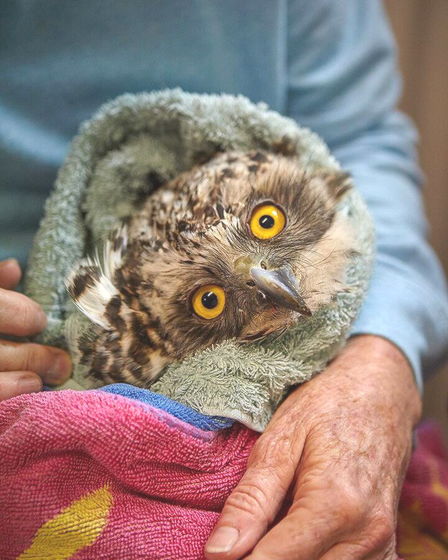
Below is an owl chick rescued by
The photo below shows a saw-whet owl rescued at the World Bird Sanctuary in Valley Park, Missouri, USA. Donations to the World Bird Sanctuary can be made
A barn owl is rescued from being attacked by crows in Skopje Park, North Macedonia.
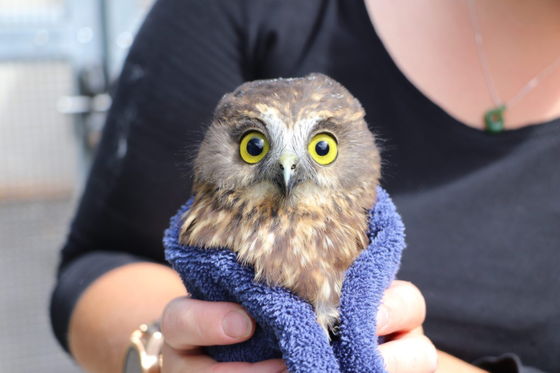
Below is Shannon the Morepork, who was rescued by
If you have a photo of an owl wrapped in a towel, you can submit it on the ' submit ' page.
Related Posts:
in Web Service, Creature, Posted by logu_ii